Supported Sheet Metal Materials
Material | Available Thickness | Key Characteristics | Compatible Finishes |
|---|
Aluminum 5052 | 0.5-6.0 mm | Lightweight, corrosion resistant, formable | Anodizing, powder coating, brushing, conductive anodizing, anodizing, hardcoat anodizing, silkscreen, laser marking |
Stainless Steel 304 | 0.5-6.0 mm | Corrosion resistant, strong | Brushing, powder coating, silkscreen, laser marking |
Stainless Steel 201 | 0.5-6.0 mm | Cost-effective stainless option | Brushing, powder coating, silkscreen, laser marking |
Cold Rolled Sheet | 0.5-6.0 mm | Economical, good for structural parts | Powder coating, silkscreen, laser marking |
Galvanized Steel Sheet | 0.5-6.0 mm | Corrosion-protected steel | Powder coating, silkscreen, laser marking |
Supported Sheet Metal Fabrication Processes
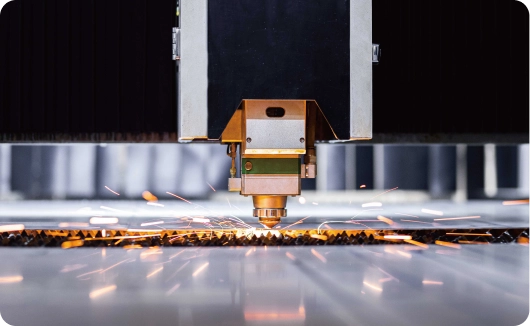
Laser Cutting
Cutting flat sheet profiles and internal features
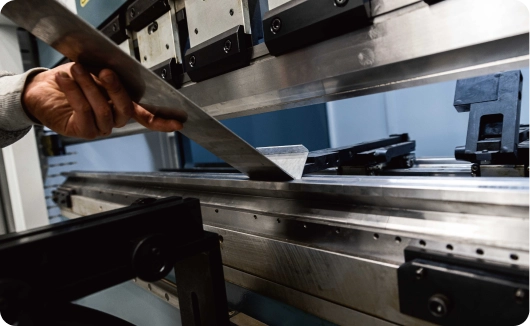
Bending
Forming sheet metal into angled parts
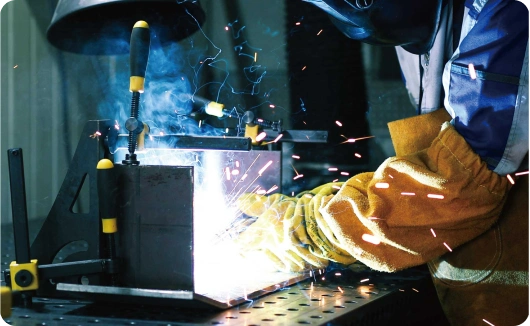
Welding
Joining multiple parts into assemblies
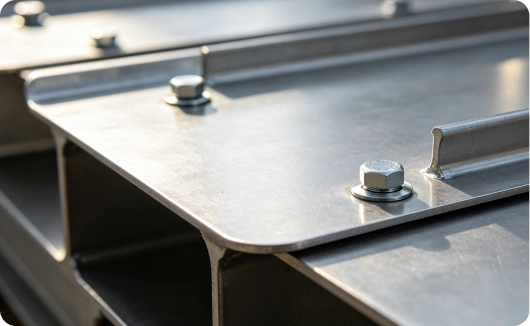
Riveting
Fastener installation for assemblies
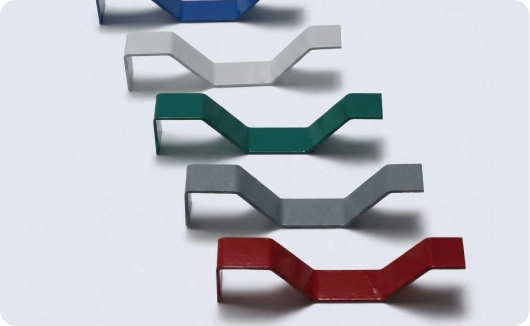
Surface Finishing
Post-processing for protection and appearance
Sheet Metal Fabrication Tolerances and Notes
Capability Item | Standard Range / Value | Compatible Finishes |
|---|
General tolerance | ±0.2 mm | Depends on part size and geometry |
Cutting tolerance | ±0.1 mm | Based on material and thickness |
Bending tolerance | ±0.3 mm | Varies by bend angle and feature position |
Punching Tolerances | ±0.1mm | Depends on hole size, tooling, and material thickness |
Thread Tolerance | ±0.1mm | Varies by bend angle and feature position |
Minimum distance between holes | 1 mm | May result in damage by default when distance < 1 mm |
Minimum diameter for cutting holes | ≥ 1 mm | Must be at least half of the sheet thickness |
Surface Finishing Options for Sheet Metal Parts
Finish | Applicable Materials | Specification / Range | Purpose |
|---|
Powder Coating | Cold Rolled Sheet, Galvanized Steel, Stainless Steel, Aluminum | 7 standard color options available | Corrosion protection, appearance |
Anodizing | Aluminum only | 9 standard color options available | Corrosion resistance, appearance |
Conductive Anodizing | Aluminum only | Conductive anodic coating with electrical conductivity retained | Corrosion resistance, electrical grounding / EMI applications |
Hardcoat Anodizing | Aluminum only | Thick hard anodic coating with enhanced wear resistance | Wear resistance, surface hardness, corrosion protection |
Brushing | Stainless Steel only | Surface texture direction as specified | Decorative finish |
Silkscreen | Cold Rolled Sheet, Galvanized Steel, Stainless Steel, Aluminum | Text / logo marking | Part identification |
Laser Marking | Cold Rolled Sheet, Galvanized Steel, Stainless Steel, Aluminum | Permanent marking | Traceability / branding |
Sheet Metal Parts We Commonly Manufacture
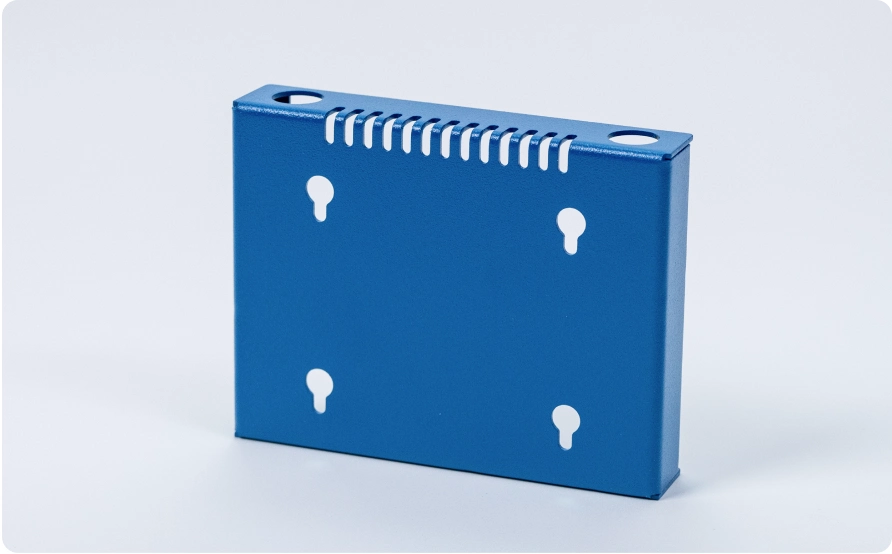
Enclosures
Common Materials:
Aluminum 5052, Stainless Steel 304, Galvanized Steel Sheet
Typical Processes:
Laser cutting, bending, welding, surface finishing
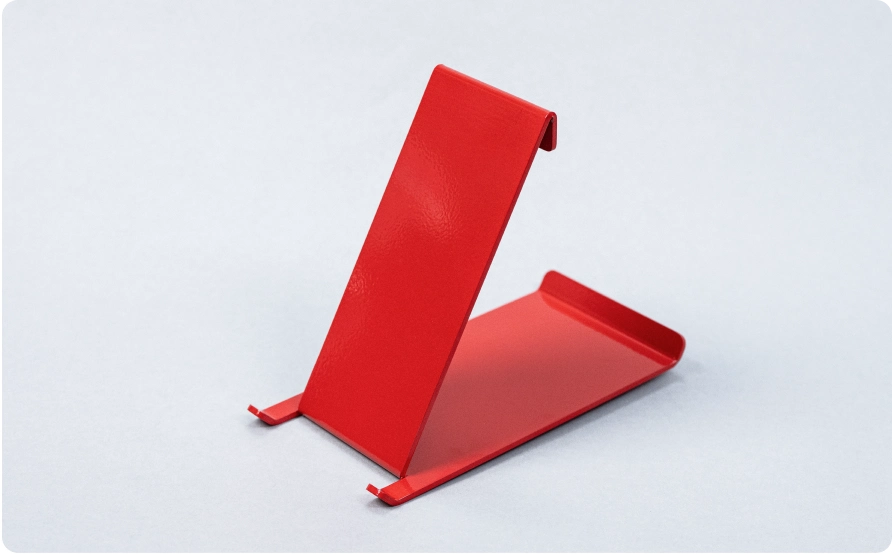
Brackets
Common Materials:
Cold Rolled Sheet, Stainless Steel 304, Aluminum 5052
Typical Processes:
Laser cutting, bending, tapping or hardware insertion, surface finishing
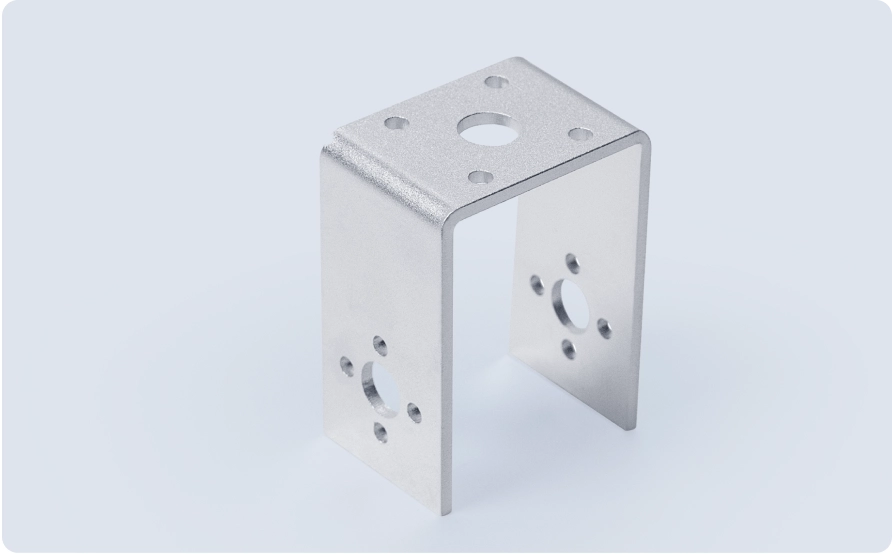
Mounting Plates
Common Materials:
Cold Rolled Sheet, Stainless Steel 304, Galvanized Steel Sheet
Typical Processes:
Laser cutting, bending, tapping or hardware insertion, surface finishing
Design Guidelines for Ordering Sheet Metal Parts
Review the checklist below before placing an order to help improve file accuracy, manufacturability, and processing efficiency.
File Preparation
- Upload a 3D STEP file for every order.
- Add 2D files when needed for marking or special features.
- Use the actual flat shape after bending for silkscreen and laser marking files.
- Keep text in DWG or DXF files as double-line fonts with 0.2 mm line width.
Design Check
- Include all related parts in one 3D file for assembly review.
- Make sure bend features and hole positions meet supported limits.
- Keep the minimum hole diameter at ≥ half of sheet thickness and ≥ 1 mm.
- Keep the minimum hole spacing at ≥ 1 mm.
Order Information
- Specify material, thickness, finish, and process requirements clearly.
- Add notes for threading, riveting, or welding if needed.
- Match custom part names to the design file for sub-component settings.
- Keep uploads within 20 drawings and 100 MB per file.