Thermoset vs Thermoplastic: Key Differences, Properties, and Manufacturing Applications
11 min
- What Are Thermoplastics and What Are Thermoset Plastics?
- Why This Distinction Matters in Manufacturing
- Key Differences Between Thermoset and Thermoplastic Materials
- Thermal Behavior and Load Response
- Mechanical Strength and Failure Behavior
- Typical Applications of Thermoplastic and Thermosetting Plastic Materials
- Thermoplastics vs Thermosets in CNC Machining
- How to Choose Between Thermoplastic and Thermoset
- Final Consideration for Manufacturing Projects
- FAQs
Thermosets and thermoplastics are the two main types of plastics used in manufacturing. Choosing between thermoset vs thermoplastic materials significantly affects CNC machining performance. On paper, they can appear similar. In practice, they behave very differently when exposed to heat, mechanical stress, or cutting forces.
This difference shows up quickly in real projects. It affects:
● Heat resistance and softening behavior
● Long-term deformation under load
● CNC machining stability and tool wear
● Dimensional accuracy over service life
Material decisions made at the early design stage often determine whether production runs smoothly or requires adjustment later. Choosing the appropriate plastic from the start helps avoid unnecessary redesign and performance issues in service. This guide explains the difference between thermoset and thermoplastic materials, including their properties, manufacturing behavior, and CNC machining performance.
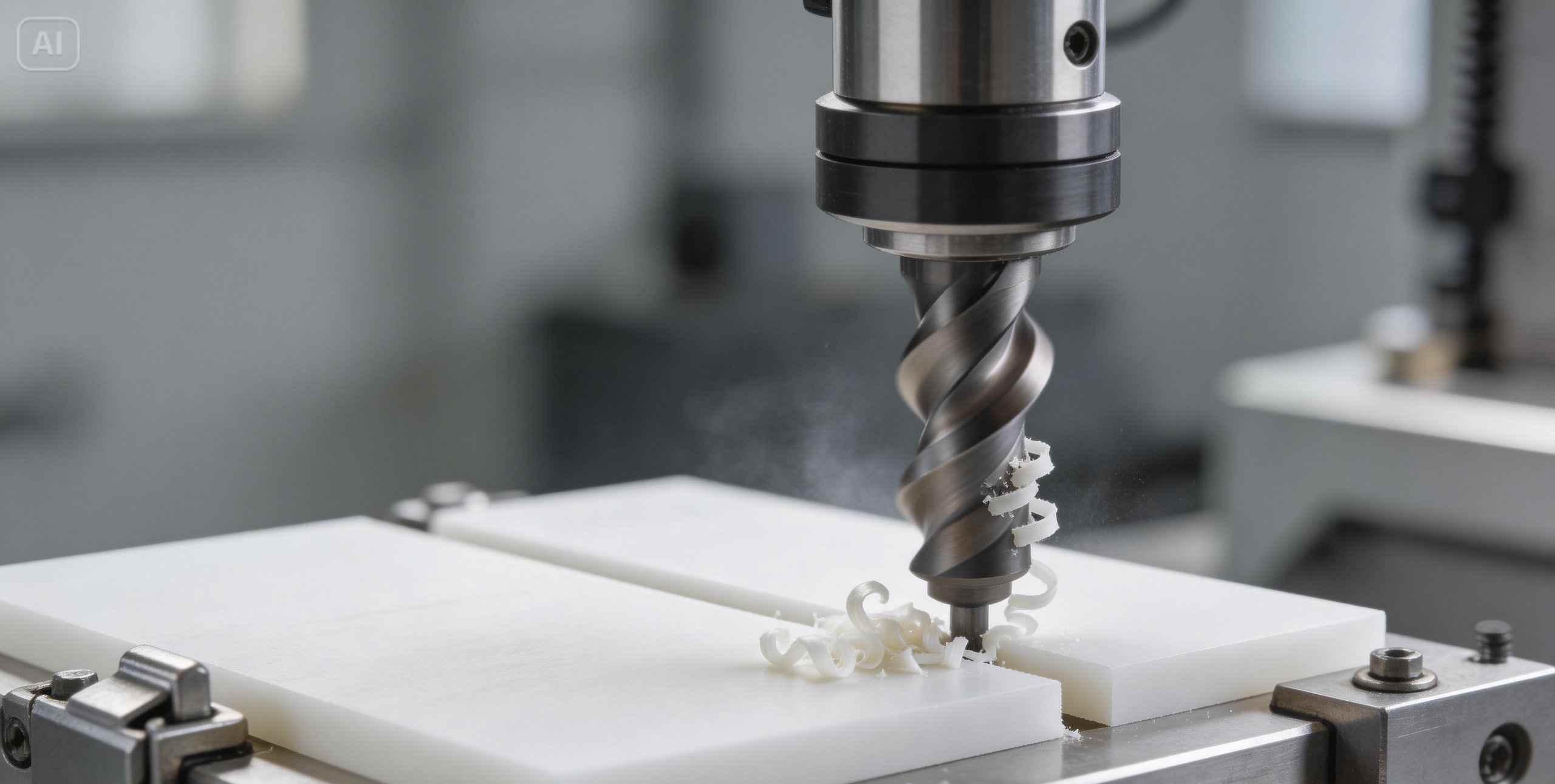
CNC machining plastic parts thermoplastic milling.
What Are Thermoplastics and What Are Thermoset Plastics?
To understand what thermoplastics and thermoset plastics are, it is important to look at how their molecular structures respond to heat and mechanical load.
Thermoplastics
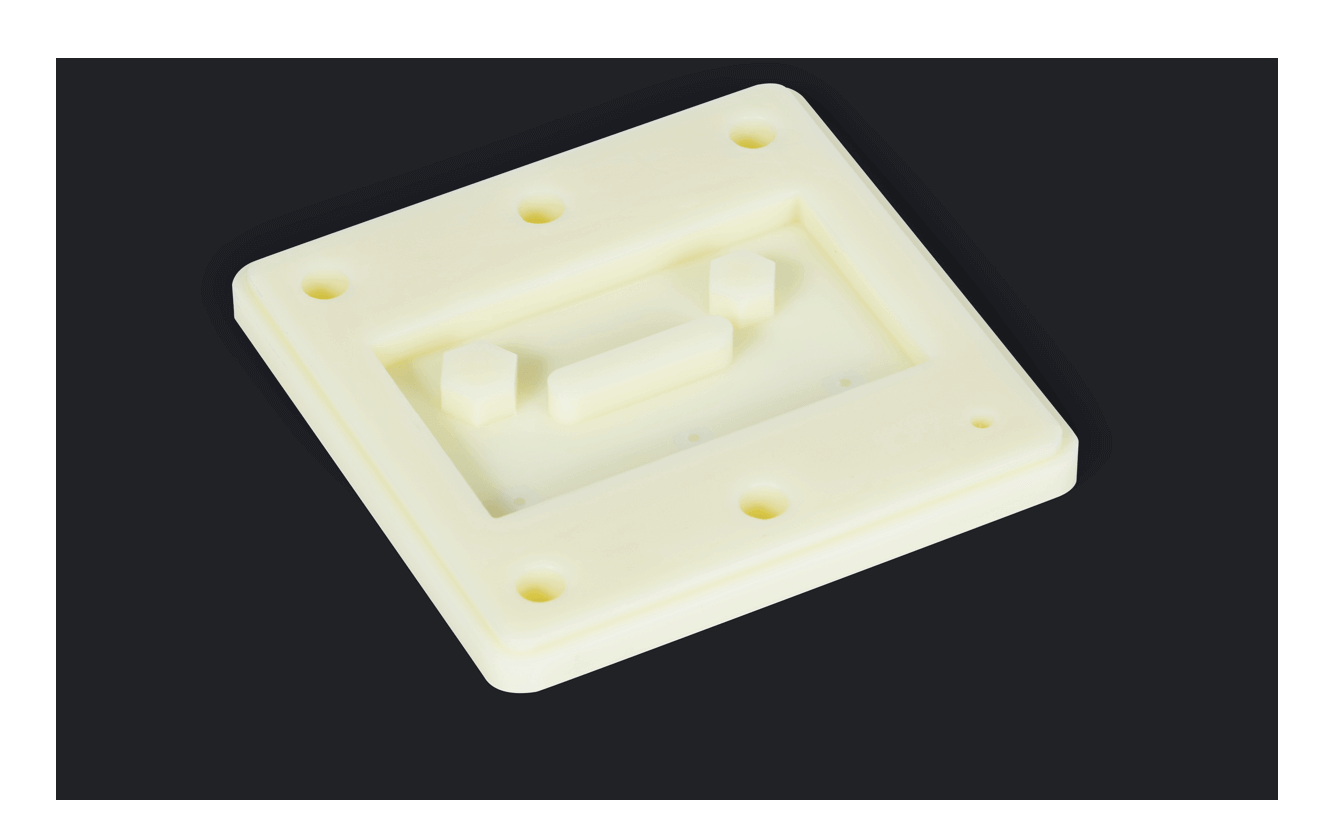
ABS thermoplastic CNC machined part.
At processing temperature, thermoplastics begin to lose stiffness. The material becomes workable before reaching any degradation point. Once the temperature drops, rigidity returns.
The heating cycle does not permanently lock the structure in place. For this reason, parts made from these materials can be reheated during forming or secondary operations, provided the recommended temperature window is not exceeded.
ABS, PC, nylon, POM, and PEEK are frequently selected for machined housings, structural brackets, and functional components. The exact temperature limit depends on grade and loading condition.
Typical thermal behavior:
● Commodity thermoplastics often have heat deflection temperatures (HDT) in the range of 70–120°C
● Engineering grades such as PEEK can exceed 250°C HDT
When operating temperatures approach a thermoplastic’s glass transition temperature (Tg), stiffness decreases significantly.
Thermosets
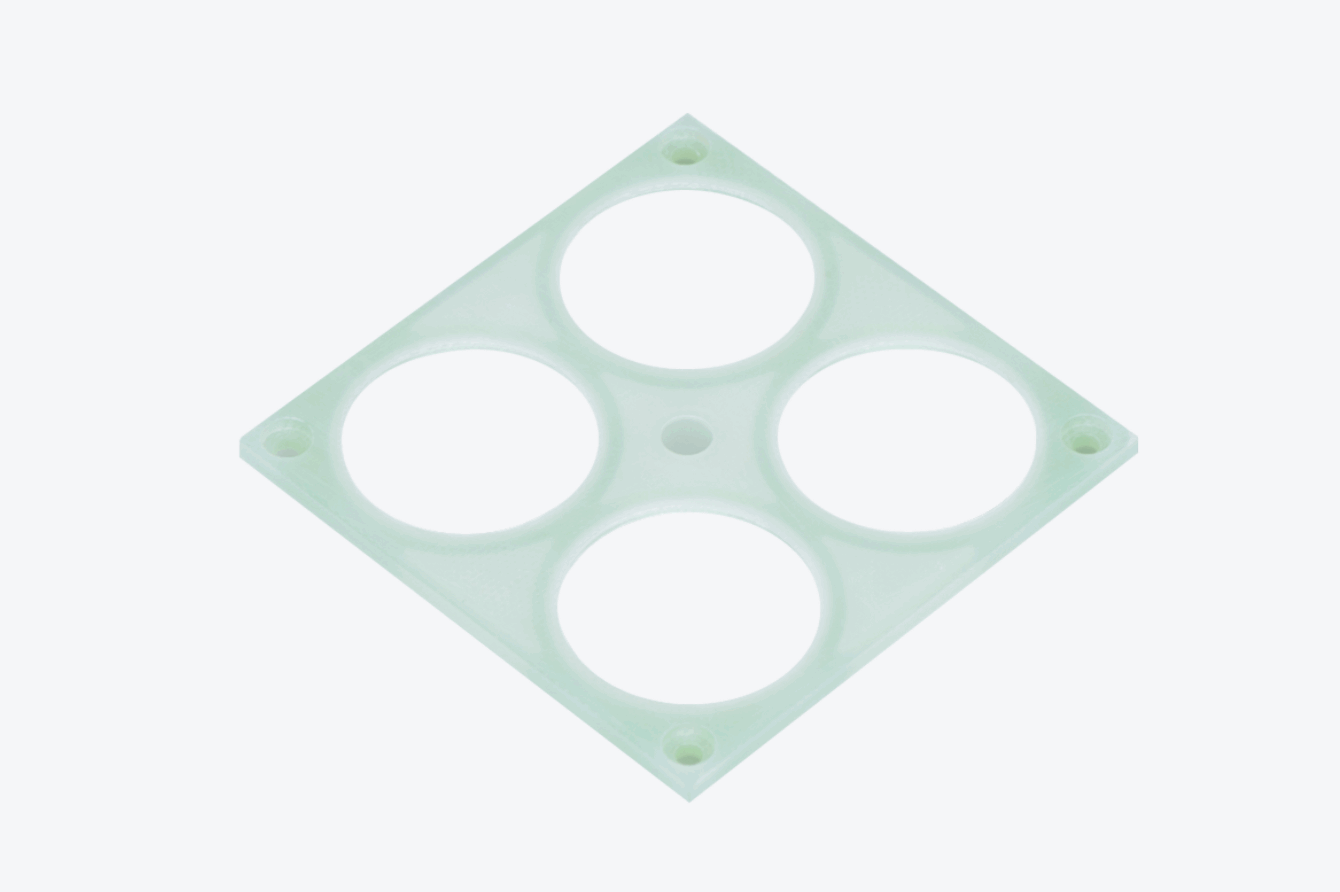
FR-4 thermoset material for CNC machining parts.
Once thermosets are cured, their structure becomes fixed. The material does not return to a molten state if reheated. Instead of softening, it begins to break down when the temperature moves beyond its rated limit.
FR-4, G10, phenolic sheets, and cured epoxy tooling boards are examples seen in electrical panels and structural supports. Once processed, these parts are designed to remain dimensionally stable rather than be reshaped.
Typical thermal behavior:
● Many epoxy-based laminates maintain structural stability up to 130–180°C continuous service
● High-performance thermosets may tolerate higher short-term exposure before degradation
Because of cross-linking, thermosets retain stiffness closer to their maximum service temperature compared with most thermoplastics.
Why This Distinction Matters in Manufacturing
The selected material influences both fabrication steps and in-service stability.
From a manufacturing perspective:
● In production:
Thermoplastics are typically molded or extruded. Thermosets require curing after forming, and many thermoset parts are machined from laminate sheets.
● Under temperature exposure:
As heat increases, many thermoplastic grades begin to lose stiffness. The part may still appear intact, but maintaining dimensional control becomes more difficult. Fully cured thermosets do not enter a softened phase. When their rated temperature is exceeded, cracking or surface damage is more likely than gradual distortion.
● Behavior during machining:
Heat accumulation at the cutting edge can cause smearing in certain thermoplastics if parameters are not well controlled. Thermosets maintain rigidity but may increase tool wear or lead to edge chipping.
● Performance under sustained load:
Over-extended service periods, dimensional shift is more frequently observed in thermoplastic parts, particularly near their heat deflection range.
In applications requiring tight tolerances near elevated temperatures, the material choice can directly affect field performance.
Key Differences Between Thermoset and Thermoplastic Materials
The following comparison summarizes the key properties of thermoplastics and thermosetting plastics, especially those that influence CNC machining and long-term structural performance.
Comparison Table
| Feature | Thermoplastics | Thermosets |
| Molecular structure | Linear or branched chains | Cross-linked 3D network |
| Reprocessability | Remeltable | Permanent after cure |
| Heat behavior | Softens near Tg | Maintains rigidity until degradation |
| Heat deflection (typical) | 70–120°C (commodity) | 130–180°C (common laminates) |
| Creep resistance | Moderate; grade-dependent | Often higher after curing |
| Impact behavior | Tough, ductile (often) | Rigid, often brittle |
| CNC machining | Heat-sensitive | Abrasive, brittle risk |
| Recycling | Often possible | Limited |
Always verify performance using the specific grade and reinforcement.
Thermal Behavior and Load Response
Thermoplastics
Thermoplastics gradually soften as temperature rises. Reduced stiffness increases the risk of:
● Permanent deformation under load (creep)
● Dimensional shift in warm environments
● Stress relaxation in thin-wall sections
Creep becomes significant when a thermoplastic operates near 50–60% of its glass transition temperature for extended periods.
Example: Nylon (PA) may absorb 1–3% moisture by weight, causing measurable dimensional growth. ABS housings near heat sources can gradually distort over time. Design allowances should account for thermal expansion and environmental humidity.
Thermosets
Once cured, thermosets retain structural rigidity up to their rated service temperature.
Dimensional stability is high under sustained heat and mechanical load. Exceeding thermal limits may cause:
● Cracking
● Surface degradation
Example: FR‑4 and G10 laminates in electrical panels remain stable at 130–180°C continuous service, with minimal creep under clamped conditions. During CNC machining, edge support is critical to prevent chipping, and carbide or coated tools are recommended to handle abrasive fillers safely.
Mechanical Strength and Failure Behavior
Thermoplastics
Advantages:
● Good impact resistance
● Ductility and energy absorption
● Easier stress redistribution
Limitations:
● Stress cracking in chemical exposure
● Reduced stiffness at elevated temperature
● Progressive creep under sustained load
Thermoplastics are often preferred for housings, covers, and moderate-load mechanical components.
Thermosets
Advantages:
● High stiffness
● Good compressive strength
● Stable insulation properties
Limitations:
● Brittle fracture under impact
● Delamination in laminate structures
● Tool wear during machining (especially glass-filled grades)
Thermosets are frequently used in structural fixtures, insulating panels, and high-temperature supports.
Typical Applications of Thermoplastic and Thermosetting Plastic Materials
The application of thermoplastic and thermosetting plastic depends largely on service temperature, mechanical load, and dimensional stability requirements.
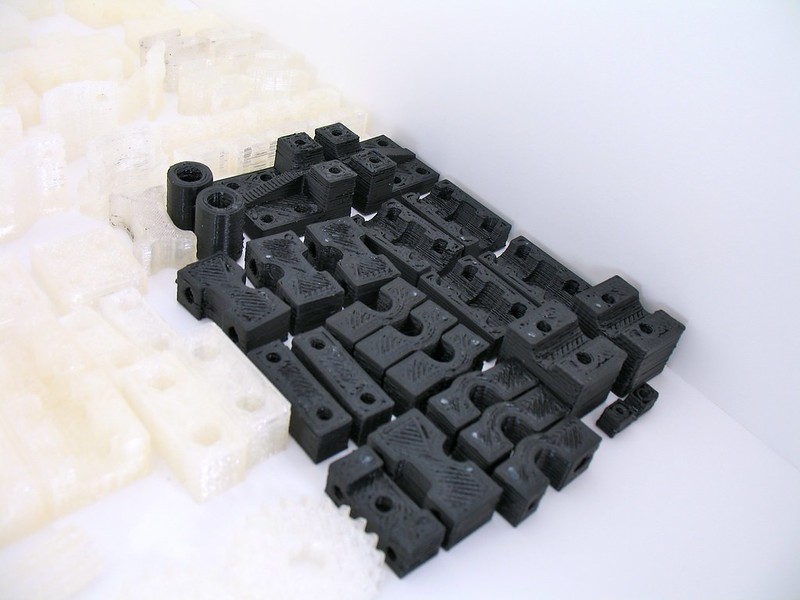
CNC machined thermoplastic parts used for housings brackets and prototypes. Source: flickr
Thermoplastics
● Automotive interior components
● Consumer electronics housings
● Fluid-handling components
● CNC-machined prototypes
● Lightweight brackets
Their faster molding cycles and recyclability make them efficient for high-volume production.
Thermosets
● Electrical insulation spacers
● Circuit board laminates (FR-4/G10)
● Tooling fixtures exposed to heat
● Structural composite panels
● Potting and encapsulation systems
Thermosets are commonly selected for dimensional stability in heat and load-sensitive environments.
Thermoplastics vs Thermosets in CNC Machining
Machining performance often determines material suitability in prototype and low-volume production.
CNC Machining of Thermoplastics
Thermoplastics are easier to machine but heat accumulation can cause surface smearing or dimensional shift. They often produce long, continuous chips, which require effective evacuation. Recommended practices:
● Use sharp, plastic-specific tools
● Moderate spindle speeds to control heat
● Allow parts to cool/stabilize before final inspection
In a custom plastic CNC thermoplastic milling service, controlling heat input and chip evacuation is essential to maintain dimensional accuracy and surface finish.
CNC Machining of Thermosets
Thermosets stay rigid during cutting, which preserves dimensional accuracy. Machining challenges include tool wear from abrasive fillers, brittle edge chipping, and dust generation. Recommended practices:
● Use carbide or coated tools
● Secure fixturing and controlled feed rates
● Dust extraction for operator safety
Unlike thermoplastics, thermosets retain dimensional stability under heat and mechanical load, which makes them highly suitable for parts requiring tight tolerances. They stay rigid during cutting, preserving accuracy, though machining challenges include tool wear from abrasive fillers, brittle edge chipping, and dust generation.
Thermosets are ideal for components requiring long-term dimensional stability, especially under heat or electrical insulation constraints.
Custom CNC Milling for Thermoplastic and Thermosets
Machining thermoplastics and thermosets demands precise process control. Thermoplastics tend to soften under heat, which can cause surface smearing, dimensional shift, or edge deformation. Spindle speeds, feed rates, and cooling cycles must be carefully managed, and chip evacuation should be continuous to avoid re-cutting and heat accumulation.
Thermosets, by contrast, remain rigid under cutting forces but can be abrasive or brittle. Tool selection is critical—carbide or coated tools reduce wear, while proper edge support prevents chipping. Material grade, wall thickness, and part geometry influence cutting strategy and surface finish quality.
Key considerations include:
● Adjusting spindle speed and feed to match material thermal sensitivity.
● Supporting thin walls and protrusions to maintain dimensional accuracy.
● Using cutting fluids or controlled cooling only when material grade allows.
Properly planned CNC milling ensures consistent tolerances, repeatable surface finish, and minimal tool wear. For prototype or low-volume production, JLCCNC’s controlled machining process supports part stability, quality, and surface integrity while handling thermoplastic and thermoset materials efficiently.
How to Choose Between Thermoplastic and Thermoset
Material choice usually becomes clear once you pin down two things: the real operating temperature at the part surface, and what “deformation” means in your assembly. A bracket that can flex a little is one story. A spacer that sets alignment or holds a gap is another.
Operating temperature
● If your operating temperature approaches the material’s glass transition range, consider thermosets or high-temperature thermoplastics.
● If your part operates near or above 120°C, standard thermoplastics may begin to lose stiffness over time. Unless you have verified data for the exact grade and geometry, stability can become uncertain. In these cases, thermosets or high-temperature thermoplastics usually provide more reliable dimensional control, particularly in thin sections.
Load and deformation tolerance
● Impact resistance required → thermoplastic
● Minimal long-term creep allowed → thermoset
Machining and production strategy
● For prototypes and low-volume CNC parts, thermoplastics are usually the faster path. Cycle time is reasonable, tooling is straightforward, and you can iterate quickly. The practical issue is heat: if you push feeds and speeds too hard, you may get smeared surfaces, burrs that don’t deburr cleanly, or dimensions that shift after the part cools down. Tight-tolerance plastic work is often more about fixturing and heat control than the nominal machine accuracy.
● For heat-exposed fixtures or electrical insulating parts, thermosets show up a lot in shops because they tend to hold their shape once cured. If you machine laminates like FR‑4/G10 or phenolic, expect more tool wear and dust management. They can cut clean, but you don’t treat them like soft plastics—support the edges, avoid chipping, and don’t let the tool rub.
Lifecycle cost
Thermoplastics:
● Lower molding cost at scale
● Recyclable scrap
Thermosets:
● Higher upfront processing cost
● Greater stability in demanding environments
Total cost should consider long-term deformation risk, maintenance, and replacement frequency.
Final Consideration for Manufacturing Projects
Thermosets and thermoplastics each offer advantages depending on service temperature, load profile, tolerance requirements, and machining strategy.
In CNC plastic parts, the first check is simple: measure it when it’s fresh off the machine, then measure again after it has cooled and been clamped or heated. That second measurement is where problems show up.
Providing the drawing and critical dimensions allows JLCCNC to evaluate material suitability before production. The process emphasizes low minimum order quantities, rapid turnaround, and strict control over tool paths and surface quality. For prototypes or small-batch production, it ensures parts meet design specifications and quality requirements.

FAQs
What is the difference between thermoset and thermoplastic materials?
Thermoplastics soften with heat and can be reshaped; thermosets stay fixed once cured and resist remelting.
Which thermoset or thermoplastic handles high temperatures better?
Thermosets are more stable under sustained heat. Some high-performance thermoplastics work if the grade and part geometry suit the application.
Which type creeps less under constant load?
Thermosets show minimal long-term deformation. Thermoplastics may need design allowances to prevent stress relaxation.
Which is easier to CNC machine: thermoplastic or thermoset plastics?
Thermoplastics are easier to cut but can smear if the tool heats the surface. Thermosets cut crisp, though abrasive fillers may wear tools and cause edge chipping.
How do thermosets and thermoplastics behave under heat exposure?
Thermoplastics soften near their glass transition temperature, risking dimensional shift. Thermosets maintain rigidity up to their rated limit; exceeding that can cause cracking or surface degradation.
When should I choose thermoset vs thermoplastic for CNC machined parts?
• Thermoplastics suit moderate-load components, quick-turn prototypes, and applications where some flexibility is acceptable.
• Thermosets suit heat-sensitive, load-critical, or long-term dimensional stability applications, especially electrical insulation or structural supports.
Keep Learning
Plastic CNC Machining: Guide to Materials, Machines & Cutting Strategies
Understanding Plastic CNC Machining When most people think of CNC machining, metals come to mind first, aluminum, steel, titanium. But plastic CNC machining has quietly creeped into many industries. Why? Because plastics are lightweight, versatile, and cost-effective, making them an ideal option for places where the best performance is needed on the best budget. CNC for plastic is now as common as CNC for metal. At JLCCNC, we don't just work with metals, we also provide CNC machining of plastic parts ......
Polycarbonate vs Acrylic for CNC Parts: Strength, Machining & Material Selection
Quick Comparison: Polycarbonate vs Acrylic Property Polycarbonate Acrylic Tensile strength 55–75 MPa 70–80 MPa Impact resistance 600–900 J/m (notched Izod) 15–30 J/m Flexural modulus 2.1–2.5 GPa 3.0–3.3 GPa Light transmission 88–90% 92–93% Heat deflection temp approximately 110–130°C depending on grade and test condition 75–100°C Chemical resistance Moderate. attacked by solvents Good. resists most common chemicals Machinability Good. tends to melt at edges Excellent. clean chips, sharp edges UV resis......
Acrylonitrile Butadiene Styrene: Properties, Types, and Applications
Key Takeaways ABS can provide useful service performance at moderately elevated temperatures, with the actual continuous-use and heat-deflection limits depending on grade, loading, and service conditions. It's an amorphous terpolymer whose properties come from the combination of three monomers: acrylonitrile contributes chemical resistance and stiffness, butadiene provides impact toughness, and styrene gives the material its processability and surface finish. ABS plastic provides moderate heat resista......
Polycarbonate CNC Machining: Properties, Design Guidelines, and Manufacturing Considerations
Key Takeaways About Polycarbonate CNC Machining Polycarbonate is used for clear guards, covers, housings, and inspection parts where visibility and protection matter in use, not just on drawings. Different machining materials or grades behave differently during cutting and show up mainly in surface clarity and edge condition. Heat from cutting affects surface marks more than the strength of the material itself. Thin walls and wide flat areas are where most surface issues start during machining. Tool s......
Acetal (POM) Plastic: Properties, Uses & Material Selection
Key Takeaways Acetal (POM) is a semi-crystalline engineering thermoplastic with high stiffness, low friction, excellent dimensional stability, and outstanding machinability. POM material comes in two main types, homopolymer (POM-H, Delrin) and copolymer (POM-C), with slightly different property profiles suited to different applications. Acetal plastic properties include tensile strength of 60-75 MPa, very low moisture absorption (0.2%), and a coefficient of friction of 0.1-0.3 against steel without lu......
What Is a Composite Material? Types, Properties, Examples, and Applications
Key Takeaway A composite material is an engineered material made from two or more constituent materials with different properties that, combined, produce a material with superior or unique characteristics neither component has alone. The main types of composite materials are classified by matrix (polymer, metal, ceramic) and by reinforcement form (fiber, particle, sandwich). Composite material properties are directional, they vary depending on fiber orientation, which is both an advantage for optimiza......