Aluminum Anodizing Color Guide
Last updated on Nov 10, 2026
- Aluminum Anodizing Color Guide
- Anodizing Colors We Offer
- Three Types of Anodizing and How They Differ
- Hardcoat Anodizing (Type III)
- Conductive Anodizing
- Why Do Anodized Parts Show Color Variation?
- Rack Marks and Design Recommendations
- CNC Anodizing Service Notes
Aluminum Anodizing Color Guide
In CNC machining of aluminum alloys, anodizing does far more than significantly improve a part's surface wear and corrosion resistance — a wide range of colors also gives the product a premium look and feel. To help you specify the right finish faster, this guide covers the anodizing colors we offer, the three types of anodizing, why color variation occurs, and the process limitations you should understand before placing an order.
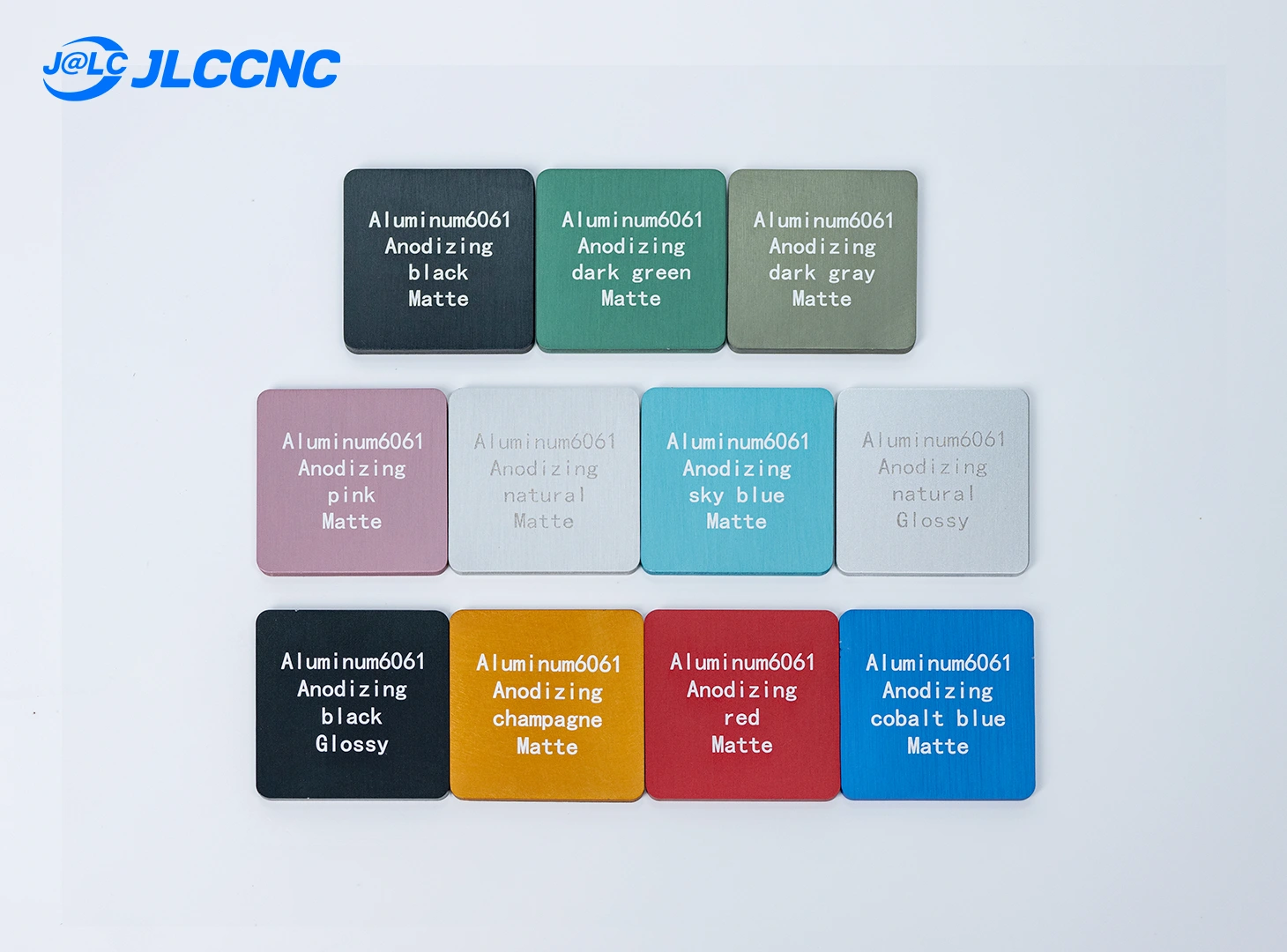
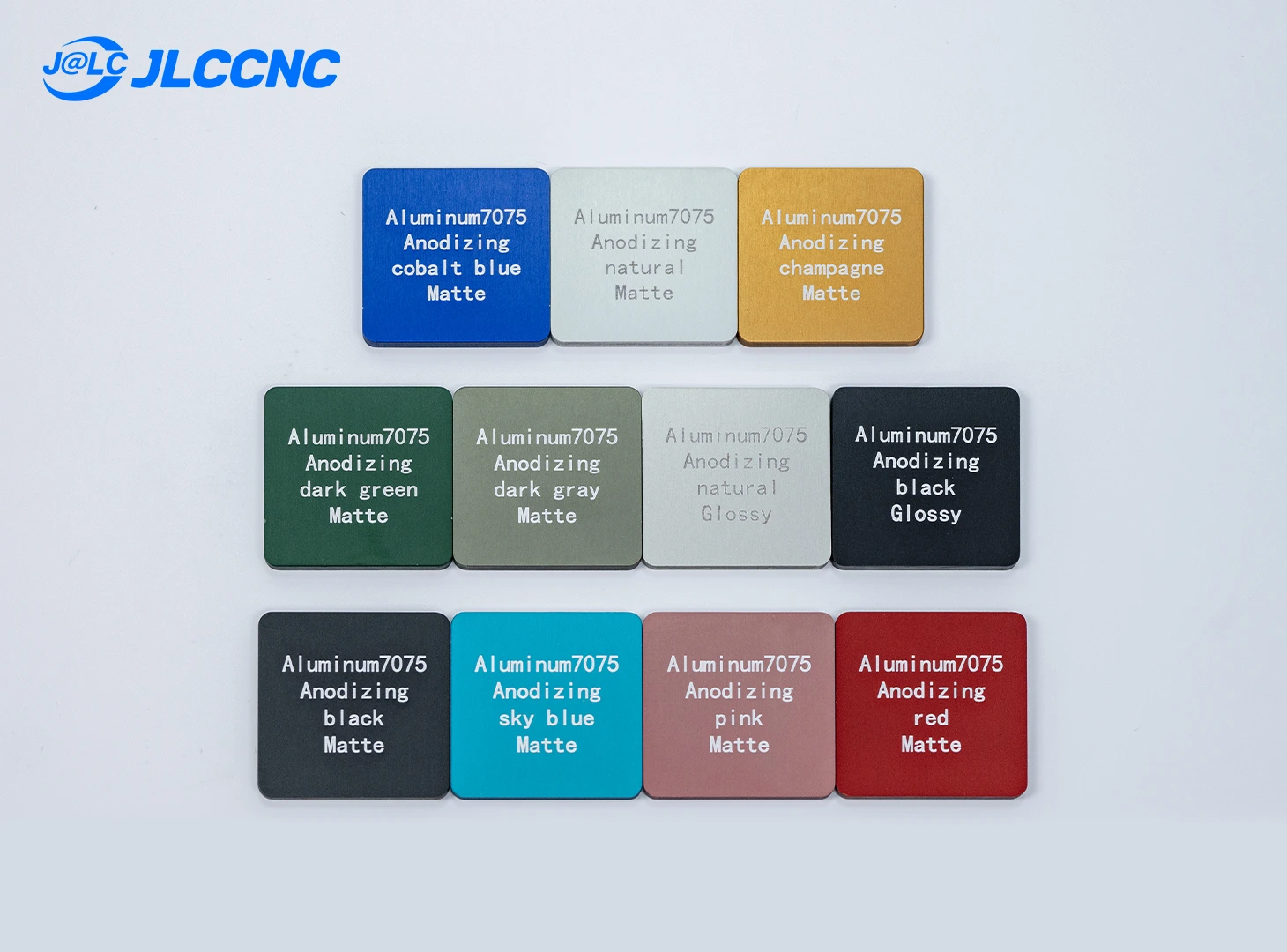
Anodizing Colors We Offer
We currently support the following standard anodizing colors, which cover most appearance and design requirements:
- Natural
- Black
- Dark Gray
- Red
- Pink
- Sky Blue
- Dark Green
- Champagne
- Cobalt blue
Three Types of Anodizing and How They Differ
Depending on the intended application (decorative or functional) , we mainly offer the following three anodizing processes. All three protect the aluminum surface from uncontrolled natural oxidation, but they differ significantly in performance and appearance:
Standard Anodizing (Type II)
Performance: Offers a moderate level of wear resistance and electrical insulation.
Appearance: Takes dye readily and provides the widest range of color options — ideal for cosmetic parts where appearance is a priority.
Standard anodizing color samples
Hardcoat Anodizing (Type III)
Performance: Extremely high wear resistance with good electrical insulation; significantly increases surface hardness.
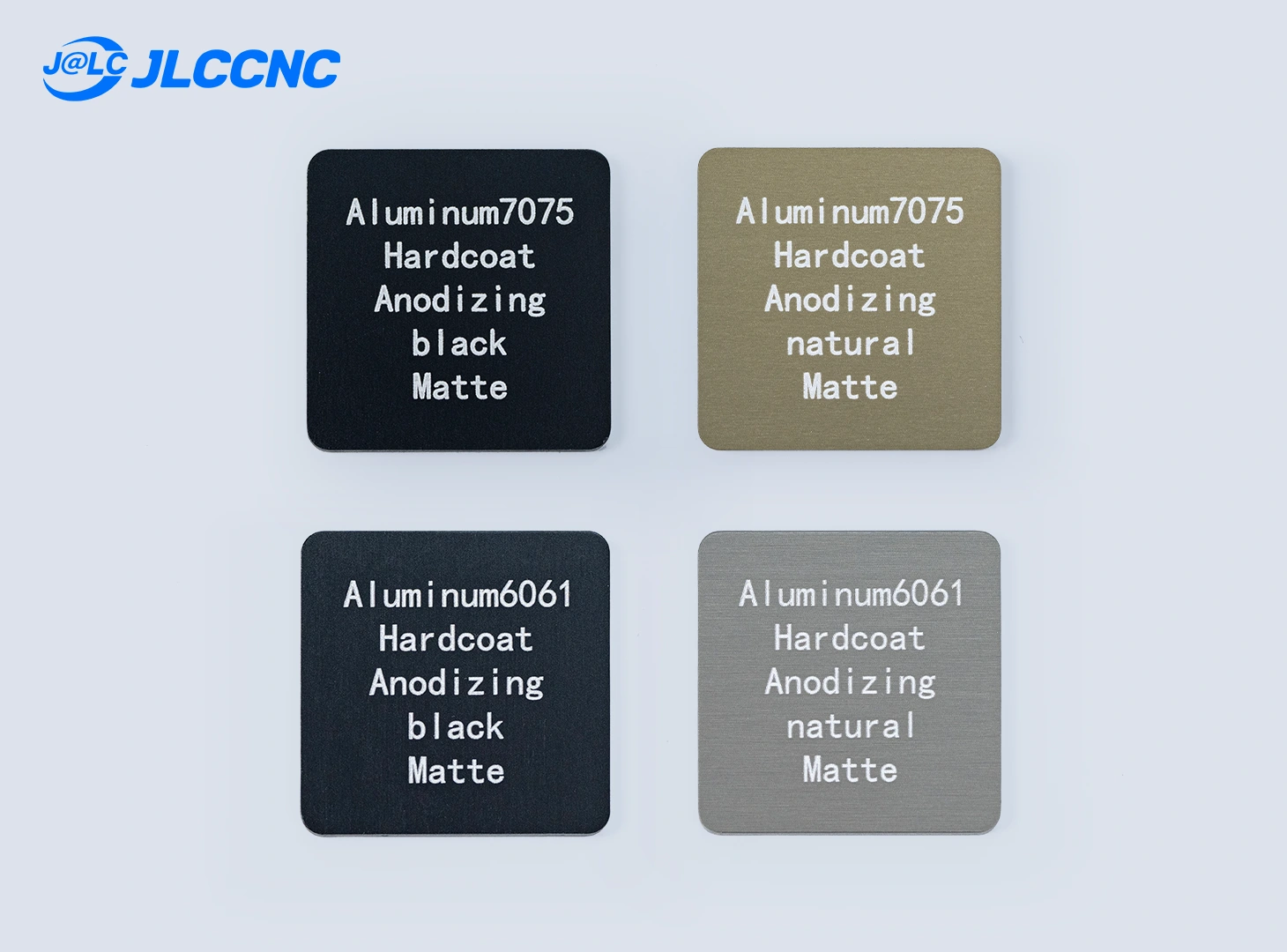
Appearance: Color options are very limited and light colors are not achievable (typically only natural and black). Best suited to parts subject to high mechanical loads, such as hydraulic cylinders and transmission components.
Hardcoat anodizing color samples
Conductive Anodizing
Performance: Provides no wear resistance, but offers excellent electrical conductivity.
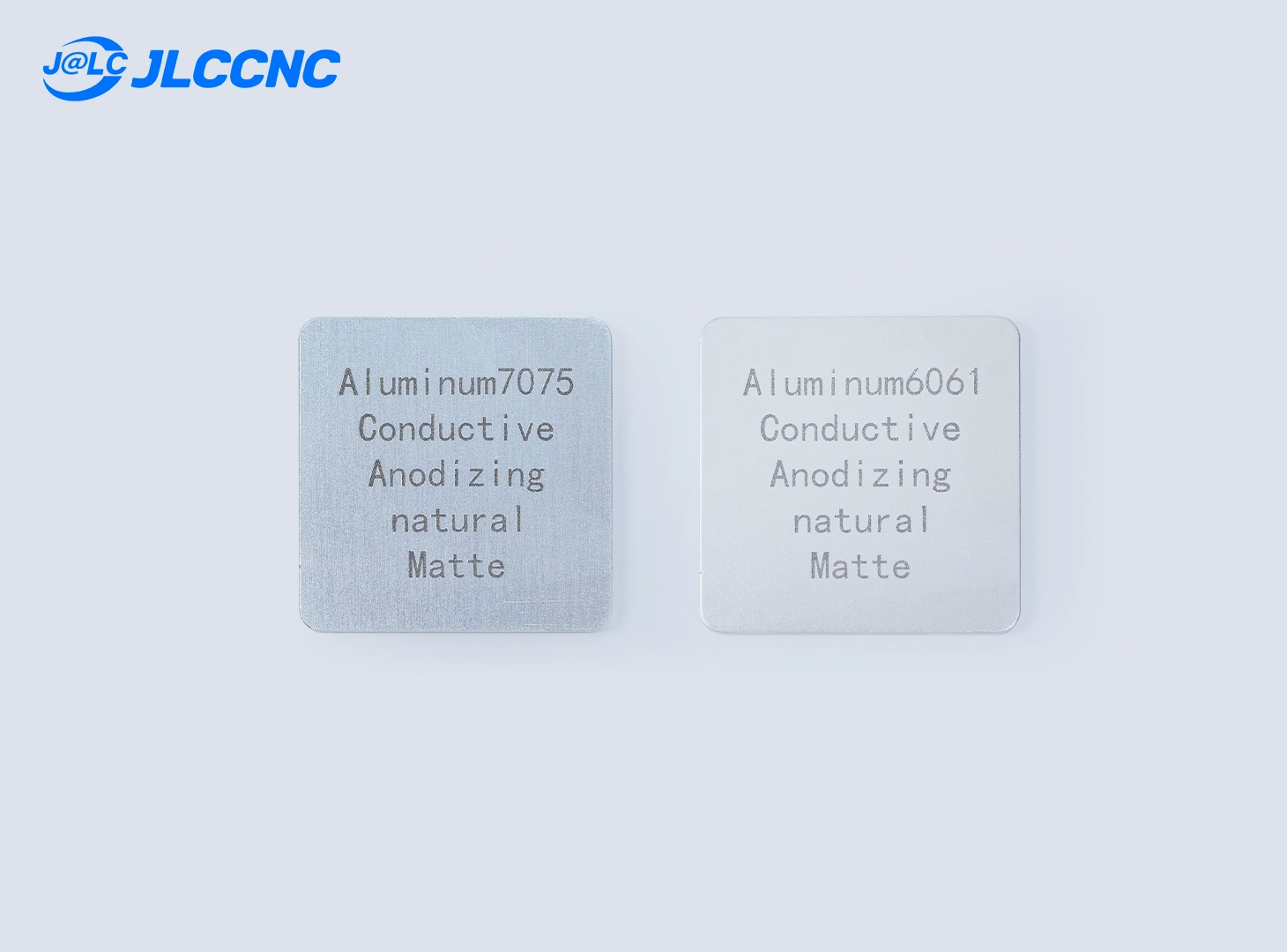
Appearance: Cannot be dyed. Commonly used for specialized electrical and electronic components such as electrolytic capacitors, integrated circuits and semiconductor devices.
Conductive Anodizing Samples
Why Do Anodized Parts Show Color Variation?
Anodizing is an electrochemical process. The final color is affected by multiple factors — the alloy's chemical composition, electrolyte (bath) concentration, anodizing time and bath temperature — so slight color variation is difficult to avoid entirely in production:
Batch-to-batch variation: Small fluctuations in bath concentration, anodizing time and ambient temperature can lead to slight differences in the final anodizing result from one production batch to the next.
Within the same production run: Even parts processed together can show minor visual differences if they come from different raw-material lots or vary in wall thickness.
Rack Marks and Design Recommendations
During anodizing, parts must be hung on an anodizing rack and electrically connected to it.
What is a hanging point?
The area where the aluminum part contacts the rack is shielded from the electrolyte and therefore cannot be anodized. This conductive contact point is the "hanging point" (also known as a rack mark).
Impact
The hanging point usually exposes the bare metal (a "white spot") and carries a slight risk of minor clamping marks.
Design recommendation
When designing aluminum alloy parts for anodizing, we strongly recommend reserving hanging-point holes or concealed contact areas in non-functional regions (such as the interior, bottom or hidden surfaces), so the overall appearance of the product is not compromised.
CNC Anodizing Service Notes
Images are for reference only: Affected by shooting conditions, screen display, coating thickness and anodizing batch, the images shown above are for reference only. Please judge the final result on the actual part.
Color options: Only the colors listed in our system are available. Custom / self-specified colors are not supported at this time.
Color variation: Slight color variation is unavoidable in anodizing. Please take this into account.
Hanging points: The racking fixture will inevitably leave contact marks where the part is not anodized. We recommend reserving non-functional holes for racking.
Part Size Requirements: The recommended minimum dimension for anodizing is 20 × 20 × 1 mm (to ensure secure fixture retention). For micro-threaded holes (<M2), blind holes (<2mm), or components with a wall thickness under 1.5mm, "no bead blasting" is recommended to prevent media entrapment and warping.
Anodized layer (film) thickness: Approximately 0.003 mm to 0.04 mm.
Secondary machining after anodizing: If the part requires secondary machining that removes the anodized layer, please specify this on the 2D drawing.