Optimizing Manufacturing Efficiency: A Guide to Computerized Numerical Control (CNC) Machining Surface Finishes
16 min
- CNC Surface Finishes: Types, Costs, and How to Choose
- CNC Surface Finish Comparison Chart
- How to Choose the Right Finish
- Surface Roughness vs. Post-Processing
- Main Surface Finishing Processes
- Other Techniques You May Encounter Elsewhere
- Process Combinations and Order
- How to Specify a Finish on a Drawing or RFQ
- Finish by Material
- FAQ
- Related Reading
- Not Sure Which Finish Fits Your Material and Tolerance?
CNC Surface Finishes: Types, Costs, and How to Choose
Quick Answer: Choose an as-machined finish when cost and dimensional stability matter most. Use bead blasting or brushing for a uniform cosmetic appearance, anodizing for aluminum corrosion resistance, hard anodizing for wear, and laser marking or UV printing for identification. Confirm material, tolerance, color, masking, and end-use environment before quoting.
A CNC-machined part comes off the machine functional but rarely finished — tool marks, sharp edges, and bare metal that may not hold up to the environment it's headed for. Surface finishing is the step that turns that machined part into something that looks right, resists corrosion or wear as needed, and meets whatever spec actually drives the choice. The hard part isn't knowing that finishing options exist — it's picking the right one for a specific part's material, function, and budget, without over-specifying something that adds cost for no functional benefit.

Precision CNC Machining Service
Professional manufacturing, fast turnaround, and quality assurance.
CNC Surface Finish Comparison Chart
Figures below are typical reference ranges — actual cost, lead time, and dimensional impact depend on part size, material, quantity, and the specific finish parameters chosen. Confirm exact numbers through a quote rather than treating this as a fixed price list.
| Finish | Applicable material | Appearance | Corrosion / wear resistance | Dimensional impact | Relative cost | Typical use |
|---|---|---|---|---|---|---|
| As Machined | All | Visible tool marks, bare material | Baseline only | None | Lowest | Internal components, cost-sensitive parts |
| Bead Blasting | Metals, some plastics | Uniform matte/satin | Slight improvement (removes stress risers) | Minimal | Low | Cosmetic texture, pre-anodizing prep |
| Brushing | Metals | Directional textured lines | Slight improvement | Minimal | Low | Industrial/contemporary look |
| Anodizing (Type II) | Aluminum only | Wide color range, glossy or matte | Good corrosion resistance | Minimal | Low–moderate | Enclosures, consumer parts, color branding |
| Hard Anodizing (Type III) | Aluminum only | Natural gray/black, limited color | Strong wear + corrosion resistance | Moderate — must be planned for in tight-tolerance fits | Moderate–high | Wear surfaces, hydraulic components |
| Conductive Anodizing | Aluminum only | Natural finish | Some corrosion protection, preserves conductivity | Minimal | Moderate | Grounding, EMI/RFI shielding |
| UV Printing | Most rigid materials, flat/gently curved surfaces | Full-color graphics | None (not a protective coating) | None | Low–moderate | Branding, decorative graphics |
| Laser Marking | Metals, polymers, ceramics | High-contrast permanent mark | None (not a protective coating) | Negligible | Low | Serialization, traceability, identification |
| Transparent / Vapor / Mirror Polishing | Plastics (esp. PMMA, PC) | Optical clarity to high gloss | N/A (cosmetic/optical) | Minimal | Moderate | Lenses, optical or premium cosmetic parts |
| Powder Coating | Metals | Wide color/texture range, thicker coating | Strong corrosion + impact resistance | Moderate–significant | Moderate | Enclosures, outdoor/industrial parts |
| Electropolishing / Passivation | Stainless steel | Smooth, bright (electropolish) or unchanged (passivation) | Improved corrosion resistance | Minimal | Moderate | Medical, food-grade, hygiene-critical parts |
How to Choose the Right Finish
- Start with material. Anodizing (in all its forms) only applies to aluminum. Plastic parts route toward polishing options instead. Steel and stainless parts generally rely on bead blasting, brushing, or as-machined, since anodizing isn't an option for them. Material alone rules out most of the table above before anything else gets considered.
- Then ask what the part actually needs to do. Cosmetic-only needs (uniform texture, color, branding) point toward bead blasting, brushing, standard anodizing, UV printing, or laser marking. Functional needs — wear resistance, corrosion resistance in a harsh environment, retained electrical conductivity — narrow the list to hard anodizing, conductive anodizing, or (for stainless) passivation/electropolishing.
- Then check tolerance, appearance, and budget together. Does the part have tight-tolerance mating features that a thicker coating would disrupt? Does color or gloss level matter beyond "looks finished"? Is this a cost-sensitive high-volume part where even a low-cost finish adds up? These three factors often trade off against each other, which is why they're evaluated last, once material and function have already narrowed the real options.
Which Finishes Affect Bores, Threads, Mating Faces, or Grounding Surfaces
Worth checking explicitly, since these are the features most likely to get missed until a part doesn't fit or ground properly:
- Bores and precision holes: Hard anodizing and powder coating add enough thickness to shift bore diameter — mask or plan for compensation. Type II anodizing, bead blasting, brushing, laser marking, and UV printing have negligible impact.
- Threads: Same logic as bores — hard anodizing and powder coating are the two to watch; mask threads or specify post-coating chasing if needed.
- Mating/sealing faces: Any coating with measurable thickness (hard anodizing, powder coating) changes the mating dimension; account for it in the fit calculation, not just the part's nominal drawing dimension.
- Grounding/electrical contact surfaces: Standard and hard anodizing both insulate — mask these surfaces or specify conductive anodizing if the whole part needs anodizing but a specific contact point needs to stay conductive.
Surface Roughness vs. Post-Processing
"Surface finish" gets used loosely to mean two related but different things: the underlying surface roughness left by the machining process itself (measured as Ra, typically in micrometers or microinches), and the post-processing treatment applied afterward (anodizing, bead blasting, and so on). A part's as-machined Ra is determined by tool selection, feed rate, and toolpath strategy during cutting; post-processing treatments are applied on top of that starting surface and can smooth it (polishing), texture it (bead blasting, brushing), or coat it (anodizing) — but they don't substitute for a poor as-machined surface if the underlying roughness itself doesn't meet spec. If a drawing calls out a specific Ra value, confirm whether that's meant for the as-machined surface, the post-finish surface, or both.
Main Surface Finishing Processes
As Machined
Parts are machined and deburred, with sharp edges chamfered, but receive no additional finishing step. Visible tool marks and minor surface scratches remain. This is the lowest-cost, fastest-lead-time option and adds zero dimensional change — the right default for internal components, prototypes, and any part where appearance and secondary surface properties don't matter.
Bead Blasting
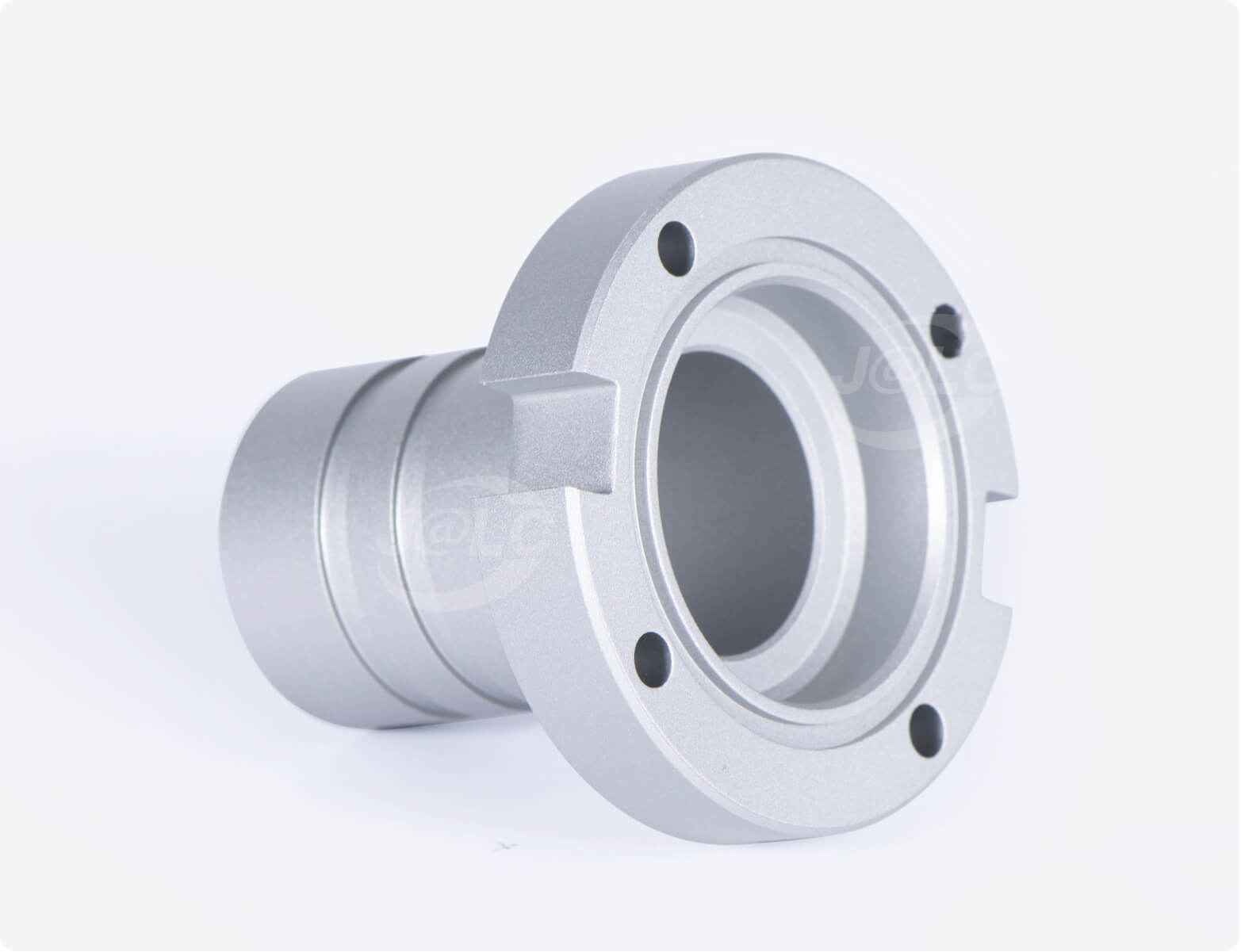
Bead blasting — sometimes loosely called "sandblasting," though the actual media used is typically small glass or ceramic beads rather than sand — propels that media at high pressure onto a part's surface. This produces a uniform matte or satin texture that hides minor surface imperfections and tool marks. It's commonly used as a pre-treatment before anodizing to get a consistent base texture, as well as a standalone cosmetic finish.
Brushing
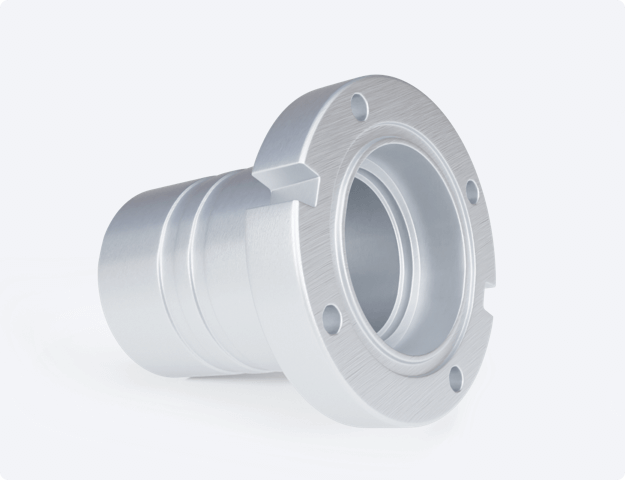
A brushed finish runs an abrasive wheel or wire brush across a part's surface to create fine, parallel directional lines. It gives metal parts a contemporary, industrial appearance and can help mask minor surface flaws, though it's more directional and less uniform in coverage than bead blasting.
Anodizing (Type II)
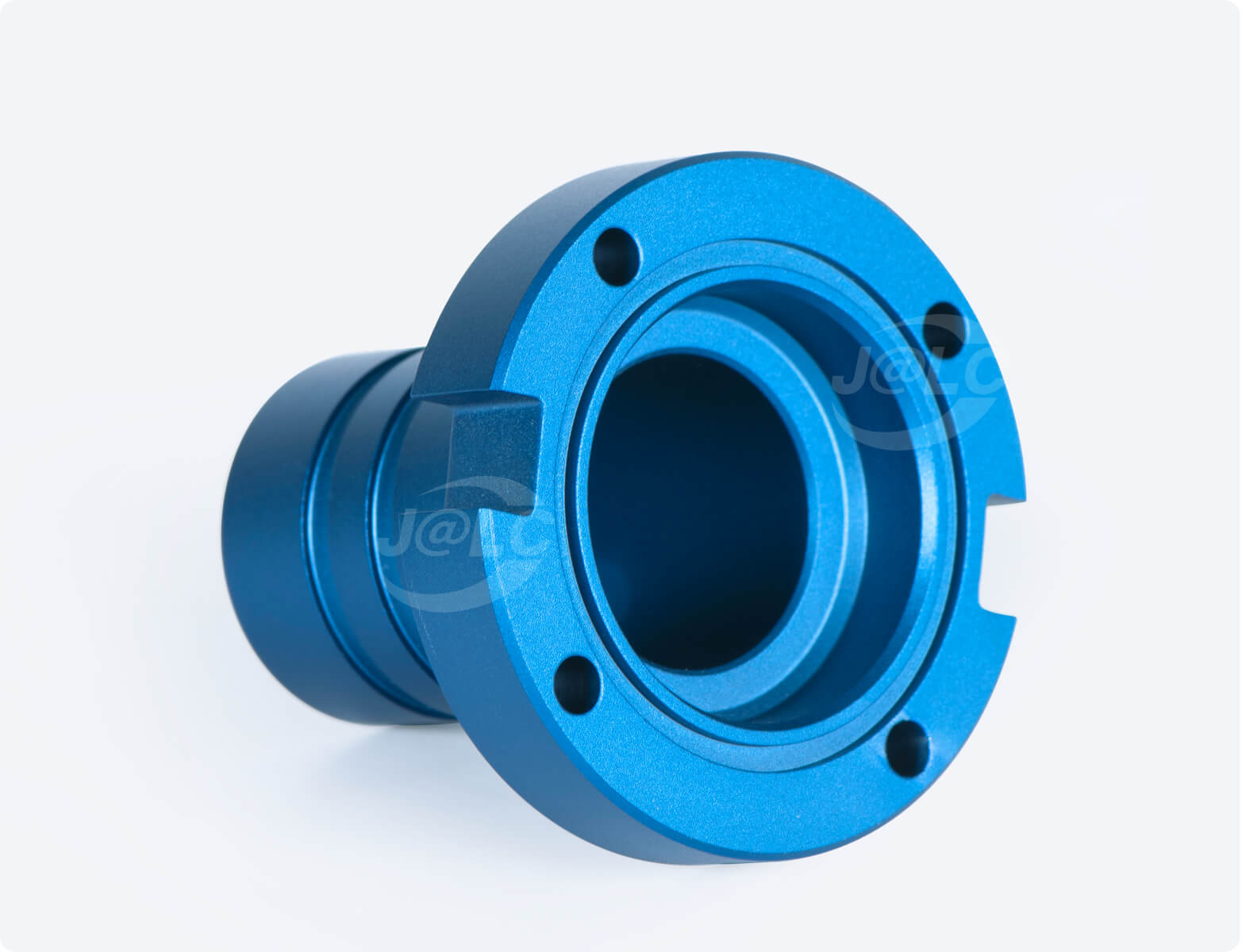
Anodizing is an electrochemical process that grows a protective oxide layer out of an aluminum part's own surface. The resulting layer improves corrosion resistance and accepts dye well, which is why anodized parts are available in a range of colors — black, red, blue, gold, and others are common. Type II anodizing is a cosmetic and moderate corrosion-resistance treatment; for parts needing genuine wear resistance, see hard anodizing below. For a deeper comparison of the two, see our anodizing vs. hard anodizing guide.
Hard Coat Anodizing (Type III)
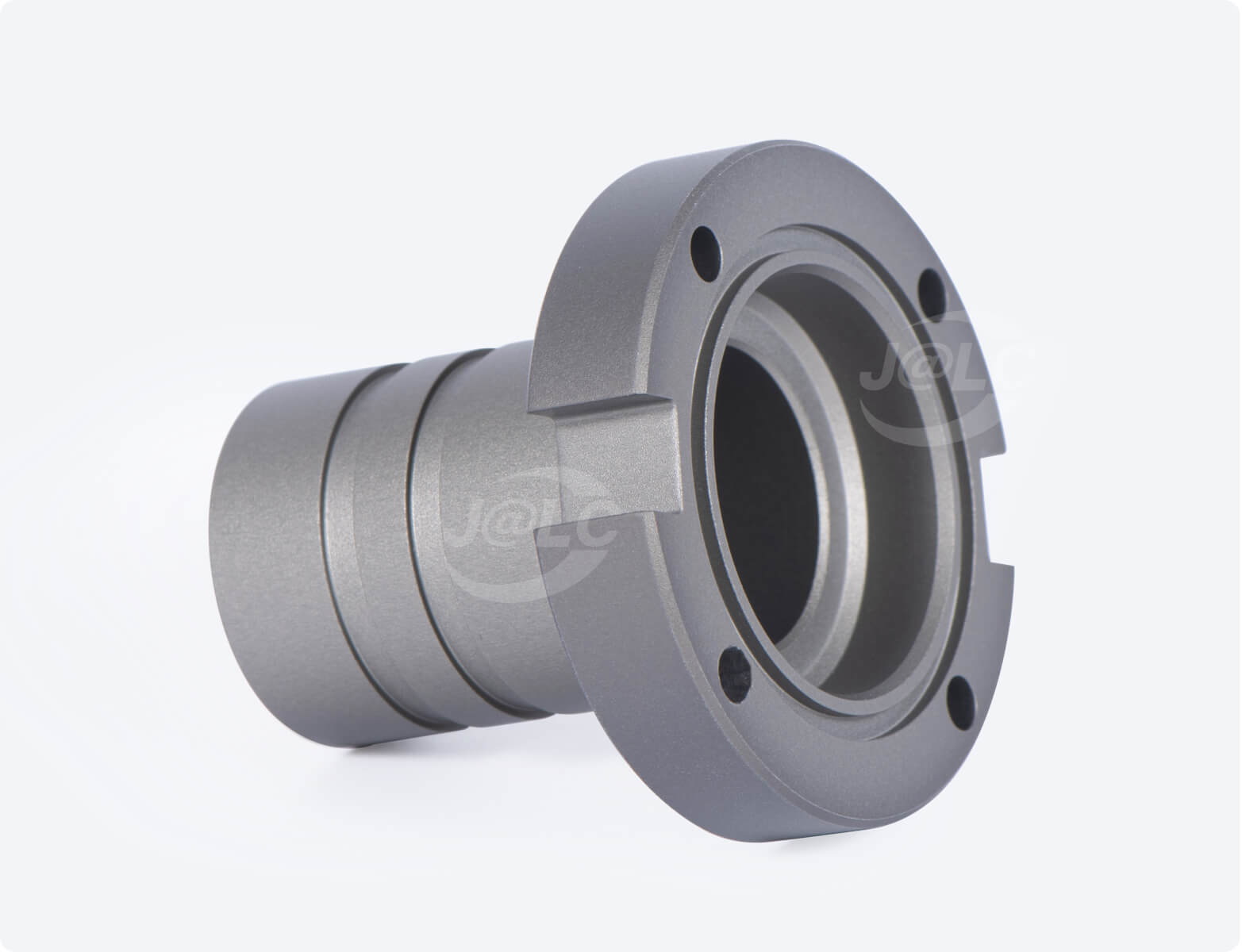
Hard coat anodizing runs the same underlying electrochemical process at lower temperature and higher current density, producing a substantially thicker and harder oxide layer than standard anodizing — commonly cited in the 25 to 100 micron range, though actual results vary by alloy and process parameters. This makes it suitable for genuinely demanding wear applications rather than cosmetic use alone. Because the coating is thick enough to meaningfully affect part dimensions, it needs to be planned for during machining on any tight-tolerance mating feature.
Conductive Anodizing
Standard and hard anodizing both produce an electrically insulating oxide layer, which is a problem for parts that need to stay grounded or shield against EMI/RFI. Conductive anodizing is a separate, specifically modified anodizing process — generally run at lower voltage and for a shorter duration than standard anodizing — that produces a thinner, more porous oxide layer intended to preserve substantially more of the part's electrical conductivity than standard or hard anodizing would. It's not that this process makes the part "more conductive" than bare, untreated aluminum — it's that it's engineered to give up less conductivity than the other anodizing options while still providing some surface protection. This is commonly used for enclosures and components needing grounding or EMI/RFI shielding while still getting some benefit from an anodized surface.
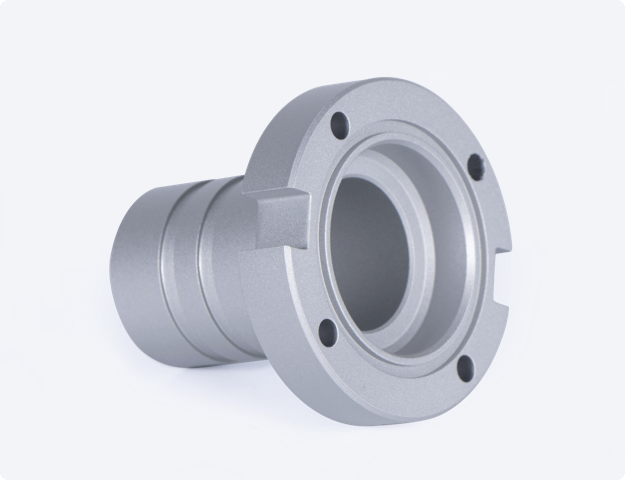
UV Printing
UV printing is a digital inkjet process that applies full-color graphics directly to a part's surface, curing the ink instantly with UV light as it's printed. It's well suited to logos, branding, patterns, and detailed multi-color images, and doesn't require screens or per-color setup the way some other printing methods do — which makes it efficient for prototypes and small-to-medium runs. It works best on flat or gently curved surfaces; deep grooves or highly uneven, complex 3D geometry are better served by laser marking or pad printing instead.
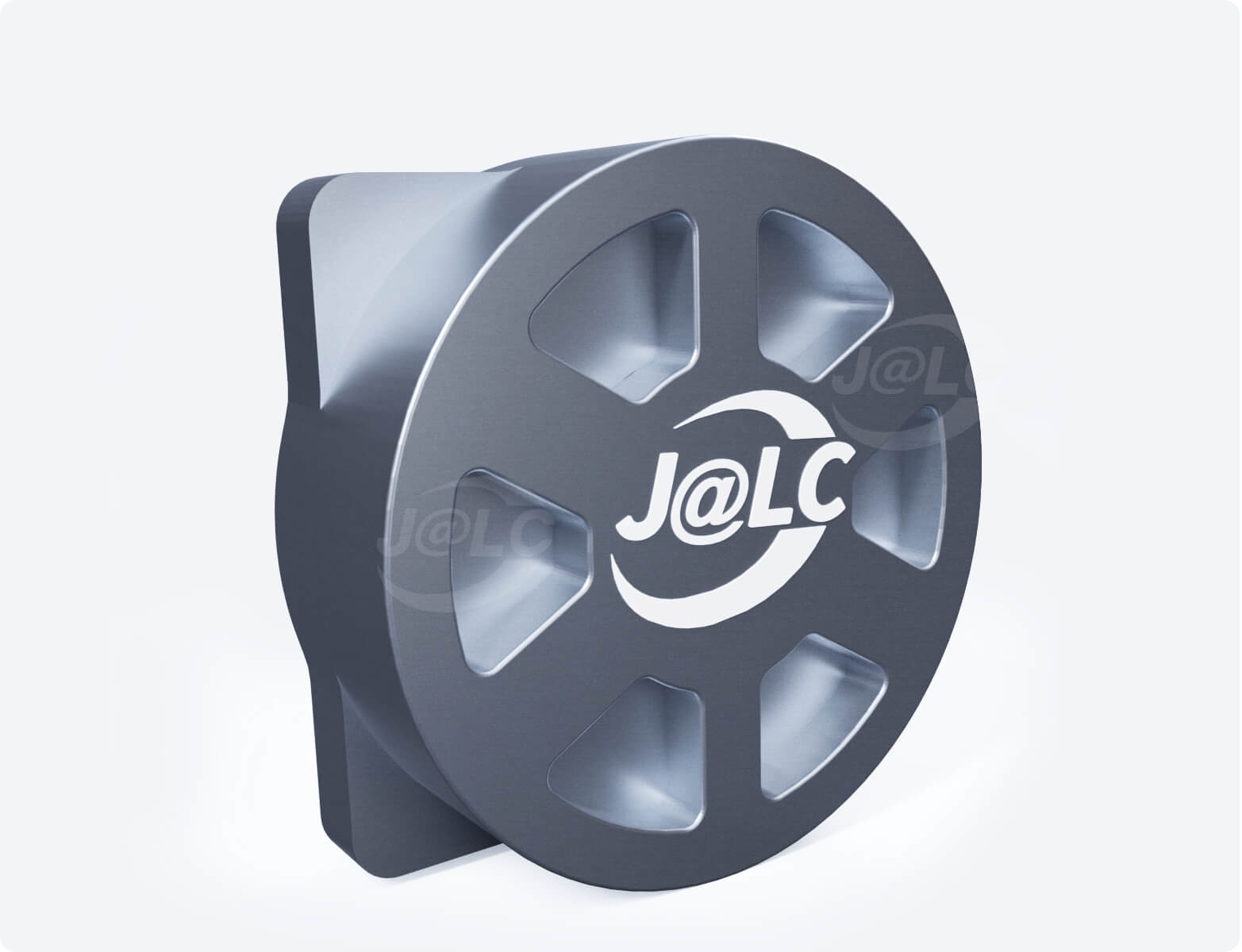
Laser Marking
Where UV printing is about full-color decorative graphics, laser marking is about permanent, high-contrast identification — serial numbers, traceability codes, branding text, or warning icons — burned into the surface with a focused laser rather than printed ink. It works across metals, polymers, and ceramics, and because it's not an applied coating, it doesn't wear off or fade the way printed markings can over a product's service life.
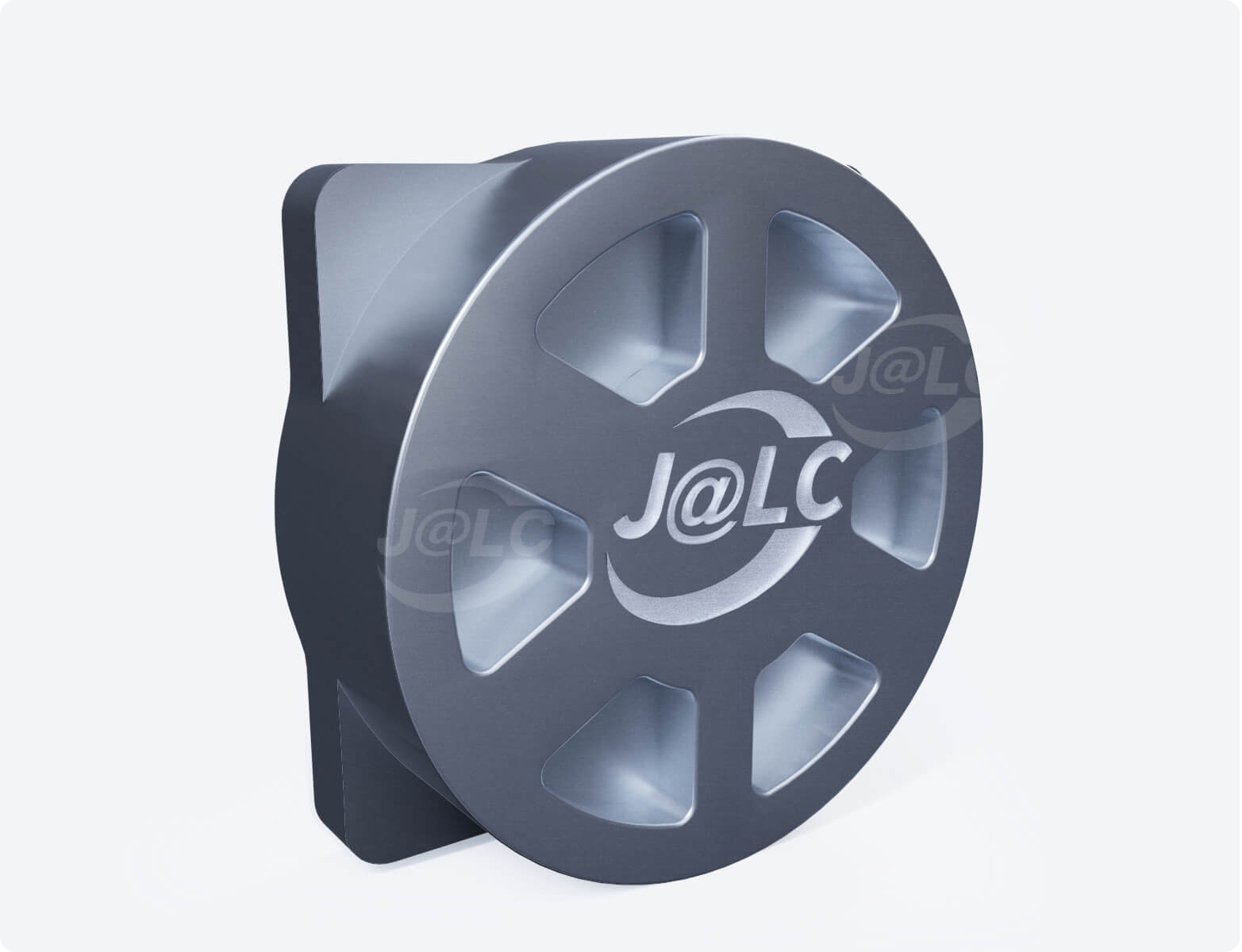
Polishing Options for Plastic Parts
- Transparent Polishing: Used to bring clear plastics like PMMA (acrylic) or polycarbonate to a high level of optical clarity — relevant for lenses and other optical-quality components.
- Blue-Tinted Vapor Polishing: Exposes the plastic surface to a solvent vapor that briefly softens and smooths the outermost layer, removing tool marks without abrasive contact; often leaves a slight blue tint as a byproduct of the process.
- Mirror Polishing: A multi-stage mechanical polishing process using progressively finer abrasives, producing a highly reflective, mirror-like surface — used where a premium cosmetic finish matters more than processing time.
Powder Coating
Powder coating applies a dry powder electrostatically to a part's surface, then cures it under heat into a durable, uniform coating — typically thicker than anodizing (commonly in the 60–120 micron range) and available in a wide range of colors and textures. It offers strong corrosion and impact resistance but adds more dimensional change than anodizing, which matters for tight-tolerance features.
Other Techniques You May Encounter Elsewhere
- Acid Etching: Chemically removes material from a part's surface in a controlled pattern, used for permanent decorative or functional markings on metals, glass, or ceramics.
- Electropolishing: An electrochemical process (essentially the reverse of plating) that smooths microscopic surface irregularities and removes embedded contaminants — common on stainless steel for medical and food-grade applications.
- PVD and CVD Coatings: Thin, hard coatings applied via vacuum vaporization (PVD) or a chemical surface reaction (CVD), used to improve wear resistance or add specific surface properties on demanding parts like cutting tools.
- Passivation: A chemical treatment, most common on stainless steel, that removes free iron and promotes a stable chromium oxide layer to enhance natural corrosion resistance, without significantly changing dimensions or appearance.
- Hand Polishing: A manual, labor-intensive polishing process best suited to low-volume parts or complex geometry that automated methods can't reach.
Process Combinations and Order
Many parts use more than one finish, applied in a specific order — the sequence matters as much as the choice of finishes themselves:
- Bead Blast → Anodize: The most common combination. Bead blasting first gives the anodized layer a consistent matte base texture instead of showing raw tool marks underneath; anodizing after blasting is standard practice, not an optional add-on.
- Brushing → Anodize: Similar logic, but produces a directional, textured look under the anodized color rather than blasting's uniform matte — a style choice, not a functional difference in outcome.
- Masking → Coating: Any surface that shouldn't be coated (threads, bores, electrical contacts) needs to be masked before anodizing, powder coating, or any other coating step — not addressed afterward, since the coating can't be selectively removed cleanly after the fact.
- Laser Marking after Anodizing: Laser marking is commonly applied on top of an already-anodized surface, since the mark needs to be visible against the final color and the marking process itself doesn't damage the coating.
Each combination should be specified explicitly and in order on the drawing — "bead blast then anodize black" is a different instruction than "anodize black then bead blast," and the two produce different results.
How to Specify a Finish on a Drawing or RFQ
A finish request that just says "anodized" or "polished" leaves too much open to interpretation. A complete spec should include:
- Material and alloy — some finishes (anodizing) only apply to specific materials
- Finish process — Type II, Type III, conductive anodizing, bead blasting, etc., named specifically rather than described generically
- Color or natural finish — and confirmation of what's realistically achievable given the process and thickness
- Target coating thickness or Ra, and acceptable range — not just "standard" — see the roughness-vs-post-processing distinction above
- Masked areas — threads, bores, electrical contacts, or any surface that must stay unfinished
- Critical mating dimensions — anything where coating growth affects fit, called out with the compensation already factored in or explicitly flagged for the supplier to confirm
- Cosmetic appearance grade — if visible surfaces have a higher bar than internal ones, say so; not every surface needs the same cosmetic standard
- Hanging-point location — for anodized aluminum parts, specify a non-cosmetic location for the rack contact point (see below)
This is also the detail that most directly affects how fast and accurate a quote comes back — a vague finish callout usually means a follow-up question before pricing, while a fully specified one can be quoted immediately.
A few additional notes worth building into this spec:
- Anodizing hanging points leave a mark. Aluminum parts are suspended from a rack during anodizing, and the physical contact points won't be fully anodized and may show minor residue. Add a hanging-point location in a non-cosmetic area on parts where appearance matters everywhere else.
- Confirm whether a Ra callout applies to the as-machined surface, the finished surface, or both — see the roughness-vs-post-processing section above. Our CNC machining surface roughness guide goes deeper into Ra/Rz specification if that's the more pressing question for your part.
Finish by Material
| Material | Viable finishes |
|---|---|
| Aluminum | Anodizing (Type II, Type III, conductive), bead blasting, brushing, UV printing, laser marking |
| Steel / Carbon Steel | Bead blasting, brushing, laser marking, UV printing — no anodizing (aluminum-specific) |
| Stainless Steel | Bead blasting, brushing, laser marking, UV printing; passivation and electropolishing are common industry options for stainless but should be confirmed as current JLCCNC offerings before quoting them |
| Plastics | Transparent polishing, vapor polishing, mirror polishing for clear/cosmetic parts; bead blasting and laser marking also usable depending on the plastic |
FAQ
How do post-processing surface finishes affect part dimensions? It varies by finish and should be confirmed with your supplier rather than treated as fixed — as a general reference, Type II anodizing typically adds only a few microns per side, Type III hard anodizing adds considerably more (commonly cited in the 12.5–50 micron per side range), and powder coating adds more still (commonly 60–120 microns total). Tight-tolerance features like bearing bores or dowel pin holes need this accounted for during the CNC machining stage, not treated as negligible.
Which surface finish provides the best corrosion resistance for aluminum? Hard coat anodizing (Type III) generally offers the strongest long-term corrosion protection in demanding environments. For general indoor or mild outdoor exposure, standard Type II anodizing provides good protection alongside color options, at lower cost.
Can plastic CNC parts be polished? Yes — thermoplastics can be mechanically buffed, tumbled, or vapor polished (well suited to transparent resins like PC and PMMA) to improve clarity and remove cutter marks.
Which finish is best for aluminum parts overall? It depends on the goal, not a single "best" answer: standard anodizing for corrosion resistance and color, hard anodizing for wear resistance, conductive anodizing when grounding/EMI shielding matters, and bead blasting or brushing when the requirement is purely cosmetic texture rather than a coating.
Can I bead blast a part before anodizing it? Yes — bead blasting before anodizing is common and gives the anodized layer a consistent matte base texture rather than showing raw machining marks underneath the coating. Specify both steps and their order on the drawing.
Does anodizing affect threads or holes? Yes, if they aren't masked — anodizing adds thickness to any surface it coats, which can affect thread fit or bore diameter on tight-tolerance features. Threads and precision holes that need to stay at nominal dimension should be explicitly masked or called out for post-anodizing machining.
How should I specify a surface finish on my drawing? At minimum: the finish type, which surfaces it applies to (and which are masked), the target Ra if roughness matters, color (for anodizing or UV printing), and any tight-tolerance features that need dimensional compensation. The more of this is explicit on the drawing, the less room there is for a mismatch between what you needed and what comes back.
Related Reading
- Anodizing vs. Hard Anodizing: The Differences in Surface Treatment Techniques
- CNC Machining Surface Roughness: A Practical Guide
- Vibratory Finishing for CNC Parts: Process, Media, and Deburring Methods
- Acrylic Polishing Guide: How to Achieve a Clear, Smooth Acrylic Finish
Not Sure Which Finish Fits Your Material and Tolerance?
Choosing the right surface finish is part of getting a part that actually performs the way it needs to — not just looks the part. Our engineering team can help confirm masking, dimensional compensation, and material compatibility before you commit to a finish.
- Full Range of Finishes: Anodizing (Type II/III/conductive), bead blasting, brushing, UV printing, laser marking, and plastic polishing options
- Engineering Review: Manufacturability and finish-compatibility feedback with every quote
- Fast Quotes: Upload your 3D CAD files (.STEP / .IGES) for a rapid review and quote
Popular Articles
• Surface Finish in Machining, Types, Charts & Testing
• Anodizing vs. Hard Anodizing: The Differences in Surface Treatment Techniques
• Anodized Aluminum Colors: Options, Limits, and Real-World Results
• Explanation of different material surface treatment technologies in CNC machining
• How to choose between Laser marking and UV printing?
Keep Learning
Surface Finish in Machining, Types, Charts & Testing
What is Surface Finish in Machining? At its core, surface finish in machining refers to the small-scale irregularities left on the surface of a part after machining. These irregularities are typically grouped into three categories: Roughness: The fine, closely spaced deviations caused by the cutting process itself. Roughness depends heavily on feed rate, tool sharpness, and cutting speed. Waviness: Larger, more widely spaced variations caused by machine tool vibration, deflection, or thermal distortio......
CNC Machining Surface Roughness: A Practical Guide
Why Surface Roughness Matters in CNC Machining When we talk about CNC machining, precision isn't just about hitting the right dimensions, it’s also about how the surface feels and performs. Surface roughness describes the fine irregularities left on a machined surface, and it directly impacts how a part behaves in the real world. So, what is surface roughness? In simple terms, it's the measure of tiny peaks and valleys created by the cutting process. While they might look smooth to the naked eye, thes......
Optimizing Manufacturing Efficiency: A Guide to Computerized Numerical Control (CNC) Machining Surface Finishes
CNC Surface Finishes: Types, Costs, and How to Choose Quick Answer: Choose an as-machined finish when cost and dimensional stability matter most. Use bead blasting or brushing for a uniform cosmetic appearance, anodizing for aluminum corrosion resistance, hard anodizing for wear, and laser marking or UV printing for identification. Confirm material, tolerance, color, masking, and end-use environment before quoting. A CNC-machined part comes off the machine functional but rarely finished — tool marks, ......
Anodizing vs. Hard Anodizing: The Differences in Surface Treatment Techniques
Quick Answer: Choose Type II anodizing when corrosion resistance, color, and cosmetic appearance are the main requirements. Choose Type III hard anodizing when the part needs greater wear resistance and the coating thickness can be accommodated in the fit and tolerance plan. Confirm alloy, coating thickness, color, sealing, and critical dimensions before release. An aluminum bracket for an outdoor enclosure and a hydraulic cylinder rod both might get anodized — but specifying the same process for both......
How to Remove Anodizing from Aluminum Parts
Key Takeaways Chemical stripping is commonly used when anodizing needs to be removed from most or all of an aluminum part, but the process can also attack the underlying aluminum if it is not controlled. Mechanical removal works well for accessible areas but can change the surface texture and remove more base metal than intended. CNC machining gives better control when a defined anodized area needs to be removed from a precision part. Laser-based removal can be useful for controlled localized treatmen......
Anodizing Thickness: How Much Does It Add?
Anodizing Thickness and Dimensional Change at a Glance Feature Approximate dimensional effect One coated external surface +0.5 × coating thickness Outside diameter across two coated surfaces +1 × coating thickness Bore diameter with two coated walls −1 × coating thickness 60° thread pitch diameter Changes by about 4 × surface-growth amount, or about 2 × coating thickness under the 0.5× growth assumption Dimensional estimates below use the 0.5 × coating-thickness surface-growth relationship given in MI......