EMI/RFI Shielding for CNC Machined Parts: Methods, Materials & Conductive Surface Finishes
15 min
- What Is EMI/RFI Shielding?
- Why Do CNC-Machined Parts Require Custom EMI/RFI Shielding Solutions?
- Typical CNC-Machined Parts Requiring EMI/RFI Shielding
- What Are the Most Common EMI/RFI Shielding Methods for CNC-Machined Parts?
- EMI/RFI Shielding Materials Comparison: Which Finish Works Best for Your CNC Parts?
- How to Design CNC Parts for Maximum EMI/RFI Shielding Effectiveness
- Common EMI/RFI Shielding Problems to Avoid in CNC-Machined Parts
- EMI/RFI Shielding Surface Finishing at JLCCNC
- Conclusion
- FAQ
EMI/RFI shielding in CNC-machined parts refers to the use of conductive materials, surface finishes, and enclosure design to block, absorb, or redirect electromagnetic interference, ensuring stable performance of sensitive electronic systems. Unlike sheet metal or molded plastic housings, CNC-machined components require tailored shielding solutions due to tighter tolerances, complex geometries, and precision grounding requirements.
Electronic systems are becoming increasingly compact, faster, and more sensitive, and controlling electromagnetic interference (EMI) and radio-frequency interference (RFI) has become not only more important but also a design-worthy consideration.
These components may be CNC machined as housings, enclosures, connectors, and structural components that need to block, absorb, or redirect electromagnetic energy. CNC-machined parts often require a unique EMI/RFI shield design, which depends on the geometry, material choice, finish, and grounding design, unlike sheet metal or formed plastic parts.
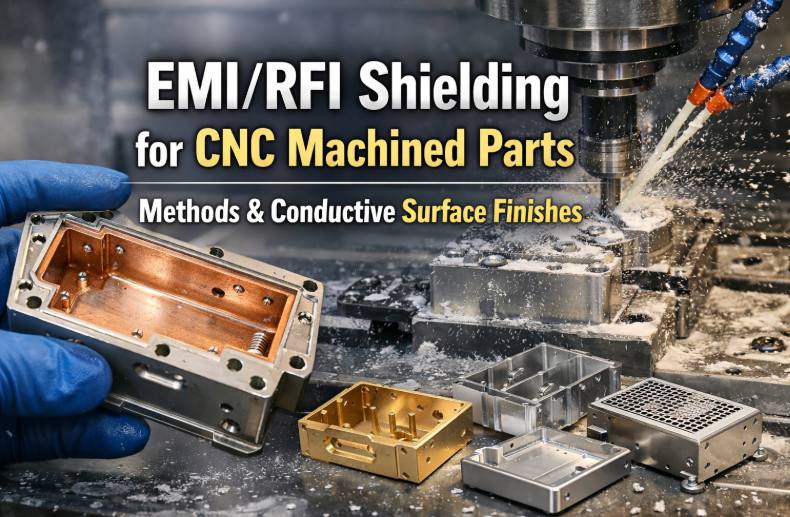
EMI/RFI Shielding for CNC Machined Parts: Methods, Materials & Conductive Surface Finishes [AI-GENEREATED]
This comprehensive guide describes:
● What are EMI and RFI shielding, and how do they operate?
● Reasons why CNC-machined components must have tailored shielding methods.
● The most prevalent shielding techniques in CNC machines are.
● Effects of conductive surface finishes on shielding.
● Maximizing EMI with CNC part design.
● The methodology of JLCCNC provides EMI shielding and integrated CNC machining.
This guide will assist you in determining the appropriate conductive finish as well as design approach to use when machining parts that are of mission-critical importance, selected to use the enclosure on a new design, or need to select a suitable conductive finish when sourcing custom EMI shielding to comply with industry standards.
What Is EMI/RFI Shielding?
It is undesirable electromagnetic energy that has the effect of interfering with the normal functioning of electronic equipment. RFI (Radio-Frequency Interference) is a sub-categorization of EMI, which, in particular, exhibits interference within the radio frequency spectrum, usually caused by wireless communication signals, transmitters, and high-frequency electronics.
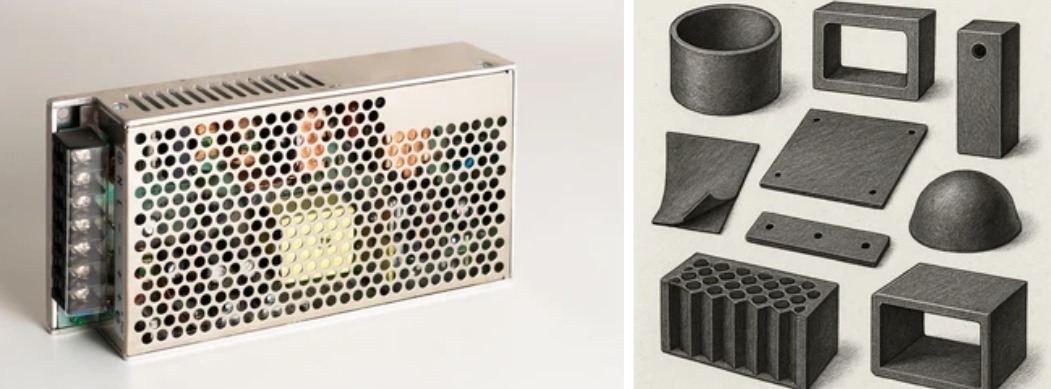
EMI/RFI Shielding [SOURCE: shutterstock]
How EMI/RFI Shielding Works?
EMI/RFI shielding, also known as suppression, reflection, absorption, or deflection of electromagnetic waves, happens to ensure that the electromagnetic waves do not disrupt delicate electronic components. The shielding of CNC-machined parts has generally been done in the form of electrically conductive materials or surface finishes that form a continuous conductive barrier.
When electromagnetic waves enter a metal surface:
● A part of the energy is reflected off.
● Part is absorbed and dissipated as heat
● The left-out energy flows by way of grounding paths.
Why Do CNC-Machined Parts Require Custom EMI/RFI Shielding Solutions?
The machined components of the CNC are not generic; they are application or implementation-specific, frequency-based, environment-based, etc. Due to variability, off-the-shelf EMI/RFI shielding products usually do not fit into the system. They do not provide consistent performance. Tailor-made EMI/RFI shielding design will provide both mechanical and electrical design functionality in one product.
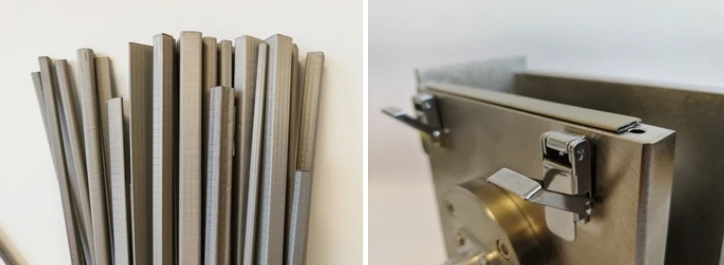
CNC-Machined Parts Require Custom EMI/RFI Shielding Solutions [SOURCE: shutterstock]
1. Geometry, Tight Tolerances, and EMI Leakage Control
Complex figures, tight fits, and non-standard sizes demand shielding that fits the part shape with accuracy. Small gaps, seams, or discontinuities at mating surfaces can significantly reduce shielding effectiveness, especially in high-frequency applications. Precision CNC machining helps control these risks, but effective shielding still requires intentional design and surface treatment.
2. Material Conductivity and Surface Behavior
The conduction of electricity and surface behavior of different metals, including aluminum, stainless steel, magnesium, and copper alloys, vary. Surface oxidation, non-conductive finishes, or anodized layers can reduce conductivity and weaken EMI/RFI shielding. Conductive surface finishes are therefore often required to maintain electrical continuity and long-term shielding reliability.
3. Frequency, Environment, and Compliance Requirements
The requirements of shielding effectiveness in low-frequency and high-frequency applications vary dramatically. In addition, heat, moisture, chemicals, and corrosion can degrade shielding performance if finishes are not properly selected. Many applications must also meet specific compliance standards (FCC, MIL-STD, ISO, medical, or aerospace), making custom EMI/RFI shielding design essential for CNC-machined parts.
Typical CNC-Machined Parts Requiring EMI/RFI Shielding
Individual EMI RFI shielding provides maintainability in operation, structural integrity, and the functional aspect of CNC-machined components.
1. Electronic Enclosures and Housings
Electronic enclosures are one of the most widespread CNC-machined parts that need to be shielded against EMI/RFI. These cases should defend vulnerable electronics and stop the escape of electromagnetic radiation and intrusion of external impediments.
Key Challenges Include:
● Joints and surfaces of mating that are discontinuous to electrical continuity.
● IN and OD connections.
● Thermal management ventilation apertures.
● Oxidized surface, which decreases the conductivity.
To overcome such obstacles, conductive layer finishes, electroplating, or selective conductive anodizing are frequently used on interior surfaces to keep shielding intact whilst not affecting exterior appearance.
2. RF Connectors and Waveguide Components
Waveguides, RF connectors, and microwave parts need to have very high shielding effectiveness since they work at high frequencies.
Key Performance Factors Study includes:
● Even microscopic spacing may result in serious signal leakage.
● Insertion loss is directly proportional to surface conductivity.
● Impedance matching requires dimensional accuracy.
The use of CNC machining with high-conductivity electroplating, which can be silver, copper, or nickel, is normal to fulfill strict RF performance specifications.
3. Sensor Housings and Shielding Cans.
Industrial automating sensors, car sensors, and medical sensors have high sensitivity to electromagnetic interference.
CNC Machined Sensor Housings Must:
● Isolate molecular circuits against localized electronic noise.
● Keep up perennial grounding paths.
● Do not add interference with non-conductive surface layers.
Chemical conversion finishes, or conductive electroplating layers, can be desirable since they have a sensible compromise between electrical conductivity, corrosion resistance, and integrity (dimensional stability).
4. Aerospace, Medical, and Telecom Applications
Performance requirements and safety, reliability, certification, and EMI/RFI shielding are not only a regulated industry requirement but also a safety, reliability, and certification issue.
These Applications Demand:
● Validated and repeatable shielding performance.
● Hardly wearing finishes that can survive extreme environments.
● Complete material, process, and surface treatment tracing.
Controlled conductive finishes of CNC-machined parts offer predictable EMI/RFI shielding that will fade away to a rigorous regulatory high-quality standard.
What Are the Most Common EMI/RFI Shielding Methods for CNC-Machined Parts?
There are a number of EMI/RFI shielding techniques that are frequently used on metal components machined by CNC to manage electromagnetic emissions. Each of the methods varies in the shielding effectiveness, longevity, cost, and applicability to certain materials and environments. The choice of the appropriate approach is based on the performance requirements, the geometry of parts, and the application constraints.
1. Conductive Coatings
Conductive coatings: Thin coatings that consist of metallic particles - silver, copper, nickel - suspended in a polymer or a resin. Its key characteristics are;
● Painted on the surface that is used, usually on interior surfaces.
● Portable and user-friendly for complicated shapes.
● Offers moderate EMI/RFI shielding.
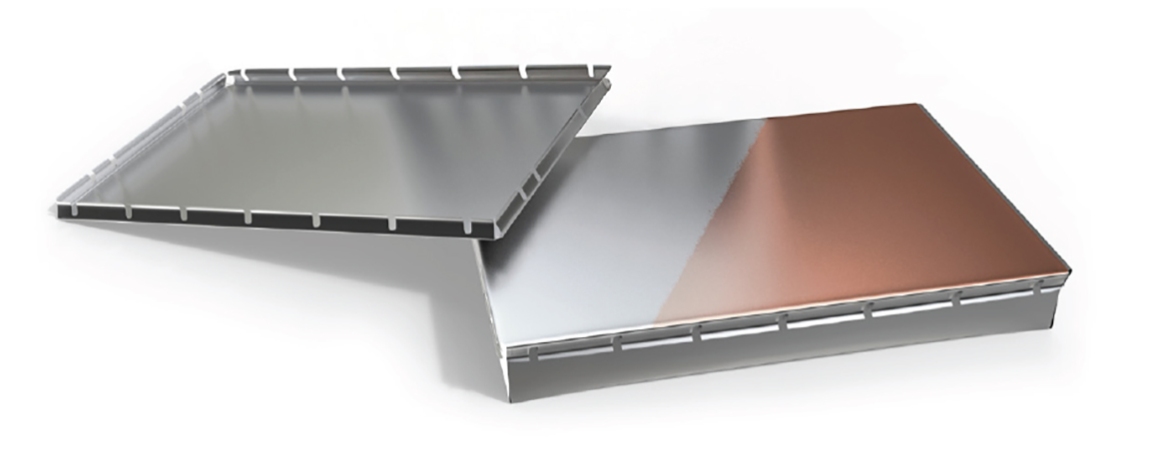
Conductive Coatings [SOURCE: shutterstock]
Advantages
● Low added weight
● Discriminatory use is possible.
● Simple, affordable, low-to-medium shielding.
Limitations
● Poorer durability than metal finishes.
● Performance may wear out or deteriorate in environments.
● Weaker in the very high frequencies.
Conductive coatings are also widespread where CNC-machined enclosures are more value-oriented in terms of reduction of weight and internal shielding.
2. Electroplating
Electroplating is the continuous application of a metallic coating by an electrochemical deposition to a CNC-machined component.
Common Plating Materials
● Copper - good electrical conductor
● Nickel - balanced conductivity and resistance to corrosion.
● Silver - the best conductor, expensive.
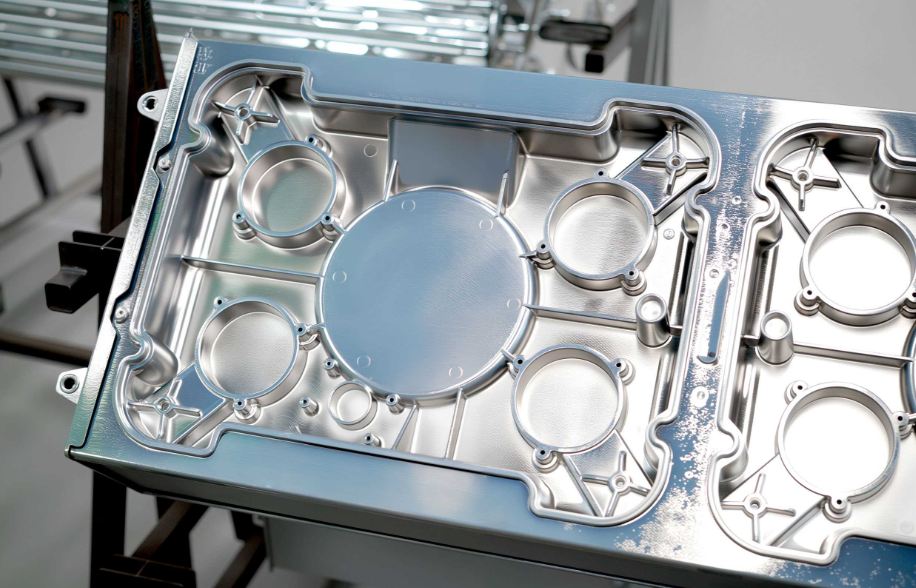
Electroplating [SOURCE: shutterstock]
Advantages
● Exceedingly low EMI/RFI shielding.
● Superior surface conductivity and signal attenuation.
● Long-lasting and durable finish.
Limitations
● Higher processing cost
● Other manufacturing operations.
● The possible dimensional effect is unless closely regulated.
Electroplating finds extensive application in RF, aerospace, telecom, and high-performance electronic applications where maximum shielding is required.
3. Conductive Anodizing
Conductive anodizing. This is anodizing that is trained, which means to preserve electrical conductivity and also enhance the corrosion resistance, typically in aluminum CNC-machine parts. Key Characteristics are;
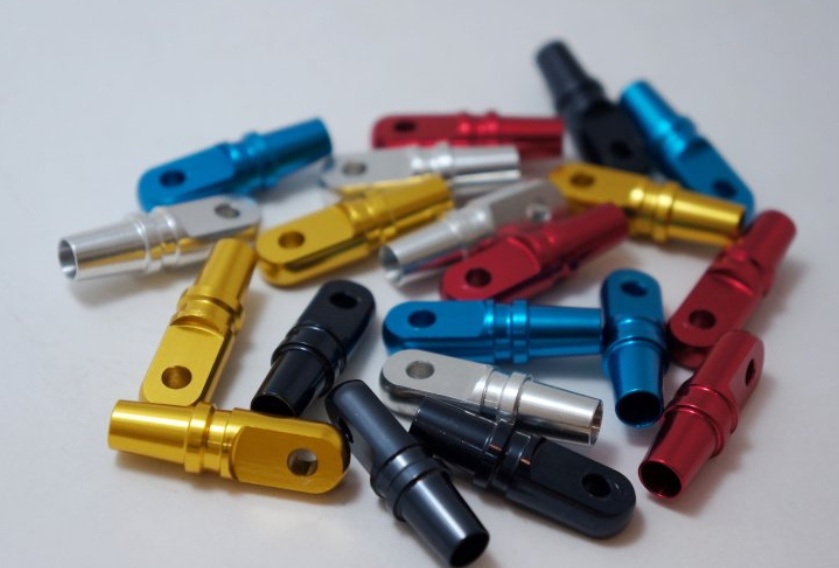
Conductive Anodizing [SOURCE: shutterstock]
● Produces a regulated layer of conductive oxide.
● Grounds well and is electrically continuous.
● Provides stable surface resistance.
Advantages
● Integrates EMI defenses with corrosion defenses.
● Minimal dimensional change
● Applicable to fine aluminum parts.
Limitations
● Reduced shielding compared to copper or silver plating.
● Restricted to certain aluminum alloys.
● Conductive anodizing aluminum CNC parts with balanced EMI/RFI shielding and environmental stability.
4. Coating in Chemicals
Chemical conversion finishes are chemical reactions of the metal.
Key Characteristics
● It is used in combination with aluminum and magnesium.
● Maintains surface conductivity.
● Offers corrosion inhibition.
Advantages
● Less influence on part dimensions.
● Cost-effective solution
● Has electrical grounding capacity.
Limitations
● Reduced level of EMI/RFI shielding efficiency compared to electroplating.
● Low aesthetic and color selections.
● Chemical conversion finishes are commonly employed where shielding of moderate strength and resistance to corrosion are needed in EMI-sensitive devices.
EMI/RFI Shielding Materials Comparison: Which Finish Works Best for Your CNC Parts?
When selecting the appropriate EMI/RFI shielding material or surface finish to use on CNC-machined parts, it is necessary to compromise electrical performance, durability, cost, and environment. Shielding finishes offer varying conductivity and electromagnetic attenuation, with some being more appropriate to use in high-frequency RF applications and others being more affordable or sensible in harsh environmental conditions. An obvious comparison assists in determining the best solution to every CNC application.
| Shielding Method | Shielding Effectiveness | Cost | Durability | Best For |
| Conductive Coatings | Medium | Low–Medium | Low | Lightweight CNC enclosures, internal shielding |
| Electroplating (Cu, Ni, Ag) | Very High | High | High | RF, aerospace, telecom, high-frequency applications |
| Conductive Anodizing | Medium–High | Medium | High | Aluminum CNC parts needing corrosion resistance |
| Chemical Conversion Coating | Medium | Low | Medium | Aluminum & magnesium parts, cost-sensitive designs |
How Shielding Materials Affect Electrical Conductivity?
The main variable that can be used to characterize the effectiveness of EMI/RFI shielding in CNC-machined components is electrical conductivity. Highly conductive surfaces, such as copper or silver plating, are much better reflectors and absorbers of electromagnetic waves; they offer better shielding, particularly at higher frequencies. Conversely, less conductive finishes or conductive paths that are not continuous diminish shielding capability and pose a greater risk of signal leakage.
Long-term conductivity is also affected by surface treatments. Electrical contacts may degrade through time due to oxidation, wear, or corrosion, and thus, durable finishes are crucial to applications that demand uniform EMI protection. The reason is that the selection of the surface finish has to consider not only the initial conductivity but also the environmental and mechanical exposure.
How to Select the Correct EMI/RFI Shielding Finish
To choose the best EMI/RFI shielding finish on parts machined by CNC, it is necessary to consider both electrical and operational considerations:
● Operating Frequency Range: Applications in high frequency require a finish with the highest surface conductivity and low resistance.
● Base Material Compatibility: Response to each shielding method varies with aluminum, stainless steel, magnesium, and copper alloy.
● Environmental Conditions: The quality and longevity of the finish may be strongly influenced by exposure to moisture, heat, chemicals, or corrosion.
● Mechanical Wear and Assembly: Frequent mating, vibration, or abrasion of the machine supports hardened finishes by way of electroplating or conductive anodizing.
● Cost and Production Volume: Moderate shielding requirements could find favour with conversion coatings or conductive coatings due to budget limitations and manufacturing scale.
How to Design CNC Parts for Maximum EMI/RFI Shielding Effectiveness
EMU/RFI shielding requires effective shielding starting at the design phase, defining the material selection, geometry, and electrical continuity. CNC part design is the direct cause of shielding performance through wall thickness, mating contact, and grounding routes. Early consideration of EMI minimizes signal leakage, rework, and end-of-life changes.
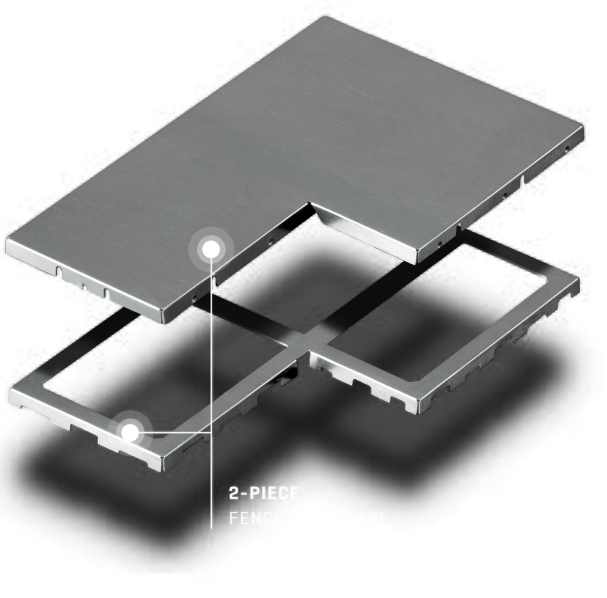
Design CNC Parts for Maximum EMI/RFI Shielding [AI-GENERATED]
1. Designing for Electrical Grounding and Contact
Effective assurance of reliability in EMI shielding is based on continuous conductive sequences and designed grounding points in CNC machining components. The electromagnetic energy is efficiently redirected to ground, not lost at interfaces, due to the low contact resistance of the mating surfaces. The grounding bosses, conductive mating surfaces, and contact pads built into the CNC design enhance substantial shielding performance.
2. Wall Thickness and Shielding Effectiveness
It is the best way to attain EMI/RFI shielding, especially in lower frequency bands where thicker barriers are better attenuators. CNC-machined enclosures enable control of the wall size to the desired shielding without too much material wastage. Designers have to contend with shielding performance, weight, cost, and mechanical requirements.
3. Avoiding Gaps and Seams in Enclosure Design
The most common source of EMI/RFI leakage in CNC-machined enclosures is gaps, seams, and discontinuities. Even tiny holes can invalidate shielding performance, particularly at high frequencies. Tighter tolerances, enhanced mating surfaces, and enhanced sealing allow reduced electromagnetic leakage paths through precision CNC machining.
4. Surface Finish Callouts for EMI/RFI Requirements
The clear surface finish callouts would be vital in attaining consistent EMI/RFI shielding in parts machined on CNC machines. The required conductive type, surface resistance targets, and masking requirements guarantee the final component to achieve its desired electrical performance criteria. Strict documentation minimizes variability across production batches and enhances adherence to EMI requirements.
We can summarize it as;
| Design Factor | Typical Values | Shielding Benefit |
| Electrical Grounding & Contact | Contact resistance ≤ 2.5 mΩ | Ensures efficient grounding and prevents EMI leakage at interfaces |
| Wall Thickness | Low freq: 2–5 mmHigh freq: 1–3 mm | Improves attenuation while balancing weight and cost |
| Gaps & Seams Control | Max gap ≤ 0.5 mmRF preferred ≤ 0.1 mm | Minimizes electromagnetic leakage paths |
| Surface Finish Callouts | Conductive anodizing ≤ 5 Ω/sqConversion coating ≤ 10 mΩ | Maintains consistent conductivity and repeatable EMI performance |
Common EMI/RFI Shielding Problems to Avoid in CNC-Machined Parts
The following problems help understand the EMI/RFI Shielding problem. We should try to avoid them during CNC machining.
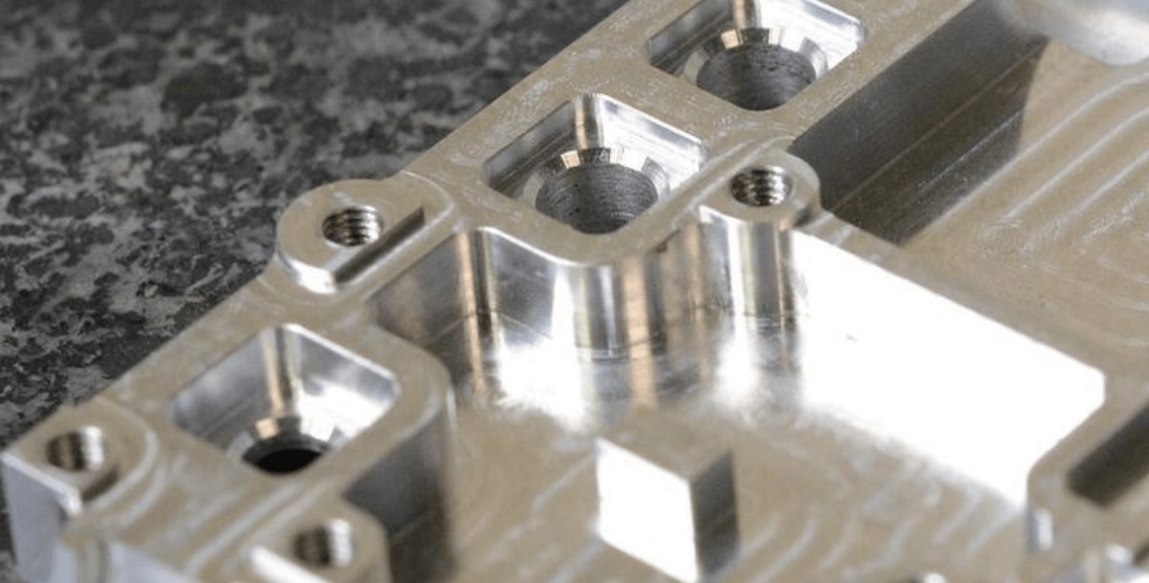
Common EMI/RFI Shielding Problems to Avoid in CNC-Machined Parts [SOURCE: shutterstock]
| Problem | Why It Fails | How to Avoid It |
| Non-conductive anodizing or coatings | Electrically isolates mating surfaces | Use conductive anodizing, selective plating, or mask grounding areas |
| Poor grounding continuity | EMI cannot dissipate to ground | Design grounding bosses; maintain contact resistance ≤ 2.5 mΩ |
| Gaps and seams in enclosures | Act as RF leakage paths | Tight tolerances; flat mating surfaces; minimize seams |
| Ignoring frequency behavior | Wrong design for the operating frequency | Thicker walls for low freq; high-conductivity finishes for RF |
| Unclear surface finish specs | Inconsistent conductivity | Define finish type, resistance limits, and masking clearly |
| Oxidation or corrosion | Increases surface resistance over time | Use corrosion-resistant conductive finishes (Ni, conversion coatings) |
| Coated fastener interfaces | Breaks electrical bonding | Use conductive fasteners or remove coatings at contacts |
EMI/RFI Shielding Surface Finishing at JLCCNC
JLCCNC integrates precision CNC machining with validated EMI/RFI shielding finishes, allowing engineers to control tolerances, surface conductivity, and grounding performance within a single manufacturing workflow.
Our Conductive Finishing Capabilities
JLCCNC offers:
● Conductive anodizing
● Coatings based on chemical conversion.
● Accurate coordination of electroplating.
● Selective conductive surfaces.
● All finishes accommodate CNC-machined geometries.

CNC Machining + EMI Finishing: One-Stop Solution
Through integrating CNC machining and conductive surface finishing, JLCCNC:
● Reduces lead times
● Improves quality control
● Guarantees finish compatibility.
This is an all-in-one solution that makes sourcing easy and enhances the reliability of EMI performance.
Conclusion
A key factor to CNC-machined parts utilized in a modern electronic setup would be EMI/RFI shielding. Electronic enclosures and RF parts, and even aerospace enclosures, need to be shielded correctly; however, the choice of materials to use, the surface finishes, and careful design are all vital.
The awareness of the shortcomings and capabilities of conductive coatings, electroplating, conductive anodizing, and chemical conversion coatings can enable an engineer to make informed decisions based on performance, durability, and costs.
Manufacturers, such as JLCCNC, by combining CNC machining with new EMI/RFI shielding and surface finishes, contribute to achieving high-precision machined parts to satisfy the increasing requirements of high-frequency, high-reliability parts.
FAQ
How does EMI and RFI shielding vary?
EMI shielding is used to cover all types of electromagnetic interference, whereas RFI shielding is used to cover radio-frequency interference.
Does surface roughness affect EMI shielding performance?
Yes. Surface roughness can affect EMI shielding performance. Rough surfaces may create tiny gaps between parts, which can weaken electrical contact and allow interference to leak through. For CNC-machined parts, smoother surfaces help conductive coatings work more effectively and provide more consistent shielding results.
Can EMI shielding be selectively applied to internal CNC surfaces only?
Yes. EMI shielding can be applied only to internal CNC surfaces when needed. This is common when the outside of the part must remain non-conductive, corrosion-resistant, or visually clean. Selective shielding helps balance protection, appearance, and cost without compromising performance.
Should aluminum be used as EMI shielding?
Yes, most of the time, aluminum is being used, particularly in conjunction with conductive anodizing or conversion finishes.
Is anodizing electrically blocking?
Standard anodizing does, but conductive anodizing is made to maintain conductivity to be used in EMI applications.
Which method of EMI shielding is optimal at high frequencies?
Copper/silver or other forms of electroplating usually provide the greatest shielding capacity at high frequencies.
Is CNC machining able to enhance EMI shielding?
Yes: it is precision machining, which enables tight tolerances, enhanced grounding capabilities, and minimized leakage routes.
Popular Articles
• Surface Finish in Machining, Types, Charts & Testing
• Anodizing vs. Hard Anodizing: The Differences in Surface Treatment Techniques
• Anodized Aluminum Colors: Options, Limits, and Real-World Results
• Explanation of different material surface treatment technologies in CNC machining
• How to choose between Laser marking and UV printing?
Keep Learning
Surface Finish in Machining, Types, Charts & Testing
What is Surface Finish in Machining? At its core, surface finish in machining refers to the small-scale irregularities left on the surface of a part after machining. These irregularities are typically grouped into three categories: Roughness: The fine, closely spaced deviations caused by the cutting process itself. Roughness depends heavily on feed rate, tool sharpness, and cutting speed. Waviness: Larger, more widely spaced variations caused by machine tool vibration, deflection, or thermal distortio......
CNC Machining Surface Roughness: A Practical Guide
Why Surface Roughness Matters in CNC Machining When we talk about CNC machining, precision isn't just about hitting the right dimensions, it’s also about how the surface feels and performs. Surface roughness describes the fine irregularities left on a machined surface, and it directly impacts how a part behaves in the real world. So, what is surface roughness? In simple terms, it's the measure of tiny peaks and valleys created by the cutting process. While they might look smooth to the naked eye, thes......
Optimizing Manufacturing Efficiency: A Guide to Computerized Numerical Control (CNC) Machining Surface Finishes
CNC Surface Finishes: Types, Costs, and How to Choose Quick Answer: Choose an as-machined finish when cost and dimensional stability matter most. Use bead blasting or brushing for a uniform cosmetic appearance, anodizing for aluminum corrosion resistance, hard anodizing for wear, and laser marking or UV printing for identification. Confirm material, tolerance, color, masking, and end-use environment before quoting. A CNC-machined part comes off the machine functional but rarely finished — tool marks, ......
Anodizing vs. Hard Anodizing: The Differences in Surface Treatment Techniques
Quick Answer: Choose Type II anodizing when corrosion resistance, color, and cosmetic appearance are the main requirements. Choose Type III hard anodizing when the part needs greater wear resistance and the coating thickness can be accommodated in the fit and tolerance plan. Confirm alloy, coating thickness, color, sealing, and critical dimensions before release. An aluminum bracket for an outdoor enclosure and a hydraulic cylinder rod both might get anodized — but specifying the same process for both......
How to Remove Anodizing from Aluminum Parts
Key Takeaways Chemical stripping is commonly used when anodizing needs to be removed from most or all of an aluminum part, but the process can also attack the underlying aluminum if it is not controlled. Mechanical removal works well for accessible areas but can change the surface texture and remove more base metal than intended. CNC machining gives better control when a defined anodized area needs to be removed from a precision part. Laser-based removal can be useful for controlled localized treatmen......
Anodizing Thickness: How Much Does It Add?
Anodizing Thickness and Dimensional Change at a Glance Feature Approximate dimensional effect One coated external surface +0.5 × coating thickness Outside diameter across two coated surfaces +1 × coating thickness Bore diameter with two coated walls −1 × coating thickness 60° thread pitch diameter Changes by about 4 × surface-growth amount, or about 2 × coating thickness under the 0.5× growth assumption Dimensional estimates below use the 0.5 × coating-thickness surface-growth relationship given in MI......