Vapor Polishing for CNC Machined Plastics: Process, Materials, and Applications
14 min
- What Is Vapor Polishing?
- Materials Suitable for Plastic Vapor Polishing
- Vapor Polishing Process and Equipment
- Vapor Polishing vs Other Plastic Finishing Methods
- Benefits of Vapor Polishing for CNC-Machined Plastics
- Challenges and Risks in Vapor Polishing
- Is Vapor Polishing Right for Your CNC-Machined Parts?
- Key Takeaways
- FAQ
In plastic CNC machining, parts are typically milled, drilled, or turned to precise dimensions. However, tool marks and a matte surface often remain. In transparent plastics (e.g., acrylic or polycarbonate), these marks reduce optical clarity and surface quality. That’s where vapor polishing comes into play.
It smooths CNC-machined parts using controlled solvent vapors. The vapor temporarily softens the outer polymer layer, allowing the surface to reflow and minimize machining marks. This improves surface gloss and optical clarity.
Compared to mechanical buffing and hand polishing, vapor polishing provides uniformity and a high-transparency finish across complex geometries and batch production.
Careful control of these parameters is necessary to prevent warping, stress cracking, or edge rounding.
This article explores the vapor polishing technique for plastics, suitable materials, process controls, its pros and cons, and how it outshines other finishing techniques. Let’s get into it.
What Is Vapor Polishing?
Vapor polishing is a chemical surface finish process in machining. It is primarily used on thermoplastic parts where solvent vapor slightly melts the outer surface layer. This allows the material to flow and remove machining marks.
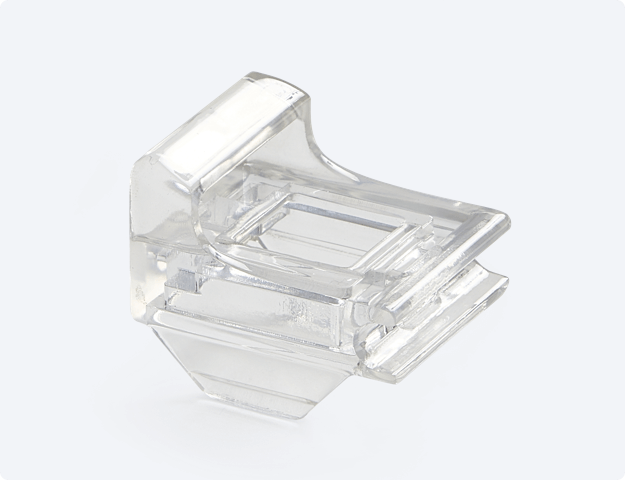
A close-up view of a transparent vapor-polished part.
How Vapor Polishing Works
During vapor polishing, controlled solvent vapor condenses on the surface of the plastic component. The solvent briefly softens the outer polymer layer, allowing microscopic peaks and machining marks to reflow. As the solvent evaporates, the surface re-solidifies into a smoother and more uniform finish.
Because the process acts only on the outermost surface layer, material removal is minimal when exposure is properly controlled. This makes vapor polishing suitable for improving optical clarity and surface gloss on CNC-machined plastics without significantly altering part geometry.
Characteristics of vapor polishing:
● It uses solvent vapor (not mechanical abrasion).
● It only softens the outer microscopic surface layer.
● It removes tool marks and micro-scratches.
● Vapor polishing is effective with transparent thermoplastics such as acrylic and polycarbonate.
● It can reach internal features and complex geometries that are hard to polish manually.
Materials Suitable for Plastic Vapor Polishing
Vapor polishing works best on thermoplastics that respond predictably to solvent exposure. The process relies on controlled surface softening. Therefore, material compatibility with the selected solvent is critical.
Not all plastic materials respond equally to vapor polishing. Some materials polish easily and produce high optical clarity. Others show limited improvement or risk of surface damage.
Vapor Polishing Acrylic (PMMA)
Acrylic (PMMA) is the most common material used for vapor polishing. Machining often leaves visible cutter marks on acrylic surfaces. These marks are especially visible on edges and transparent surfaces. Vapor polishing can restore optical clarity by smoothing the surface layer.
The acrylic vapor polishing process is widely used to restore optical clarity on machined PMMA parts.
For acrylic parts:
● Typically polished using solvents such as methylene chloride.
● It gives high-gloss and transparent surfaces.
● It effectively removes fine machining marks and haze.
● Example: It works well on display panels, optical covers, and light guides.
Typical Challenge: Overexposure may cause rounding of edges or dimensional changes on thin features.
For a comprehensive comparison of acrylic polishing methods and surface finishing techniques, review this detailed acrylic polishing guide.
Vapor Polishing Polycarbonate (PC)
Polycarbonate can also be vapor polished. However, the process is more sensitive than acrylic polishing. The material is tougher and less brittle. Moreover, it is prone to stress-related surface defects if the solvent exposure is not controlled.
For polycarbonate parts:
● Vapor polishing requires careful solvent selection and exposure control.
● It increases surface gloss and transparency.
● It is often used for protective covers, lenses, and machine guards.
Typical Challenge: Pre-existing internal stress may increase the risk of micro-cracking.
Other Thermoplastics
Some additional thermoplastics can be vapor polished under specific conditions. However, results may vary depending on the polymer structure and solvent compatibility.
Below are the common examples:
ABS
● For ABS, the compatible solvent is ‘acetone vapor’.
● It mainly improves cosmetic appearance.
● Common in prototype housings and consumer product parts.
PETG
● PETG can achieve moderate surface smoothing.
● Vapor polishing is often used for clear covers and display components.
● However, it requires controlled exposure to avoid surface distortion.
Materials with Limited Compatibility
Nylon
● Nylon is generally difficult to vapor polish because of its high crystallinity and resistance to most solvents.
● Surface improvement is limited compared to acrylic.
PEEK
● PEEK’s high chemical resistance makes vapor polishing difficult. Mechanical finishing is usually required instead.
Limitations and Compatibility Notes
Material behavior during vapor polishing depends on various factors: For example:
● Polymer properties like chemical resistance to solvents.
● Internal stress from CNC machining or molding.
● Part geometry and wall thickness.
● Surface condition before polishing.
Tip: Testing on sample parts is typically recommended before full production polishing.
When Vapor Polishing Does Not Work Well
Vapor polishing is not suitable for every plastic component and application. Some materials or geometries do not respond well to solvent exposure.
Vapor polishing is not ideal for:
● Materials with high chemical resistance. These plastics do not bond with solvents.
● Fiber-reinforced plastics (Glass Fiber Reinforced Plastic (GFRP), Carbon Fiber Reinforced Plastic (CFRP), Aramid Fiber Reinforced Plastic (AFRP, e.g., Kevlar®), Hybrid FRPs (glass + carbon).
● Thin sections or sharp edges. These may deform during exposure.
● Parts with high internal stresses are prone to cracking during vapor exposure.
Vapor Polishing Process and Equipment
Vapor polishing involves the controlled vaporization of solvent on the thermoplastic components to provide a smooth surface. As discussed above, the process temporarily softens the outer layer of polymer to enable the surface to flow and minimize machining marks. Following exposure, the solvent evaporates. It causes the surface to re-solidify and become smoother and clearer.
Factors for stable results:
Exposure time: For vapor polishing, exposure time depends on material, part thickness, and solvent, but typical ranges are:
● Acrylic (PMMA): 30 to 90s.
● Polycarbonate (PC): 60 to 120s.
● Thin sections (<3 mm): shorter end of range.
● Thicker sections (>6 mm): longer end of the range.
Solvent compatibility: It must be matched to the specific polymer
Process environment: You must perform vapor polishing in sealed chambers with controlled temperature and ventilation
Step-by-Step Guide
A typical vapor polishing operation follows a controlled sequence to prevent surface defects.
Surface Preparation
Parts should be clean before polishing since dust, chips, and oil residues might respond to the solvent and mark the surface. Therefore, you must:
● Remove chips and machining debris.
● Wipe down the surfaces using the relevant solvents or blow off and examine the part for deep scratches or defects.
Vapor Exposure
The part is placed inside a polishing chamber. Here, solvent vapor is introduced into the chamber and condenses on the plastic surface, briefly softening the outer layer.
Surface Reflow and Smoothing
As the softened surface flows, micro-scratches and tool marks are reduced. This stage determines the final gloss and transparency of the part.
Drying and Stabilization
After vapor exposure, the part is removed and allowed to stabilize as the solvent evaporates.
● The surface re-hardens as the solvent evaporates.
● Parts may require drying or ventilation time.
Integrating Vapor Polishing into CNC Machining Workflows
In CNC plastic machining, vapor polishing is typically performed after all machining procedures are completed. Since the process affects the outer surface layer, it is treated as a final finishing step.
Typical workflow integration includes:
● CNC machining of the plastic component.
● Deburring and cleaning of machined edges.
● Vapor polishing to improve surface quality.
● Final inspection and dimensional verification.
Manufacturers often test vapor polishing parameters during process development.
Key Equipment and Parameters for Vapor Polishing
The optimal vapor polishing results depend on using proper equipment and controlled process parameters.
Polishing Chamber
● Enclosed system designed to contain solvent vapor.
● Maintains controlled exposure conditions.
● Provides operator safety and ventilation.
Temperature Control
● Temperature influences the vapor generation rate.
● Higher temperatures increase solvent evaporation.
● Stable conditions help produce consistent finishes.
Exposure Time
● Short exposure improves gloss without distortion.
● Excessive exposure may cause surface deformation.
Ventilation and Recovery Systems
● Remove excess solvent vapors after processing.
● Emphasize operator safety and environmental compliance.
Chemical Agents Used in Vapor Polishing
Table 01: Common solvents for vapor polishing plastic parts.
| Polymer | Solvents | Mechanism of Action | Typical Exposure Parameters | Practical Notes |
| Acrylic (PMMA) | Methylene chloride, Dichloromethane | Solvent partially dissolves surface chains; polymer flows to fill micro-scratches | 30 - 90 sec at 20 - 25 °C (vapor condensation) | Monitor edges; excessive time rounds sharp features; best for optical clarity panels |
| Polycarbonate (PC) | Specialized chlorinated solvent blends | Softens surface polymer chains; reduces surface roughness | 20–60 sec at 18 - 22 °C | High internal stress areas are prone to micro-cracks; minimize mechanical handling during exposure |
| ABS | Acetone, MEK (Methyl Ethyl Ketone) | Slight surface reflow; smooths machining marks | 10 - 30 sec at ambient 20 °C | Minimal dimensional change; only suitable for cosmetic smoothing; thin walls may warp |
| PETG | Dichloromethane, Chloroform | Surface polymer layer softens and flows | 15 - 40 sec at 20 °C | Moderate gloss achievable; monitor thin walls to prevent distortion; avoid uneven vapor exposure |
| Nylon (PA) | Limited response to vapor polishing | Limited polymer chain mobility; minor surface smoothing | 20 - 60 sec at 20 °C | Poor solvent absorption; only minor cosmetic effect; not recommended for precision surfaces |
| PEEK | N/A | High chemical resistance prevents surface softening | N/A | Vapor polishing is ineffective; mechanical or abrasive finishing is required |
Vapor Polishing vs Other Plastic Finishing Methods
Let’s compare vapor polishing with other finishing techniques and see where it outshines others.
Vapor Polishing vs Mechanical Buffing
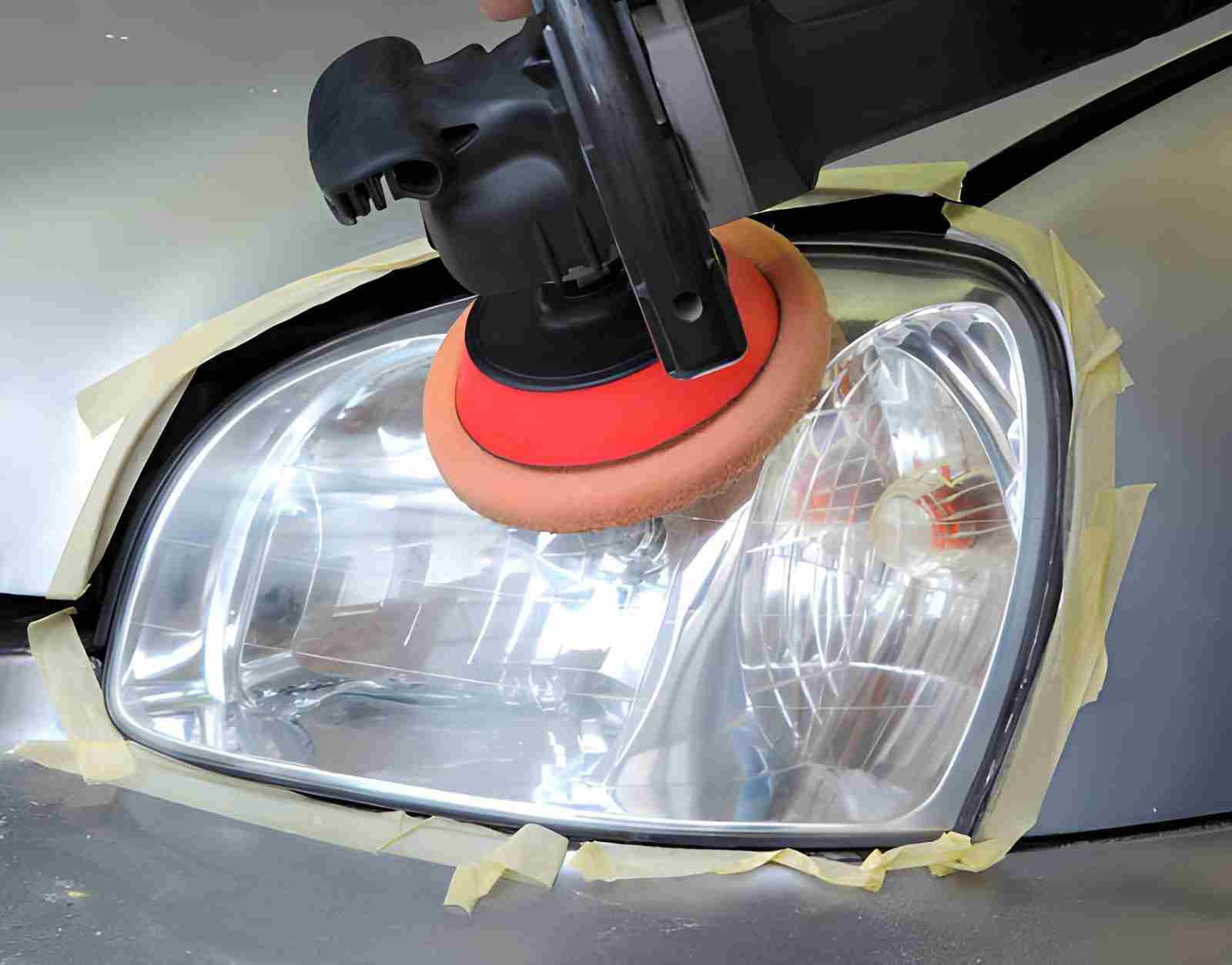
Manual buffing of a car headlight using a handheld buffing machine. (Source: iStock)
● Vapor polishing chemically reflows the surface without removing material.
● Mechanical buffing removes surface material and can even alter critical dimensions.
● Swirl marks or inconsistent finishes may occur with buffing.
Therefore, it requires skilled operators for repeatable results. So, this limits batch production efficiency.
Vapor Polishing vs Manual Polishing
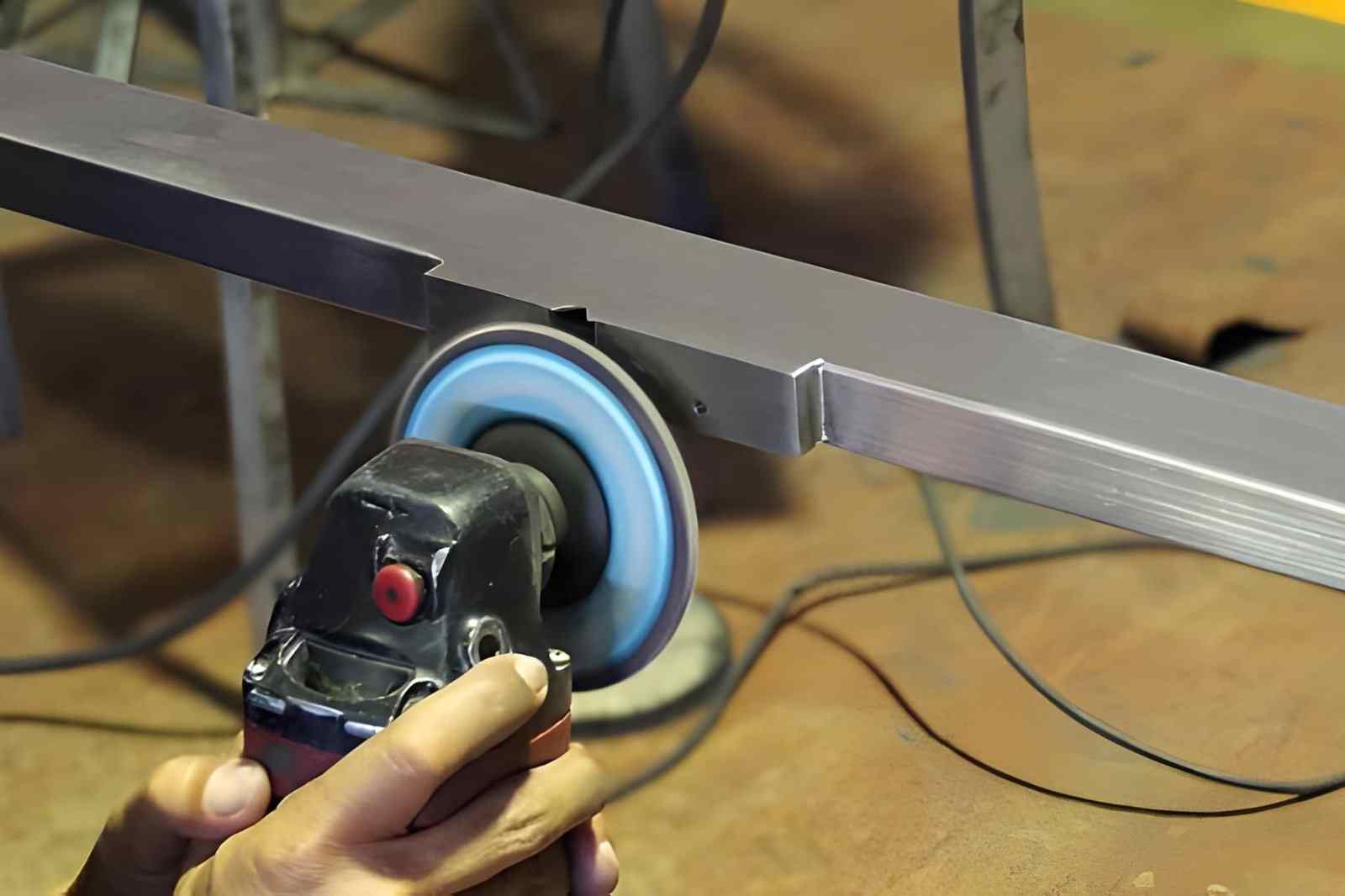
The image shows a worker holding a polishing machine and precisely polishing the metal surface. (Source: iStock)
● During vapor polishing, the polymer surface is softened using solvent vapors. This allows the surface to reflow and reduce machining marks.
● Dimensional change is usually minimal when exposure is controlled.
● Manual polishing removes undesired material physically and may introduce dimensional variation.
● Finish quality heavily depends on operator skill and optimal pressure application.
Vapor Polishing vs Flame Polishing
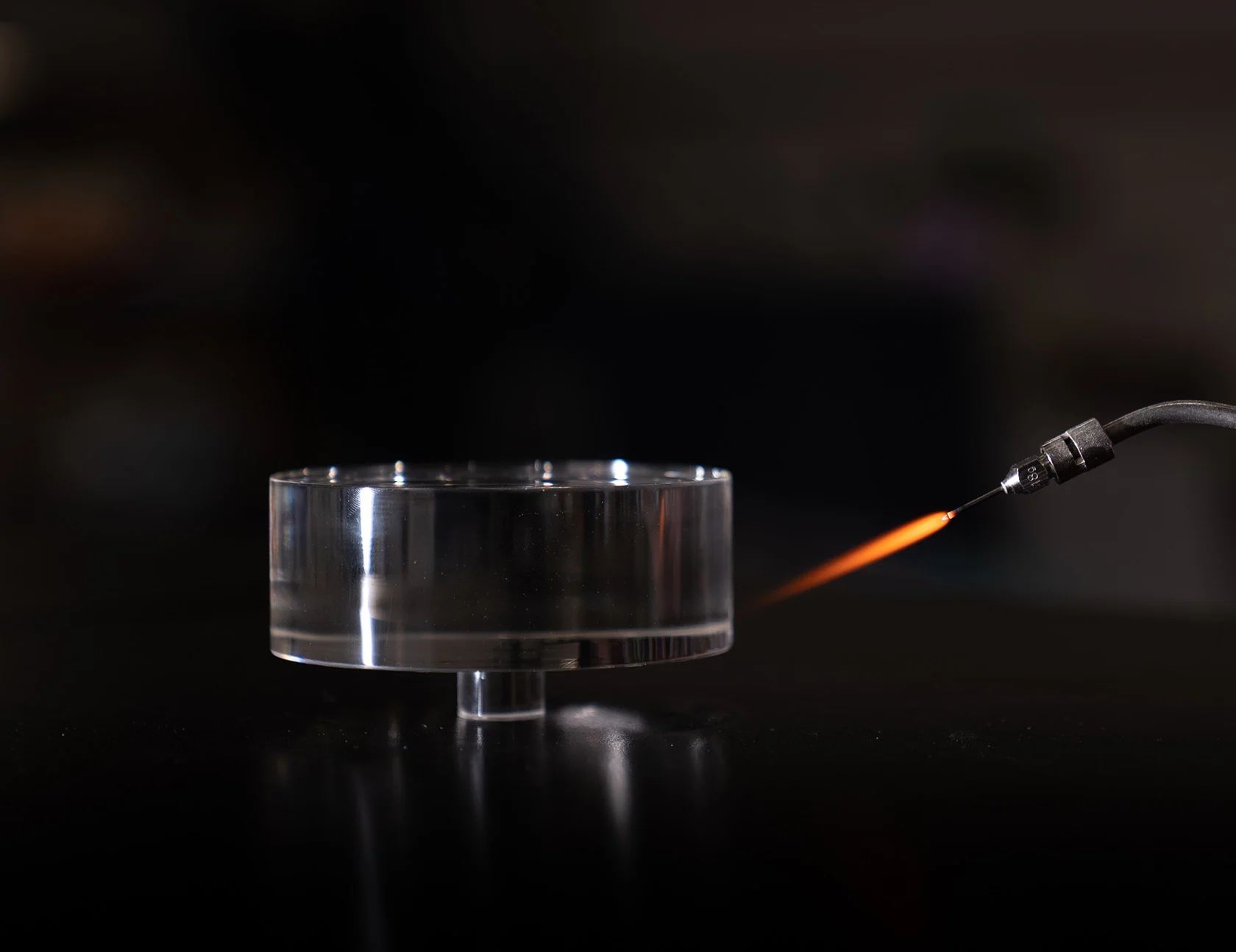
Nozzle flame polishing a plastic part on a black background. (Source: simplyplastics)
● Vapor polishing uniformly applies solvent vapor. It minimizes thermal stress and preserves thin walls.
● Surface gloss and clarity are consistent across the entire part, including edges and internal features.
● Flame polishing melts surface edges with direct heat. It can warp thin sections or induce micro-cracks in parts.
● It often works best for straight acrylic edges, but it is unsuitable for complicated and large surfaces.
Comparison at a Glance
Table 02: Difference between Vapor vs manual vs flame vs mechanical polishing
| Method | Surface Interaction | Dimensional Effect | Reach |
| Vapor Polishing | Solvent softens the polymer surface to level machining marks | Minimal; dimensional changes are usually minimal when exposure is properly controlled | Full surface, edges, internal features |
| Manual Polishing | Abrasive removes material physically | Moderate; may alter tolerances | External surfaces only |
| Flame Polishing | Direct heat melts surface edges | Medium; thin sections may warp | Exposed edges only |
| Mechanical Buffing | Abrasive removes the polymer layer | Moderate; critical dimensions may change | Accessible external surfaces |
Benefits of Vapor Polishing for CNC-Machined Plastics
Vapor polishing adds gloss, smoothness, and enhances the parts’ surface durability. Some of its common benefits include:
Surface Finish and Optical Clarity
● Removes CNC tool marks and micro-scratches without significant material removal.
● Produces smooth, high-gloss surfaces that improve optical clarity in transparent plastics such as acrylic or polycarbonate.
● The process creates a uniform finish across edges, flat areas, and complex geometries.
Enhanced Durability and Scratch Resistance
● The reflowed surface reduces microscopic roughness that can trap debris or initiate minor abrasion.
● This helps improve resistance to light scratches and surface wear during handling and assembly.
Cost and Time Efficiency for Mass Production
● Polishes multiple parts simultaneously in controlled vapor chambers.
● Reduces labor compared with manual or mechanical polishing.
● Lowers scrap rates by preserving tolerances and reducing rework.
Challenges and Risks in Vapor Polishing
During vapor polishing, excessive exposure time or strong solvents can cause warping, surface defects, or dimensional changes. Here are the common challenges:
Overexposure and Its Effects on Material Quality
● Excessive vapor exposure may cause dimensional drift and rounding of edges. This especially occurs in acrylic or polycarbonate thin-walled sections.
● Long-term softening may cause sagging of the surface of vertical walls or unsupported elements.
● Localized variation of gloss or localized surface waviness can be caused by uneven vapor distribution.
Stress Cracking and Surface Damage
● CNC machining or sharp edge stresses may be residual triggers for the onset of micro-cracks when solvent softening is taking place.
● Polycarbonate and ABS are both sensitive to high concentrations of solvents, which result in surface crazing or brittle fractures in stressed areas.
● Recurring polishing processes without releasing stress may spread crack propagation along machined edges.
Environmental and Safety Considerations
● Methylene chloride, trichloroethylene, or chloroform are volatile solvents. These processes must be carried out in enclosed chambers with proper ventilation systems.
● Vapors are toxic and flammable. Therefore, operators are to use respirators, gloves, and eye protection goggles.
● Poor storage and handling may lead to the risk of fire, chemical burns, and inhalation.
Best Practices for Mitigating the Risks
● Exposure time, temperature, and vapor concentration per type of polymer and each wall thickness are advised to be calibrated.
● Avoid deformation and sagging of unsupported geometries by means of rigid support fixtures.
● It is always advisable to do trial runs on sample parts before going into full production.
● Measure the concentration of solvents and uniformity of chambers to avoid uneven softening of the material.
Is Vapor Polishing Right for Your CNC-Machined Parts?
Yes, vapor polishing can be regarded as a perfect method in cases when the parts require a smooth and high-gloss finish. Nevertheless, not all thermoplastic components and shapes respond equally, and solvent exposure is a crucial factor that needs to be tightly monitored.
Final Thoughts on Choosing Vapor Polishing for Your Applications
● Vapor polishing is well-suited for acrylic (PMMA) and polycarbonate (PC) when optical clarity and a high-gloss finish are desired.
● It effectively removes CNC tool marks and micro-scratches without impacting the part dimensions.
● Avoid the vapor polishing process for thick, highly stressed, and chemically incompatible plastics.
● To get consistent outcomes, ensure proper part support and precise control of solvent exposure to prevent warping or edge rounding.
Key Takeaways
● Vapor polishing preserves CNC tolerances while improving surface smoothness and optical clarity.
● It requires controlled solvent exposure to prevent deformation or stress cracking.
● It is ideal for batch-scale production runs and gives a consistent finish across multiple parts.
● The process improves the overall durability of machined plastics and may slightly reduce micro-abrasion due to smoother surfaces.
● Always follow safety protocols, as solvent vapors are toxic and flammable.
Balancing optical clarity and tight tolerances in machined plastics demands strict process control. For rapid turnarounds and cost-effective production, submit CAD files or design details to JLCCNC. This ensures a customized quote on precision CNC machining and reliable vapor polishing.

FAQ
What plastics are best for vapor polishing?
Acrylic (PMMA) and polycarbonate (PC) respond best to vapor polishing. Some thermoplastics, like ABS and PETG, can work, but you may need to test them first.
● Materials like PEEK, Nylon, or glass-filled plastics usually do not polish well.
How do you choose the right chemical for vapor polishing?
The solvent must be compatible with the plastic. It should soften the surface without causing cracks. For example, methylene chloride works well for acrylic; in contrast, polycarbonate requires a solvent formulated specifically for PC.
Can you vapor polish large plastic parts?
Yes, it is possible as long as the part fits inside a vapor chamber. Larger parts generally need longer exposure and careful support to prevent warping and an uneven finish.
Is vapor polishing suitable for CNC-machined acrylic parts?
Yes, it removes tool marks and micro-scratches while keeping dimensions stable. Proper fixturing and controlled exposure ensure consistent results.
Does vapor polishing change part dimensions?
If done correctly, changes are minimal. Thin walls or sharp edges might round slightly, usually less than 0.02 mm.
How much material is removed during vapor polishing?
The process only softens and reflows the surface instead of removing it, so typical material loss is less than 0.01 to 0.02 mm.
Is vapor polishing compatible with tight tolerances?
Yes, dimensional changes are typically minimal when exposure is properly controlled. Unsupported and very thin sections may see slightly more variation.
Popular Articles
• Surface Finish in Machining, Types, Charts & Testing
• Anodizing vs. Hard Anodizing: The Differences in Surface Treatment Techniques
• Anodized Aluminum Colors: Options, Limits, and Real-World Results
• Explanation of different material surface treatment technologies in CNC machining
• How to choose between Laser marking and UV printing?
Keep Learning
Surface Finish in Machining, Types, Charts & Testing
What is Surface Finish in Machining? At its core, surface finish in machining refers to the small-scale irregularities left on the surface of a part after machining. These irregularities are typically grouped into three categories: Roughness: The fine, closely spaced deviations caused by the cutting process itself. Roughness depends heavily on feed rate, tool sharpness, and cutting speed. Waviness: Larger, more widely spaced variations caused by machine tool vibration, deflection, or thermal distortio......
CNC Machining Surface Roughness: A Practical Guide
Why Surface Roughness Matters in CNC Machining When we talk about CNC machining, precision isn't just about hitting the right dimensions, it’s also about how the surface feels and performs. Surface roughness describes the fine irregularities left on a machined surface, and it directly impacts how a part behaves in the real world. So, what is surface roughness? In simple terms, it's the measure of tiny peaks and valleys created by the cutting process. While they might look smooth to the naked eye, thes......
Optimizing Manufacturing Efficiency: A Guide to Computerized Numerical Control (CNC) Machining Surface Finishes
CNC Surface Finishes: Types, Costs, and How to Choose Quick Answer: Choose an as-machined finish when cost and dimensional stability matter most. Use bead blasting or brushing for a uniform cosmetic appearance, anodizing for aluminum corrosion resistance, hard anodizing for wear, and laser marking or UV printing for identification. Confirm material, tolerance, color, masking, and end-use environment before quoting. A CNC-machined part comes off the machine functional but rarely finished — tool marks, ......
Anodizing vs. Hard Anodizing: The Differences in Surface Treatment Techniques
Quick Answer: Choose Type II anodizing when corrosion resistance, color, and cosmetic appearance are the main requirements. Choose Type III hard anodizing when the part needs greater wear resistance and the coating thickness can be accommodated in the fit and tolerance plan. Confirm alloy, coating thickness, color, sealing, and critical dimensions before release. An aluminum bracket for an outdoor enclosure and a hydraulic cylinder rod both might get anodized — but specifying the same process for both......
How to Remove Anodizing from Aluminum Parts
Key Takeaways Chemical stripping is commonly used when anodizing needs to be removed from most or all of an aluminum part, but the process can also attack the underlying aluminum if it is not controlled. Mechanical removal works well for accessible areas but can change the surface texture and remove more base metal than intended. CNC machining gives better control when a defined anodized area needs to be removed from a precision part. Laser-based removal can be useful for controlled localized treatmen......
Anodizing Thickness: How Much Does It Add?
Anodizing Thickness and Dimensional Change at a Glance Feature Approximate dimensional effect One coated external surface +0.5 × coating thickness Outside diameter across two coated surfaces +1 × coating thickness Bore diameter with two coated walls −1 × coating thickness 60° thread pitch diameter Changes by about 4 × surface-growth amount, or about 2 × coating thickness under the 0.5× growth assumption Dimensional estimates below use the 0.5 × coating-thickness surface-growth relationship given in MI......