Coating vs Painting: Key Differences for CNC and Industrial Manufacturing
13 min
- Coating vs Painting: Quick Answer
- Why Surface Finish Decisions Fail in Manufacturing
- What Is the Real Difference Between Coating and Painting?
- Why Coating Thickness Is Critical in CNC Manufacturing
- Powder Coating vs Painting: Industrial Performance Comparison
- Anodizing vs Powder Coating for CNC Aluminum Parts
- How Engineers Actually Select Surface Finishes
- Common Manufacturing Defects in Coating Systems
- Surface Finishing Strategies for CNC Machined Parts
- Coating Services for CNC and Metal Parts
- CNC Manufacturing Reality: Surface Finish Must Be Designed Early
- Conclusion
- FAQ About Coating And Painting
If you’ve worked in CNC machining or metal fabrication long enough, you eventually stop treating “coating vs painting” as a terminology debate.
It becomes a design constraint problem.
Because in real manufacturing, surface finishing is not applied at the end of the process—it directly influences whether parts assemble correctly, maintain tolerance, and survive in service environments.
In many failed projects, the root cause is not machining accuracy, but an unaccounted coating system that changes geometry, friction behavior, or surface adhesion characteristics after production.
This is where coating decisions become engineering-critical.
Coating vs Painting: Quick Answer
The difference between coating and painting is mainly the engineering purpose behind the surface finish.
| Surface Finish | Primary Purpose | Typical Thickness | Common Industrial Use |
|---|---|---|---|
| Painting | Appearance and color | 20–40 μm | Consumer products, decorative panels |
| Industrial Coating | Protection and surface performance | 5–120 μm depending on process | CNC parts, machinery, outdoor components |
In industrial manufacturing, coatings are usually selected to improve:
- corrosion resistance
- wear resistance
- hardness
- chemical protection
- electrical insulation
Paint systems are more commonly optimized for:
- color consistency
- gloss
- branding
- cosmetic appearance
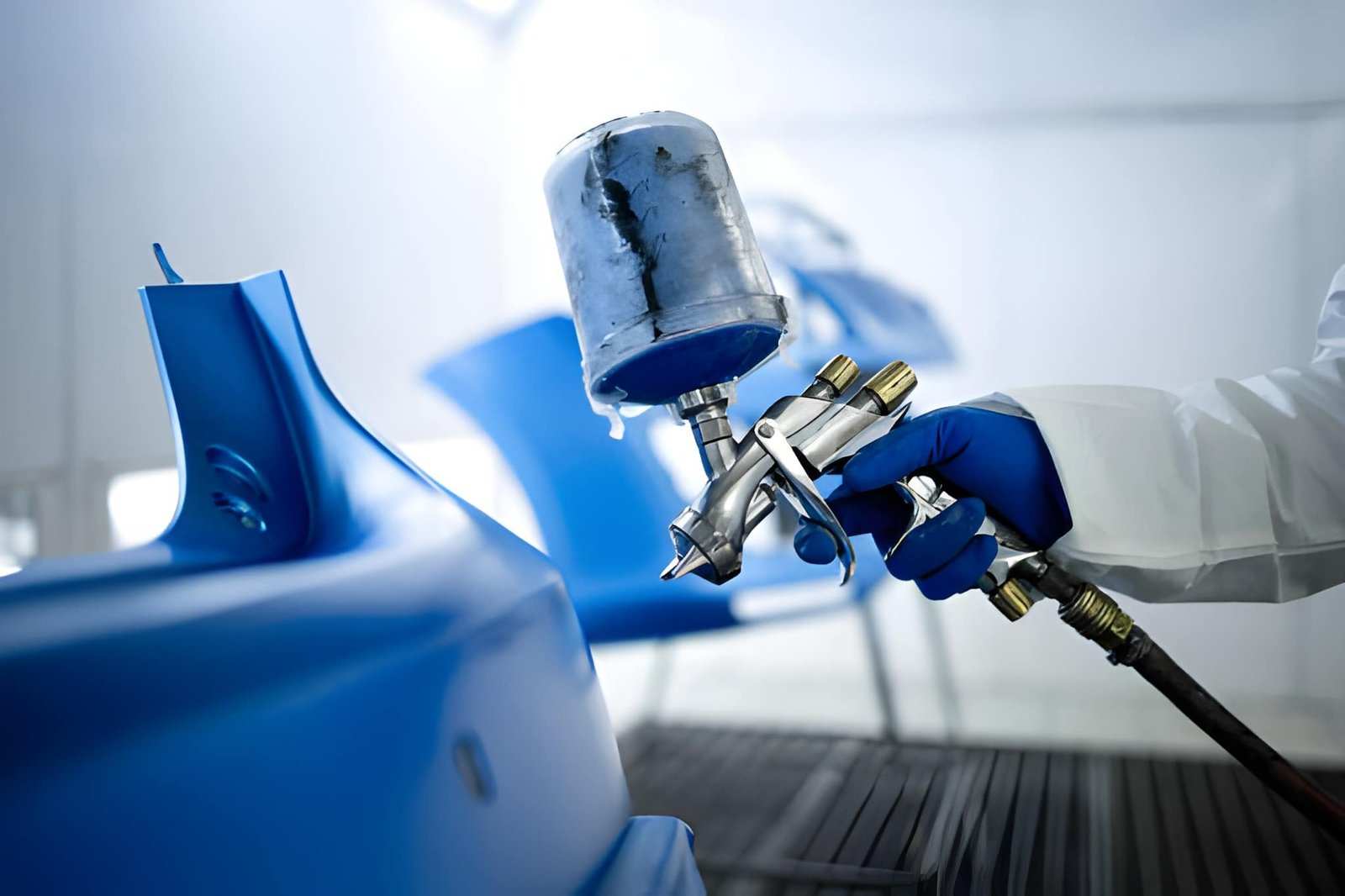
In many CNC and sheet metal applications, the distinction matters because coating thickness directly affects tolerances, assembly fit, and long-term durability.
Why Surface Finish Decisions Fail in Manufacturing
Most surface finishing failures are not caused by the coating system itself, but by incorrect assumptions during design and process planning.
Dimensional deviation after coating application
A common misunderstanding is treating coating as a purely cosmetic layer with negligible engineering impact.
In reality, coatings introduce measurable dimensional change on every exposed surface.
For example, a machined bore specified at 10.00 mm can easily shift outside tolerance after powder coating due to material accumulation on internal walls. Since coating builds on both sides of the geometry, even a moderate film thickness can effectively convert a clearance fit into a press fit.
This type of failure is especially common in CNC assemblies where mating features are not dimensionally compensated during design.
Assembly failure caused by thread interference
Threaded features are particularly sensitive to surface finishing.
Coating buildup inside threaded holes reduces effective pitch diameter and increases torque resistance during assembly. In severe cases, fasteners cannot engage at all.
This is not a coating defect—it is a missing masking strategy in process planning.
Industrial coating workflows typically assume that critical interfaces are either masked or post-machined. Without this assumption explicitly defined, assembly failure becomes almost inevitable.
Adhesion failure due to surface chemistry mismatch
A significant portion of coating delamination issues originates from surface condition rather than coating formulation.
Freshly machined aluminum surfaces typically contain residual cutting fluids, non-uniform oxide layers, and micro-scale surface energy variation caused by tool interaction.
These conditions reduce coating wetting uniformity, preventing consistent mechanical or chemical bonding at the interface.
Even high-performance coating systems will fail prematurely if surface preparation is not aligned with material condition.
Hidden tolerance stack-up after final assembly
One of the most expensive failure modes occurs when individual components pass inspection but fail at assembly stage.
This typically results from cumulative effects such as:
coating applied on both mating surfaces
inconsistent masking boundaries
uncompensated dimensional stack-up across interfaces
The result is interference, misalignment, or assembly stress that only becomes visible during final integration.
This is especially common in CNC enclosures, housings, and multi-part mechanical systems.
What Is the Real Difference Between Coating and Painting?
In industrial engineering, the distinction is not based on terminology but on functional intent.
Coating systems are designed to modify surface performance under defined operating conditions.
Painting systems are primarily designed to modify surface appearance.
Industrial coating systems
Coatings are engineered surface treatments intended to improve mechanical or environmental performance.
They are typically used to control:
corrosion resistance in aggressive environments
wear resistance under mechanical contact
chemical resistance in industrial exposure
surface hardness and friction behavior
electrical insulation properties
Common industrial coating systems include powder coating, anodizing, electroplating, and conversion coatings.
These processes are defined by controlled film formation and predictable performance characteristics.
Paint systems in manufacturing
Paint is primarily a decorative surface treatment system designed around visual control.
Its main functions include:
color definition and branding
surface gloss control
aesthetic uniformity across products
basic environmental protection
While modern industrial paint systems can achieve controlled film thickness, they are generally less suitable than engineered coating systems for precision dimensional applications.
Core engineering distinction
At a system level:
Coating → performance-driven surface engineering system
Painting → appearance-driven surface finishing system
The overlap exists, but design intent determines process selection.
Why Coating Thickness Is Critical in CNC Manufacturing
Coating thickness becomes an engineering variable once parts require dimensional accuracy.
In CNC machining, surface finishing directly affects:
bore geometry
shaft fits
thread engagement
sealing interfaces
bearing alignment surfaces
Typical industrial thickness ranges
| Process | Typical Thickness |
|---|---|
| Paint | 20–40 μm |
| Powder coating | 60–120 μm |
| Type II anodizing | 5–25 μm |
| Hard anodizing | 25–75 μm |
| Zinc plating | 5–15 μm |
Why dimensional change is amplified in internal features
Coating is applied on all exposed surfaces, which means internal geometries are affected twice.
For a cylindrical bore, coating reduces effective diameter by twice the coating thickness.
ΔD=2t
where t is coating thickness per side.
On tight bearing fits, even relatively thin coating buildup can completely change assembly behavior.
Even relatively thin coatings can shift a clearance fit into an interference condition if not accounted for during design.
Why anodizing behaves differently from applied coatings
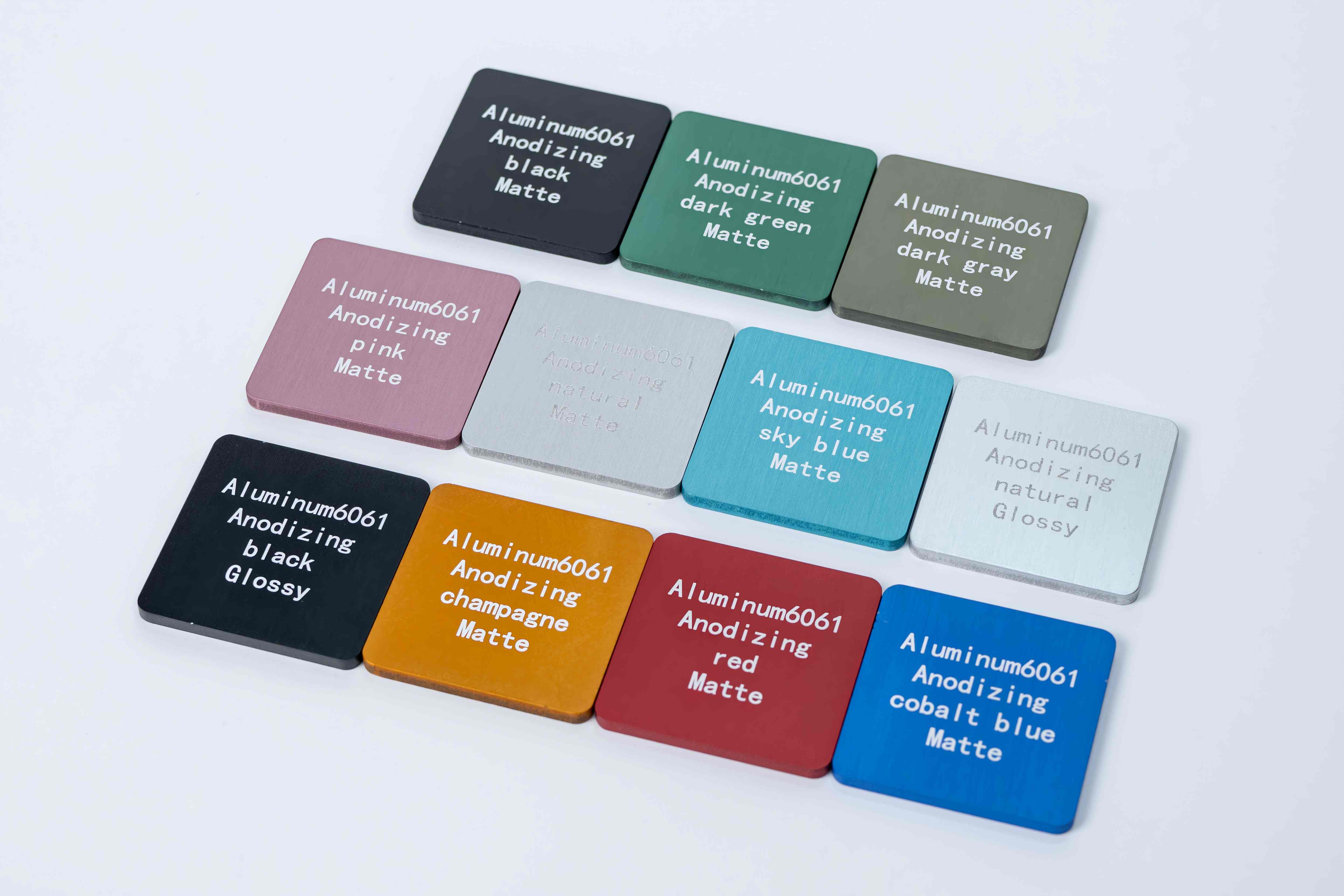
Unlike paint or powder coating, anodizing is a conversion process rather than an added layer.
During anodizing, part of the aluminum substrate is converted into aluminum oxide.
This results in:
outward dimensional growth
partial consumption of base material
predictable but non-linear geometry change
Because of this behavior, anodizing is often preferred for precision CNC aluminum parts where dimensional stability is critical.
Powder Coating vs Painting: Industrial Performance Comparison
The practical difference between powder coating and painting only becomes meaningful in mechanical and environmental service conditions.
Paint vs Powder Coat Durability
When comparing paint vs powder coat durability, the main difference is resistance to mechanical wear and environmental exposure.
Powder coating generally provides:
- higher impact resistance
- thicker protective film
- better outdoor durability
- improved corrosion protection
- longer resistance to chipping
Traditional paint systems generally provide:
- easier spot repair
- lower processing temperature
- better suitability for large structures
- more flexibility for color matching
In industrial CNC and sheet metal applications, powder coating is often preferred for:
- machine enclosures
- outdoor brackets
- industrial housings
- aluminum frames
- fabricated steel assemblies
Paint systems remain common for:
- large welded structures
- low-volume production
- field repair applications
- cosmetic surface finishing
The correct choice depends on dimensional tolerance, environmental exposure, repairability requirements, and production scale.
Durability behavior under real conditions
Powder coating forms a continuous cured polymer network after thermal curing. This structure provides higher resistance to impact, abrasion, and long-term environmental exposure.
Paint systems generally form thinner films with lower mechanical strength, making them more vulnerable under cyclic stress or outdoor degradation.
Thickness distribution and edge behavior
In real production, sharp corners almost always build thicker powder layers than flat surfaces. This becomes a problem when edge geometry is part of a mating interface.
This produces two consistent engineering effects:
edge thickness amplification
risk of uneven curing in recessed geometries
Paint systems distribute more uniformly but lack mechanical robustness in thick-film applications.
Rework and process control
Powder coating is effectively irreversible once cured.
Defects require full stripping and reprocessing.
Paint systems allow localized repair and surface correction, which makes them more suitable for prototype or low-volume iterations.
Anodizing vs Powder Coating for CNC Aluminum Parts
This comparison is primarily a trade-off between dimensional control and surface flexibility.
Process mechanism difference
Anodizing transforms the surface into an oxide layer through electrochemical reaction. The coating becomes part of the substrate system.
Powder coating adds a separate polymer layer on top of the substrate.
This fundamental difference drives all downstream behavior.
Dimensional stability
Anodizing provides:
lower thickness variation
more predictable geometry control
better repeatability across production batches
Powder coating introduces:
higher dimensional uncertainty
masking dependency
edge accumulation sensitivity
Mechanical performance
Hard anodizing provides significantly higher surface hardness compared to polymer-based coatings.
It is commonly used in:
sliding components
wear surfaces
mechanical guide structures
Standard powder coating systems are generally not preferred for high-friction or precision wear interfaces.
Aesthetic flexibility
Powder coating provides broader color control and texture variation.
Anodizing maintains the metallic texture of the substrate more naturally than polymer-based coatings.
How Engineers Actually Select Surface Finishes
In industrial environments, surface finish selection follows constraint hierarchy rather than preference.
Functional environment first
Environmental conditions determine baseline feasibility:
corrosive exposure requires protective coating systems
chemical exposure requires chemically resistant finishes
wear conditions require hardened surface systems
Dimensional sensitivity second
If parts include:
precision bores
mating surfaces
threaded interfaces
then coating strategy must be integrated into design geometry before machining begins.
Masking feasibility
Certain geometries make masking:
cost-intensive
inconsistent across batches
or physically impractical
In these cases, design modification is often required instead of process compensation.
Production volume constraints
Prototype production typically favors flexible coating systems.
High-volume production requires stable and repeatable finishing processes such as anodizing or powder coating.
Common Manufacturing Defects in Coating Systems
Adhesion failure
Typically caused by incomplete surface preparation or contamination prior to coating.
Edge buildup variation
Common in powder coating due to electrostatic concentration effects at sharp geometries.
Blistering
Caused by trapped moisture or volatile compounds beneath coating layers during curing.
Orange peel texture
Associated with process instability in spray application or curing environment control.
Surface Finishing Strategies for CNC Machined Parts
Aluminum Parts
Anodizing is the primary industrial solution due to its integration with the substrate and predictable dimensional behavior.
Powder coating is used when color or texture requirements exceed anodizing capability.
Steel Components
Steel requires external protection due to inherent corrosion susceptibility.
Powder coating and zinc-based systems are commonly used depending on exposure conditions.
Stainless steel
Generally relies on passivation for corrosion resistance.
Coatings are applied mainly for aesthetic or branding purposes.
Plastics Components
Coating selection is limited by thermal sensitivity and surface energy constraints.
Low-temperature paint systems and surface activation treatments are typically required.
Common CNC Finishing Options
Surface finishing plays a critical role in CNC machining because machined surfaces often require additional protection, conductivity control, or cosmetic improvement after production.
Common coating systems for CNC parts include:
| Finish | Common CNC Applications |
|---|---|
| Anodizing | Aluminum housings, brackets, heat sinks |
| Powder coating | Steel frames, enclosures, machine covers |
| Zinc plating | Fasteners and corrosion-resistant hardware |
| Conversion coating | Electrical grounding surfaces |
| Wet paint | Large fabricated assemblies |
For CNC aluminum parts, anodizing is commonly preferred because it preserves dimensional accuracy better than thicker polymer coatings. Hard anodizing still requires dimensional compensation in precision-fit applications due to oxide growth.
For welded steel assemblies, powder coating is often selected for corrosion resistance and cosmetic consistency.
In precision CNC assemblies, coating selection should always be reviewed together with:
- tolerance requirements
- masking strategy
- mating interfaces
- assembly clearances
- thread engagement depth
Coating Services for CNC and Metal Parts
Surface finishing is typically evaluated together with machining strategy in industrial manufacturing because coating selection directly affects dimensional behavior, assembly fit, corrosion resistance, and long-term product performance.
For CNC machined components, coating processes are usually reviewed before production begins to avoid downstream issues such as thread interference, tolerance drift, or inconsistent surface appearance across batches.
Typical industrial surface finishing options include:
| Finish | Common Applications |
|---|---|
| Type II anodizing | Cosmetic and corrosion-resistant aluminum parts |
| Hard anodizing | Wear-resistant precision aluminum components |
| Powder coating | Steel enclosures, frames, brackets, fabricated assemblies |
| Wet paint systems | Large welded structures and cosmetic assemblies |
| Electroless nickel plating | Precision wear surfaces and corrosion-sensitive components |
| Black oxide | Low-reflection steel parts and tooling components |
Tolerance Review Before Coating
For tolerance-sensitive CNC parts, coating thickness is typically reviewed during manufacturability analysis.
Special attention is usually required for:
- precision bores
- threaded holes
- bearing fits
- sealing surfaces
- sliding interfaces
Depending on coating type and tolerance requirements, dimensional compensation or post-finish machining may be necessary.
Masking Strategy for Critical Features
Masking is commonly used to protect:
- threaded interfaces
- grounding locations
- bearing seats
- electrical contact surfaces
- precision mating features
Without proper masking control, coating buildup can interfere with assembly or electrical conductivity requirements.
Coating Selection Assistance
Different coating systems are optimized for different operating conditions.
Selection is typically based on:
- corrosion exposure
- UV exposure
- friction and wear conditions
- dimensional sensitivity
- cosmetic requirements
- production volume
For example:
- anodizing is commonly selected for precision CNC aluminum parts
- powder coating is preferred for outdoor steel assemblies
- electroless nickel is used for wear-resistant precision interfaces
Prototype and Production Capability
Surface finishing requirements often differ between prototype and production stages.
Prototype projects may prioritize:
- rapid turnaround
- flexible finish options
- lower setup cost
Production programs usually require:
- batch consistency
- stable color control
- repeatable coating thickness
- controlled inspection standards
At JLCCNC, coating requirements are reviewed together with machining tolerances and assembly interfaces before production to reduce downstream fitment and finishing issues.

Precision CNC Machining Service
Professional manufacturing, fast turnaround, and quality assurance.
CNC Manufacturing Reality: Surface Finish Must Be Designed Early
Instead of treating surface finishing as a final cosmetic step, most industrial manufacturers evaluate coating strategy during early-stage design, especially for precision CNC assemblies with tight tolerance requirements.
If coating thickness, masking strategy, and material behavior are not defined during design, downstream failure modes become statistically likely:
assembly interference
dimensional drift
tolerance stack-up failure
production rework cost
Conclusion
In industrial CNC manufacturing, coating vs painting is not a semantic comparison.
It is a system-level decision that affects geometry, assembly, durability, and lifecycle performance.
In CNC manufacturing, surface finishing decisions directly influence machining strategy, tolerance allocation, assembly reliability, and long-term product performance.
A coating system that works cosmetically may still fail mechanically if coating thickness, masking boundaries, thermal curing behavior, or material compatibility are not considered during design.
For precision CNC components, coating selection should be treated as part of the engineering specification rather than a post-production appearance choice.
At JLCCNC, coating and surface finishing requirements are reviewed together with machining tolerances, material selection, and assembly interfaces before production begins. This helps reduce coating-related fit issues, dimensional drift, and downstream assembly failures in both prototype and production projects.
Precision CNC Machining Service
Professional manufacturing, fast turnaround, and quality assurance.
FAQ About Coating And Painting
Q: Does coating affect CNC tolerances?
Yes. Even thin coatings can significantly change fit dimensions, especially in bores, threads, and mating surfaces.
Q: Why does powder coating cause fit issues?
Because it builds thickness on all exposed surfaces, reducing effective internal dimensions unless masked or compensated.
Q: Is anodizing better than paint for aluminum?
For functional CNC parts, yes. It provides better wear resistance, corrosion protection, and dimensional stability.
Q: Can coating be applied without affecting dimensions?
Not entirely. But anodizing and controlled masking strategies minimize impact compared to paint or powder coating.
Q: Which coating is best for CNC machined aluminum parts?
Anodizing is commonly preferred for CNC aluminum parts because it provides corrosion resistance, improved surface hardness, and relatively stable dimensional behavior compared with thicker polymer coatings.
Q: Does powder coating affect threaded holes?
Yes. Powder coating buildup inside threaded holes can reduce thread clearance and interfere with fastener engagement. Critical threaded features are often masked before coating or re-tapped afterward.
Popular Articles
• Surface Finish in Machining, Types, Charts & Testing
• Anodizing vs. Hard Anodizing: The Differences in Surface Treatment Techniques
• Anodized Aluminum Colors: Options, Limits, and Real-World Results
• Explanation of different material surface treatment technologies in CNC machining
• How to choose between Laser marking and UV printing?
Keep Learning
Surface Finish in Machining, Types, Charts & Testing
What is Surface Finish in Machining? At its core, surface finish in machining refers to the small-scale irregularities left on the surface of a part after machining. These irregularities are typically grouped into three categories: Roughness: The fine, closely spaced deviations caused by the cutting process itself. Roughness depends heavily on feed rate, tool sharpness, and cutting speed. Waviness: Larger, more widely spaced variations caused by machine tool vibration, deflection, or thermal distortio......
CNC Machining Surface Roughness: A Practical Guide
Why Surface Roughness Matters in CNC Machining When we talk about CNC machining, precision isn't just about hitting the right dimensions, it’s also about how the surface feels and performs. Surface roughness describes the fine irregularities left on a machined surface, and it directly impacts how a part behaves in the real world. So, what is surface roughness? In simple terms, it's the measure of tiny peaks and valleys created by the cutting process. While they might look smooth to the naked eye, thes......
Optimizing Manufacturing Efficiency: A Guide to Computerized Numerical Control (CNC) Machining Surface Finishes
CNC Surface Finishes: Types, Costs, and How to Choose Quick Answer: Choose an as-machined finish when cost and dimensional stability matter most. Use bead blasting or brushing for a uniform cosmetic appearance, anodizing for aluminum corrosion resistance, hard anodizing for wear, and laser marking or UV printing for identification. Confirm material, tolerance, color, masking, and end-use environment before quoting. A CNC-machined part comes off the machine functional but rarely finished — tool marks, ......
Anodizing vs. Hard Anodizing: The Differences in Surface Treatment Techniques
Quick Answer: Choose Type II anodizing when corrosion resistance, color, and cosmetic appearance are the main requirements. Choose Type III hard anodizing when the part needs greater wear resistance and the coating thickness can be accommodated in the fit and tolerance plan. Confirm alloy, coating thickness, color, sealing, and critical dimensions before release. An aluminum bracket for an outdoor enclosure and a hydraulic cylinder rod both might get anodized — but specifying the same process for both......
How to Remove Anodizing from Aluminum Parts
Key Takeaways Chemical stripping is commonly used when anodizing needs to be removed from most or all of an aluminum part, but the process can also attack the underlying aluminum if it is not controlled. Mechanical removal works well for accessible areas but can change the surface texture and remove more base metal than intended. CNC machining gives better control when a defined anodized area needs to be removed from a precision part. Laser-based removal can be useful for controlled localized treatmen......
Anodizing Thickness: How Much Does It Add?
Anodizing Thickness and Dimensional Change at a Glance Feature Approximate dimensional effect One coated external surface +0.5 × coating thickness Outside diameter across two coated surfaces +1 × coating thickness Bore diameter with two coated walls −1 × coating thickness 60° thread pitch diameter Changes by about 4 × surface-growth amount, or about 2 × coating thickness under the 0.5× growth assumption Dimensional estimates below use the 0.5 × coating-thickness surface-growth relationship given in MI......