Powder Coating vs Anodizing: Differences, Cost, and How to Choose
13 min
- Powder Coating vs Anodizing: Which Is Better?
- Powder Coating vs Anodizing: What’s the Difference
- What Is Anodizing
- What Is Powder Coating
- Engineering Differences That Affect Part Performance
- Design Considerations Before Choosing a Finish
- Powder Coating vs Anodizing: Cost Comparison
- When to Use Anodizing vs Powder Coating
- Powder Coating vs Anodizing for Aluminum: What Changes
- Online CNC Machining Service for Parts That Need the Right Finish
- Key Takeaways
- FAQ
Powder coating vs anodizing refers to two different surface finishing processes for metal parts. The main difference between powder coating and anodizing is that powder coating adds a protective layer on top of the surface, while anodizing converts the aluminum surface into a hard oxide layer with minimal dimensional change.
Typically, the choice comes down to:
- How the part is used
- The required tolerance
- How the surface should behave after CNC machining
Powder coating uses coloured powders that can be pigmented to produce a range of colors and finishes. Some of the common powders include:
- Epoxy
- Polyester
- Epoxy-polyester hybrid
- Polyurethane
- Acrylic
- PVDF
These powders create a solid layer on the surface. This layer can slightly change dimensions and round edges, which may affect threads, mating surfaces, and tight fits.
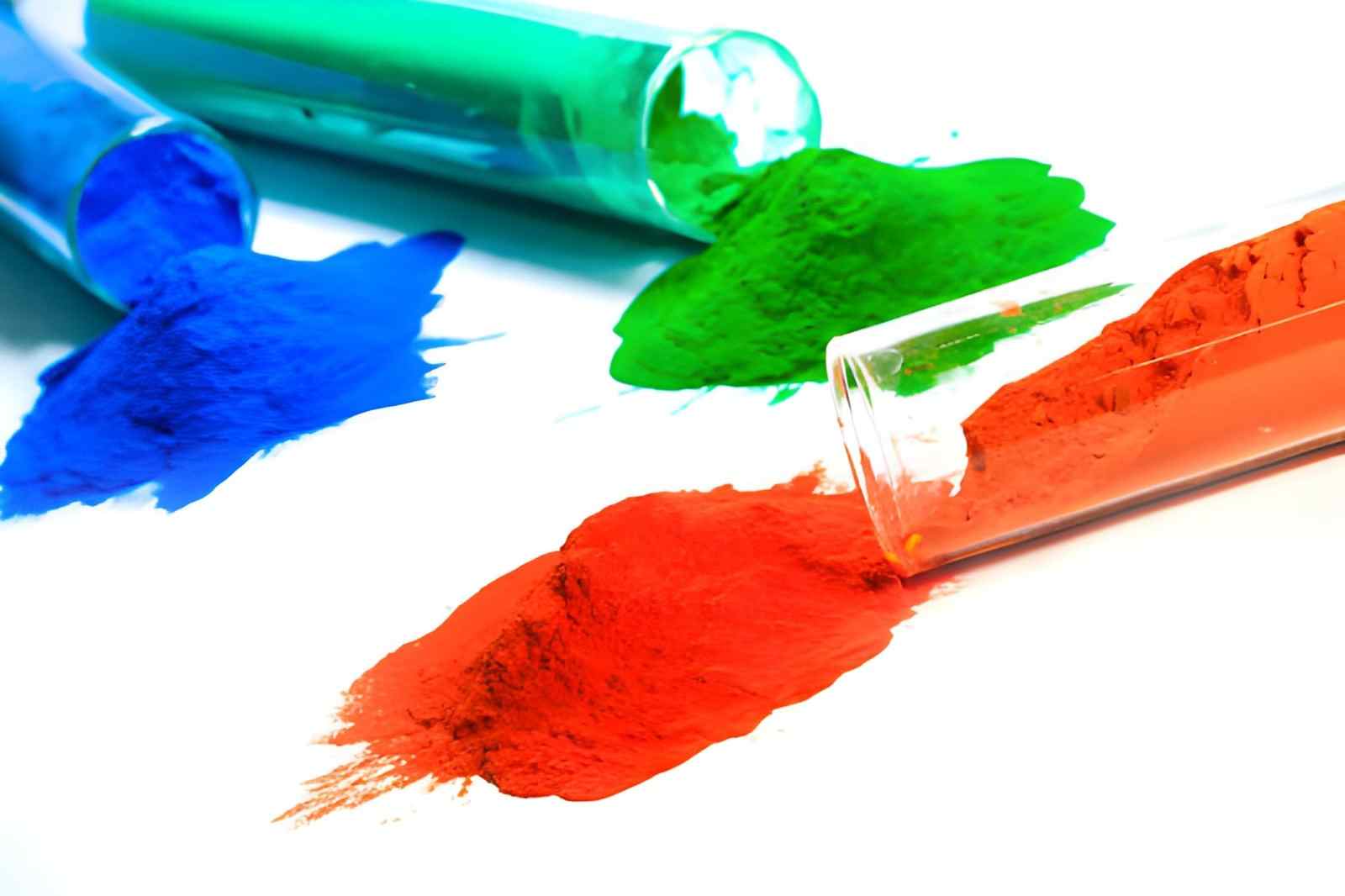 Image showing colorful powder samples used in the powder coating process for metal finishing. (iStock)
On the other hand, anodizing adds a thin oxide layer from the base metal itself. It has minimal dimensional impact compared to coatings, but still requires tolerance consideration. The common anodizing types include:
- Type I
- Type II (sulfuric acid anodizing)
- Type III (hard coat anodizing)
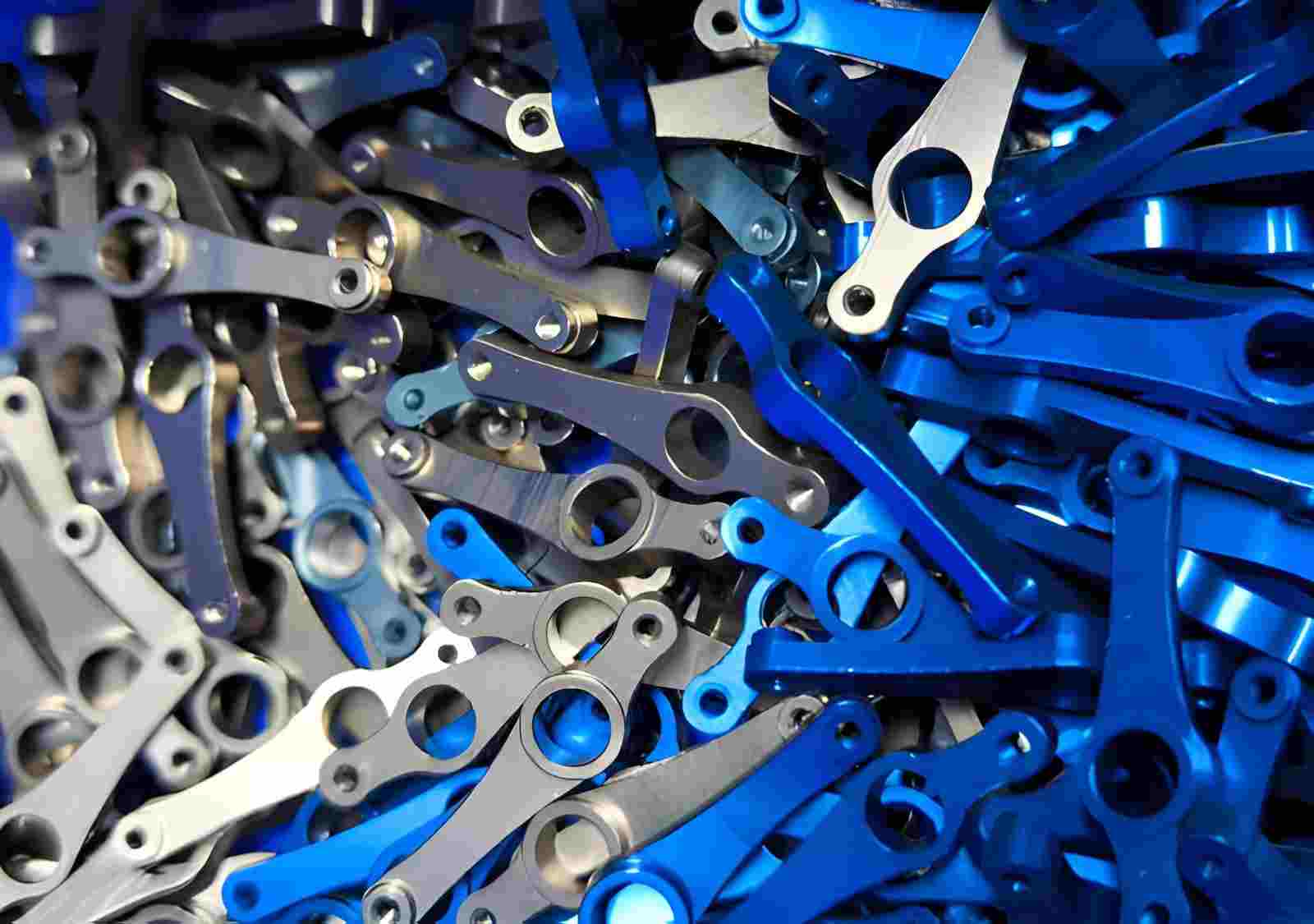 Identical machined aluminum parts in bulk with an anodized surface finish. (Source: iStock)
If you're deciding quickly, the table below summarizes how each finish behaves in real machining scenarios.
Quick Comparison: Powder Coating vs Anodizing
Scenario | Better Choice | Why It Matters |
|---|---|---|
Tight tolerances, threads, and sealing surfaces | Anodizing | Minimal thickness change keeps dimensions stable |
Sliding or wear surfaces | Anodizing | Hard oxide layer resists abrasion and friction |
Precision-machined parts | Anodizing | Maintains fit without post-machining adjustments |
Large external surfaces or housings | Powder Coating | Provides uniform coverage over wide areas |
High visual consistency or color requirements | Powder Coating | Wide color range with smooth or textured finishes |
Parts exposed to impact or handling | Powder Coating | Coating absorbs impact better than oxide layer |
Cost-sensitive large batches | Powder Coating | More efficient for batch processing |
Powder Coating vs Anodizing: Which Is Better?
Neither finish is better across all parts. The better choice depends on where the part becomes sensitive after finishing — on fit, surface wear, appearance, or production cost.
- For precision parts, anodizing is often the better choice because it has less effect on dimensions and is easier to control on holes, threads, and close-fitting features.
- For outdoor panels or visible parts, powder coating is often preferred when full coverage, color choice, and surface appearance matter more.
- For cost-sensitive batches, powder coating can be the more practical option on larger parts or simpler shapes.
- For parts exposed to repeated sliding or abrasion, hard anodizing is usually the better fit because it performs more consistently under surface contact.
In practice, the better finish is usually the one that creates fewer problems after machining and assembly.
Powder Coating vs Anodizing: What’s the Difference
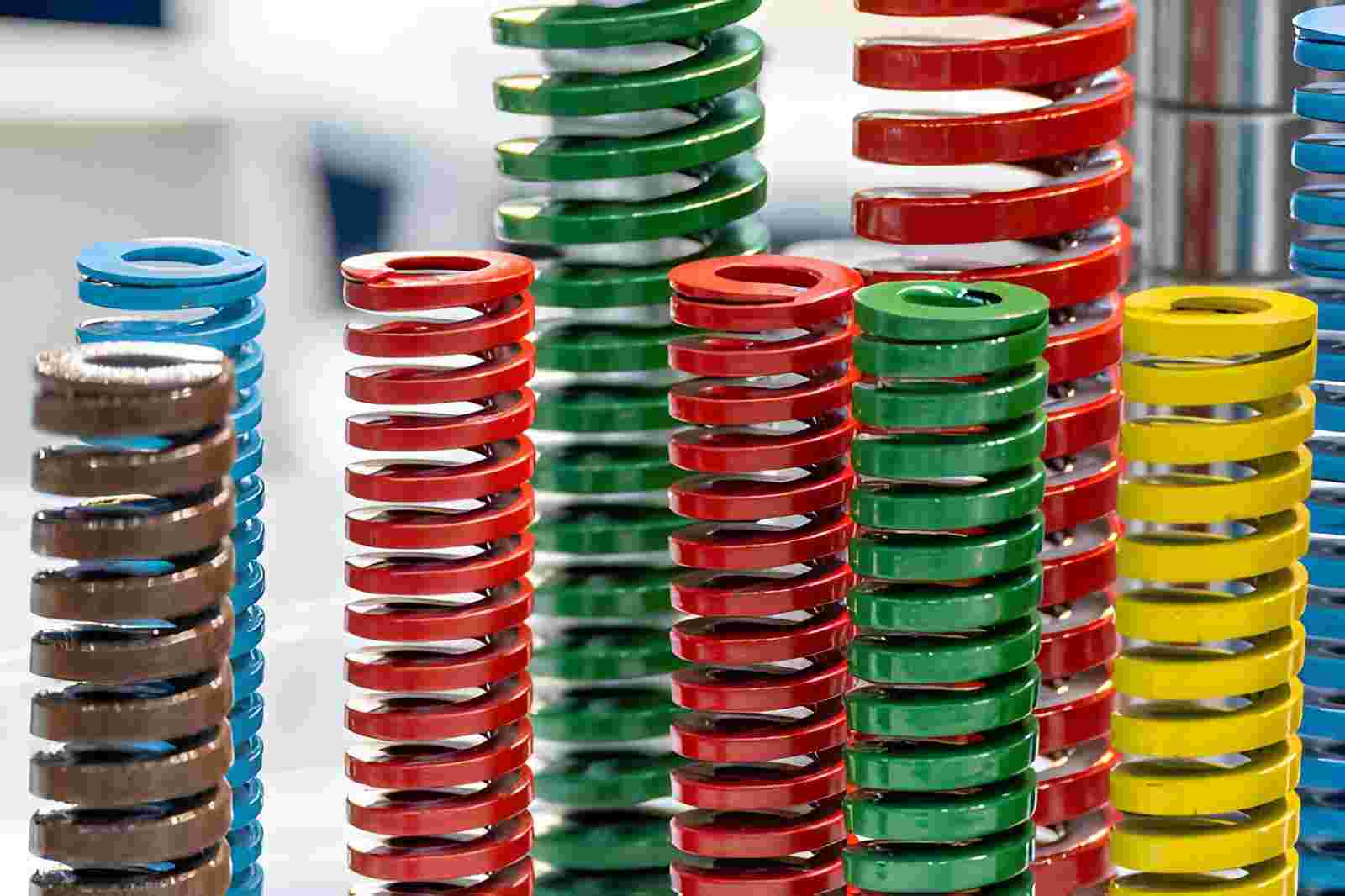
A group of compression coil springs coated with high-gloss pure polyester powder. (Source: iStock)
Powder coating adds a visible coating layer. On the other side, anodizing stays closer to the base metal. It is often chosen when your parts need to fit, seal, or slide after finishing.
We’ve seen powder-coated parts usually fail fit checks due to thickness buildup. Anodized parts usually hold size better, but wear behaves differently.
The table below expands on how each process behaves in real machining conditions. The table below compares both finishing types based on how they behave on custom-machined parts.
Feature | Powder Coating | Anodizing |
|---|---|---|
Process | Powder is sprayed, then baked into a solid layer | Surface is converted into oxide using the current |
Thickness | Usually 60 to 120 µm, can go higher on edges | Usually 5 - 25 µm, depending on process type |
Tolerance Impact | Adds thickness, affects holes, threads, and fits | Low impact, part size stays more stable |
Fit and Assembly | Threads often need masking or rework after coating | Threads usually remain usable without heavy masking |
Durability | Handles impact well, but can chip on sharp edges | Hard surface resists wear, but can scratch under load |
Surface Behavior | Covers surface defects and machining marks | Follows the original surface finish closely |
Appearance | Wide color range, smooth/ textured finish | Limited colors, metallic look, batch variation possible |
Cost | Lower for simple parts and large batches | Higher due to tighter process control |
Applications | Frames, covers, brackets, and outdoor parts | Machined parts, housings, heat sinks, precision components |
What Is Anodizing
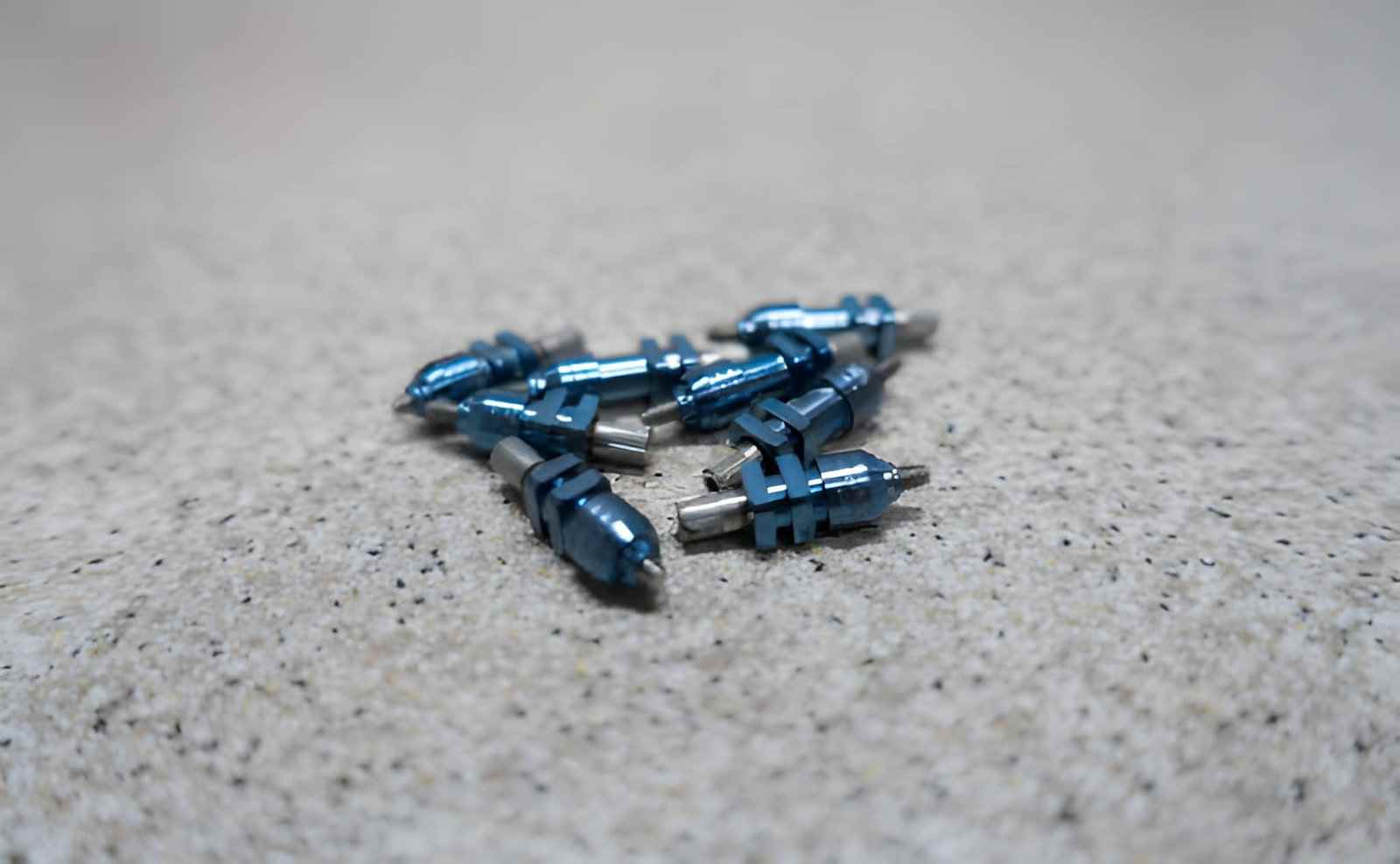
Image showing anodized dental prosthesis parts placed on a work surface in a dental laboratory. (Source: iStock)
- Anodizing surface treatment is mostly used for aluminum machined parts.
- It turns the outer layer of the metal into a hard oxide layer through an electrical process.
- Unlike paint and coatings, this layer is part of the metal itself.
- It adds a bit of thickness. Dimensional change is typically small but not negligible in precision fits
What Is Powder Coating
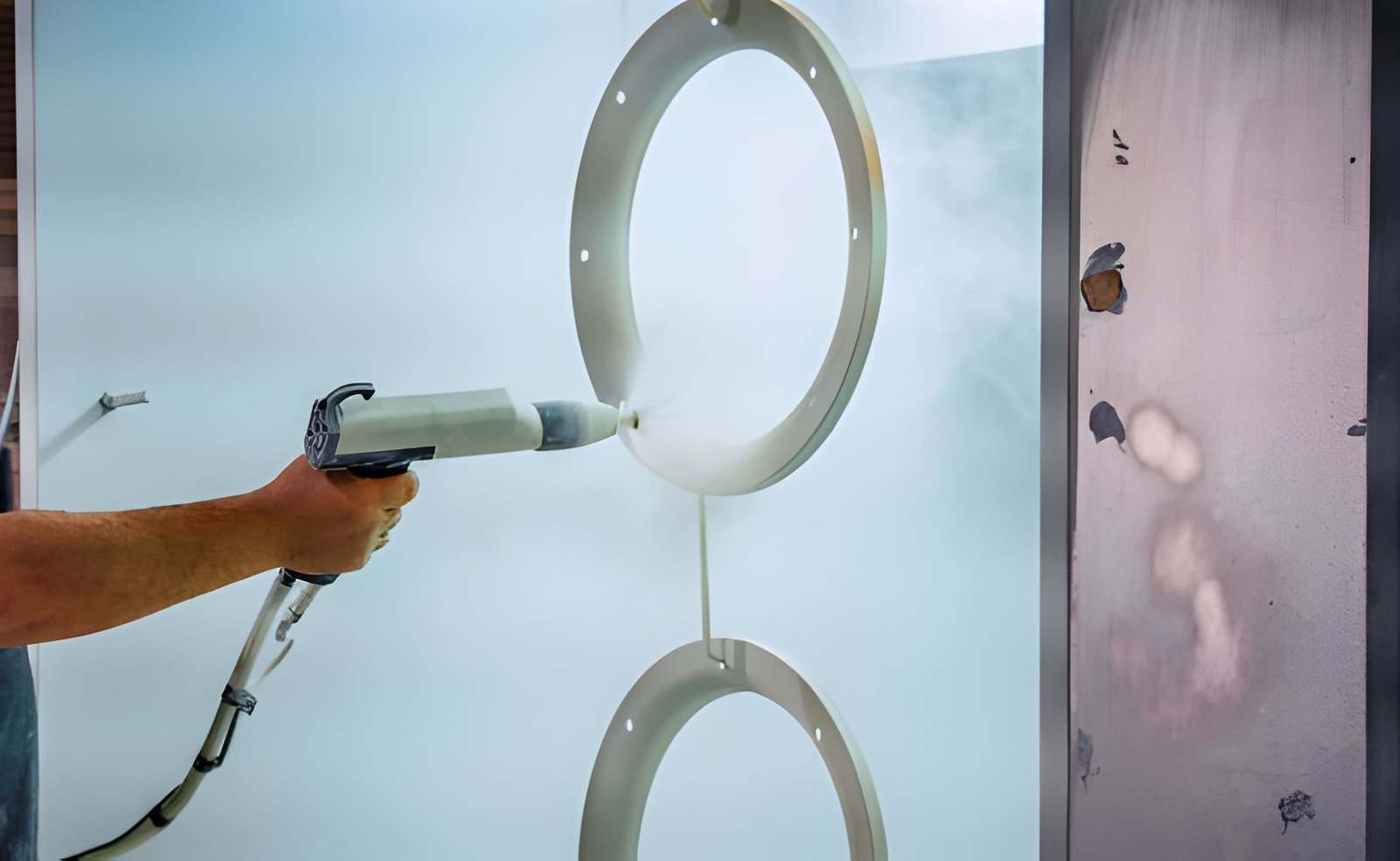
Close-up image showing powder coating being applied to a circular metal component using a spray gun inside a coating booth. (Source: iStock)
- Powder coating uses dry powder. It is applied using an electrostatic charge and then cured with heat.
- It forms a solid, durable layer that becomes part of the part’s surface.
- It adds measurable thickness, so design tolerances may change.
- However, it requires consideration for threads, holes, and assembly fit on precision parts.
Engineering Differences That Affect Part Performance
The right finishing choice is important as it impacts how a part withstands load, wear, and chemical exposure.
Thickness and Fit Considerations
- Powder coating adds about 60 to 120 µm. This can slightly reduce the hole or thread clearance.
- Anodizing adds only 5 to 25 µm and usually keeps the part closer to its original dimensions, but tight CNC tolerances still need to be checked before finishing.
For tight fits, masking or small adjustments after finishing may be needed.
Wear and Impact Resistance
Powder coating resists light impact but may chip at edges. For parts exposed to abrasion or repeated sliding contact, the difference between standard anodizing and hard anodizing becomes more important. Standard anodizing typically provides more moderate protection.
Corrosion Protection
- Powder coating creates a coating layer to prevent moisture and chemicals.
- Anodizing applies a good oxide covering, which offers protection to aluminum despite a scratch.
- Scratched powder-coated surfaces expose the metal; anodized surfaces remain protected.
Surface Appearance and UV Stability
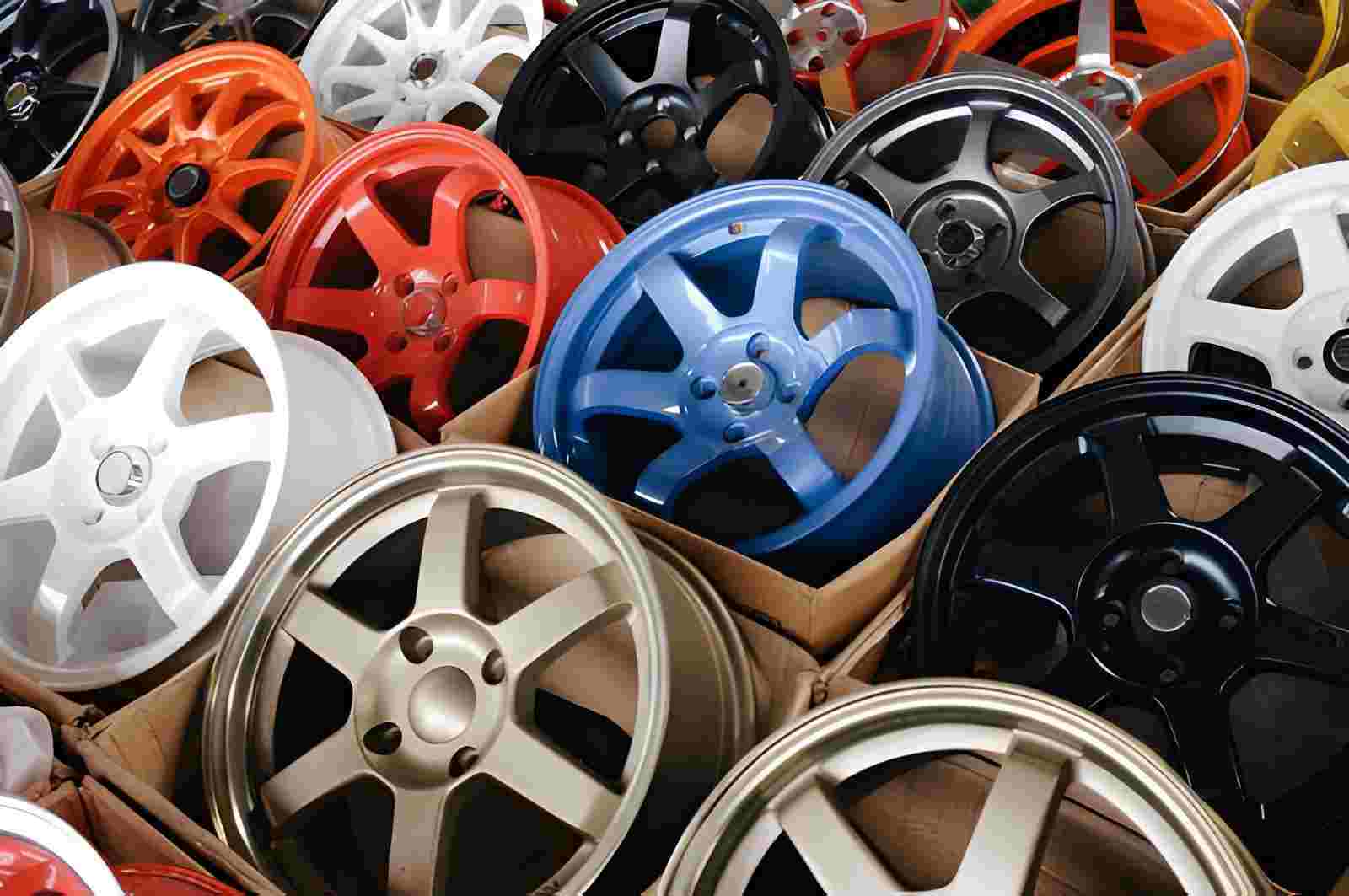
Multiple aluminum alloy car rims finished with vibrant anodized colors. (Source: iStock)
- Powder coating has numerous colors and surfaces, although it may become faint under the sun's exposure.
- Anodized parts feature a metallic look and retain their color in sunlight.
- Anodized surfaces can have machining marks, whereas small defects may be concealed by powder coating.
Common Failure Modes
- Powder coating may chip, crack, or peel on sharp edges and threads.
- Anodized layer can wear under high-friction areas or surfaces can discolor.
Design Considerations Before Choosing a Finish
Selecting a finish affects how parts assemble and function. Engineers and designers must account for coating behavior early to avoid rework, fit issues, or assembly problems. This section focuses on practical adjustments needed before the application of finishing.
Tolerance Stack-Up After Coating or Anodizing
- Increase hole and slot allowances if applying thick powder coating.
- Keep anodizing in mind for precision holes, but usually, minimal adjustment is needed.
- Consider cumulative tolerance effects when multiple parts are assembled.
Threaded Features and Masking Requirements
- Plan masking or re-tapping for powder-coated threads to prevent interference.
- Use anodizing for threads that must remain precise without extra preparation.
- Specify which threads are functional vs non-critical to guide finishing.
Edge Geometry and Coating Build Behavior
- Avoid extremely sharp edges that may cause powder coating chipping.
- Add fillets or chamfers to help the coating flow evenly and reduce wear.
- Ensure edges that seal/mate remain within design clearance after coating.
Compatibility with Assembly and Sealing Surfaces
- Identify press-fit or sliding surfaces and adjust dimensions before coating.
- Mask or grind surfaces that need direct metal contact for seals and fasteners.
- Always make sure that the finish thickness does not interfere with alignment, gaskets, or O-rings.
Powder Coating vs Anodizing: Cost Comparison
Choosing between powder coating and anodizing impacts more than the material price. Part size, shape, and features affect labor, handling, and overall production. Therefore, knowing these details helps you plan machining, assembly, and finishing without surprises.
Part Size, Batch Size, and Geometry
- Small, detailed parts often cost more to anodize because each feature needs careful handling.
- Large panels or frames are usually cheaper to powder coat in batch runs.
- Complicated shapes increase the time for masking and fixturing.
Surface Preparation and Post-Treatment
- Powder coating needs degreasing, surface cleaning, and masking of threads and holes.
- While anodizing requires chemical cleaning, precise bath timing, and consistent thickness monitoring. Therefore, extra handling for critical surfaces adds labor and cost.
Situations That Increase Costs
- The cost of powder coating is also high when the tolerances are tight or the holes are threaded and require adjustment after coating.
- The cost of anodizing is increased by thick and hard coating or when coating parts other than aluminum.
- Both finishes may be very costly compared to standard finishings since small batches, complicated components, or unique colors are involved.
When to Use Anodizing vs Powder Coating
Choosing a finish rarely starts from the process itself. In most projects, the decision is driven by constraints that appear during design, machining, or assembly.
Instead of asking which finish is “better,” engineers usually look at what cannot be compromised — fit, wear behavior, edge condition, or environmental exposure.
When Anodizing Is Preferred
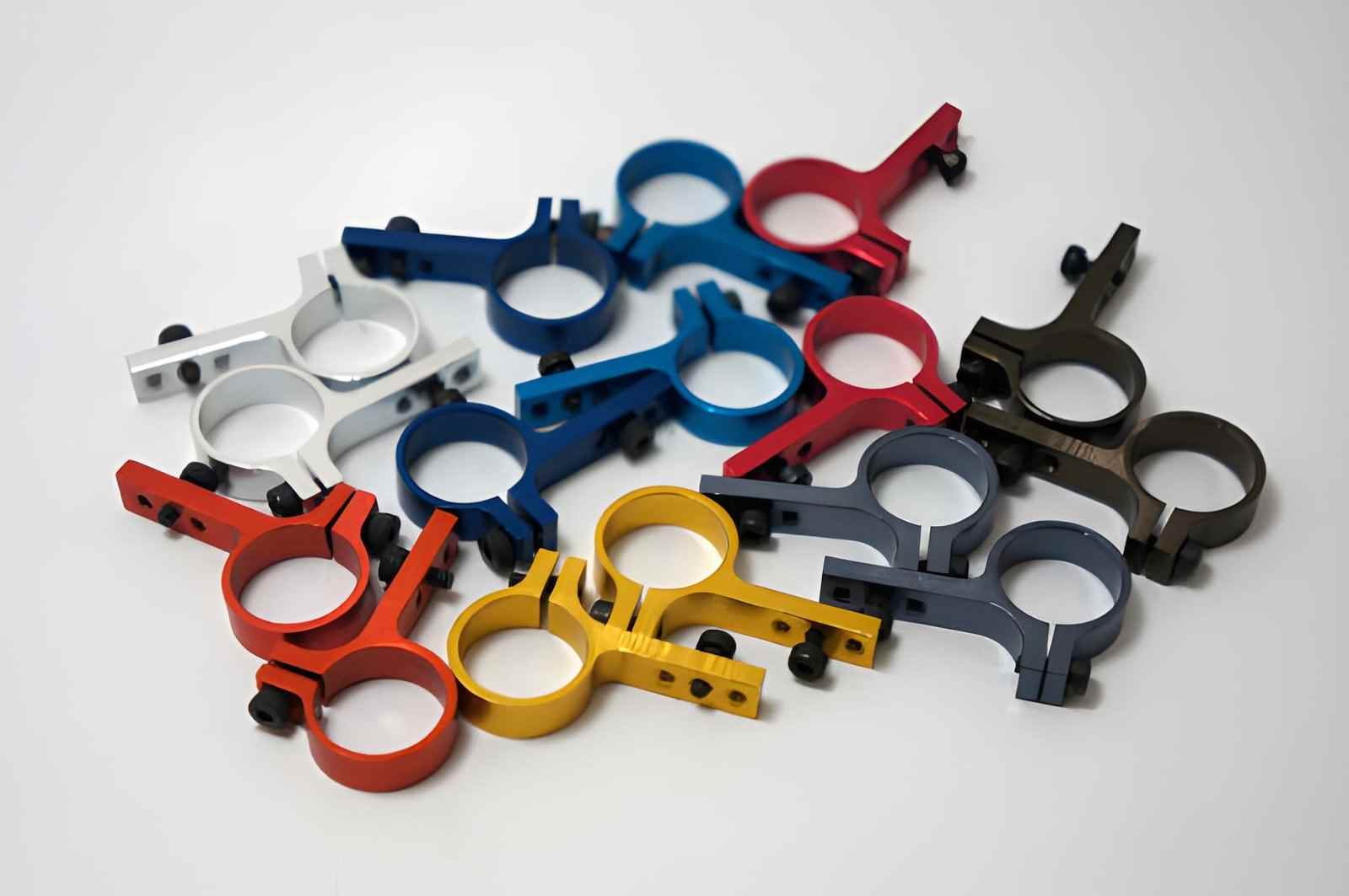
Machined aluminum components with identical shapes and colorful finishes, neatly arranged on a white background. (iStock)
Anodizing becomes the practical option when dimensional stability and surface interaction matter more than appearance.
- Tight-fit features cannot tolerate additional coating thickness
- Threads and small holes must remain usable without secondary machining
- Sliding or contact surfaces require consistent wear behavior
- Sealing surfaces depend on flatness and predictable geometry
- Parts are exposed to UV or long-term outdoor conditions where color stability matters
In these cases, the finish follows the geometry rather than modifying it.
When Powder Coating Is Preferred
Powder coating is usually selected when coverage, protection, and visual consistency outweigh small dimensional changes.
- Large external surfaces require uniform color or texture
- Minor dimensional buildup can be absorbed in assembly design
- Impact resistance matters more than sliding wear performance
- Edge protection is needed, even if the coating thickness varies slightly
- Production volume favors batch coating efficiency over precision finishing
Here, the finish acts as an added layer rather than a controlled surface transformation.
Powder Coating vs Anodizing for Aluminum: What Changes
As mentioned before, anodizing forms a controlled oxide layer on the surface. This layer adhesively attaches to the surface without a significant dimensional change in actual size.
In contrast, powder coating sits on the aluminum parts. It adds to the thickness that may cause holes, threads, and tight fits. The coating behavior is generally determined by the alloy type, surface preparation, and the part geometry.
Electrical Conductivity and Grounding Considerations
Anodized surfaces are electrical insulators due to the aluminum oxide layer, except when the layer is thin or locally removed. This requires contact points to be exposed via masking before processing or by removing the layer afterward.
Powder-coated surfaces become non-conductive, but grounding can be maintained through masked contact points.
Electrical paths are usually preserved by masking or sanding bolts, tabs, and mounting surfaces.
Repair and Rework Differences
Scratched anodized components are usually polished and can be mildly dyed, though matching the color precisely is challenging.
The powder-coated layer can be removed by stripping or sanding and can be eliminated and refinished, although edges and threads should be given additional care.
Note: Both finishes require clean, dry surfaces before repair; otherwise, they will not adhere.
Online CNC Machining Service for Parts That Need the Right Finish
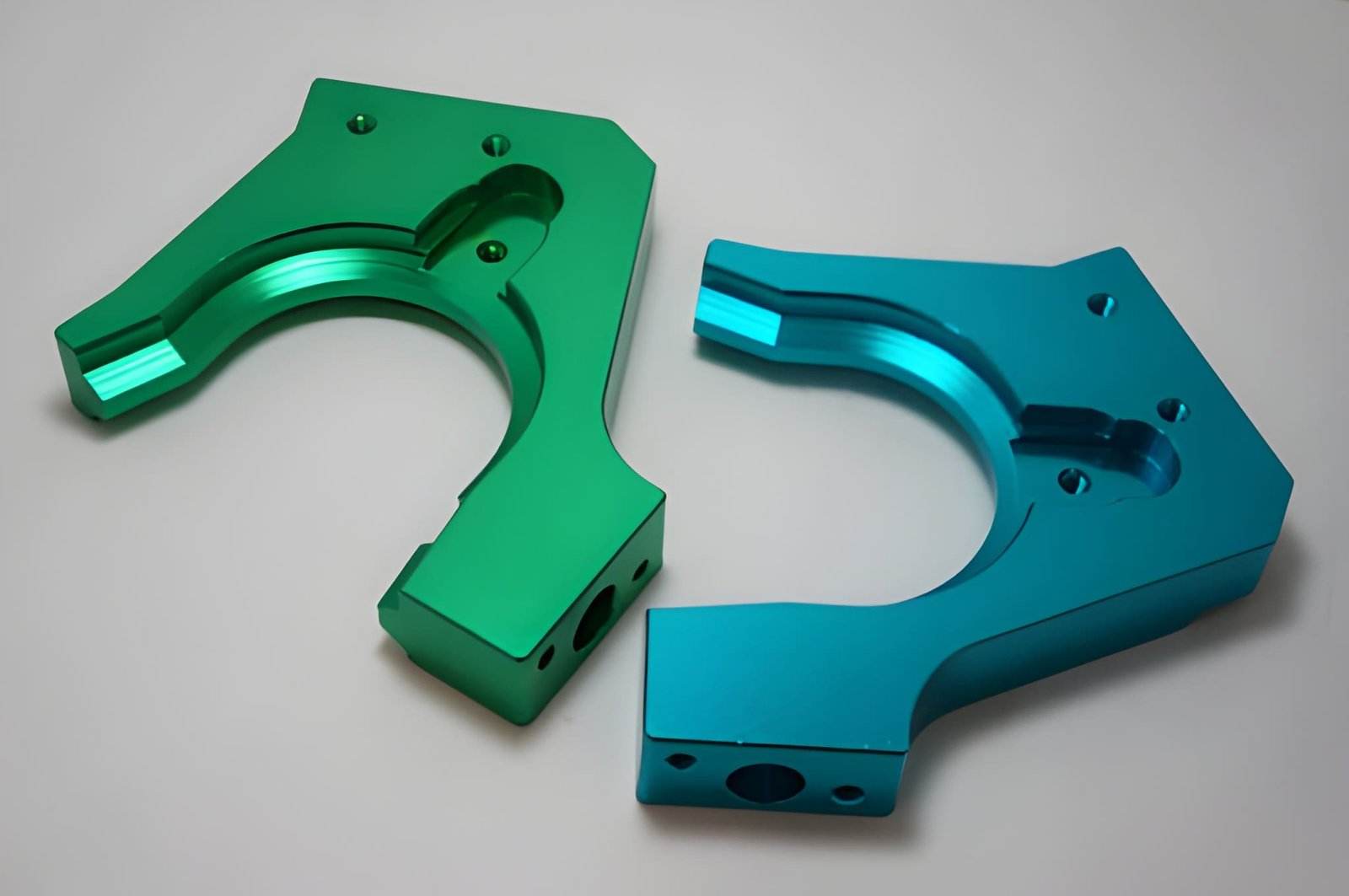
Close-up of a pair of high-precision anodized aluminum components produced through CNC turning. (Source: iStock)
For many custom parts, machining and finishing cannot be treated separately. A hole, thread, sealing face, or contact area may still look fine after machining, but become more difficult once anodizing or powder coating is applied.
JLCCNC provides online CNC machining and sheet metal fabrication for parts that may require anodizing, powder coating, and other post-processing options. When a drawing includes tighter features or functional surfaces, it helps to review those areas early so finishing does not create avoidable fit or assembly problems later.
Upload your CAD file to JLCCNC to review:
- coating impact on tolerances
- thread masking requirements
- finishing cost differences before production
Key Takeaways
To sum up, choosing between powder coating and anodizing usually depends on how the part will be used and what it needs to withstand.
Anodizing forms a hard surface layer that keeps tolerances and resists wear. Powder coating adds a protective layer on top, which can protect against impact and provide color, but changes dimensions slightly.
- You must consider part features and the environment before selecting a finish. In general
- Holes, threads, and mating surfaces may need allowances for coating thickness.
- Sharp edges can chip powder coating or wear anodizing.
- Sliding surfaces, corrosion risk, part size, and electrical contact all influence the choice.
FAQ
Q: What finish lasts longer in high-wear applications?
Anodized surfaces typically perform better in sliding or high-friction conditions. It forms a hard oxide layer that is resistant to scratching and corrosion. Powder coating, on the other hand, has a tendency to chip or peel due to continuous friction. Thus, it is more suitable for impact protection and not for sliding wear.
Q: What is the main difference between anodizing and powder coating?
The anodizing process adds a hard oxide to the aluminum surface; however, the dimensions remain nearly the same. Powder coating is applied over the part surface, and it is typically a thick coating. So, it may change the fit, holes, and threads.
Q: Is anodizing stronger than powder coating?
Anodizing is more resistant to wear or scratching on the surfaces of contact. Powder coating is harder, and it rarely impacts, but it can be chipped or peeled under frequent friction.
Q: Does powder coating affect part dimensions?
Yes, powder coating not only adds a 60-120 micron layer, but also can impact the fit into tight holes, threads, or assembly fits, if not taken into consideration. In some cases, coating thickness can exceed 120–150 µm due to edge buildup or multi-layer applications.
Q:Which is better for outdoor use, anodizing or powder coating?
Both protect against corrosion, but anodizing maintains color and surface hardness longer. Powder coating can fade or chip if exposed to abrasion or strong UV.
Q: Why is anodizing usually used for aluminum only?
The anodizing process forms a protective oxide on aluminum specifically. Other metals do not form the same hard, consistent layer, making anodizing less effective.
Q: Is powder coating cheaper than anodizing for small batches?
Powder coating setup is simpler, but for very small, detailed parts, handling and masking can make it costlier. Anodizing can be more predictable for tight, small aluminum parts.
Q: Which finish is better for precision-machined parts?
Anodizing is better where tolerances and thread fits must stay precise and accurate. Comparatively, powder coating can work if allowances are made for added thickness, but careful masking is required.
Popular Articles
• Anodized Aluminum Colors: Options, Limits, and Real-World Results
• Explanation of different material surface treatment technologies in CNC machining
• Anodizing vs. Hard Anodizing: The Differences in Surface Treatment Techniques
• How to choose between Laser marking and UV printing?
• What is Bead Blasting Finish in CNC? A Complete Guide
Keep Learning
How to Remove Anodizing from Aluminum Parts
Key Takeaways Chemical stripping is commonly used when anodizing needs to be removed from most or all of an aluminum part, but the process can also attack the underlying aluminum if it is not controlled. Mechanical removal works well for accessible areas but can change the surface texture and remove more base metal than intended. CNC machining gives better control when a defined anodized area needs to be removed from a precision part. Laser-based removal can be useful for controlled localized treatmen......
Anodizing Thickness: How Much Does It Add?
Anodizing Thickness and Dimensional Change at a Glance Feature Approximate dimensional effect One coated external surface +0.5 × coating thickness Outside diameter across two coated surfaces +1 × coating thickness Bore diameter with two coated walls −1 × coating thickness 60° thread pitch diameter Changes by about 4 × surface-growth amount, or about 2 × coating thickness under the 0.5× growth assumption Dimensional estimates below use the 0.5 × coating-thickness surface-growth relationship given in MI......
Blackening Coating: How It Works, Types, and Applications
Key Takeaways Blackening coating is a broad category of dark metal surface treatments, while black oxide is a specific conversion coating. Conventional hot black oxide on steel forms a thin magnetite surface through an alkaline oxidizing process. Cold blackening uses different chemistry and should not automatically be treated as equivalent to hot black oxide. Black oxide has minimal dimensional impact and can reduce surface reflectivity. Corrosion protection depends heavily on the sealing treatment an......
Optimizing Manufacturing Efficiency: A Guide to Computerized Numerical Control (CNC) Machining Surface Finishes
CNC Surface Finishes: Types, Costs, and How to Choose Quick Answer: Choose an as-machined finish when cost and dimensional stability matter most. Use bead blasting or brushing for a uniform cosmetic appearance, anodizing for aluminum corrosion resistance, hard anodizing for wear, and laser marking or UV printing for identification. Confirm material, tolerance, color, masking, and end-use environment before quoting. A CNC-machined part comes off the machine functional but rarely finished — tool marks, ......
Anodizing vs. Hard Anodizing: The Differences in Surface Treatment Techniques
Anodizing vs. Hard Anodizing: The Differences in Surface Treatment Techniques Quick Answer: Choose Type II anodizing when corrosion resistance, color, and cosmetic appearance are the main requirements. Choose Type III hard anodizing when the part needs greater wear resistance and the coating thickness can be accommodated in the fit and tolerance plan. Confirm alloy, coating thickness, color, sealing, and critical dimensions before release. An aluminum bracket for an outdoor enclosure and a hydraulic c......
Laser Etching: Complete Technical Guide to Process, Materials, and Industrial Applications
Laser etching is widely used in manufacturing, product design, and industrial marking. However, it is often confused with laser engraving and laser marking, which can lead to incorrect process selection. This guide explains its core principles, process, materials, and industrial applications in a structured way. What Is Laser Etching? Engineering Definition of Laser Etching At its core, laser etching is a process that uses a focused laser beam to alter the surface of a material permanently. Unlike pro......