Composite Material Guide: Types, Manufacturing Processes, Applications & Selection
27 min
- What Is a Composite Material?
- Types of Composite Material
- How Engineers Choose Composite Materials
- Composite Material Manufacturing Processes
- Challenges in Composite Material Manufacturing
- Key Properties of Composite Materials
- Composite Materials vs Traditional Engineering Materials
- Common Composite Material Applications
- Advantages and Limitations of Composite Materials
- Composite Materials in Modern Manufacturing
- Future Trends in Composite Materials
- Conclusion
- FAQ About Composite Material
Composite materials are now widely used in aerospace and automotive structures because they combine high strength with relatively low weight.
Unlike traditional metals, composite materials can be engineered by combining different reinforcement and matrix materials to achieve specific mechanical, thermal, or chemical properties.
As manufacturing technologies have matured, composites have become practical for both high-performance and commercial products.
In this guide, I'll break down everything you need to understand about composite material—from basic definitions to practical selection tips. Whether you're an engineer, designer, or just curious about advanced materials, you'll find useful insights here.
What Is a Composite Material?
Composite Material Definition
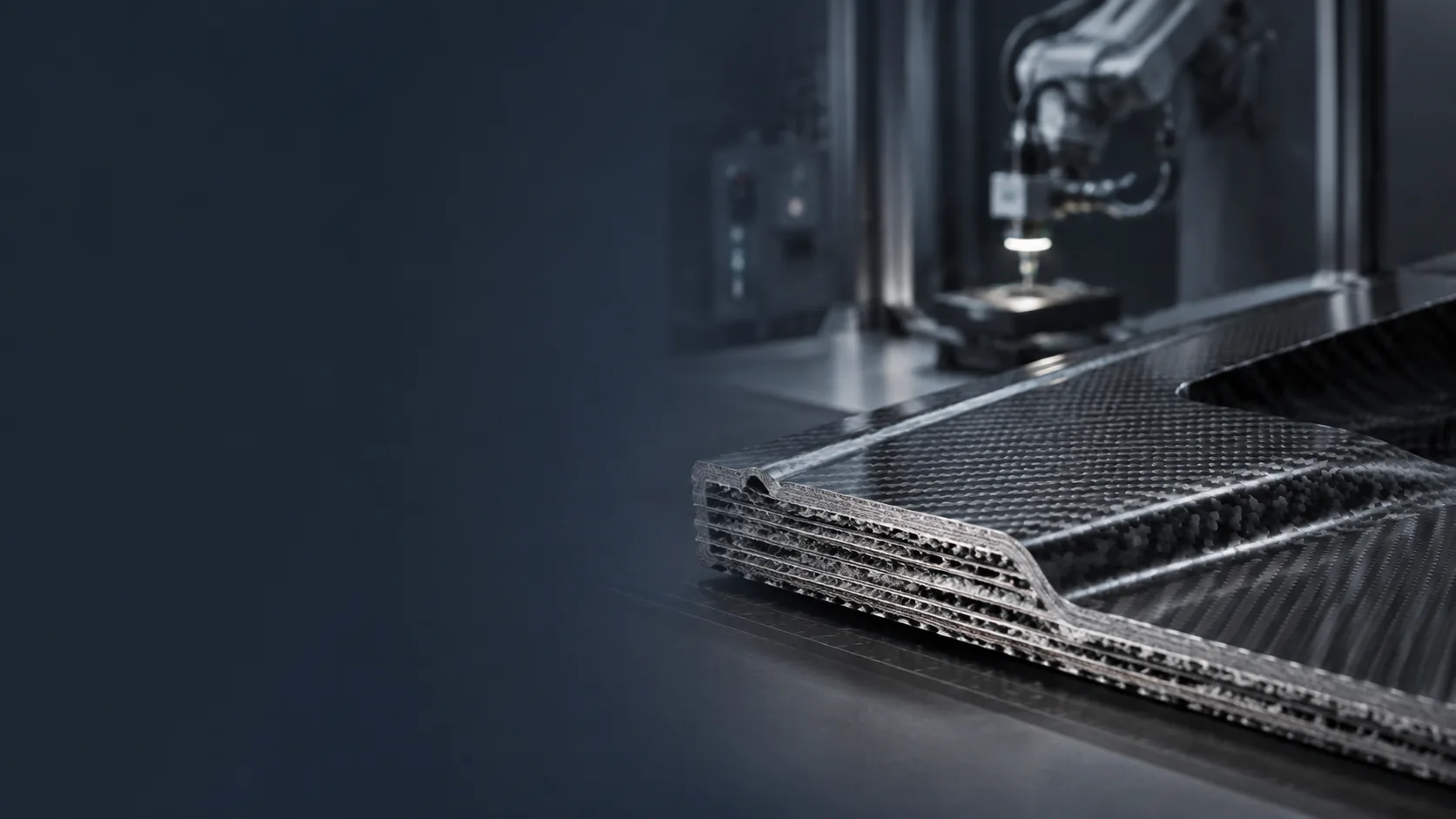
A composite material is exactly what it sounds like—it's made from two or more distinct materials that are combined together to create something new. The cool part? The resulting material has properties that are better than either of the individual materials alone.
You find this in nature too. Wood is basically a natural composite of cellulose fibers and lignin. Bone is a composite of collagen and minerals. Humans have been copying this idea for thousands of years—ancient Egyptians used straw and mud to make bricks, which is essentially an early composite.
Today, when people talk about composite material in engineering, they're usually referring to fiber-reinforced polymers, but there's a lot more variation than that.
Matrix and Reinforcement Components
Every composite has two basic components: the matrix and the reinforcement.
The matrix is the binder that holds everything together. It surrounds the reinforcement fibers and protects them from environmental damage. It also transfers stress between fibers. Common matrix materials include polymers, metals, and ceramics.
The reinforcement is the strong stuff that gives the composite its main strength. Fibers are the most common reinforcement—carbon, glass, aramid, and natural fibers all get used. The fibers carry most of the load, while the matrix keeps them in the right position.
The combination is what makes magic happen. You get the strength from the fibers and the toughness from the matrix.
Key Properties of Composite Material
What makes composites special compared to traditional materials? The biggest thing is that you can tailor their properties to match exactly what your application needs. Want more strength in one direction? You just orient more fibers that way. Need better corrosion resistance? Pick a different matrix material.
Other common properties you'll see: high strength-to-weight ratio, good fatigue resistance, excellent corrosion resistance, and low thermal expansion. Depending on the combination you choose, you can also get electrical insulation or conductivity, high temperature resistance, or even self-healing properties.
Why Composite Materials Are Different From Traditional Materials
Traditional materials like steel or aluminum are homogeneous—their properties are the same everywhere in the material. Composites are heterogeneous. You have two distinct materials staying separate at the microscopic level, and that's why you get the best properties from both.
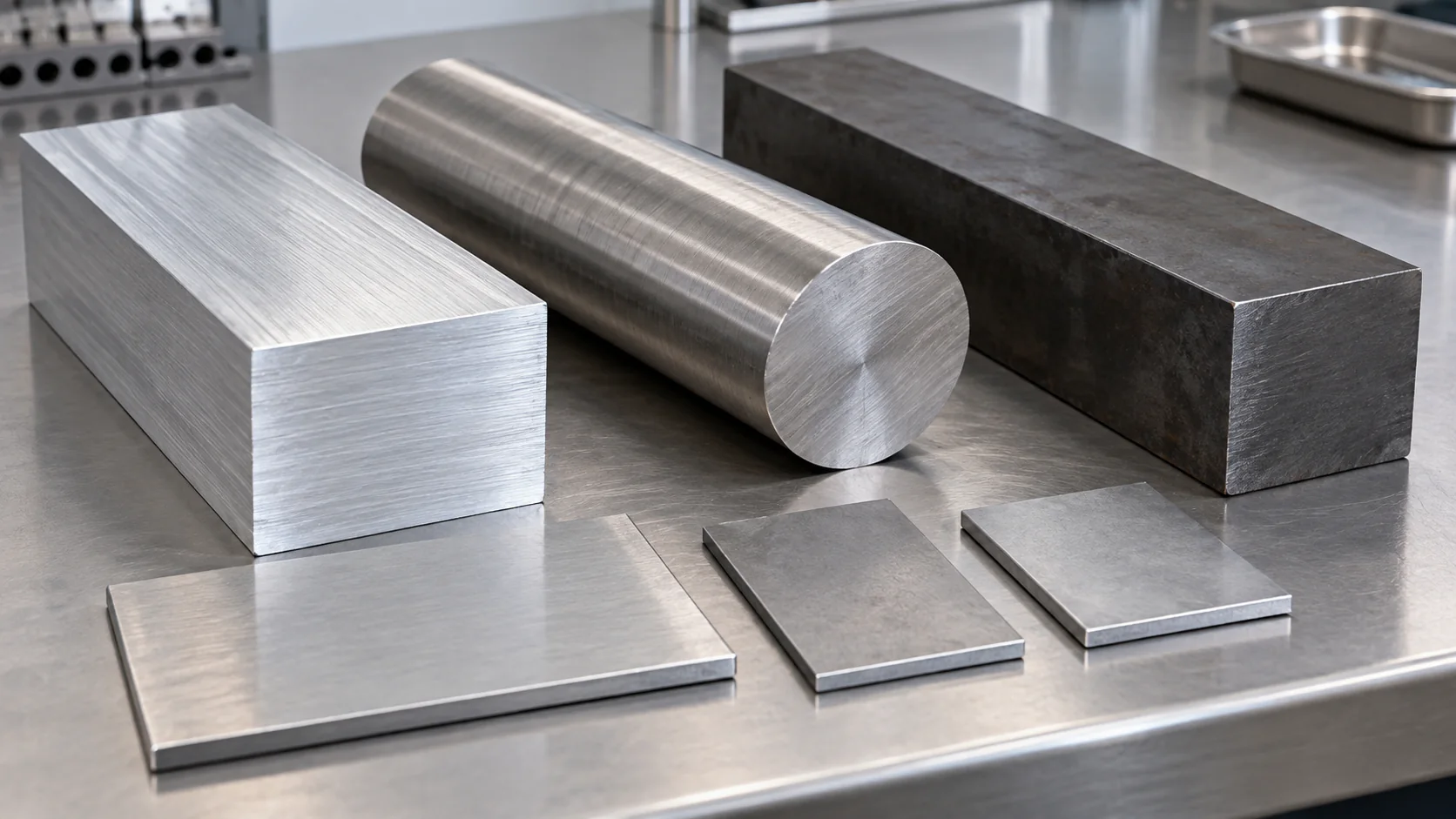
With metals, what you see is what you get. The strength and weight are fixed by the material's inherent properties. With composites, you can design the material and the part at the same time. That's a huge difference in how you approach design and manufacturing.
Types of Composite Material
Polymer Matrix Composites (PMC)
Polymer matrix composites are the most common type you'll find today. They use a polymer resin (usually epoxy, polyester, or vinyl ester) as the matrix, with various fibers as reinforcement.
What makes PMCs so popular? They're relatively easy to manufacture, have excellent strength-to-weight ratios, and can be molded into complex shapes pretty easily. Most aerospace, automotive, and wind energy composites fall into this category.
The downside? They don't handle extremely high temperatures as well as metal or ceramic matrix composites. But for most applications, that's not an issue.
Carbon Fiber Composites (CFRP)
Carbon fiber reinforced polymers are the rock stars of the composite world. Carbon fibers are extremely strong and stiff, and they're super light. That's why you see them everywhere from Formula 1 cars to premium bicycle frames to aircraft wings.
The strength-to-weight ratio of CFRP is unmatched by most traditional materials. Depending on design requirements, carbon fiber components can be significantly lighter than steel components while delivering comparable structural performance.The catch? Carbon fiber is expensive, and manufacturing it takes more time and specialized equipment.
Glass Fiber Composites (GFRP)
Glass fiber composites are the more affordable cousin of carbon fiber. E-glass (electrical glass) is the most common type—it offers good strength at a much lower cost than carbon. That's why fiberglass is so widely used in things like boat hulls, automotive body panels, and construction materials.
Glass fiber is heavier than carbon fiber and not quite as strong or stiff, but for many applications, it's more than good enough. It's also more electrically insulating than carbon, which is a plus in some applications.
Metal Matrix Composites (MMC)
Metal matrix composites use a metal like aluminum, magnesium, or titanium as the matrix, with ceramic fibers or particles as reinforcement. These are used for specialized applications where you need higher temperature resistance than polymers can handle.
MMCs have higher stiffness than the base metal, better wear resistance, and lower thermal expansion. They're used in things like aerospace engine components, automotive brake rotors, and electronic heat sinks. They're not as common as PMCs, but they fill an important niche.
Ceramic Matrix Composites (CMC)
Ceramic matrix composites are for extreme environments. They use a ceramic matrix (like silicon carbide or alumina) with ceramic fibers as reinforcement. Regular ceramics are brittle, but CMCs are much tougher and more resistant to thermal shock.
They can handle temperatures way above what metals or polymers can survive—up to 1,600°C in some cases. That makes them perfect for things like gas turbine engines, heat shields, and aerospace thermal protection systems. They're expensive, but in applications where nothing else works, they're invaluable.
Natural Fiber Composites
Natural fiber composites are a growing area, driven by sustainability demands. They use natural fibers like flax, hemp, jute, or bamboo as reinforcement, usually with a bio-based polymer matrix.
The main advantages? They're renewable, lighter than glass fiber, and have a lower carbon footprint. They're already being used in automotive interior panels, sports equipment, and construction materials. The downsides? Lower strength and moisture absorption can be an issue. But for non-structural applications, they're gaining traction fast.
How Engineers Choose Composite Materials
Selecting a composite material is rarely about finding the strongest or lightest option. In real-world engineering projects, designers must balance performance requirements, manufacturing constraints, operating conditions, and cost targets.
Before choosing a composite material, engineers typically evaluate the following factors:
Mechanical Load Requirements
The expected loads are often the starting point for material selection. Applications requiring maximum stiffness and strength, such as aircraft structures or racing vehicles, commonly use carbon fiber composites. For moderate structural loads where cost is more important, glass fiber composites are often sufficient.
Operating Temperature
Temperature can significantly affect composite performance. Polymer matrix composites are suitable for most industrial applications but may lose mechanical properties at elevated temperatures. For extreme thermal environments such as turbine engines or thermal protection systems, ceramic matrix composites are typically preferred.
Environmental Exposure
The operating environment should also be considered. Moisture, saltwater, chemicals, and ultraviolet radiation can affect long-term durability. Glass fiber composites are widely used in marine environments due to their corrosion resistance, while specialized resin systems may be required for chemical processing applications.
Manufacturing Method and Design Complexity
Some composite materials are easier to manufacture than others. Large structural components may benefit from vacuum infusion or filament winding, while complex geometries may require resin transfer molding (RTM) or compression molding. Material selection should align with the available manufacturing process.
Production Volume
Production quantity has a direct impact on material choice. High-performance carbon fiber composites may be justified for low-volume aerospace applications, while higher-volume consumer products often rely on glass fiber composites to control costs.
Cost Targets
Material cost, tooling investment, manufacturing labor, inspection requirements, and lifecycle maintenance costs should all be considered. In many cases, the lowest material cost does not necessarily result in the lowest total ownership cost.
The best composite material is not always the strongest material—it is the material that delivers the required performance, durability, manufacturability, and cost efficiency for a specific application.
Composite Material Selection Guide
In real engineering decisions, material selection is rarely based on a single property. It is usually a trade-off between cost, weight, temperature resistance, and manufacturability.
| Design Requirement | Recommended Composite Type | Typical Applications |
|---|---|---|
| Lowest cost | Glass Fiber Composite (GFRP) | Construction, marine, consumer products |
| Maximum strength-to-weight ratio | Carbon Fiber Composite (CFRP) | Aerospace, motorsports, high-performance equipment |
| High-temperature resistance | Ceramic Matrix Composite (CMC) | Turbine engines, thermal protection systems |
| Wear resistance | Metal Matrix Composite (MMC) | Brake systems, heat sinks, industrial equipment |
| Lightweight structures | Carbon Fiber Composite (CFRP) | Aircraft, EV components, sporting goods |
| Sustainability | Natural Fiber Composite | Automotive interiors, eco-friendly products |
Composite Material Manufacturing Processes
There are several different manufacturing processes for composite material, each suited to different production volumes and part geometries.
Hand lay-up process
Hand lay-up is the oldest and simplest process. Layers of reinforcement fabric are placed in a mold by hand, and resin is applied with a roller or brush. It's low cost for low volumes and doesn't require expensive equipment. But it's labor intensive and quality can vary between operators.
Hand lay-up is still commonly used for one-off parts, prototypes, and large structures like boat hulls where automation isn't practical.
Vacuum bagging process
Vacuum bagging is often used after hand lay-up to improve quality. After laying up the fabric and resin, a plastic bag is sealed over the part and a vacuum is applied. The atmospheric pressure compacts the layers, removes excess resin, and eliminates voids. This produces a higher quality, more consistent part than hand lay-up alone.
Resin Transfer Molding (RTM)
Resin transfer molding injects resin into a closed mold that already contains the dry fiber reinforcement. RTM produces excellent dimensional accuracy and good surface finish on both sides of the part. It's good for medium to high volume production where consistent quality is important.
Compression Molding
Compression molding is another high-volume method. You put pre-measured composite material (usually sheet molding compound or bulk molding compound) into a heated mold, then close the mold and apply pressure. The material flows and fills the mold, then cures.
It's fast, automated, and great for complex shapes with good dimensional control. You see this used extensively in automotive industry for body panels and structural components.
Filament winding technique
Filament winding wraps continuous resin-impregnated fibers around a rotating mandrel. This process is ideal for producing cylindrical or spherical parts like pressure vessels, pipes, and rocket motor casings. It's highly automated and produces parts with very high fiber content for maximum strength.
Pultrusion process
Pultrusion pulls continuous fibers through a resin bath and then through a heated die that cures the resin into the desired profile. This process is used to produce continuous lengths of composite profiles with constant cross-section—things like I-beams, rods, and tubing for construction and infrastructure.
Challenges in Composite Material Manufacturing
Fiber Alignment and Layup Consistency
Getting the fiber alignment exactly right is one of the biggest challenges in composite manufacturing. Even a small deviation from the designed orientation can drop the strength significantly. With manual layup, getting consistent alignment across large parts is tough.
Automated fiber placement machines help with this, but they're expensive. Smaller manufacturers often struggle with consistency, especially on complex curved surfaces.
Void Formation and Porosity
Voids—little air pockets trapped in the resin—are the enemy of good composite parts. They create stress concentrations and weaken the part. Too much porosity can ruin an expensive component.
Vacuum bagging and pressure injection help reduce voids, but they don't eliminate them completely. The resin has to properly wet out every fiber, and any dry spot becomes a problem. Controlling this consistently takes experience and good process design.
Delamination Risks
Delamination is when the layers of composite separate from each other. It's one of the most common failure modes in composites. Impact damage can cause delamination that you can't even see from the surface, but it gradually spreads under load.
Designing to prevent delamination adds complexity. You need to think about how loads transfer between layers, and sometimes add special toughened resins or stitching through the thickness to hold everything together.
Quality Inspection and Testing
Inspecting composite parts for internal defects isn't as straightforward as with metals. Ultrasonic testing is commonly used to find delaminations and voids, but it's time-consuming and requires skilled technicians.
For critical aerospace components, you often need 100% inspection, which adds significant time and cost to manufacturing. Developing faster, cheaper inspection methods is an active area of research right now.
Key Properties of Composite Materials
Strength-to-Weight Ratio
This is the big one that makes composites so attractive. High-strength carbon fiber composites have a strength-to-weight ratio about five times higher than mild steel. That means you get the same strength with a fraction of the weight.
In industries where every pound counts—aerospace, automotive, wind energy—this weight saving directly translates to better performance and lower operating costs. A lighter aircraft uses less fuel. A lighter wind turbine blade puts less stress on the hub and tower.
Corrosion Resistance
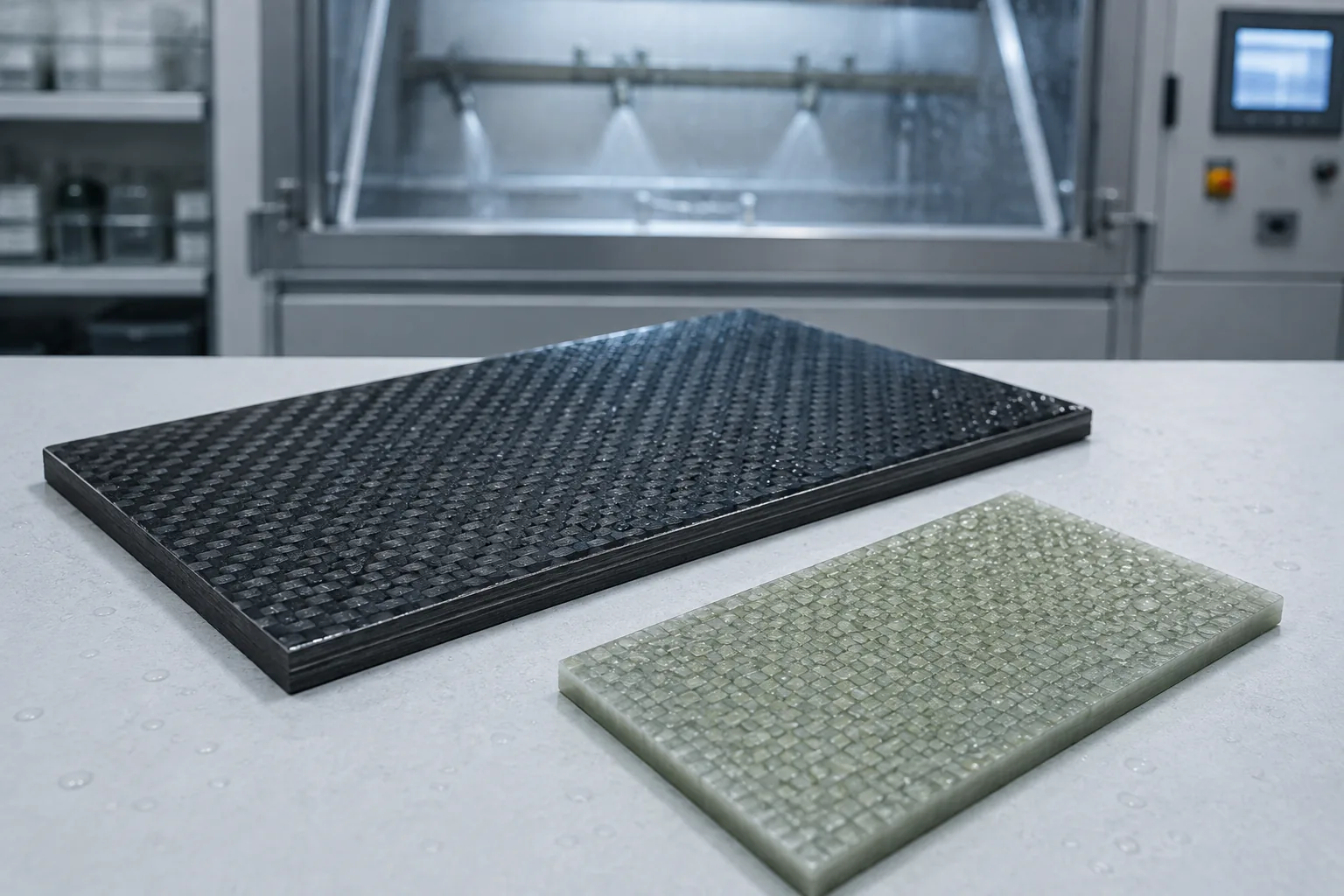
Composites don't rust like steel, and they don't corrode like aluminum. Most polymer matrix composites are highly resistant to chemicals, moisture, and salt water. That's why they're so popular in marine applications and chemical processing equipment.
You don't need to paint them or add protective coatings like you do with metals. That saves maintenance cost over the life of the part.
Fatigue Resistance
Fatigue—when a material fails after repeated loading—is a big problem for many metals. Composites generally handle cyclic loading much better. The fibers distribute the stress, and crack propagation is slower than in homogeneous metals.
That's why composites are ideal for things like aircraft wings and wind turbine blades that see millions of loading cycles over their lifetime. They last longer in fatigue than most metals when designed correctly.
Thermal Properties
Composites can be tailored to have whatever thermal properties you need. Most polymer matrix composites have low thermal expansion, which is great for applications where dimensional stability at different temperatures is important—like aircraft wings or telescope mirrors.
You can also create composites with high thermal conductivity (for heat sinks) or extremely low thermal conductivity (for insulation), depending on the fibers and matrix you choose. That flexibility is a huge advantage in many engineering applications.
Electrical Properties
Again, you can tailor this to your needs. Carbon fiber composites are electrically conductive, which can be good or bad depending on the application. Glass fiber composites are excellent insulators, which makes them perfect for electrical components and transmission line structures.
If you need electromagnetic shielding, you can design a composite that provides that. If you need something transparent to radio waves, composites can do that too.
Composite Materials vs Traditional Engineering Materials
| Feature | Composite | Steel | Aluminum | Titanium |
|---|---|---|---|---|
| Weight | Lowest | High | Medium | Medium-High |
| Strength | High | Very High | Medium | Very High |
| Strength-to-Weight | Best | Poor | Good | Excellent |
| Corrosion Resistance | Excellent | Poor (needs coating) | Good (passivates) | Excellent |
| Cost | High | Low | Medium | Very High |
| Machinability | Difficult | Easy | Easy | Moderate |
Looking at this table, you can immediately see why composites aren't replacing metals entirely—they have different strengths. The sweet spot for composites is where weight savings justify the higher cost.
Composite Materials vs Steel
Steel is cheap, strong, and easy to fabricate. But it's heavy. Composites beat steel hands down on strength-to-weight and corrosion resistance. But steel beats composites on cost and ease of manufacturing. For structures where weight isn't critical and cost is king, steel is still the way to go.
Composite Materials vs Aluminum
Aluminum is the traditional lightweight material in aerospace and automotive. Composites are still lighter and have better corrosion resistance than aluminum. But aluminum is cheaper, easier to weld and machine, and it has better damage tolerance in some cases. Many modern aircraft use a mix of both.
Composite Materials vs Titanium
Titanium has excellent strength and corrosion resistance, but it's extremely expensive and heavy compared to composites. Composites offer similar strength at a much lower weight, but they can't handle the high temperatures that titanium survives in engine applications. Again, it's about matching the material to the job.
When Composites Are Preferred
Composites are usually the preferred choice when:
- Weight reduction is a top priority
- You need excellent corrosion resistance
- Fatigue performance is critical
- You need to tailor directional properties
- Dimensional stability over temperature changes is important
That's why you see them dominate in aerospace primary structures, wind turbine blades, high-performance automotive parts, and marine applications.
When Metals Are Preferred
Metals still make more sense when:
- Cost is the main driver
- You need high volume production with low tooling cost
- The part needs to handle extremely high temperatures
- You need good conductivity for electrical or thermal applications
- Repairability is important
Even in the most composite-intensive aircraft, the engines and certain high-temperature structural parts are still metal.
Common Composite Material Applications
Aerospace Industry
Aerospace is where high-performance composites really took off. Modern commercial aircraft like the Boeing 787 and Airbus A350 use composite materials for over 50% of their structural weight—wings, fuselage, empennage, all composite. The weight savings directly translates to thousands of gallons of fuel saved per year.
Military aircraft use even more composites, both for weight savings and for stealth properties. Composites can be designed to absorb radar energy, which helps reduce the aircraft's radar signature.
Automotive Industry
Automotive is another huge growth area for composites. Electric vehicles especially benefit from weight savings—every pound you cut extends the vehicle's range. High-performance cars like McLaren, Ferrari, and Porsche use carbon fiber monocoques for maximum stiffness and minimum weight. Tesla battery enclosures increasingly incorporate composite structures.
Even mainstream automakers are using more composites for body panels, interior components, and structural parts. Natural fiber composites are gaining popularity for non-structural interior parts because of their sustainability benefits.
Wind Energy
Wind turbine blades are one of the largest applications of composite materials today. A modern offshore wind turbine blade can be over 100 meters long, and it needs to be strong, light, and resistant to fatigue and weathering. GE offshore wind blades exceed 100m and rely heavily on GFRP. Composites are really the only material that can meet all those requirements economically.
Almost all wind turbine blades today use glass fiber or carbon fiber reinforced epoxy. The demand for composites in wind energy is growing exponentially as more wind farms get built around the world.
Marine Industry
Corrosion resistance makes composites perfect for marine applications. Almost all pleasure boats and yachts use fiberglass composite hulls these days—it's cheaper to build and lasts longer than wood or metal.
For larger commercial vessels, composites are used for superstructures, hatches, and interior components. Military ships also use composites for various applications to reduce weight and improve corrosion resistance.
Construction Industry
Composites are used in construction for things like bridge decks, facade panels, reinforcement bars (rebar) for concrete, and window frames. They're especially useful in corrosive environments like coastal bridges where steel rebar would rust away quickly.
Fiber reinforced polymer panels also give architects more freedom to create complex shapes and interesting facades. They're lighter than traditional building materials, which reduces the load on the foundation.
Consumer Products
Walk into any sporting goods store and you'll see composites everywhere. Bicycle frames, tennis rackets, golf clubs, skis, and hockey sticks all use carbon fiber or fiberglass composites to get light weight and high strength.
Consumer electronics is another growing area. Laptop casings, phone cases, and camera bodies use carbon fiber composites for a premium look and feel, plus they're lighter than metal or plastic. High-end furniture designers are also starting to use composites for unique shapes and durability.
Advantages and Limitations of Composite Materials
Major Advantages
Let me recap the main advantages we've talked about so you have them all in one place. First, the unmatched strength-to-weight ratio—you can get parts that are dramatically lighter than metal without giving up strength.
Next, excellent corrosion resistance means less maintenance and longer life in harsh environments. Fatigue resistance is superior to most metals, so composite parts last longer under repeated loading.
You can tailor the properties to your exact needs—orient strength where you need it, pick the right thermal or electrical properties, and mold complex shapes that would be impossible with metal.
Key Limitations
Composites aren't perfect, and it's important to understand the downsides. The biggest one is cost—materials and manufacturing are both more expensive than metals. High-performance carbon fiber is especially pricey.
Repairing composite damage is harder than fixing metal. When metal dents, you can often pound it out or weld it. When composites delaminate, repairing it properly requires specialized knowledge and materials.
Composites are also more difficult to machine than metals. The abrasive fibers wear out cutting tools quickly, and you have to be careful not to delaminate the part during cutting. That's why most net-shape composite manufacturing processes are preferred, but when you need precision features, you still need CNC machining expertise.
Another limitation is that composite properties can be less consistent than metals, especially with manual manufacturing processes. Quality control is more critical and more complex.
Cost Considerations
When you look at cost, you have to think beyond just the initial material price. Yes, composites cost more upfront, but the weight savings can save you money over the life of the product. In an aircraft, lower weight means less fuel used for decades. That adds up to huge savings.
In applications where corrosion would kill a metal part quickly, composites last longer, so you get better value even though they cost more initially. But for low-stress, low-cost applications where weight doesn't matter, the extra upfront cost rarely makes sense.
Sustainability and Recycling Challenges
This is the big elephant in the room for composites right now. Most polymer matrix composites use thermoset resins, which can't be melted down and reused easily. When an aircraft or wind turbine reaches the end of its life, most composite parts end up in landfills.
The industry is working hard on this problem—new recyclable thermoplastic composites and better recycling processes are being developed. But right now, recycling composites is still expensive and not widely available. It's one of the biggest challenges the industry needs to solve in the next decade.
Composite Materials in Modern Manufacturing
What a lot of people don't realize is that even the most advanced composite assemblies almost always need precision-machined metal components to work properly. Composites are great for large structural sections, but when you need tight-tolerance holes, threaded connections, or interface points that have to mate perfectly with other components, you need machined components.
Why Composite Assemblies Still Need Machined Components
Composite materials can't do everything. When you have high-load bearing points, connections that need to be disassembled for maintenance, or interfaces where composite just doesn't have the required bearing strength, you need metal inserts or fittings. These almost always come from precision machining because you need tight tolerances and perfect surface finishes.
Even with all the advances in composite manufacturing, you still can't beat CNC-machined metals for certain critical functions in hybrid assemblies. The best modern designs combine the lightweight strength of composites with the toughness and machinability of metals where it matters most.
Aluminum Components for Composite Structures
Aluminum machining is the most common choice for general-purpose fittings in composite structures. Aluminum is light, easy to machine, and affordable. It provides excellent bearing strength at connection points where the composite would crush under high loads.
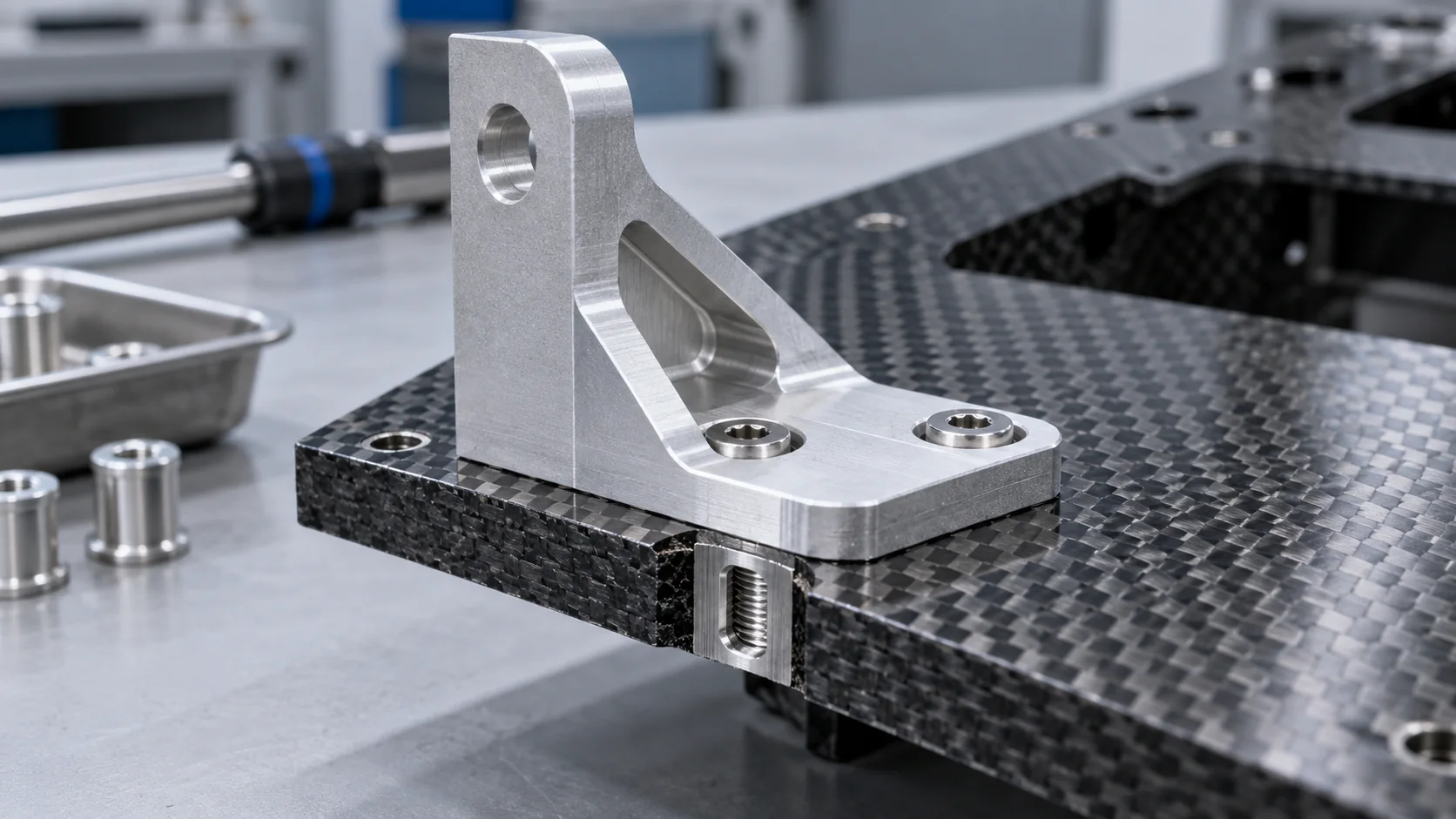
In aerospace composite assemblies, aluminum is used for brackets, stiffeners, and fitting inserts. It's also easy to coat or anodize for corrosion resistance, which matches well with the long life expectancies of composite structures.
Titanium Components for Aerospace Composite Assemblies
When you need higher strength and lower weight than aluminum, titanium machining is the go-to. Titanium has an excellent strength-to-weight ratio, and it expands at a rate much closer to composites than steel does. That reduces thermal stress at the interface between the metal fitting and the composite structure.
In critical aerospace applications like wing attachment points and engine nacelle connections, titanium is almost always used. It's more expensive than aluminum, but in these critical applications, the extra cost is worth it for the performance and weight savings.
Stainless Steel Components for High-Load Interfaces
When you need maximum strength and wear resistance, stainless steel machining is the answer. Stainless steel fittings are used in high-load bearing connections where even titanium isn't strong enough. It's also corrosion resistant, which is important in marine and offshore applications like wind turbine foundations.
Stainless steel is heavier than aluminum or titanium, but for certain high-load static connections, the extra weight doesn't matter. What matters is that it can handle the stress year after year without failing.
Engineering Plastic Components in Composite Assemblies
Not all machined components in composite assemblies need to be metal. Engineering plastics machining is common for non-structural or low-load fittings, spacers, and insulators. Plastics are light, cheap, and offer excellent electrical insulation when you need it.
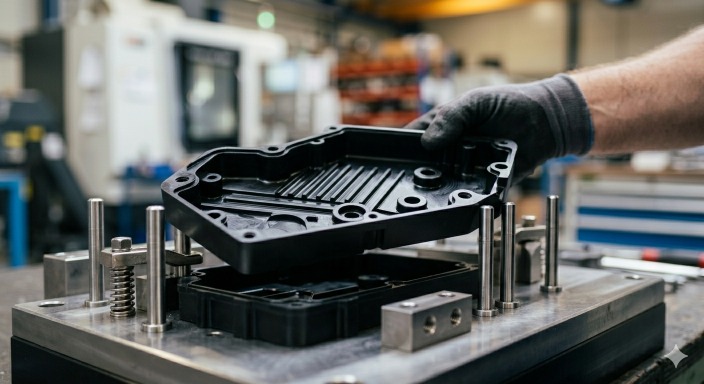
Common engineering plastics used in composite assemblies include PEEK, nylon, and Delrin. PEEK in particular has excellent strength and temperature resistance, so it's used in many aerospace composite applications where metal isn't needed.
Composite Parts vs CNC-Machined Metal Parts
So when should you use a composite part, and when should you just machine it from solid metal? It really comes down to the application. For large structural parts where weight matters, composites almost always win. For small fittings, brackets, and components where you need tight tolerances, CNC-machined metal is usually more practical and cost-effective.
The sweet spot for most modern designs is a hybrid approach: use composites for the large structural sections to save weight, and use precision-machined metal components for all the critical interface points where you need strength, tolerance, and bearing surface.
Design Considerations for Hybrid Assemblies
When you're designing a hybrid composite-metal assembly, there are a few key things to keep in mind. First, think about thermal expansion—different materials expand at different rates when heated, and that can create stress at the interface. Try to match the coefficients as closely as possible.
Second, you need to think about galvanic corrosion. Some metals (like carbon steel) can corrode when they're in direct contact with carbon fiber composites. You need to isolate them with insulating layers or pick compatible materials like titanium or aluminum.
Third, design the machined metal components to distribute load evenly into the composite. Concentrated loads can cause delamination, so you need to spread the load out over a larger area of the composite.
Precision CNC Machining for Engineering Applications
In hybrid engineering systems, precision-machined components play a critical supporting role in ensuring structural performance and assembly accuracy.
JLCCNC does not currently machine composite materials themselves. However, many composite assemblies require precision-machined aluminum, titanium, stainless steel, or engineering plastic components for mounting, fastening, and structural interfaces.
For prototype and production applications, precision CNC machining helps ensure dimensional accuracy and reliable integration within composite systems.

Precision CNC Machining Service
Professional manufacturing, fast turnaround, and quality assurance.
Future Trends in Composite Materials
Sustainable Composite Materials
Sustainability is driving a lot of the research right now. We're seeing more development of bio-based matrices made from plant-derived resins instead of petroleum-based epoxies. Natural fiber reinforcements are also growing quickly as automakers look to reduce their carbon footprint.
The goal is to create composites that have comparable performance to petroleum-based materials but with a much lower carbon footprint. We're still in the early days for many of these materials, but the progress is impressive.
Recyclable Composite Technologies
To solve the end-of-life problem, companies are developing new recyclable composite systems. Thermoplastic composites are one of the most promising areas—they can be melted down and re-molded when they reach the end of their life.
New recycling processes for thermoset composites are also emerging—chemical recycling that breaks down the resin so you can recover the fibers and reuse them. As these technologies scale, recycling composites will become much more common and affordable.
Bio-Based Composite Development
Going beyond just natural fibers, researchers are developing completely bio-based composites made entirely from renewable resources. Imagine a composite made from flax fibers and a resin derived from corn or sugarcane. These materials are already being used in automotive interiors, and we're starting to see them move into structural applications as their performance improves.
Automation and AI in Composite Manufacturing
Automation is transforming composite manufacturing, just like it has for metals. Automated fiber placement machines can lay down thousands of pounds of composite material per day with perfect consistency, something that would take dozens of workers to do by hand.
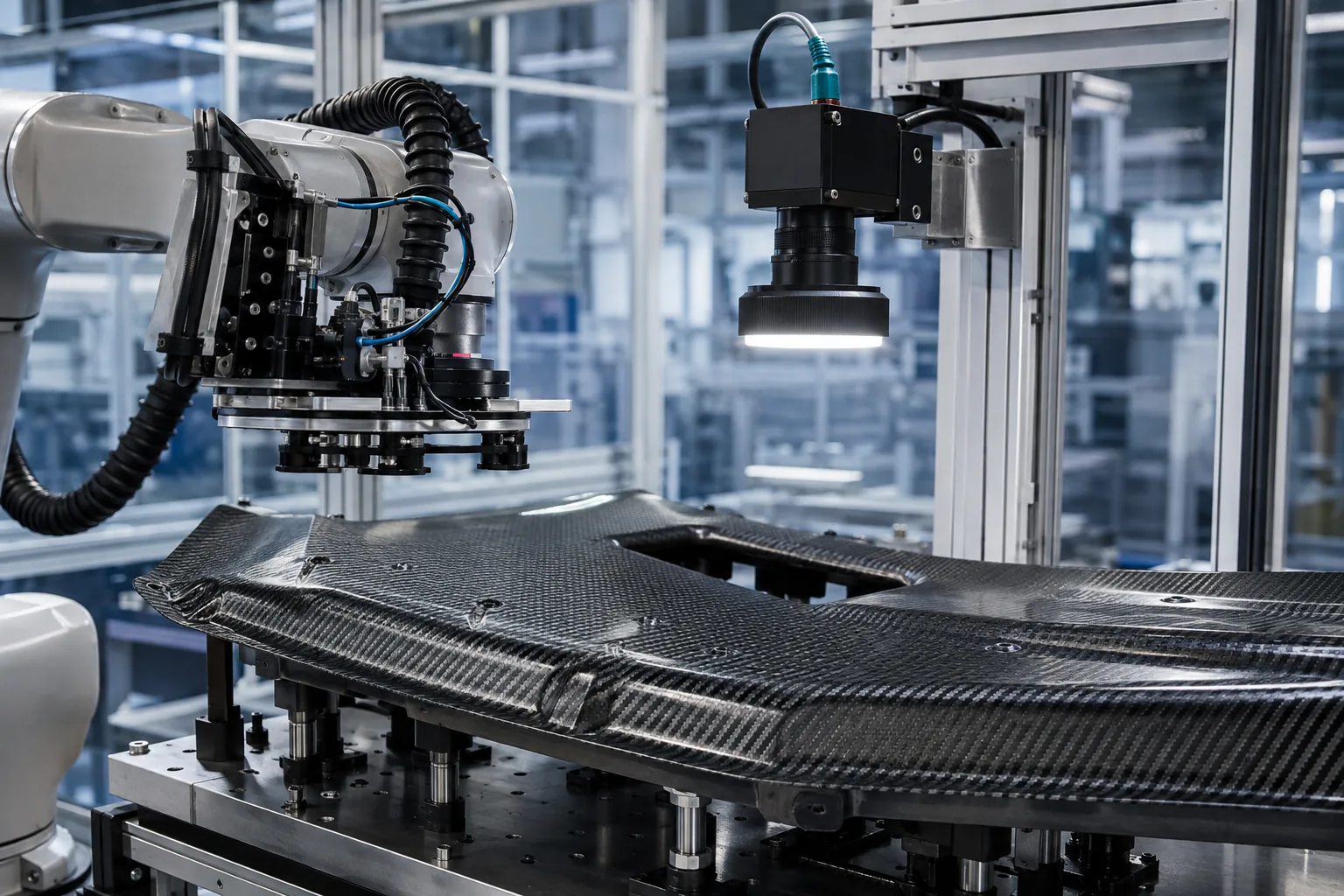
AI is starting to be used for process optimization—predicting where defects will occur, optimizing curing cycles, and improving quality control. As automation and AI come together, the cost of manufacturing composites will come down, making them more accessible for more applications.
Conclusion
Composite materials have become essential in modern engineering due to their ability to combine low weight with high performance.
However, they are not a replacement for metals. Most high-performance systems rely on a combination of composites and precision-machined components to achieve optimal results.
Understanding where each material performs best allows engineers to design more efficient, durable, and cost-effective systems.
FAQ About Composite Material
Q: What is a composite material?
A material made from two or more distinct components that work together to improve performance.
Q: What usually fails first in a composite part during testing?
Failure depends on loading conditions. Matrix cracking often appears first, followed by delamination, fiber-matrix debonding, or fiber breakage.
Q: What are composite material applications?
Aerospace, automotive, wind energy, marine, construction, and consumer products.
Q: Are composites stronger than steel?
By weight, yes; by volume, steel can still be stronger.
Q: Can composites be recycled?
Some thermoplastic composites can be recycled; thermoset recycling is still developing.
Q: Can composites be machined?
Yes, but it is challenging; most machining is applied to supporting metal or plastic components.
Q: What components require CNC machining in composite systems?
Interface parts such as brackets, inserts, housings, and mounting structures made from metal or engineering plastics.
Keep Learning
Composite Material Guide: Types, Manufacturing Processes, Applications & Selection
Composite materials are now widely used in aerospace and automotive structures because they combine high strength with relatively low weight. Unlike traditional metals, composite materials can be engineered by combining different reinforcement and matrix materials to achieve specific mechanical, thermal, or chemical properties. As manufacturing technologies have matured, composites have become practical for both high-performance and commercial products. In this guide, I'll break down everything you ne......
Copper vs Brass: Complete Engineering Comparison for Material Selection & CNC Machining
If you’re trying to pick between copper and brass for your next CNC project, you’re not alone. These two copper-based alloys are the most widely used for precision parts, but their performance and manufacturing costs differ dramatically. Engineers often compare copper and brass because both materials offer excellent corrosion resistance and are widely used in CNC machining, yet their performance characteristics differ significantly. Below we’ve put together a quick side-by-side comparison for the two ......
How to Choose the Materials in Sheet Metal Fabrication
In sheet metal fabrication, a wide range of metal materials are available, including stainless steel, carbon steel, copper, cold-rolled steel, aluminum, galvanized steel, alloy steel, and hot-rolled steel. The abundance of options can make it challenging to select the most suitable material for a specific application. Therefore, choosing the right sheet metal material is essential for successful product design and fabrication. The wrong material can lead to performance issues, faster corrosion, or hig......
Most Cost-Effective Metals for CNC Machining: A Comparative Guide
When selecting materials for CNC machining, engineers and purchasers face a constant balancing act between performance, machinability, and cost. While aluminum, stainless steel, brass, copper, and titanium are common choices, each comes with trade-offs that affect the overall value of a part—not just in terms of raw material price, but also machine time, tool wear, and long-term durability. This guide dives deeper into the comparative cost-effectiveness of popular metals used in CNC machining, helping......
Metal material and plastic material performance comparison
In modern manufacturing, the choice of materials is critical to product performance, production costs and manufacturing processes. Metal materials and plastic materials are the two main categories, each with its own unique properties and application scenarios. How to reasonably choose materials not only relates to product quality, but also affects manufacturing efficiency and economy. In this paper, we will comprehensively analyze the performance comparison of metal and plastic materials, to provide e......
CNC Machining Materials: A Comprehensive Guide
In modern manufacturing, CNC machining technology has become vital due to its ability to accurately manufacture complex parts. Choosing the right material is critical to ensuring the success of your CNC machining project. This article will provide you with a comprehensive guide to CNC machining materials, helping you to understand the properties of different materials and how to choose the best CNC machining service provider for your project, such as JLCCNC. Introduction to CNC Machining CNC, or Compu......