On-Demand Manufacturing Process for CNC Production and Custom Parts
19 min
- What Is On-Demand Manufacturing?
- On-Demand Manufacturing Workflow for CNC and Custom Parts
- Benefits of On-Demand Manufacturing
- Challenges and Limitations of On-Demand Manufacturing
- Cost and Economic Considerations in On-Demand Manufacturing
- Applications of On-Demand Manufacturing in Industry
- Materials and Processes Used in On-Demand Manufacturing
- On-Demand Manufacturing vs Traditional Manufacturing
- How to Choose an On-Demand CNC Manufacturing Partner
- FAQs About On-Demand Manufacturing
Key Takeaways
- CNC on-demand manufacturing is the most common implementation, machined metal and plastic parts produced from uploaded files with fast turnaround.
- The model reduces inventory investment, enables low-minimum-quantity orders, and allows design changes without scrapping committed production batches.
- On-demand production doesn't eliminate manufacturing cost, it shifts when that cost is incurred and removes the carrying cost of unsold inventory.
- The economics favor on-demand manufacturing at low-to-medium volumes and for parts with variable demand or frequent design iteration.
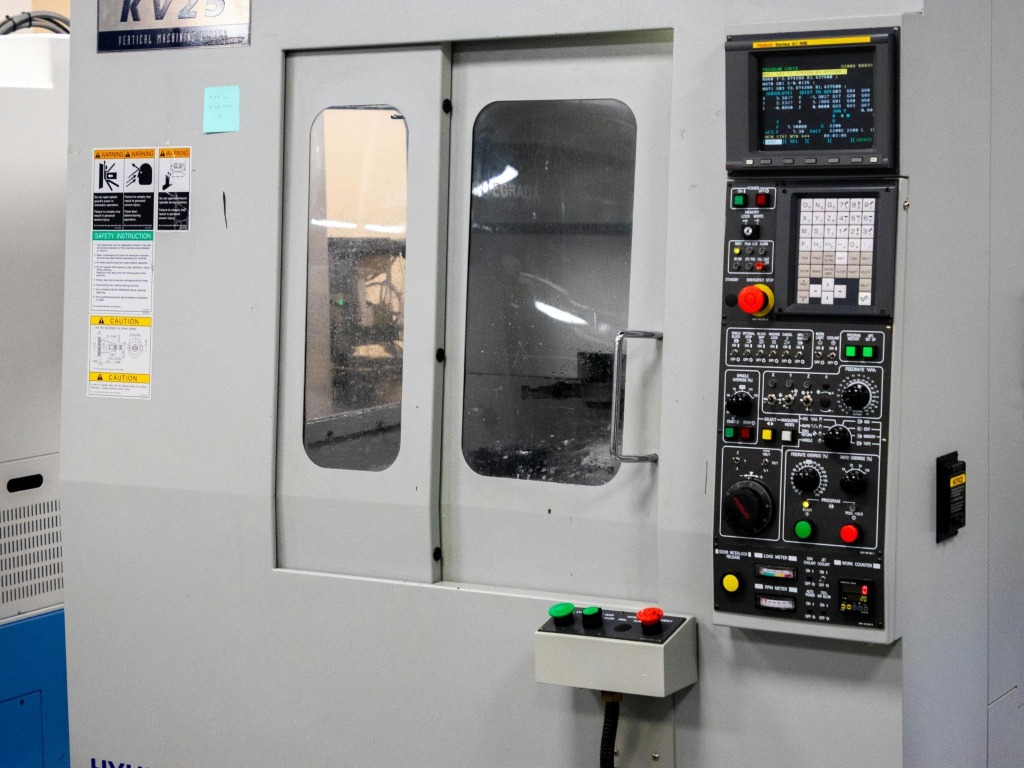
(Pexels) CNC machine in a production workshop
Traditional manufacturing is usually based on forecasts. Companies estimate future demand, buy material, run production batches, and hold inventory until orders arrive. If the forecast is wrong, they either carry excess stock that ties up cash or struggle to meet orders with a production line that is not ready for the job.
On-demand manufacturing flips this model. Parts get made when they're ordered, not when they're forecast. The inventory is digital, a CAD file, rather than physical. The production system responds to actual demand rather than predicted demand. For engineers, product developers, and procurement teams dealing with low volumes, frequent design changes, and unpredictable demand, this changes what's economically feasible.
What Is On-Demand Manufacturing?
On-demand manufacturing is a make-to-order production model in which parts are made only after a confirmed order is placed. Instead of building inventory in advance, companies store digital design data and trigger production only when demand is real. This approach reduces the financial risk of excess stock and makes it easier to respond to design updates, low-volume requirements, and uncertain purchasing patterns.
In practice, on-demand manufacturing depends on digital workflows. A customer submits a CAD file, receives a quote, confirms the order, and the part moves into production. Because the process is built around digital files, CNC programming, and flexible scheduling, the same system can support prototypes, replacement parts, bridge production, and small-batch custom components.
The main difference between on-demand manufacturing and traditional manufacturing is the production trigger. Traditional manufacturing often follows a make-to-stock model, where parts are produced in advance and held in inventory. On-demand manufacturing follows a make-to-order model, where production begins only after the order is confirmed. This model is especially useful when demand is variable, quantities are low, or the design may change before the next order.
For product developers and procurement teams, the value is not simply lower inventory. It is also faster iteration, lower upfront commitment, and better responsiveness to real demand. Standard hardware may still be best served by stocked supply, but custom CNC machined parts, enclosures, brackets, and other engineered components are often a strong fit for on-demand production.
On-demand manufacturing at scale operates through networked manufacturing capacity, multiple production facilities, potentially in multiple locations, accessible through a single digital platform. When an order is placed, the platform routes it to the facility with available capacity, appropriate equipment, and the correct material in stock. The customer interacts with the platform rather than managing individual supplier relationships.
This network model is what enables on-demand manufacturing to maintain short lead times even when individual facilities are at capacity. A single-facility on-demand manufacturer has no buffer when the machines are full. A networked platform routes overflow to alternate capacity, maintaining lead times across demand spikes.
JLCCNC provides on-demand CNC manufacturing with engineering review, rapid quoting, and integrated capabilities across machining, sheet metal, and finishing. This kind of digital workflow helps engineering teams source parts quickly without coordinating multiple suppliers.

Precision CNC Machining Service
Professional manufacturing, fast turnaround, and quality assurance.
On-Demand Manufacturing Workflow for CNC and Custom Parts
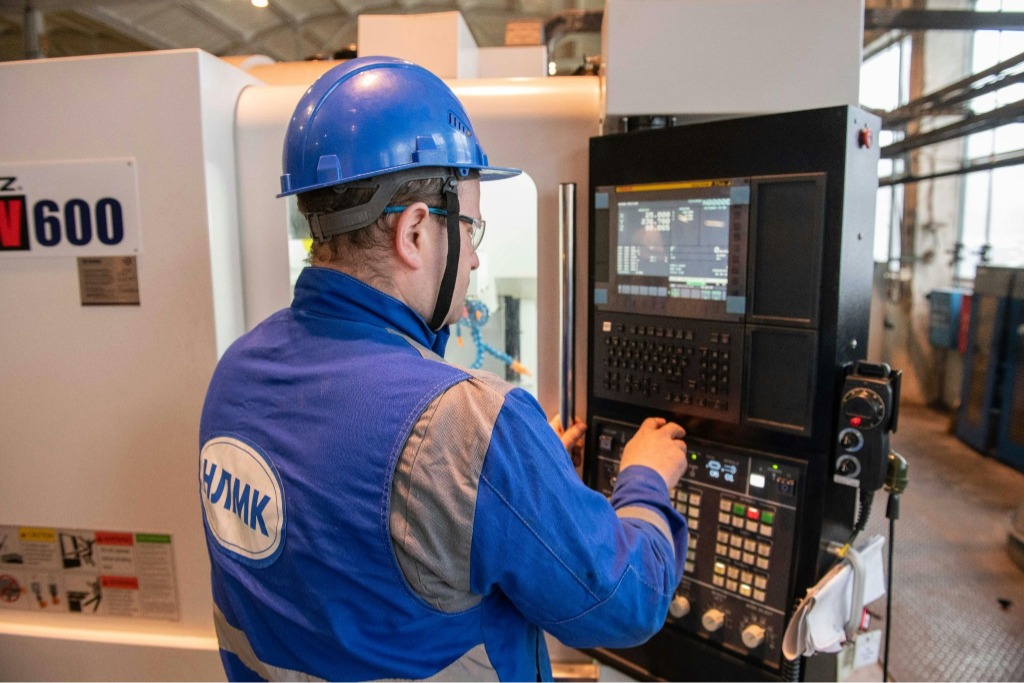
(Pexels) Operator using a CNC machine
On-demand manufacturing is a make-to-order production model in which parts are made only after a confirmed order is placed. Instead of building inventory in advance, companies store digital design data and trigger production only when demand is real. This approach reduces the financial risk of excess stock and makes it easier to respond to design updates, low-volume requirements, and uncertain purchasing patterns.
In practice, on-demand manufacturing depends on digital workflows. A customer submits a CAD file, receives a quote, confirms the order, and the part moves into production. Because the process is built around digital files, CNC programming, and flexible scheduling, the same system can support prototypes, replacement parts, bridge production, and small-batch custom components.
The main difference between on-demand manufacturing and traditional manufacturing is the production trigger. Traditional manufacturing often follows a make-to-stock model, where parts are produced in advance and held in inventory. On-demand manufacturing follows a make-to-order model, where production begins only after the order is confirmed. This model is especially useful when demand is variable, quantities are low, or the design may change before the next order.
For product developers and procurement teams, the value is not simply lower inventory. It is also faster iteration, lower upfront commitment, and better responsiveness to real demand. Standard hardware may still be best served by stocked supply, but custom CNC machined parts, enclosures, brackets, and other engineered components are often a strong fit for on-demand production.
Benefits of On-Demand Manufacturing
Reduced Inventory and Storage Costs
Inventory is capital that isn't working. Physical parts sitting in a warehouse represent the production cost plus storage cost plus the risk of obsolescence, and that cost accrues continuously until the parts ship. On-demand manufacturing eliminates that inventory position entirely for parts that can be produced quickly enough to meet demand without stock.
The financial impact is measurable: inventory carrying cost is often estimated in the range of 20-30% of inventory value annually, depending on storage, handling, insurance, obsolescence risk, and cost of capital. A company holding $500,000 in machined component inventory pays $100,000-150,000 per year to hold it. Converting that to on-demand manufacturing shifts those costs to production-on-order, which only occurs when revenue is confirmed.
Faster Product Development Cycles
Product development that depends on traditional manufacturing lead times is slow. A design change that requires a new production run, four to eight weeks for a typical custom machined component in traditional production, slows the iteration cycle dramatically. On-demand production that delivers revised parts in three to five days allows multiple design iterations in the time traditional manufacturing requires for one.
This iteration speed compounds across a development program. A product that requires six design iterations before it's ready for production takes six months in traditional manufacturing or six weeks in on-demand production. Six weeks earlier to market isn't a marginal improvement, it's a competitive advantage that affects revenue, customer acquisition, and market positioning.
Flexible Low-Volume Production
Traditional manufacturing has effective minimum order quantities below which the economics break down, setup cost exceeds part value at very low volumes. On-demand manufacturing can support very low order quantities for many standard processes, often starting from a single part, although actual minimums still depend on process, material, and supplier policy. One part, five parts, fifty parts, the per-part price adjusts but production is feasible at any quantity.
This flexibility matters beyond prototyping. Replacement parts for equipment that's no longer in production. Components for specialized machinery with low annual demand. Parts for research and development programs where quantities are undefined. Bridge production while production tooling is being completed. All of these are legitimate demand scenarios that traditional manufacturing serves poorly and on-demand production serves efficiently.
Reduced Tooling and Upfront Investment
Traditional production processes, injection molding, die casting, stamping, require tooling investment before the first part can be produced. That investment ranges from thousands to hundreds of thousands of dollars and is sunk before any revenue is generated. On-demand CNC manufacturing requires no tooling investment, the programming cost is minimal and is typically included in the part price rather than charged separately.
For startups, small-volume products, and design-stage components, eliminating the tooling investment changes what's financially feasible. A product that requires $50,000 in tooling before production starts is a much larger financial commitment than a product that can be sourced in production quantities through on-demand manufacturing without tooling.
Improved Supply Chain Agility
Supply chain agility, the ability to respond to demand changes, supply disruptions, and design modifications without significant delay, is a competitive advantage that on-demand manufacturing directly enables. Traditional supply chains with long lead times and large batch minimums are inherently rigid. On-demand production with short lead times and low minimums is inherently flexible.
During supply disruptions, component shortages, logistics delays, supplier capacity problems, on-demand manufacturing capacity provides an alternative source that can be activated quickly. A company with established on-demand manufacturing relationships can redirect production within days when a primary supplier fails to deliver.
Challenges and Limitations of On-Demand Manufacturing
The benefits above are real, but on-demand manufacturing isn't the right model for every situation. Understanding the limitations matters as much as understanding the advantages.
Production Scheduling and Capacity Management
On-demand manufacturing platforms that operate at high utilization face scheduling challenges that traditional batch production doesn't. When every job is different and orders arrive unpredictably, capacity planning is genuinely difficult. A platform that promises three-day lead times needs to maintain enough spare capacity to absorb demand spikes without breaking those commitments, which means carrying idle capacity during low-demand periods.
Customers who rely on on-demand manufacturing for time-critical applications need to understand that lead times can extend during high-demand periods. Building in lead time buffer, using multiple on-demand suppliers for critical components, and communicating urgent requirements early are practical risk management strategies.
Quality Consistency Across Batches
On-demand manufacturing by definition produces small batches infrequently rather than large batches on established processes. Quality consistency across batches, produced weeks or months apart, potentially on different machines with different setups, requires more active quality management than a continuous production run where process capability is established and monitored over thousands of parts.
First-article inspection on each order, documented process parameters that are retrieved when a repeat order arrives, and material certifications that accompany each batch are the quality management practices that maintain consistency across the separated production events that characterize on-demand manufacturing.
Cost Considerations for Small Orders
On-demand production is not always cheaper than traditional manufacturing, particularly at very small quantities where setup cost per part is unavoidable. A single machined part in on-demand manufacturing might cost $200. The same part at 500 units in traditional manufacturing might cost $15 each. If 500 units is the right quantity and demand is predictable, traditional manufacturing is more economical.
The on-demand advantage appears when 500 units isn't the right quantity, when actual demand is 50 units, or 200, or when the design might change before 500 units are needed. The comparison needs to account for inventory carrying cost, obsolescence risk, and the probability of design changes, not just unit cost at volume.
Cost and Economic Considerations in On-Demand Manufacturing
Low-Volume vs Mass Production Economics
| Factor | On-Demand Manufacturing | Traditional Mass Production |
|---|---|---|
| Minimum order quantity | 1-10 pieces | 100-10,000+ pieces |
| Setup cost allocation | Amortized over small batch, high per-part impact | Amortized over large batch, low per-part impact |
| Tooling investment | None for CNC; minimal | Significant for molding, casting, stamping |
| Per-unit cost at low volume | Competitive | High (tooling + setup not justified) |
| Per-unit cost at high volume | Higher than mass production | Lowest achievable |
| Inventory requirement | Near zero | Significant |
| Lead time | Days | Weeks to months |
| Design change cost | Minimal, revised file | Tooling modification, scrapped inventory |
| Break-even quantity (typical) | 1-200 pieces | 200-1000+ pieces depending on process |
Inventory Cost vs Unit Cost
| Scenario | On-Demand Manufacturing | Traditional Manufacturing |
|---|---|---|
| Annual demand 100 units, unit cost $50 | Total: $5,000 production, zero inventory cost | Unit cost $30, but minimum 500 units = $15,000 investment with $10,500 in unsold inventory |
| Annual demand 1,000 units, unit cost $50 | Total: $50,000 production, low inventory cost | Unit cost $20, 1,000 units = $20,000, inventory carrying cost ~$4,000/year, net $24,000 |
| Part obsoleted after 200 units | 200 × $50 = $10,000 total cost | 500 minimum × $30 = $15,000, 300 units scrapped |
| Design change after 50 units shipped | Revise file, produce at revised spec | Scrap remaining inventory, potentially modify tooling |
Tooling Investment and Production Scale
Tooling investment is the threshold that determines where on-demand manufacturing economics end and traditional manufacturing economics begin. Below that threshold, in annual volume and product stability, on-demand production avoids a capital commitment that isn't justified by the demand. Above it, in annual volume with a stable design, the tooling investment pays back quickly enough that traditional manufacturing becomes more economical per unit.
The threshold quantity varies by process: iFor example, injection molding often requires tooling investment in the tens of thousands of dollars, and the economic break-even may occur only at much higher annual volumes than CNC on-demand manufacturing. The exact threshold depends on geometry, material, tooling complexity, and target unit cost.
When On-Demand Manufacturing Is Cost-Effective
On-demand production is cost-effective when annual volume is below the tooling break-even for the production process, design iteration is ongoing or anticipated, demand is unpredictable enough that inventory risk is significant, parts serve multiple customers or programs with independent demand, or delivery speed has economic value that justifies the per-unit premium over traditional manufacturing.
It's less cost-effective when annual volumes are high and stable, design is frozen for long periods, and the per-unit cost differential between on-demand and tooled production is large enough that carrying inventory is cheaper than paying the on-demand premium.
Applications of On-Demand Manufacturing in Industry
| Application | Why On-Demand | Typical Volume | Process |
|---|---|---|---|
| Functional prototypes | Speed, no tooling, design iteration | 1-10 pieces | CNC machining, SLA, SLS |
| Bridge production | Filling gap before tooling is ready | 50-500 pieces | CNC machining, sheet metal |
| Spare and replacement parts | Unpredictable demand, no inventory justification | 1-50 pieces | CNC machining |
| Custom aerospace components | Low volume, high precision, no standard tooling | 1-100 pieces | CNC machining, specialized processes |
| Automotive prototype parts | Pre-production validation, design iteration | 5-50 pieces | CNC machining, sheet metal |
| Robotics components | Frequent design changes, mixed volumes | 1-200 pieces | CNC machining, 3D printing |
| Medical device prototypes | Regulatory iteration, material requirements | 1-20 pieces | CNC machining, precision turning |
| Industrial tooling and fixtures | One-off or low quantity, custom geometry | 1-10 pieces | CNC machining |
| Consumer product pilots | Pre-production, market testing | 50-200 pieces | CNC, sheet metal, finishing |
| Research and development parts | Single units, experimental geometry | 1-5 pieces | CNC machining, 3D printing |
Materials and Processes Used in On-Demand Manufacturing
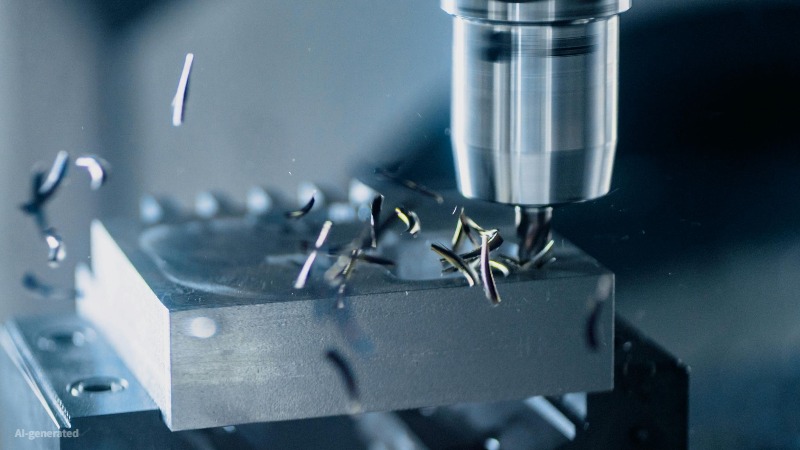
(AI generated) CNC milling machine cutting a metal part
Metals for CNC Machining
Standard metals available for CNC on-demand manufacturing: 6061-T6 and 7075-T6 aluminum for lightweight structural components. 1018 and 4140 steel for general structural and mechanical parts. 304 and 316L stainless steel for corrosion-resistant applications. Titanium Grade 5 for aerospace and medical applications. Copper and brass for electrical and precision mechanical applications.
Material availability in on-demand manufacturing is constrained by what the platform stocks rather than what's theoretically available. Standard alloys in standard stock sizes are available immediately. Exotic alloys and non-standard sizes may require procurement lead time that extends the on-demand production timeline.
Plastics and Engineering Materials
Engineering plastics for CNC on-demand manufacturing include POM (Delrin) for sliding and precision mechanical components, PEEK for high-temperature and chemical-resistance applications, nylon (PA6, PA12) for wear-resistant and lightweight structural parts, PTFE for chemical and electrical applications, and polycarbonate and acrylic for optical and housing applications.
3D printing materials extend the on-demand manufacturing material range significantly, SLA resins, SLS nylon powders, and FDM engineering filaments provide options for complex geometry that CNC machining can't produce efficiently, or for materials where CNC machining would be prohibitively expensive per unit.
CNC Machining, Sheet Metal, and 3D Printing
The three primary processes in on-demand manufacturing cover different geometry and volume regimes. CNC machining handles precision metal and plastic parts with tight tolerances and complex geometry. Sheet metal fabrication handles formed structural enclosures, brackets, and housings at lower per-part cost for appropriate geometries. 3D printing handles complex organic geometry, internal channels, and very low-volume applications where machining setup cost can't be justified.
Hybrid on-demand manufacturing, combining processes for a single assembly, produces complete parts rather than individual components. A machined bracket welded to a sheet metal panel, or a 3D printed housing with machined inserts, represents the kind of multi-process on-demand production that reduces supplier count and coordination overhead for engineering teams.
On-Demand Manufacturing vs Traditional Manufacturing
Traditional manufacturing produces parts before orders arrive and stores them in inventory. On-demand manufacturing produces parts when orders arrive and eliminates the inventory position. The economic and operational implications of that single difference are substantial.
| Factor | On-Demand Manufacturing | Traditional Manufacturing |
|---|---|---|
| Production trigger | Confirmed order | Forecast demand |
| Minimum quantity | 1-10 pieces | 100-10,000+ pieces |
| Lead time | 1-10 days | 4-12 weeks |
| Inventory required | Near zero | Weeks to months of stock |
| Tooling investment | None (CNC) to minimal | Significant for molded/cast/stamped parts |
| Design change cost | Minimal | Tooling modification plus scrapped inventory |
| Per-unit cost at low volume | Competitive | High, setup not justified |
| Per-unit cost at high volume | Higher than optimized production | Lowest achievable |
| Supply chain complexity | Low, single platform | High, multiple suppliers, long lead times |
| Capital requirement | Low | High, tooling plus inventory |
| Risk of obsolescence | Minimal | Significant for stocked inventory |
| Best for | Low volume, variable demand, design iteration | High volume, stable design, predictable demand |
How to Choose an On-Demand CNC Manufacturing Partner
Manufacturing Capabilities and Capacity
The right on-demand manufacturing partner has the processes your parts need, not just CNC machining in general, but the specific machines, tolerances, materials, and finishing options your designs require. A platform that handles 3-axis milling and turning but not 5-axis work or sheet metal fabrication creates gaps that require additional suppliers.
Capacity matters alongside capability. An on-demand manufacturing platform that can quote any part but frequently misses lead time commitments because of scheduling constraints isn't delivering on the core value proposition. References from existing customers and actual lead time data, not just promised lead times, provide a more accurate picture than the marketing claims.
Quality Control and Certifications
Quality certifications, ISO 9001 for quality management systems, provide assurance that the manufacturing partner has documented processes, inspection procedures, and corrective action systems rather than informal practices that produce variable results. For aerospace and medical applications, AS9100 or ISO 13485 certification may be required by the end customer's supply chain requirements.
Beyond certifications, the practical quality indicators are: inspection reports shipped with parts, CMM capability for tight-tolerance features, material certifications and traceability, and a clear process for handling non-conformances when they occur. A manufacturing partner that provides these without being asked is operating at a higher quality management standard than one that requires them to be specified each time.
Lead Time and Production Scalability
Lead time consistency matters more than lead time speed. A partner that promises three days and delivers four is more useful than one that promises two days and delivers five. Understanding the realistic lead time under normal and high-demand conditions, and the partner's capacity to scale when order volumes increase, is important information for supply chain planning.
Scalability from prototypes to low-volume production to bridge production is the progression that most products follow. An on-demand manufacturing partner who handles prototypes well but can't scale to bridge production quantities creates a transition problem. Partners with genuine production capacity alongside prototype capability, not just a prototype shop trying to handle production, provide a smoother path through product development.
FAQs About On-Demand Manufacturing
Q: What is on-demand manufacturing?
On-demand manufacturing is a production model where parts are manufactured in response to confirmed orders rather than in advance for stock, using digital design files and flexible CNC production capacity to fulfill orders at low minimum quantities with short lead times.
Q: How does CNC on-demand manufacturing work?
A customer uploads a CAD file, receives a quote based on automated or engineer-reviewed analysis of the geometry and requirements, confirms the order, and receives CNC machined parts within days. The workflow eliminates the manual quoting, scheduling, and supplier management steps that create delay in traditional manufacturing.
Q: What are the advantages of on-demand production?
Eliminated inventory investment and carrying cost. No tooling capital requirement. Low minimum quantities from one piece upward. Fast lead times measured in days rather than weeks. Design change flexibility without scrapping committed production inventory. Supply chain responsiveness to unpredictable demand.
Q: Is on-demand manufacturing suitable for low-volume CNC parts?
Yes, it's the primary application. On-demand production economics work best at low volumes where traditional production setup costs make batch manufacturing impractical. Single pieces, small batches of five to fifty parts, and bridge production quantities are where CNC on-demand manufacturing is most clearly superior to traditional alternatives.
Q: What is the difference between on-demand and traditional manufacturing?
Traditional manufacturing produces to forecast, stores inventory, and requires minimum quantities that justify production setup cost. On-demand manufacturing produces to confirmed order, eliminates inventory, and serves any quantity from one piece upward. Traditional manufacturing has lower per-unit cost at high volumes. On-demand manufacturing has lower total cost at low volumes when inventory carrying cost and tooling investment are included in the comparison.
Popular Articles
• Rapid Prototyping Guide: Processes Compared and How to Choose the Right Method for Manufacturing
• CNC Rapid Prototyping: Cost, Lead Time, Design Tips & Machining Service
• How is the Cost of CNC Machining Determined
• CNC machining solutions for DIY project designers
• The true cost of CNC machining services what are the main factors affecting price
Keep Learning
Rapid Prototyping Guide: Processes Compared and How to Choose the Right Method for Manufacturing
What Is Rapid Prototyping (AI generated) Various rapid prototyping parts including 3D printed, CNC machined, and sheet metal components on a workshop table. Rapid prototyping is a manufacturing approach that produces physical parts directly from CAD data within hours or days, enabling engineers to quickly validate design, fit, and function before full-scale production. Modern shops use several methods under this umbrella. 3D printing, CNC machining, and sheet processes all fall into the rapid prototyp......
What Is CNC Precision Machining? Process, Tolerances & Applications
Key Takeaways CNC precision machining focuses on controlling part variation within strict dimensional requirements rather than simply producing smaller features. Many precision machining applications can achieve tolerances around ±0.025 mm when the part design and manufacturing conditions are suitable. The final accuracy of a machined part depends on how well the process is planned, controlled, and verified from design to inspection. CNC precision machining is widely used for parts that require consis......
Additive vs Subtractive Manufacturing: Differences, Advantages, and How to Choose the Right Process
Quick Comparison: Additive vs Subtractive Manufacturing Feature Additive Manufacturing Subtractive Manufacturing How it works Builds parts layer by layer Removes material from solid stock Best for Complex geometry, prototypes, low-volume production Precision parts, tight tolerances, production runs Design freedom Excellent, including internal channels and lattices Limited by cutting tool access Typical accuracy Lower as-built accuracy; post-processing is often required High dimensional accuracy direct......
OEM vs ODM: Key Differences, Benefits, and How to Choose
Key Differences at a Glance Between OEM and ODM Factor OEM Manufacturing ODM Manufacturing Design Origin Buyer provides the product design Supplier provides an existing design Product Control Higher control over specifications and development Less control over the core product design Engineering Input Requires more engineering and product development work Requires less technical involvement Customization Extensive customization options Limited to predefined modification options Intellectual Property I......
Large Part CNC Machining: Processes, Challenges, and Manufacturing Considerations
Key Takeaways About Large Part CNC Machining Large part CNC machining handles components where size itself introduces manufacturing challenges that standard machining doesn't face, thermal effects, deflection, workholding complexity, and dimensional control over long spans. Machine travel is one constraint but not the only one, part weight, spindle access, and workholding capability define what a machine can actually do with large components as much as the stated work envelope. Accuracy on large parts......
Low Volume CNC Machining: Small Batch Production Strategies and Manufacturing Guide
Key Takeaways About Low Volume CNC Machining Low volume CNC machining is typically used for production runs ranging from a single part to roughly 1,000 units, without the tooling investment required by molding or casting processes. Small batch CNC machining is often the most practical choice when designs are still evolving, demand is uncertain, or production quantities are too low to justify dedicated tooling. CNC machining can produce production-grade parts from aluminum, stainless steel, titanium, a......