Functional Prototyping: Engineering Validation and Prototype Manufacturing
25 min
- What Is Functional Prototyping?
- Functional Prototype Development Stages
- What Functional Prototypes Are Designed to Validate
- Manufacturing Methods for Functional Prototypes
- Material Selection for Functional Prototype Parts
- Designing Functional Prototypes for Manufacturing Realism
- Functional Prototyping vs Production Manufacturing
- Common Challenges in Functional Prototyping
- Choosing the Right Functional Prototyping Strategy
- Conclusion About Functional Prototyping
- FAQ About Functional Prototyping
Key Takeaways About Functional Prototyping
- Functional prototyping is the manufacturing of parts and assemblies that replicate production geometry, material behavior, and assembly interfaces closely enough to produce valid engineering test data.
- Functional prototype development sits between concept modeling and production release. It is the stage where assumptions about design performance are replaced by measured data.
- The manufacturing method for a functional prototype should match the validation objective: CNC machining for tight-tolerance functional parts, sheet metal for structural assemblies, 3D printing for rapid functional iteration.
- Material selection in functional prototyping directly affects how much confidence the test data provides, prototyping in a material with different mechanical properties from the production material produces results that may not transfer.
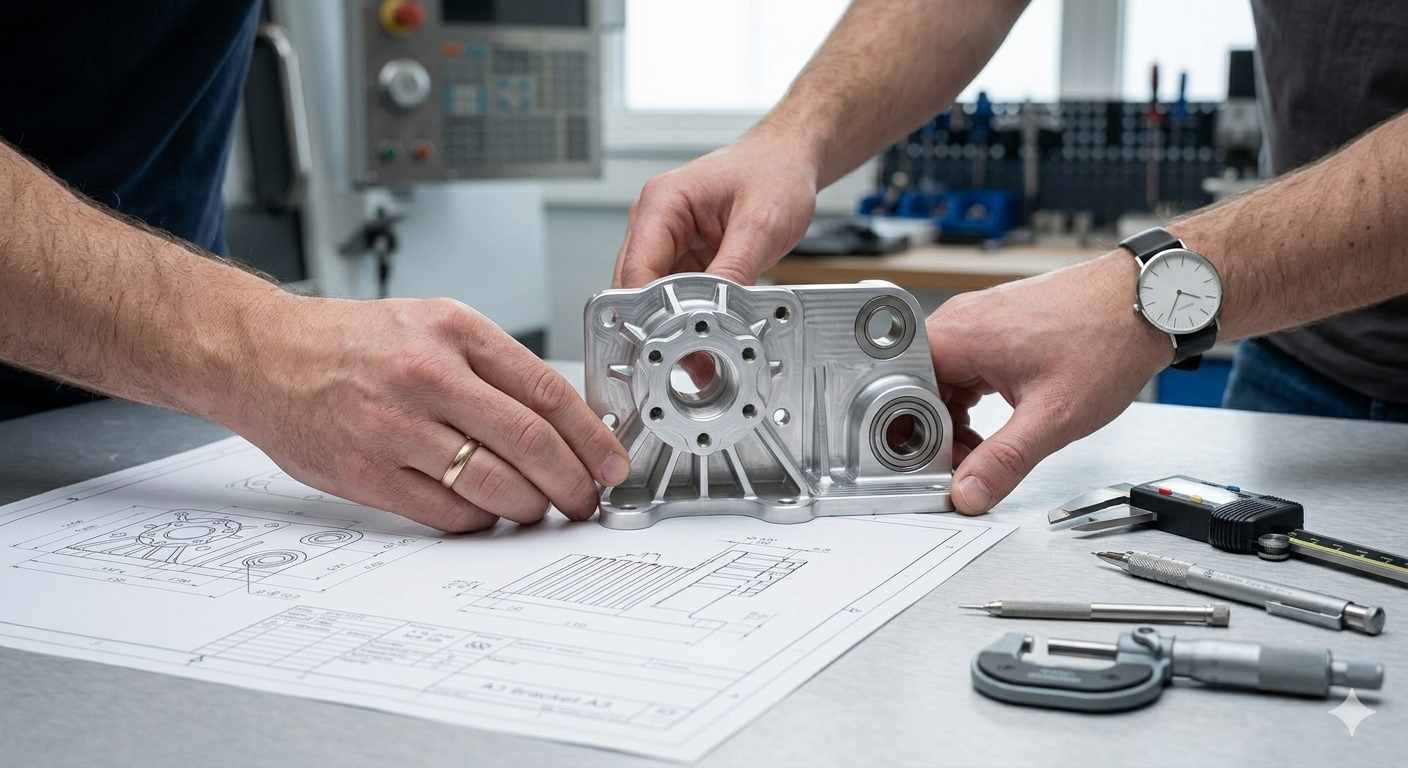
(AI generated) Engineer placing a CNC machined aluminum functional prototype bracket
Here's the situation most product teams find themselves in. The CAD model looks right. The simulation results are acceptable. Everyone on the team is confident. Then the first physical assembly arrives, and the issues start showing up. A bore stack leaves no clearance for assembly. A bracket deflects more than the simulation predicted. A sliding feature binds once the preload and surface friction enter the system.
That gap, between what a design looks like on screen and how it actually behaves as a physical object, is exactly what functional prototyping exists to close. Not to make something that looks like the product. To make something that tells you whether the product actually works before you've committed to production tooling, supply chain, and manufacturing processes that cost orders of magnitude more to change later.
This guide covers functional prototype development from engineering validation objectives through manufacturing method selection, material considerations, and production transition. If you're building something that has to work, not just look like it would work, this is the process framework worth understanding.
If you're earlier in the process and still figuring out the concept, our rapid prototyping guide covers where functional prototyping fits within the broader prototyping workflow.
At JLCCNC, functional prototyping is what we do most of. CNC machined functional prototypes, sheet metal structural assemblies, and hybrid builds that combine multiple processes, all with engineering review built into the quote.
What Is Functional Prototyping?
Functional prototyping is the process of building physical parts or assemblies that replicate production-intent geometry, material behavior, and assembly interfaces to validate engineering performance before production release.
Functional Prototypes vs Visual Prototypes
A visual prototype shows what the product looks like; a functional prototype shows whether it works.
| Factor | Visual Prototype | Functional Prototype |
|---|---|---|
| Primary purpose | Appearance, form, stakeholder review | Engineering validation, performance testing |
| Material requirement | Any material that looks right | Production-like material with correct mechanical behavior |
| Dimensional accuracy | Approximate | Controlled to design tolerance |
| Manufacturing method | 3D printing, clay, foam, mock-up | CNC machining, sheet metal, SLA with engineering resin |
| Assembly behavior | Not tested | Verified against mating parts |
| Structural loading | Not applied | Applied to target specification |
| Test data produced | None | Measurable performance data |
| Cost relative to visual | Higher | Significantly higher |
| When used | Early concept, design review | Engineering validation, DVT, pre-production |
Why Functional Validation Matters Before Production
Injection mold tooling may cost anywhere from several thousand dollars for simple prototype tools to well into six figures for multi-cavity hardened production molds. A production line changeover costs more. Discovering that a structural bracket fails at 60% of the target load after tooling is cut is a problem that costs multiples of what functional prototype development would have cost to catch it earlier.
Functional prototypes aren't insurance against all problems. They're targeted investments in finding specific failure modes while the cost of finding them is still manageable. The engineering judgment in functional prototyping is knowing which failure modes to test for and building functional prototypes that are capable of revealing them.
Functional Prototype Development Stages
Product development doesn't move from concept directly to functional prototype. Functional prototype creation fits within a staged development process where the objectives at each stage are different and the prototype specification follows those objectives.
Concept Prototype vs Functional Prototype
Concept prototypes answer "does this idea make sense geometrically?" while functional prototypes answer "does this design actually perform?"
| Factor | Concept Prototype | Functional Prototype |
|---|---|---|
| Objective | Geometry feasibility, design intent | Engineering performance validation |
| Accuracy required | Approximate | Controlled tolerance |
| Material | Anything machinable or printable | Production-equivalent mechanical properties |
| Testing | Fit check, visual review | Load, stress, thermal, assembly |
| Manufacturing | 3D printing, rough machining | CNC machining, sheet metal, engineering SLA |
| Lead time priority | Fast | Accurate |
| Cost | Low | Moderate to high |
| Output | Go/no-go on concept | Engineering data for design decisions |
Engineering Prototype and EVT/DVT Builds
Engineering Validation Testing (EVT) and Design Validation Testing (DVT) are the formal functional prototyping stages in structured product development.
EVT builds validate that the engineering design works as intended under controlled test conditions. Parts are manufactured to design intent using production-like materials and processes where possible. The test data from EVT tells the engineering team whether the design meets performance targets or needs iteration before DVT.
DVT builds validate that the design meets all product requirements including regulatory standards, environmental specifications, and reliability targets. DVT functional prototypes are manufactured to tighter specifications than EVT builds. The goal is to produce parts as close to production quality as possible without actual production tooling. At JLCCNC, DVT functional prototyping builds are where CNC machining capability, material selection, and tolerance control are most critical, the data from DVT needs to be trustworthy enough to support a production release decision.
Pilot Production and Manufacturing Validation
Pilot production is functional prototype creation at small volume using production processes rather than prototype processes. A pilot run of 20-50 parts on production tooling with production materials and production assembly processes validates that the manufacturing system can produce parts to specification reliably, not just that a single precision-machined prototype passes the test.
The failure modes in pilot production are different from those in engineering prototypes. Individual parts may pass all dimensional checks while process capability across a batch shows variation the engineering prototype didn't reveal. Assembly yield, process cycle time, and tooling performance all become measurable for the first time.
When Functional Validation Is Considered Complete
Functional prototype development is complete when three things are true. The design has been tested against all identified failure modes and either passed or been modified until it passes. The manufacturing process has demonstrated it can produce the required geometry to the required tolerance across a representative batch. And the test data is comprehensive enough that the engineering team can make a production release decision with documented confidence rather than assumption.
In practice, this is a judgment call. There is always one more test that could be run and one more tolerance that could be tightened. The engineering discipline in functional prototyping is knowing when the data is sufficient versus when additional testing is adding cost without reducing production risk.
What Functional Prototypes Are Designed to Validate
Fit, Motion, and Assembly Verification
The first thing a functional prototype reveals is whether the assembly behaves as intended once real tolerances and surface contact conditions enter the system.
Tolerance stack-up across multiple parts means that parts individually within tolerance may not assemble correctly when combined. A functional prototype assembly with all mating parts present reveals stack-up behavior that analysis alone misses. A bearing bore that's at the high end of its tolerance, combined with a shaft at the high end of its tolerance, produces an interference fit where clearance was intended, and the prototype assembly tells you this before it happens on a production line.
Moving features need to be tested under realistic load and friction conditions. A sliding mechanism that moves freely in CAD may bind under the friction forces present in the real assembly. A snap fit that looks correct in the model may not have adequate retention force when assembled in the target material. Functional prototype creation specifically to test assembly behavior, with all the mating parts, in the target materials, under the expected assembly forces, catches these before they're designed into a production system.
Load, Stress, and Structural Performance
Structural validation is where functional prototyping does its most important work. Simulation gives you calculated stress distributions and predicted failure modes, functional prototype testing under real load gives you measured data on whether those predictions are correct.
They often aren't. Stress concentrations at internal corners behave differently in real parts than in FEA models. Weld zones in sheet metal assemblies have different mechanical properties than the parent material. Fastener preload relaxes under vibration in ways that affect joint behavior. Printed parts have different properties in different build orientations. Physical load testing often exposes contact conditions, local deformation, and assembly effects that simplified simulation models may not capture fully.
At JLCCNC, structural quality functional prototypes are manufactured with the geometric accuracy and material fidelity that structural testing requires. A machined 6061-T6 aluminum bracket for structural validation has the correct heat treatment condition, the correct surface finish, and the correct dimensional accuracy to produce test data that transfers to the production design.
Thermal, Wear, and Environmental Validation
Parts that operate at elevated temperatures, experience repeated sliding contact, or are exposed to chemical environments need functional prototypes that can be tested under those conditions before production commitment.
Thermal validation requires parts manufactured in the production material, or a material with matched thermal expansion coefficient and heat deflection temperature, to produce meaningful data. A functional prototype in the wrong material that passes thermal testing doesn't validate the production design; it validates that the wrong material survives the test.
Wear testing needs surface finish and dimensional accuracy matched to the production part. A bearing surface with Ra 0.4 µm from precision grinding behaves completely differently under repeated contact than the same geometry with Ra 1.6 µm from standard milling. Functional prototype creation for wear validation specifies both geometry and surface condition.
Manufacturability and Production Feasibility
Beyond testing the design, functional prototypes reveal whether the design can actually be manufactured at production volume with production processes and acceptable yield.
Features that are straightforward to machine as one-off prototypes may be difficult or slow to produce at volume. Assembly sequences that work for a skilled technician building one unit at a time may be impractical on a production line. Tolerances that a CNC machining center holds easily become a process capability problem at volume on less capable production equipment.
The prototype may pass testing and still fail in production. That usually points to a manufacturability issue rather than a geometry problem.
Manufacturing Methods for Functional Prototypes
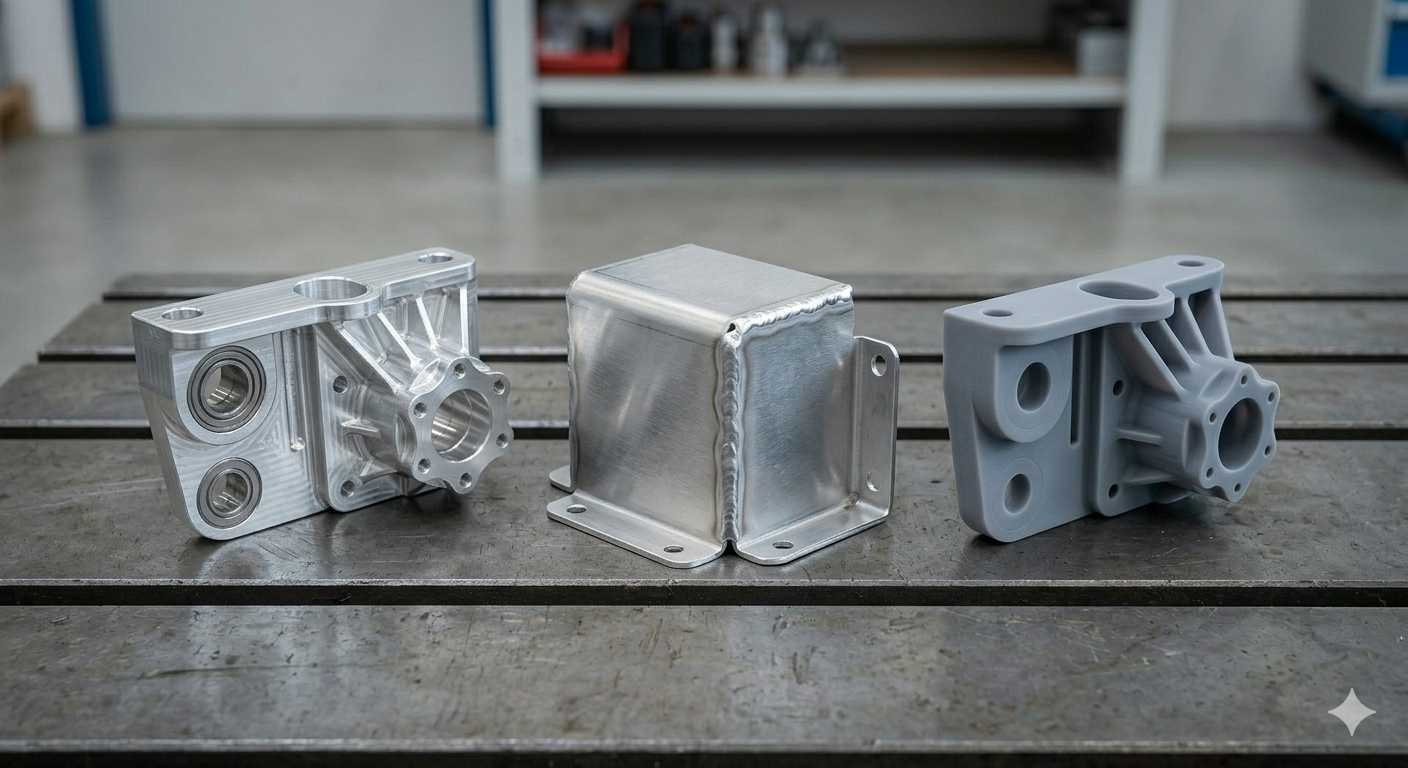
(AI generated) Three functional prototype parts side by side
CNC Machining for High-Accuracy Functional Parts
CNC machining is the default manufacturing method for functional prototype development requiring tight tolerances, production-equivalent materials, and geometry that needs to hold up under real structural testing.
CNC machined functional prototypes can be produced from the same alloys as the intended production parts, including 6061-T6 aluminum, 316L stainless, and 4140 steel. On controlled datum features, tolerances around ±0.05 mm are commonly achievable depending on geometry, setup rigidity, and inspection method. The test data from a CNC machined functional prototype in production material is directly applicable to the production design because the material behavior, dimensional accuracy, and surface quality are representative.
For functional prototypes requiring assemblies with precision fits, bearing bores, shaft diameters, locating features, and threaded interfaces, CNC machining is often the only method that produces the dimensional control needed to test assembly behavior meaningfully. Surface finish control can matter as much as dimensional tolerance during functional validation. Sealing faces, bearing contact areas, and mating surfaces may require specific Ra values to reproduce realistic operating conditions.
For a deeper look at how CNC machining for prototypes works and what's achievable on complex geometry, this guide covers the process in detail.
Sheet Metal Fabrication for Structural Assemblies
Structural enclosures, frames, brackets, and housings that will be sheet metal in production should be prototyped in sheet metal during functional prototype development. The structural behavior of sheet metal fabrications, weld zone properties, formed corner geometry, fastened joint stiffness, is different enough from machined solid geometry that machined block functional prototypes of sheet metal designs don't produce transferable test data.
Sheet metal functional prototypes are more expensive than machined equivalents for simple parts but often cheaper for complex welded assemblies where machining equivalent geometry from solid would require significant stock removal. Our sheet metal fabrication capability at JLCCNC covers laser cutting, forming, welding, and hardware insertion for complete sheet metal functional prototype assemblies.
Before committing to a sheet metal structural assembly for functional validation, our sheet metal prototype guide covers design tips, lead time, and cost expectations.
3D Printing for Rapid Functional Iteration
3D printing, specifically SLA with engineering resins and SLS with PA12, is where functional prototype creation makes the most sense when the priority is iteration speed over production realism.
For geometry validation, assembly clearance checks, and early-stage functional testing where material properties don't need to match production exactly, 3D printed functional prototypes get parts into testing in days rather than weeks. The design iteration cycle, print, test, find the problem, modify the CAD, print again, is fast enough to run multiple design cycles in the time a single CNC machined prototype would take.
SLA with high-strength engineering resins like 9000HE can support limited structural validation for selected consumer and industrial applications where long-term fatigue, heat exposure, and creep behavior are not dominant concerns. SLS PA12 functional prototypes generally show more uniform mechanical behavior across build directions than typical FDM parts.
Hybrid Manufacturing for Functional Assemblies
Most real functional prototype assemblies use more than one manufacturing method. A product might have a CNC machined structural frame, 3D printed brackets and housings for rapid iteration, sheet metal panels, and purchased hardware, all assembled and tested together.
Hybrid functional prototype development requires coordination between manufacturing methods, ensuring that the CNC machined reference features align with the 3D printed mating geometry, that the sheet metal panel interfaces match the machined frame dimensions, and that the overall assembly tolerance stack doesn't accumulate errors from three different manufacturing processes into a combination that fails assembly.
JLCCNC operates as a one-stop manufacturing platform for functional prototype development, combining CNC machining, sheet metal fabrication, and low-volume production support under a centralized engineering review process. This reduces coordination gaps between prototype stages and helps maintain dimensional consistency across different manufacturing methods.
Upload your CAD files to receive a project-specific manufacturing review and quotation for functional prototyping.

Precision CNC Machining Service
Professional manufacturing, fast turnaround, and quality assurance.
Material Selection for Functional Prototype Parts
Using Production-Like Materials for Realistic Testing
The most common mistake in functional prototype development is testing in the wrong material. A structural bracket machined in aluminum when the production part will be injection-molded glass-filled nylon doesn't tell you how the nylon part will behave, it tells you how the aluminum prototype behaved, which is a completely different answer.
Production-like materials in functional prototyping means matching the properties that matter for the test being conducted. For structural testing, this means matching elastic modulus and yield strength as closely as possible. For thermal testing, it means matching heat deflection temperature and thermal expansion coefficient. For wear testing, it means matching surface hardness and friction coefficient.
When the production material itself is available in prototype quantities, use it. When it isn't, because production material is injection-molded and injection molding tooling doesn't exist yet, select the closest available alternative and document the differences so the test data is interpreted with appropriate caveats.
Material Selection Based on Mechanical Requirements
For metal functional prototypes, the material selection is usually straightforward. CNC machined functional prototypes in 6061-T6 aluminum, 304/316 stainless, or 4140 alloy steel are production-representative in mechanical properties for most applications.
For polymer functional prototypes, the selection is more nuanced. SLA engineering resin functional prototypes suit applications where stiffness, moderate strength, and good surface finish are the priorities. SLS PA12 functional prototypes suit applications where toughness, fatigue resistance, and snap-fit or hinge features are involved. FDM in ASA or PETG suits functional prototypes for enclosures and light-duty structural features where material cost matters more than mechanical precision.
Balancing Prototype Cost and Validation Accuracy
Functional prototype creation is an investment decision. Higher manufacturing accuracy and better material match produce more confident test data, but at higher cost per part. The right balance depends on what decision the test data needs to support.
Early-stage functional prototypes where multiple design iterations are expected favor lower cost and faster turnaround, 3D printed functional prototypes that cost $50-200 per part and arrive in 3 days suit this stage. Late-stage DVT builds where the test data needs to support a production release decision favor manufacturing accuracy and material match over cost, CNC machined functional prototypes at $500-2000 per part in production-equivalent material are the right investment at this stage.
When Prototype Materials Differ From Production Materials
Sometimes prototype and production materials can't match. The production part is die-cast zinc and the functional prototype is machined aluminum. The production part is injection-molded ABS and the functional prototype is SLA engineering resin. The production part is forged steel and the functional prototype is machined bar stock.
In these cases, the test data needs to be interpreted through the lens of material differences. Structural test results on an aluminum functional prototype of a zinc die casting need to be scaled by the modulus and yield strength differences before they can be used to predict production part behavior. Thermal test results on an SLA resin functional prototype of an ABS injection-molded housing need to account for the different heat deflection temperatures. Documenting these differences and applying appropriate correction factors is part of rigorous functional prototype development.
Designing Functional Prototypes for Manufacturing Realism
Tolerance Planning for Functional Assemblies
Tolerances on functional prototypes should reflect production intent, not be tightened arbitrarily to make the prototype easier to assemble or loosened to make it faster to manufacture.
Tightening tolerances on prototype features to ensure assembly success masks real tolerance stack-up problems that will appear in production. If the design requires every part to be at the favorable end of its tolerance to assemble correctly, that's critical information, and a functional prototype with tightened tolerances won't reveal it.
The tolerance specification on functional prototype drawings should mirror the production tolerance intent. If the production process can hold ±0.1mm on a feature, the functional prototype should be made to ±0.1mm, not ±0.02mm just because CNC machining can hold it. Prototype tolerances should reflect realistic production capability. Otherwise, the assembly behavior observed during validation may not transfer reliably to production parts.
Structural Geometry and Load Path Considerations
Functional prototypes for structural testing need geometry that faithfully represents the load paths in the production design. Simplified geometry that removes stiffening ribs, gussets, or fillets to make the prototype easier to manufacture doesn't represent the structural behavior of the production part, it represents the behavior of a weaker, less stiff structure that will produce lower failure loads and different failure modes.
Functional prototype creation for structural validation should replicate all geometry that carries load. The time spent machining the correct rib geometry or correctly representing the fillet radii is time invested in getting test data that means something for the production design.
Assembly Interfaces and Moving Features
Assembly interfaces on functional prototypes, mating surfaces, bores and shafts, snap features, fastened joints, need the same dimensional accuracy and surface finish as the production design intends. A slip fit bore at H7 tolerance with Ra 0.8 µm surface finish in the production design should be manufactured to the same specification on the functional prototype. A snap fit with a specific cantilever thickness and undercut depth in production should be replicated at those exact dimensions in the prototype.
Moving features need particular attention. A hinge, linkage, or sliding mechanism that works in the prototype under test conditions needs to be manufactured with production-representative clearances, surface finish, and preload, otherwise the functional prototype creates false confidence in a design that will behave differently in production.
Designing Prototype Parts for Production Transition
The best functional prototype development anticipates production. Design decisions made during functional prototype creation, material selection, tolerance specification, surface finish requirements, assembly sequence, should be driven partly by what can be sustained in production, not just what works for the prototype.
A functional prototype feature that requires production-impossible tolerances to function correctly is a design problem that the prototype is revealing. A functional prototype assembly that requires skilled manual alignment to assemble successfully is warning that the production assembly process will be problematic. Using functional prototyping as an opportunity to identify and eliminate these production challenges, not just to validate that the prototype works, increases the value of the functional prototype development investment substantially.
Functional Prototyping vs Production Manufacturing
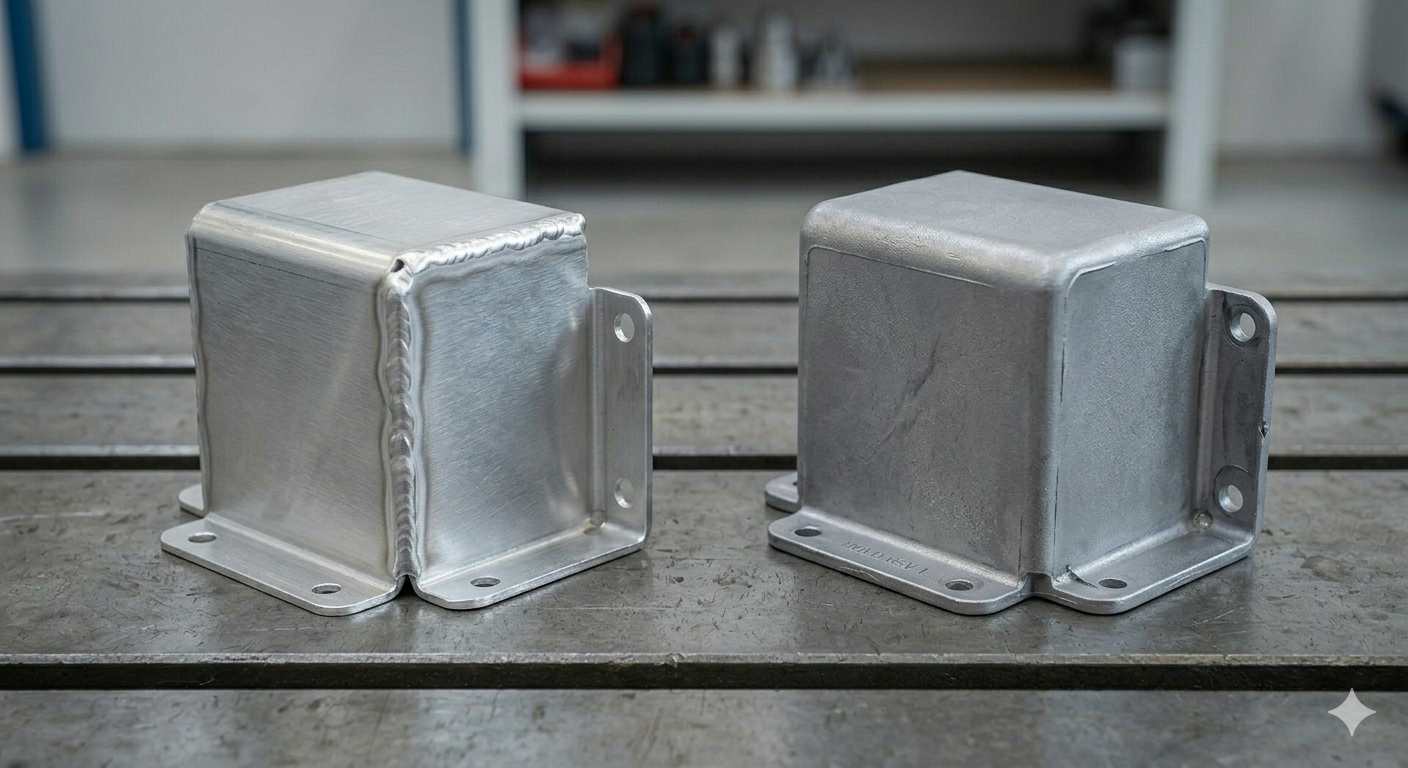
(AI generated) functional prototype vs production part
Prototype Accuracy vs Production Requirements
CNC machined functional prototypes can hold tolerances of ±0.02-0.05mm routinely. Production injection molding holds ±0.1-0.3mm. Production stamping holds ±0.1-0.5mm. Production die casting holds ±0.2-0.5mm.
Some assemblies function correctly only because the prototype was manufactured far tighter than the intended production process can realistically maintain. If the design requires ±0.05mm tolerances to function correctly and the production process holds ±0.2mm, the production parts won't function, regardless of what the prototype testing showed. Functional prototype development that doesn't account for this mismatch produces optimistic validation data that doesn't transfer to production.
Prototype Speed vs Manufacturing Realism
3D printed functional prototypes arrive in 2-5 days. CNC machined prototypes take 5-10 days. Sheet metal assemblies take 7-14 days. Injection mold tooling takes 4-12 weeks.
The speed advantage of functional prototyping techniques is obvious. The manufacturing realism trade-off is less obvious. A 3D printed functional prototype tells you whether the geometry is correct and gives you a useful indication of structural behavior. It doesn't tell you how an injection-molded version of the same part will behave in terms of weld line strength, sink marks on thick sections, gate vestige effects on mating surfaces, or how the part will release from the tool. Manufacturing realism in functional prototype development requires choosing the process that matches the validation objective, not just the one that arrives fastest.
When Prototype Parts Cannot Fully Represent Production Parts
Some production processes produce material properties that prototype processes genuinely cannot replicate. Forged components develop directional grain flow during forming. A prototype machined from rolled bar stock will not reproduce the same fatigue behavior, especially under cyclic loading. Die-cast aluminum has a specific microstructure, skin condition, and porosity distribution from the casting process that machined solid prototypes don't replicate.
In these cases, functional prototype development needs to account for the gap. The prototype test data is directionally useful but not directly predictive. Applying appropriate design margin, testing at more conservative conditions, or investing in forged or cast prototype blanks machined to final geometry are the approaches that reduce this gap.
Common Challenges in Functional Prototyping
Dimensional Variation and Assembly Stack-Up
Prototype assemblies may still develop interference or excessive clearance even when individual parts remain within drawing tolerance. Stack-up across multiple mating features often becomes visible only after physical assembly, especially in compact mechanisms with bearings, sliding interfaces, or fastener alignment requirements.
Distortion and Residual Stress After Machining
Thin-wall aluminum and steel prototypes can shift slightly after rough machining or fixture release because internal stress redistributes as material is removed. Stress relief between roughing and finishing is sometimes necessary on larger or thinner parts where flatness and positional accuracy matter during testing.
Surface Finish and Contact Behavior
Functional testing depends on more than geometry alone. Sliding surfaces, sealing areas, and bearing interfaces may behave differently if prototype surface finish does not match production intent. Surface roughness, edge condition, and local machining marks can affect friction, wear, and preload behavior during assembly testing.
Manufacturing Limits on Complex Geometry
Some production geometries cannot be replicated fully during early prototyping. Undercuts, molded features, deep internal channels, and casting-dependent shapes may require simplified prototype geometry before production tooling exists. In these cases, validation usually focuses on the load-bearing or tolerance-critical features first.
Choosing the Right Functional Prototyping Strategy
Match the Prototype Method to the Validation Goal
Prototype strategy depends on what needs to be verified. Early geometry reviews may only require rapid printed parts for fit and packaging evaluation, while structural validation usually needs production-like materials and tighter dimensional control.
Assemblies involving bearings, sliding interfaces, or precision alignment often move toward CNC machining because surface finish and tolerance consistency affect the test results directly. Cosmetic housings and early enclosure studies may tolerate faster additive processes instead.
Balance Iteration Speed Against Manufacturing Realism
Fast iteration helps during early design stages when geometry changes frequently. In later validation stages, manufacturing realism becomes more important because the test data needs to reflect production behavior more closely.
A prototype that arrives quickly but behaves differently from the intended production part may still help with geometry review, though it provides limited value for structural or thermal validation.
Consider Material Behavior Early
Prototype material selection should follow the dominant failure mode being evaluated. Structural testing depends heavily on stiffness and yield behavior. Thermal validation depends more on heat resistance and expansion characteristics. Wear testing may require production-level surface hardness and finish instead of only matching nominal geometry.
Plan Around the Intended Production Process
Some prototype methods validate geometry effectively but reveal little about production manufacturability. Designs intended for molding, casting, or stamping may still require additional review for draft conditions, tooling access, shrinkage behavior, or process-related distortion before production release.
For lower-volume products, prototype machining methods sometimes remain practical for final production as well, especially when annual quantities stay relatively low.
Conclusion About Functional Prototyping
Functional prototyping is where engineering assumptions become engineering data. Functional testing exposes problems that are difficult to predict reliably through CAD review and simulation alone. Either way, functional prototype development produces an answer that changes how the next design decision gets made.
The investment in quality functional component prototyping pays back in production. Problems caught during functional prototype development cost a fraction of what they cost after tooling is committed, production processes are established, and supply chains are in place. The engineers who skip functional prototype development to save time and cost at the prototype stage reliably spend more total time and cost over the product development cycle than those who invest in it properly.
At JLCCNC, functional prototype creation is handled from single parts to complete assemblies, CNC machined precision components, sheet metal structural builds, and hybrid assemblies combining multiple processes. Engineering review is included in every quote, and our team will tell you if the functional prototype specification needs adjustment to produce valid test data before production starts.
Upload your functional prototype files and get a quote from engineers who understand what the build is trying to validate.
Precision CNC Machining Service
Professional manufacturing, fast turnaround, and quality assurance.
FAQ About Functional Prototyping
Q: What is a functional prototype?
A functional prototype is a physical part or assembly built to test how a design performs under real operating conditions before production begins. Unlike appearance models, functional prototypes are used to evaluate fit, motion, structural behavior, thermal performance, assembly interaction, and manufacturability using production-like geometry and materials where necessary.
Q: What is the difference between a functional prototype and a visual prototype?
A visual prototype focuses on appearance, shape, and presentation. It is typically used for concept review, marketing evaluation, or ergonomic assessment and may not use production materials or accurate tolerances. A functional prototype is built for engineering validation. It uses controlled dimensions, realistic assembly interfaces, and materials with representative mechanical properties so the design can be tested under actual loading, motion, thermal, or environmental conditions.
Q: Which manufacturing method is best for functional prototypes?
The best manufacturing method depends on the validation objective. CNC machining is commonly used for tight-tolerance functional parts and structural testing. Sheet metal fabrication is preferred for welded frames, enclosures, and formed assemblies. SLA and SLS 3D printing are useful for rapid iteration, fit checks, and early-stage functional evaluation where production realism is less critical. Many functional prototype assemblies combine multiple manufacturing methods to balance speed, cost, and engineering accuracy.
Q: Should functional prototypes use production materials?
Functional prototypes should use production materials whenever the validation depends on mechanical, thermal, wear, or environmental behavior. Material differences can significantly affect stiffness, strength, friction, thermal expansion, and fatigue performance. In early development stages, substitute materials may still be acceptable for geometry review or basic assembly testing. However, production-like materials are usually necessary before final engineering validation or production release decisions.
Q: Can CNC machining be used for functional prototyping?
Yes. CNC machining is one of the most common methods for functional prototype development because it provides high dimensional accuracy, controlled surface finish, and access to production-grade metals and engineering plastics. CNC machined functional prototypes are widely used for structural brackets, precision assemblies, bearing interfaces, threaded components, and parts requiring realistic load testing or tolerance verification.
Q: How do functional prototypes reduce production risk?
Functional prototypes reduce production risk by identifying design, assembly, material, and manufacturability problems before production tooling and supply chain commitments are finalized. Testing physical prototypes under real operating conditions helps engineers detect issues such as tolerance stack-up, structural weakness, thermal distortion, excessive wear, or assembly interference early in development, when design changes are still relatively inexpensive to implement.
Popular Articles
• Rapid Prototyping Guide: Processes Compared and How to Choose the Right Method for Manufacturing
• CNC Rapid Prototyping: Cost, Lead Time, Design Tips & Machining Service
• How is the Cost of CNC Machining Determined
• CNC machining solutions for DIY project designers
• The true cost of CNC machining services what are the main factors affecting price
Keep Learning
Rapid Prototyping Guide: Processes Compared and How to Choose the Right Method for Manufacturing
What Is Rapid Prototyping (AI generated) Various rapid prototyping parts including 3D printed, CNC machined, and sheet metal components on a workshop table. Rapid prototyping is a manufacturing approach that produces physical parts directly from CAD data within hours or days, enabling engineers to quickly validate design, fit, and function before full-scale production. Modern shops use several methods under this umbrella. 3D printing, CNC machining, and sheet processes all fall into the rapid prototyp......
What Is CNC Precision Machining? Process, Tolerances & Applications
Key Takeaways CNC precision machining focuses on controlling part variation within strict dimensional requirements rather than simply producing smaller features. Many precision machining applications can achieve tolerances around ±0.025 mm when the part design and manufacturing conditions are suitable. The final accuracy of a machined part depends on how well the process is planned, controlled, and verified from design to inspection. CNC precision machining is widely used for parts that require consis......
Additive vs Subtractive Manufacturing: Differences, Advantages, and How to Choose the Right Process
Quick Comparison: Additive vs Subtractive Manufacturing Feature Additive Manufacturing Subtractive Manufacturing How it works Builds parts layer by layer Removes material from solid stock Best for Complex geometry, prototypes, low-volume production Precision parts, tight tolerances, production runs Design freedom Excellent, including internal channels and lattices Limited by cutting tool access Typical accuracy Lower as-built accuracy; post-processing is often required High dimensional accuracy direct......
OEM vs ODM: Key Differences, Benefits, and How to Choose
Key Differences at a Glance Between OEM and ODM Factor OEM Manufacturing ODM Manufacturing Design Origin Buyer provides the product design Supplier provides an existing design Product Control Higher control over specifications and development Less control over the core product design Engineering Input Requires more engineering and product development work Requires less technical involvement Customization Extensive customization options Limited to predefined modification options Intellectual Property I......
Large Part CNC Machining: Processes, Challenges, and Manufacturing Considerations
Key Takeaways About Large Part CNC Machining Large part CNC machining handles components where size itself introduces manufacturing challenges that standard machining doesn't face, thermal effects, deflection, workholding complexity, and dimensional control over long spans. Machine travel is one constraint but not the only one, part weight, spindle access, and workholding capability define what a machine can actually do with large components as much as the stated work envelope. Accuracy on large parts......
Low Volume CNC Machining: Small Batch Production Strategies and Manufacturing Guide
Key Takeaways About Low Volume CNC Machining Low volume CNC machining is typically used for production runs ranging from a single part to roughly 1,000 units, without the tooling investment required by molding or casting processes. Small batch CNC machining is often the most practical choice when designs are still evolving, demand is uncertain, or production quantities are too low to justify dedicated tooling. CNC machining can produce production-grade parts from aluminum, stainless steel, titanium, a......