HVAC Sheet Metal Fabrication: Ductwork Techniques, Standards, and Best Practices
22 min
- HVAC Sheet Metal Fabrication: Key Types and When to Use
- What Is HVAC Sheet Metal Fabrication
- Materials Used in HVAC Sheet Metal Fabrication
- Core Fabrication Processes in HVAC Sheet Metal Work
- HVAC Duct Fabrication Design Checklist (Engineer-Oriented)
- Precision and Quality Standards in HVAC Sheet Metal
- HVAC Sheet Metal Component Types and Uses
- Fabrication Challenges Unique to HVAC Sheet Metal
- How to Ensure Airflow Efficiency Through Fabrication
- Welding and Joining Techniques for HVAC Sheet Metal
- Tooling and Equipment for HVAC Sheet Metal Fabrication
- Safety and Compliance in HVAC Sheet Metal Shops
- Cost Factors in HVAC Sheet Metal Fabrication
- Choosing a Fabrication Partner for HVAC Sheet Metal
- Conclusion HVAC Sheet Metal Fabrication Best Practices
- FAQs about the HVAC Sheet Metal
(AI generated) Worker shaping metal sheet on press brake
HVAC Sheet Metal Fabrication: Key Types and When to Use
Overview of Common HVAC Sheet Metal Materials
HVAC sheet metal fabrication is the foundation of modern HVAC ductwork systems. From standard HVAC duct fabrication to custom HVAC sheet metal fabrication, precision in material selection and processing directly impacts airflow efficiency, leakage control, and system longevity.
In HVAC sheet metal fabrication, material selection directly influences the performance, durability, and efficiency of HVAC ductwork. Different materials are used depending on environmental conditions, system requirements, and cost considerations.
Galvanized steel is widely used in standard HVAC duct systems due to its balance of strength, corrosion resistance, and affordability. It performs well in most indoor environments and remains the default choice for general HVAC duct fabrication.
Aluminum is typically selected when weight reduction or corrosion resistance is a priority. It is commonly used in moisture-prone or coastal environments where traditional steel ductwork may degrade over time.
Stainless steel is reserved for more demanding applications. In HVAC sheet metal systems exposed to high temperatures, chemicals, or strict hygiene requirements, stainless steel provides long-term durability and stability.
In addition to these metals, certain HVAC duct systems incorporate specialized materials such as insulated panels, fiberglass duct board, or acoustic liners. These are used to enhance thermal efficiency, reduce noise, or improve air distribution performance in specific applications.
While this section provides a general overview, each material has distinct properties, advantages, and limitations. The next section explores these materials in detail to help guide proper selection for different HVAC applications.
This is where experienced manufacturers like JLCCNC come into the picture. With advanced CNC sheet metal fabrication, JLCCNC produces HVAC sheet metal components, duct sections, and custom enclosures with tight dimensional control and consistent quality. Engineers working on complex HVAC duct systems can upload their designs, select materials, and receive production-ready parts built for real-world installation conditions.
What Is HVAC Sheet Metal Fabrication
HVAC sheet metal fabrication is the process of cutting, shaping, and assembling metal parts used in air distribution systems. It produces the ductwork that moves air through a building with controlled flow.
HVAC sheet metal fabrication vs general sheet metal work
General sheet metal fabrication covers many industries like construction and manufacturing. HVAC sheet metal fabrication focuses on air movement. The work requires accurate sizing and tight joints because air movement depends on it. Small errors can affect performance.
Why HVAC fabrication demands precision
Air distribution reflects how well the system is built. If cuts or joints are not accurate, air can leak or lose pressure.
Proper fabrication keeps air delivery stable and supports system performance.
Typical HVAC components requiring fabrication
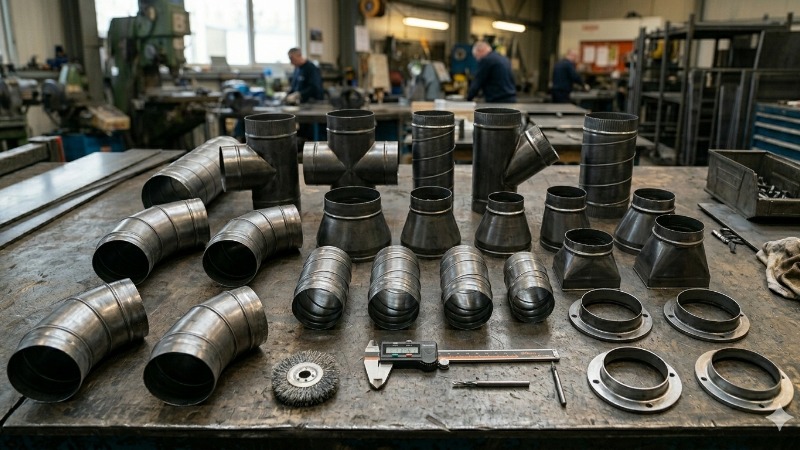
Some common fabricated parts are ducts, elbows, reducers, and transitions. These components connect and guide airflow through the system. Each part must fit correctly to maintain consistent movement of air.
Materials Used in HVAC Sheet Metal Fabrication
(AI generated) Different metal sheets stacked in factory storage
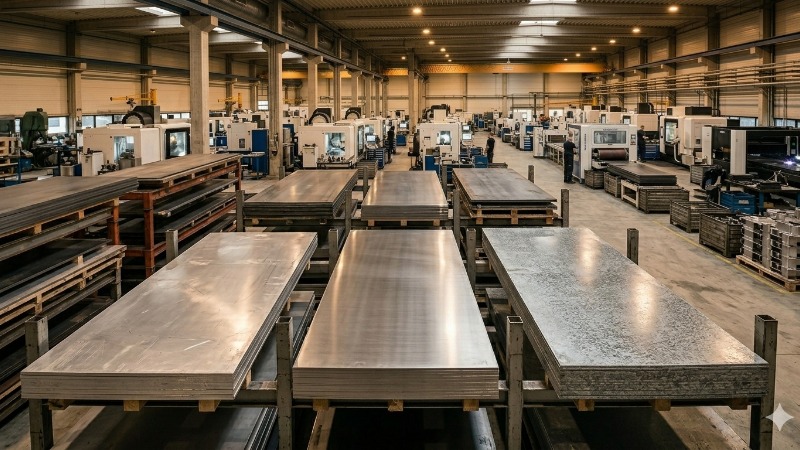
The material you choose in sheet metal fabrication directly affects how a system performs over time. Especially for HVAC systems, it influences durability, corrosion resistance, and how stable the system stays under load. In practice, material choice is less about preference and more about the environment the system will operate in.
Galvanized steel: pros and limitations
Galvanized steel is commonly used because it is strong and handles everyday conditions well. Its zinc coating helps resist rust, which makes it suitable for most ductwork. It performs reliably in standard environments but starts to lose effectiveness when exposed to constant moisture or harsh conditions.
Stainless steel: performance in corrosive environments
Stainless steel is used when the environment is more demanding. It holds up against moisture, heat, and chemical exposure without degrading quickly. This makes it suitable for situations where long term resistance matters. The tradeoff is cost, which is why it is usually reserved for specific use cases.
Aluminum sheet metal in HVAC systems
Aluminum is lighter and resists corrosion on its own. It is often chosen when handling and installation need to be easier or when weight is a concern. It works well in environments with moisture, as long as the application does not require heavy structural strength.
Material thickness, gauge selection, and structural impact
Thickness plays a direct role in how the system behaves. Thicker material keeps ducts rigid and reduces vibration, while thinner sheets are easier to work with but may flex under pressure. Choosing the right gauge helps maintain shape and keeps air delivery stable inside the system.
Material Selection Guidelines by Environment
| Environment | Material choice | Reason |
|---|---|---|
| Normal indoor use | Galvanized steel | Balanced strength and cost |
| Moist or coastal areas | Aluminum or stainless steel | Better resistance to corrosion |
| Industrial or chemical exposure | Stainless steel | Handles harsh conditions better |
| Light duty or easy handling | Aluminum | Easier to install and manage |
Each environment calls for a different approach. The goal is to match the material with the actual conditions so the system stays efficient without unnecessary cost or failure risk.
Choosing the right material is only half the equation. Precision cutting, forming, and fabrication determine whether those materials actually perform the way engineers expect.
Core Fabrication Processes in HVAC Sheet Metal Work
Most HVAC sheet metal fabrication moves through a defined set of steps that shape raw material into usable duct components. The way each step is handled directly affects fit, durability, and air movement behavior.
Nested cutting laser, plasma, waterjet comparison
Laser cutting is often chosen when accuracy matters. It produces clean edges and handles detailed parts well. Plasma cutting, on the other hand, is preferred when speed is more important and material is thicker, even if the edge finish is slightly rougher. Waterjet cutting avoids heat altogether, which helps when the material cannot tolerate thermal distortion.
Bending and forming operations for HVAC parts
Forming sheet metal into bends turns flat sheets into ducts, elbows, and transitions. Air delivery stays smoother when bends are accurate and consistent. Any variation can affect how air moves through the system and how well parts align during installation.
Punching, shearing, and blanking techniques
Punching creates openings for bolts, airflow, or access points. Shearing is used to cut sheets into required sizes with straight edges. Blanking removes specific shapes that later become components in the system. Each step prepares the metal before it moves toward assembly.
Assembly welding, riveting, and mechanical fastening
Welded joints create strong, permanent connections where structure matters most. Riveting is used when heat needs to be avoided while still keeping parts securely joined. Mechanical fasteners allow quicker assembly and make future maintenance easier, though they do not match welded strength.
Process Cost and Efficiency Comparison
| Process | Cost | Speed | Precision |
|---|---|---|---|
| Laser cutting | High | Medium | High |
| Plasma cutting | Lower | High | Medium |
| Waterjet cutting | High | Slower | High |
HVAC Duct Fabrication Design Checklist (Engineer-Oriented)
Before moving from design to HVAC duct fabrication, engineers typically evaluate a set of key parameters that directly affect air distribution performance, manufacturability, and cost. A structured checklist helps avoid rework and ensures the HVAC ductwork system performs as expected.
Minimum bend radius and airflow impact
Sharp bends increase turbulence and pressure loss in HVAC duct systems. As a general rule, the inner radius of a bend should be at least equal to the duct width where possible. Gradual transitions improve ventilation efficiency and reduce system resistance.
Recommended duct gauge by size
Material thickness should scale with duct size and pressure class. Larger ducts require thicker gauges to maintain rigidity and prevent vibration. Following SMACNA duct construction standards helps ensure structural stability across HVAC duct fabrication projects.
Leakage class selection (SMACNA)
HVAC ductwork systems are classified by leakage classes (CL). Lower leakage classes indicate tighter systems with better energy efficiency. Selecting the correct leakage class early helps define sealing methods and fabrication precision requirements.
Joint method selection: welded vs flange vs mechanical
Welded joints are preferred for airtight, high-pressure HVAC duct systems
Flanged connections (TDF/TDC) balance strength and assembly efficiency
Mechanical fasteners are suitable for low-pressure or service-access areas
Choosing the right joint method directly affects fabrication complexity, installation speed, and long-term maintenance.
Cost vs performance tradeoffs
Design decisions often impact fabrication cost. Complex geometries, excessive bends, or tight tolerances increase machining and labor requirements. Optimizing duct layout and standardizing components can significantly reduce HVAC sheet metal fabrication costs without sacrificing performance.
Precision and Quality Standards in HVAC Sheet Metal
Quality in HVAC sheet metal comes down to how closely the work follows defined standards. Dimensions, joint accuracy, and consistency all influence how the system performs after installation. In HVAC sheet metal fabrication, these standards keep results predictable and reduce performance issues later.
ASHRAE / SMACNA standards basics
ASHRAE focuses on system performance, air delivery, and energy efficiency. SMACNA defines how ductwork should be fabricated and installed. It covers duct construction classes, reinforcement, joint types, and sealing requirements. Most commercial HVAC duct systems follow SMACNA pressure classes and leakage classes to stay within acceptable performance limits.
Dimensional tolerances and flatness requirements
SMACNA typically allows dimensional tolerances within ±3 mm for standard duct sections, depending on duct size and pressure class. Poor tolerance control leads to misalignment during assembly. Flatness also plays a role, especially on larger duct sections where surface deviation can cause joint gaps. SMACNA guidelines typically expect surfaces to remain even enough to allow proper sealing without visible warping or stress at connections.
Leak and joint quality standards
Leakage control is defined through duct leakage classes in SMACNA standards. Systems are expected to stay within SMACNA defines duct leakage classes (CL), typically expressed as CFM per 100 ft² of duct surface area at a given static pressure. Joint quality directly affects this. Proper sealing methods like gaskets, sealants, or welding are used to keep leakage within acceptable ranges. Weak joints increase energy loss and reduce system efficiency over time.
Inspection and documentation best practices
Inspection usually happens at multiple stages to catch issues early. Measurements, joint integrity, and surface conditions are checked before final installation. Leakage testing may also be performed on critical systems to verify performance. Documentation keeps a record of consistency across batches and supports accountability in HVAC duct fabrication.
HVAC Sheet Metal Component Types and Uses
(AI generated) Assorted HVAC duct components laid out
Air distribution works best when each component is placed and connected correctly. Different parts handle different roles, and even small design choices can affect overall performance.
Plenums, transitions, and boots
A plenum works as the main air distribution box, feeding air into multiple ducts. Transitions help adjust size or shape so airflow stays steady between sections. Boots connect ducts to vents and guide air into the room without unnecessary loss.
Elbows, tees, and adapters
Direction changes are handled by elbows when straight routing is not possible. Air movement splits through tees to serve different areas of the system. Size or shape differences are managed using adapters so connections stay continuous without redesign.
Registers, grilles, and diffusers
Air enters or exits a space through registers and grilles. Even distribution comes from diffusers, which help avoid direct drafts. Placement and selection both play a role in keeping airflow balanced and temperatures consistent.
Custom sheet metal brackets and supports
System stability depends on proper support. Brackets and hangers keep ducts aligned and prevent sagging over time. Custom solutions are often needed to match the layout and ensure everything stays secure after installation.
Fabrication Challenges Unique to HVAC Sheet Metal
On most HVAC projects, fabrication issues don’t come from one place. Layout complexity, material behavior, and site limitations all start to overlap. When these are not handled early, problems usually show up during installation or operation.
Handling complex geometries and tight tolerances
In real layouts, straight lines are rare. Angles, offsets, and tight spaces make shaping more demanding. Getting multiple parts to align without gaps requires tight control, otherwise small deviations start affecting fit and air transfer.
Thermal expansion and vibration resistance issues
With temperature changes, metal does not stay static. Expansion and contraction happen over time, and joints take that stress. Add continuous air transfer and equipment movement, and vibration becomes a factor that can loosen connections or create noise.
Alignment and fitment challenges in retrofit installations
When working on existing buildings, perfect alignment is rarely possible. Old duct paths, limited access, and fixed structures create constraints. Adjustments are usually needed on site to get everything to fit without disturbing airflow.
Material wastage and nesting optimization
Before cutting even starts, sheet planning makes a difference. Poor layouts waste material quickly and increase cost. Better nesting improves usage and keeps production more efficient without changing the final output.
Common design mistakes increasing cost or air loss
Design decisions often carry forward into fabrication. Small oversights at this stage tend to create bigger issues later, especially when parts do not behave as expected during assembly.
Ignoring proper duct sizing often leads to imbalance in air transfer. Sharp transitions or sudden size changes create turbulence and pressure loss. Poor layout planning increases the number of bends, which adds resistance. Inconsistent spacing between supports can cause sagging over time. Lack of access points makes maintenance harder and affects long term performance.
Poor tolerance stack → leakage risk
Across a full system, small measurement errors do not stay isolated. They build up across joints and connections. Gaps start to appear, and once that happens, air leakage becomes difficult to control.
Oversizing ducts → reduced air velocity and poor air movement control
In some cases, increasing duct size seems like a safe choice. In practice, airflow slows down when the size goes beyond what is needed. That change affects pressure balance and reduces efficiency.
Improper joining → vibration/noise
At connection points, joint quality becomes noticeable over time. Weak or incorrect joining allows slight movement. Under continuous air circulation, that movement turns into vibration and eventually noise.
How to Ensure Airflow Efficiency Through Fabrication

(AI generated) Clean duct interior with smooth airflow
Most air delivery problems don’t appear out of nowhere. They usually link back to how the duct was fabricated and assembled. Small inconsistencies at that stage tend to show up later as pressure loss, noise, or uneven distribution.
Impact of seams and joints on airflow
At the seams, system efficiency either stays smooth or starts to break. Poorly aligned joints create small gaps or edges that disturb the flow. Clean alignment and proper sealing help maintain steady movement and reduce leakage.
Minimizing sharp edges and turbulence zones
Once air starts moving through the duct, even minor shape changes begin to matter. Sharp edges and sudden transitions tend to disturb the flow and create turbulence. Keeping transitions gradual helps air move with less resistance.
Surface finish and friction considerations
Over distance, the inner surface starts influencing how air behaves. A rough finish increases friction and slows things down. Smoother surfaces allow air to pass more freely and help maintain consistent flow.
Integration with insulation and sealing
When ducts are installed, insulation and sealing need to work with the fabrication, not against it. Gaps or poor sealing allow air to escape, while weak insulation affects temperature control. Proper integration keeps air handling performance contained and stable across the system.
Welding and Joining Techniques for HVAC Sheet Metal
In HVAC fabrication, joint quality defines how the system behaves under load. Poor joints leak, vibrate, or deform. That shows up later as inefficiency or maintenance issues.
Spot welding vs seam welding
Spot welding creates discrete connection points. It works where speed and localized strength matter. You’ll see it in light assemblies or where continuous sealing isn’t critical.
Seam welding runs along the joint. It forms a continuous bond. That matters in ducts where airtight performance is required. This ensures a continuous, gap-free connection.
Use of rivets, screws, and clinching
Mechanical fastening gives flexibility. Rivets lock parts in place. Screws allow removal. That matters in systems that need service access.
Clinching is different. It deforms the material to create a mechanical lock. No extra hardware. Faster assembly. Lower cost per joint in high-volume work. In HVAC duct fabrication, methods like Pittsburgh seam and TDF/TDC flanges are more commonly used.
Gasket and sealant integration
Even well-made joints leak if left untreated. Microscopic gaps exist between surfaces.
Gaskets fill those gaps. Sealants add a secondary barrier. Together, they stabilize pressure and reduce leakage paths. The key is correct application. Wrong sealant. Wrong surface prep. It fails.
Avoiding distortion during welding
Heat changes geometry. That’s the risk.
Uneven heating pulls the metal out of alignment. You end up with warped panels or misaligned joints. That affects fit and airflow.
Control the heat. Use proper sequencing. Clamp the workpiece. The goal is simple: keep the structure stable while the weld sets.
Tooling and Equipment for HVAC Sheet Metal Fabrication
On a typical shop floor, the output depends on the tools in use. CNC cutters, brake presses, rolling machines, and inspection tools shape and verify each part. The difference shows up in accuracy and repeatability across HVAC duct systems.
CNC laser cutters and turret punch presses
In cutting operations, precision usually comes from CNC control. Laser cutters handle detailed profiles and keep edges clean. This is critical in HVAC ductwork, where precise fit directly affects sealing performance. Turret punch presses come in when the same pattern repeats. Faster cycles. Consistent parts for hvac duct fabrication.
Brake presses and rolling machines
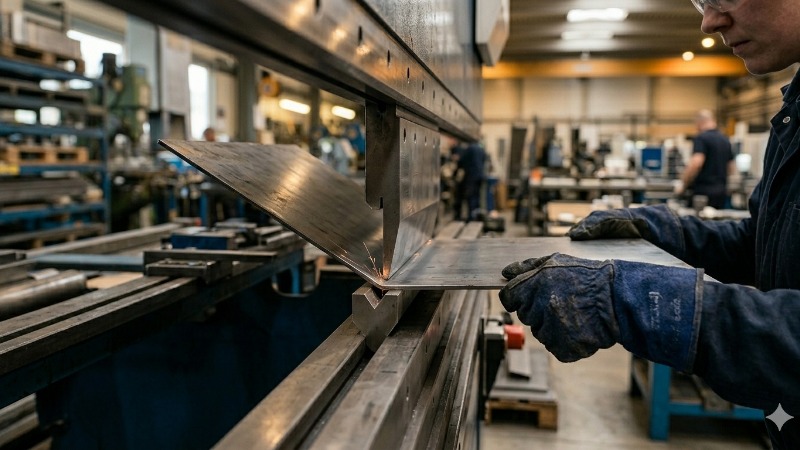
During forming, flat sheets need controlled bends. Brake presses handle angles and panels used in hvac ductwork. Rolling machines take over for curves and cylindrical sections. Both are used in custom hvac sheet metal fabrication where the layout does not follow a simple shape.
Hand tools for finishing and trimming
After forming, small imperfections still remain. Hand tools are used to clean edges and remove burrs. Snips, trimmers, and deburring tools refine the surface. In HVAC duct systems, even minor roughness can affect sealing.
Inspection tools (calipers, gauges, flow meters)
Before parts move forward, measurements need verification. Calipers and gauges check dimensions during hvac duct fabrication. Flow meters come into play after assembly to confirm airflow performance. This step ensures the final sheet metal HVAC ductwork meets both size and function requirements.
Safety and Compliance in HVAC Sheet Metal Shops
On the shop floor, safety decisions affect both output and people. Cuts, sharp edges, airborne dust, and heavy sheets all introduce risk. Clear procedures reduce incidents and keep work consistent across HVAC sheet metal operations.
PPE and hazard control
Around cutting and forming areas, exposure risks are constant. Gloves protect against sharp edges. Eye protection prevents injury from sparks and debris. Hearing protection becomes necessary near high noise equipment. Basic controls like machine guards and emergency stops reduce direct contact with hazards.
Ventilation and dust control
During cutting and grinding, fine particles get released into the air. Without proper airflow, dust builds up quickly and affects both health and equipment. Local exhaust systems and proper ventilation help remove airborne particles. This keeps the workspace safer and supports cleaner hvac duct fabrication.
Material handling best practices
Handling sheet metal requires control and planning. Large sheets can bend, slip, or cause injury if lifted incorrectly. Proper lifting techniques and support tools reduce strain and prevent accidents. Organized storage also helps avoid damage before parts move into hvac ductwork assembly.
Compliance with workplace safety codes
Workplace safety codes define how operations should run. These include equipment safety, worker protection, and handling procedures. Following these standards keeps operations aligned with legal requirements and reduces risk across HVAC duct systems.
Cost Factors in HVAC Sheet Metal Fabrication
In most projects, cost builds up across material, labor, and machine time. Small decisions at the design stage often carry forward into fabrication. The impact shows up clearly in overall budget and efficiency across HVAC sheet metal work.
Material costs and waste management
Material cost usually takes the largest share. Sheet selection, thickness, and grade all affect pricing. Waste becomes an issue when cutting layouts are not planned properly. Better nesting reduces scrap and keeps cost under control in hvac duct fabrication.
Labor and setup cost by complexity
Simple parts move faster through production. Complex geometries increase setup time and require more adjustments. Skilled labor also adds to cost when precision is critical. In HVAC duct systems, tighter tolerances often mean more time spent on setup and alignment.
Equipment amortization impact
Machine cost does not show up directly in every part, but it adds up over time. CNC machines, presses, and cutters carry high initial investment. That cost gets distributed across production runs. Higher volume jobs usually balance this better, especially in sheet metal HVAC ductwork.
Design for manufacturability tips to reduce cost
Design choices often decide how easy or difficult fabrication becomes. Simpler geometries reduce cutting and forming time. Fewer joints lower assembly effort. Standard sizes help avoid extra adjustments. In custom hvac sheet metal fabrication, practical design decisions help control both cost and production time.
Choosing a Fabrication Partner for HVAC Sheet Metal
On most projects, the fabricator you choose affects more than delivery timelines. Build accuracy, fit, and long term performance all depend on how the work is handled from the start. A reliable partner usually shows consistency in both process and output.
Experience and certifications to look for
In HVAC work, experience shows in execution. Look for teams that have handled HVAC sheet metal projects across different system sizes and layouts. Familiarity with duct pressure classes, joint sealing methods, and tolerance control matters.
Certifications should align with industry standards. SMACNA compliance for duct construction is a key indicator. ASHRAE guidelines for airflow and system performance should be understood and followed. ISO based quality management practices also add credibility. These are not just labels. They reflect how the work is actually carried out on the floor.
Project portfolio and case studies
Past projects reveal how a fabricator handles real conditions. Look for examples that include both standard hvac ductwork and complex builds. Case studies should show how challenges were managed, not just final results. Consistency across multiple projects matters more than one standout job.
Lead time and supply chain flexibility
Project timelines often shift due to design changes or material delays. A fabricator needs to adjust without slowing everything down. Strong supplier networks and flexible production planning help keep HVAC duct systems on schedule.
Quality assurance and warranty practices
Quality control needs to be built into each stage. Dimensional checks using calibrated tools, inspection of joints, and verification of sealing are standard steps. Leakage control and fitment accuracy should be confirmed before delivery.
Documentation also matters. Inspection records, tolerance reports, and batch consistency tracking help maintain accountability. On the warranty side, clear coverage for fabrication defects and joint integrity should be defined. This reduces risk and sets expectations after installation.
Custom HVAC Sheet Metal Fabrication Services
Not every project follows standard dimensions. Custom HVAC sheet metal fabrication becomes necessary when layouts, airflow requirements, or space constraints differ. This includes custom transitions, non standard duct sizes, and specialized components.
The ability to handle custom hvac duct fabrication without affecting accuracy or timeline is what separates a capable shop from a basic one.
For engineers and buyers working on HVAC ductwork systems, fabrication capability directly impacts installation efficiency and long-term system performance.
At JLCCNC, we provide precision CNC sheet metal fabrication for HVAC duct fabrication and custom HVAC sheet metal components. With instant quoting, tight tolerance control, and lead times as fast as 3 days, teams can move from design to production without delays.
Whether you need standard duct sections or complex custom HVAC sheet metal fabrication, our platform supports rapid iteration and scalable production.
Conclusion HVAC Sheet Metal Fabrication Best Practices
Across HVAC sheet metal work, consistent results come from controlled processes and clear decisions. Material choice, fabrication accuracy, and joint quality all connect directly to system performance.
Recap of techniques and considerations
Each stage plays a role. Cutting affects fit. Forming defines shape. Joining controls strength and sealing. Small errors at any step tend to show up later as leakage or pressure loss.
Balancing quality, cost, and performance
Cost decisions should not compromise performance. Thinner material or poor joints may reduce upfront cost but increase long term issues. Balanced choices keep systems efficient without unnecessary spending.
Final advice for project success
Clear design, proper fabrication, and consistent quality checks make the difference. Working with a team that understands both standard and custom HVAC requirements helps avoid delays and rework. Early coordination usually leads to smoother execution and better results.
FAQs about the HVAC Sheet Metal
Q: What is HVAC sheet metal fabrication?
HVAC sheet metal fabrication is the process of cutting, forming, and assembling metal sheets to create ductwork and components that efficiently distribute air within HVAC systems.
Q: How early should fabrication be considered in an HVAC project?
Right at the design stage. Early coordination avoids rework, especially when layouts or space constraints are tight.
Q: What causes most delays in HVAC fabrication projects?
Material availability and last minute design changes usually create delays. Poor coordination between design and fabrication also slows things down.
Q: How do you know if a fabricated duct is built correctly?
Fit, alignment, and sealing give it away. If joints sit clean and airflow stays stable, the fabrication is usually on point.
Q: Is custom fabrication always more expensive?
Not always. When planned properly, it can actually reduce installation issues and save cost later.
Popular Articles
• Micro CNC Machining Explained: Process, Precision & How Small It Can Really Get
• CNC Machining in the Medical Industry
• CNC for Luxury Watchmaking: Achieving Sub-Micron Tolerances
• Micro CNC Machining: Techniques for Manufacturing Miniature Components
• CNC Machining vs Sheet Metal: Which is Better for Enclosures?
Keep Learning
Micro CNC Machining Explained: Process, Precision & How Small It Can Really Get
Explaining Micro CNC Machining Any machinist can machine a block of aluminum into a bracket. But what happens when your part is the size of a grain of rice, and still needs tolerances tighter than a human hair? That's when “standard CNC” suddenly feels clumsy, and every micron starts to matter. This is the world of micro CNC machining. It's not about big, impressive cuts, it's about making the kind of components you'll never notice… until they fail. Like the gears in a luxury watch, the nozzles in med......
Custom Bicycle Parts: CNC Machining Guide
Key Takeaways CNC machining is often a practical choice for custom bicycle parts when production quantities are low, the geometry is complex, or critical interfaces require tighter dimensional control than near-net-shape forming can provide. The parts that benefit most are the ones where fit accuracy genuinely matters, such as bearing seats, bottom bracket interfaces, derailleur mounting features, and suspension pivots, where dimensional variation can affect assembly and performance. For CNC-machined ......
Online CNC Machining Services for Startups: Benefits & Uses
Key Takeaways Online CNC machining lets startups upload CAD files, get quotes, order custom parts, and manage production through a digital workflow. Prototyping: Startups can order single or small quantities to test fit, function, materials, and designs before scaling production. Production flexibility: The same CNC service can support prototypes, small batches, and higher quantities as product demand develops. Cost factors: Material, part size, geometry, tolerances, quantity, machining requirements, ......
CNC Machining for the Automotive Industry
Key Takeaways Automotive CNC machining is used both to produce certain low-volume components directly and to finish cast or forged parts at critical interfaces, including engine blocks, transmission housings, suspension uprights, brake components, and EV motor housings. CNC machining isn't how most automotive parts get manufactured in volume; casting, forging, and stamping handle the majority of mass production. What CNC does well is prototyping, low-volume production, precision finishing of cast or f......
CNC Machining for the Optics Industry: Optical Components & Housings
Key Takeaways CNC machining for optical systems primarily produces optomechanical components that hold, locate, align, and protect optical elements, including housings, lens barrels, mounts, spacers, retaining rings, and alignment fixtures. Conventional CNC machining is primarily used for the mechanical components around optical elements, while lenses and mirrors are generally produced through specialized grinding, polishing, coating, or ultra-precision machining processes. CNC machining provides the ......
Semiconductor CNC Machining: Precision Parts for Semiconductor Equipment
Key Takeaways CNC machining produces semiconductor equipment parts such as vacuum plates, manifolds, chambers, stages, brackets, and equipment housings. The function of a feature should set its machining requirements. A sealing surface needs suitable flatness and surface condition, while locating holes depend more on diameter and position. Large pockets can make an aluminum plate move after material removal. Roughing and finishing operations may therefore need separate setups. Thin walls can deflect u......