Sinker EDM Machine: Types, Specs & How to Choose One
7 min
- Sinker EDM Machine: Types, Specs & How to Choose One
- What Is a Sinker EDM Machine?
- Key Machine Specifications
- Electrode Considerations
- Types of Sinker EDM Setups
- Choosing the Right Sinker EDM Setup for a Job
- A Common Misconception Worth Correcting
- FAQ
Sinker EDM Machine: Types, Specs & How to Choose One
Our sinker EDM guide covers how the process itself works — the shaped electrode, the erosion mechanics, where sinker EDM fits against wire and hole-drilling EDM. This one focuses on the machine: what actually differentiates one sinker EDM setup from another, and what to weigh when specifying or evaluating one.
Need Precision Sinker EDM Machining?
If you’re looking for a reliable manufacturing partner for precision mold and tooling work, JLCCNC can help. We provide sinker EDM, wire EDM, hole-drilling EDM, and CNC machining services for complex cavities, hardened materials, and precision components, with the flexibility to handle different machining processes in one production flow.

Precision CNC Machining Service
Professional manufacturing, fast turnaround, and quality assurance.
What Is a Sinker EDM Machine?
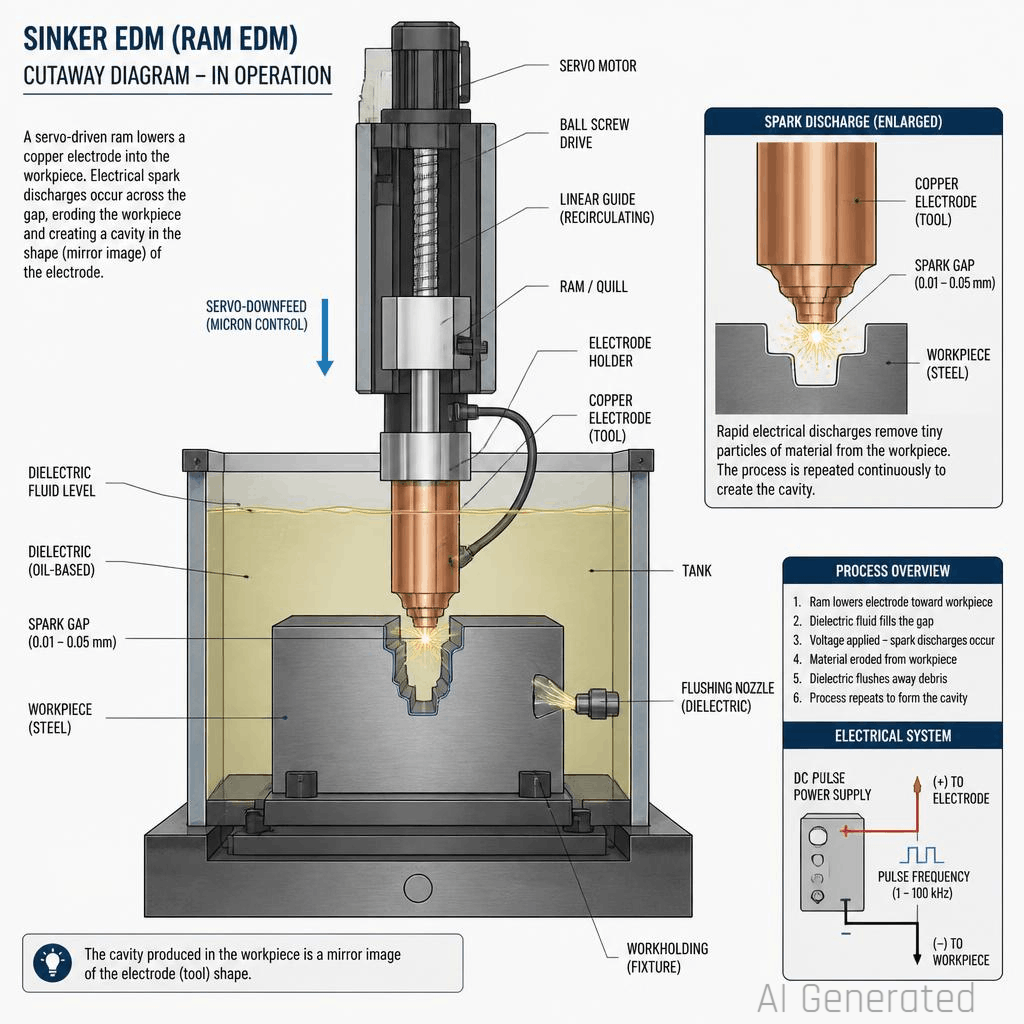
A sinker EDM machine (also called a ram EDM machine) erodes a cavity into a workpiece by advancing a precisely shaped electrode — the "ram" — downward through dielectric fluid, generating electrical discharges that erode the workpiece into the electrode's mirror-image form. The core systems: a servo-controlled ram that advances the electrode with fine positional control, a power supply generating and regulating the discharge pulses, a dielectric tank and filtration system (typically oil-based for sinker work, unlike the deionized water common in wire EDM), and a control system managing gap voltage, discharge timing, and flushing to keep the erosion process stable as the cavity deepens.
Key Machine Specifications
Ram travel and workpiece capacity. Defines both how deep a cavity the machine can sink and how large a workpiece it can accommodate on the table — a real constraint when a mold base or die component is large or the cavity is unusually deep.
Power supply range. Determines the range of discharge current and pulse settings available, which in turn affects both maximum material removal rate and achievable surface finish. A wider power range gives more flexibility to rough out material quickly on one setting and finish with a fine surface on another, without switching machines.
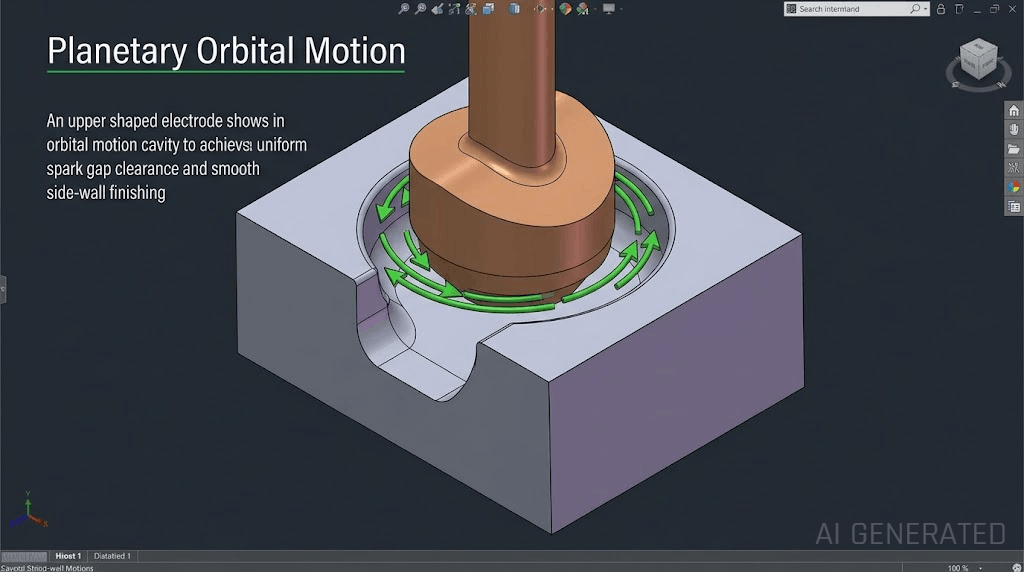
Orbiting/planetary capability. Many sinker EDM machines can move the electrode in small orbital patterns during the cut, effectively using a single electrode to produce a cavity slightly larger than the electrode itself, or to achieve a finer finish pass without swapping to a second, more precise electrode. This capability meaningfully reduces the number of separate electrodes needed for a job.
Positioning accuracy. Determines how precisely the ram (and therefore the resulting cavity) can be positioned relative to the workpiece's reference features — important for cavities that need to align accurately with other machined features on the same part.
Automation and unattended operation. Higher-end machines support automatic electrode changing and unattended multi-electrode job sequencing, letting a single job run through roughing and multiple finishing passes with different electrodes overnight without an operator present.
Electrode Considerations
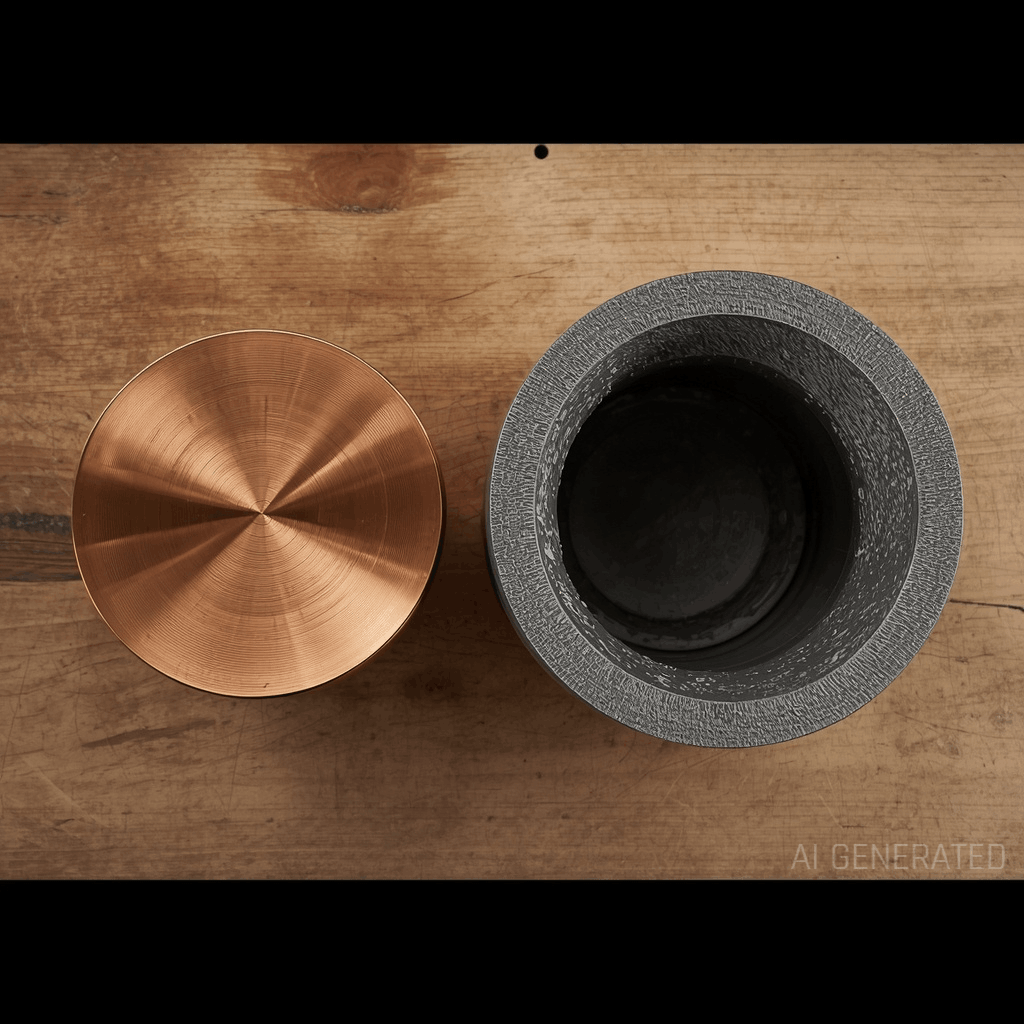
The electrode is effectively consumable tooling in sinker EDM, and its material and design matter as much as the machine running it. Copper electrodes offer good conductivity and are relatively easy to machine into precise shapes, making them a common default. Graphite electrodes machine faster and cost less for complex shapes, wear at a different rate than copper, and are often preferred for larger or roughing electrodes where their faster machinability outweighs copper's finer finish characteristics. Electrode wear compounds over a long job — for cavities requiring high precision, wear compensation (adjusting the electrode path to account for the small amount of material lost from the electrode itself during erosion) is a real part of running the process accurately, not an edge case.
Types of Sinker EDM Setups
Standard production sinker EDM covers the bulk of mold, die, and tooling cavity work — solid capability for the tolerances most cavity and detail work actually requires.
High-precision sinker EDM pushes surface finish and tolerance further, relevant for optical mold components, fine medical device tooling, and other work where standard cavity finish isn't sufficient without extensive hand-polishing afterward.
Micro sinker EDM handles very small, fine-detail cavities and features — miniature mold inserts, small precision components — often requiring finer electrode control and lower-current settings than standard sinker work uses.
Choosing the Right Sinker EDM Setup for a Job
Cavity depth and complexity point toward how much ram travel and positioning precision actually matter for a given job — a shallow, simple cavity doesn't need the same capability as a deep, complex mold detail.
Surface finish requirements should be weighed against the machine's achievable finish range and whether orbital finishing capability can get there without a separate hand-polishing step afterward, which adds cost and lead time.
Electrode material and complexity affects both electrode cost and lead time — a complex graphite electrode might machine faster than an equivalent copper one, but the right choice depends on the specific finish and wear characteristics the cavity needs.
Job volume and repeatability matters for whether automated electrode changing and unattended operation are worth the added machine cost — for a one-off mold cavity, manual operation is often perfectly adequate; for repeat production of the same tooling, automation pays for itself in reduced operator time.
A Common Misconception Worth Correcting
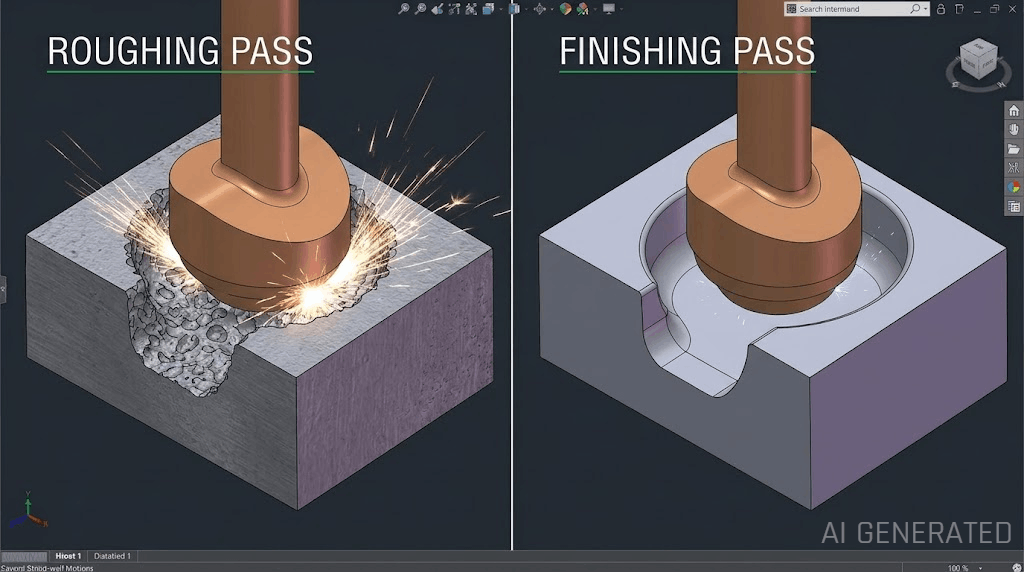
Assuming a single electrode can rough and finish a cavity to final tolerance in one pass is a common source of disappointing results on a first sinker EDM job. In practice, most precision cavities go through a roughing pass (fast material removal, rougher finish) followed by one or more finishing passes with progressively finer settings — and often a separate, more precise electrode for the final pass. Planning for that multi-pass sequence from the start, rather than expecting one electrode and one pass to deliver both speed and final finish, is what actually produces a cavity that meets both the tolerance and the surface finish spec.
At JLCCNC, sinker EDM runs alongside wire EDM, hole-drilling EDM, and conventional CNC machining under one service, which matters for mold and tooling work where the base is machined conventionally and the hardened cavity detail is finished with sinker EDM in the same production flow.
Need Precision Sinker EDM for Your Next Project? Upload your CAD file today to get an instant quote for precision EDM and CNC machining.
FAQ
What's the difference between copper and graphite electrodes?
Copper offers finer finish characteristics and good conductivity but is slower and costlier to machine into complex shapes. Graphite machines faster for complex geometry and costs less, at some tradeoff in achievable surface finish — the right choice depends on the specific cavity's finish and complexity requirements.
Why does sinker EDM use oil-based dielectric instead of water?
Oil dielectric is generally preferred for sinker EDM because it offers better insulation properties for the deeper, more complex cavity geometry typical of sinker work, and its handling characteristics suit the process differently than the deionized water commonly used in wire EDM.
How many passes does a typical sinker EDM cavity need?
Most precision cavities go through a roughing pass followed by one or more progressively finer finishing passes, often with different electrodes for roughing versus finishing — rarely a single pass with a single electrode for both speed and final surface finish.
What is orbiting in sinker EDM?
A small circular or programmed motion the electrode makes during the cut, which lets a single electrode produce a cavity slightly larger than its own dimensions and can improve surface finish on a finishing pass without switching to a different electrode.
Keep Learning
Laser Engraving Aluminum: Marking Methods & Surface Effects
Key Takeaways Laser engraving usually removes base material to create a recess. Laser marking is a broader term that can describe a surface-color change or material removal, so the process name alone does not define the final result. On aluminum, alloy and surface finish affect marking contrast. A light mark on dark anodized aluminum is a common design target, but the actual appearance depends on the finish and laser process. JLCCNC laser marking produces a recessed area 0.03–0.1 mm deep. The result i......
CNC Cutting Fluid: Types, Functions, Applications, and Selection Guide
Key Takeaways Cutting fluid in machining performs four functions simultaneously: cooling the tool and workpiece, lubricating the tool-chip interface to reduce friction, carrying chips away from the cut zone, and protecting machined surfaces from corrosion between operations. Different machining operations need different fluid priorities: high-speed aluminum milling may need adhesion control and chip evacuation, threading and tapping need strong lubrication, and grinding requires both cooling and fine ......
Blind Hole Machining Guide: What Is a Blind Hole, Types of Holes, and Tapping Tips
What Is a Blind Hole? Types of Holes and CNC Hole Machining Explained In CNC machining, few operations challenge process control and tool stability as much as blind hole machining. A blind hole is a hole that terminates at a defined internal depth rather than breaking through the opposite surface. Because the cavity is enclosed at the bottom, chip evacuation, thermal behavior, tool wear, and dimensional accuracy become far more difficult to manage compared to through-hole machining. These constraints ......
Rake Angle in Machining: Machinists’ Guide to Perfect Cuts
What is Rake Angle? (minaprem) If you've ever stood in front of a CNC machine or a manual lathe, you know that the cutting tool's geometry isn't just some arbitrary design. Every angle, edge, and surface has a job to do, and one of the most important of those is the rake angle. We've been running machines long enough to know that rake angle can make or break your surface finish, tool life, and machining efficiency. In this guide, we're going to walk you through what rake angle is, how it works, and ho......
Sheet Metal vs CNC Machining: A Guide to Choosing the Right Method for Your Metal Parts
Quick Answer: Choose sheet metal for uniform-thickness enclosures, panels, and formed brackets when bends and production volume support lower unit cost. Choose CNC machining for variable wall thickness, precision bores, tight feature relationships, and complex 3D geometry. Use a hybrid design when a formed structure needs precision-machined interfaces. A quote comes back for a bracket, and it's priced as a CNC part — machined from solid aluminum, a few hours of spindle time, a per-part cost that makes......
What Steps Are Taken To Minimize Waste In CNC Machining Processes?
How to Reduce Waste in CNC Machining: 5 Practical Strategies Quick Answer: CNC machining waste is reduced mainly through DFM, near-net stock, efficient toolpaths, preventive tool maintenance, and alloy-segregated recycling. The biggest gains usually come before cutting: reduce unnecessary material removal and prevent scrap or rework. Every CNC-machined part starts as more material than it ends up being. A pocket gets milled out, a profile gets cut away, a boss gets faced down to size — and all of that......