Spray Painting for Plastic Parts: Surface Preparation, Adhesion, and CNC Finishing Challenges
18 min
- What Is Spray Painting for Plastic Parts
- How the Spray Painting Process Works for Plastic Parts
- Plastic Material Compatibility in Spray Painting
- Why Some Plastics Are Difficult to Spray Paint
- How to Prepare Plastic for Spray Painting
- How to Spray Paint Plastic Parts
- Primers and Coating Systems for Plastic Parts
- Why Black Spray Painting Shows Surface Defects More Easily
- Spray Painting vs Other Plastic Surface Finishing Methods
- Dimensional and Assembly Considerations in Spray-Painted Plastic Parts
- Durability and Performance of Spray-Painted Plastic Parts
- Common Spray Painting Problems in Plastic CNC Parts
- Choosing Spray Painting for CNC Plastic Components
- Conclusion About Spray Painting
- FAQ’s About Spray Painting
Key Takeaways About Spray Painting for Plastic
- Plastic parts can usually be spray painted successfully after CNC machining when the surface is cleaned properly and matched with a compatible primer system.
- ABS and polycarbonate generally accept coatings more consistently, while nylon, POM, and PTFE are harder to paint because of weaker paint adhesion.
- ABS and polycarbonate usually show steady coating behavior after CNC work. Nylon, POM, and PTFE show coating separation because the primer does not stay fixed on the machined surface.
- Sharp edges and deep internal features often receive uneven paint coverage because spray access changes across the geometry.
- Excess coating thickness near threads, snap fits, and mating faces can create assembly interference after finishing.
- Primer layers are commonly added before painting to improve coating grip on difficult plastic surfaces.
- Curing temperature must be controlled because excessive heat can distort thin-wall plastic components.
- Common defects include peeling, fisheyes, gloss variation, edge pullback, and uneven texture on machined surfaces.
CNC-machined plastic parts often show tool marks, uneven surface texture, and base material color variation after machining. Spray painting is applied to improve surface appearance and create a more uniform finish across visible areas.
Plastic coatings behave less predictably than painted metal surfaces because polymers respond differently to solvents, curing heat, and surface preparation methods.
In production environments, paint adhesion problems usually start from the machining stage itself. Sharp edges, sanding scratches, coolant residue, and rough cutter marks reduce coating stability across the surface. Deep pockets and internal corners also receive uneven paint thickness because spray angle changes inside enclosed features. In practice, surface preparation often determines whether the final coating looks uniform across the entire part.
Different plastics also behave differently during coating. For instance:
- ABS and polycarbonate usually respond well to bead blasting and fine sanding, with primer spreading more evenly across machined surfaces after preparation.
- Nylon can be coated after controlled surface preparation, although adhesion stability is less predictable than ABS or PC. POM is considerably more difficult because of its very low surface energy.
In enclosed housings with thin ribs and large flat faces, curing heat can also release internal machining stress from the plastic. As a result, slight warping becomes visible around mounting zones and edge profiles after the coating cycle.
What Is Spray Painting for Plastic Parts
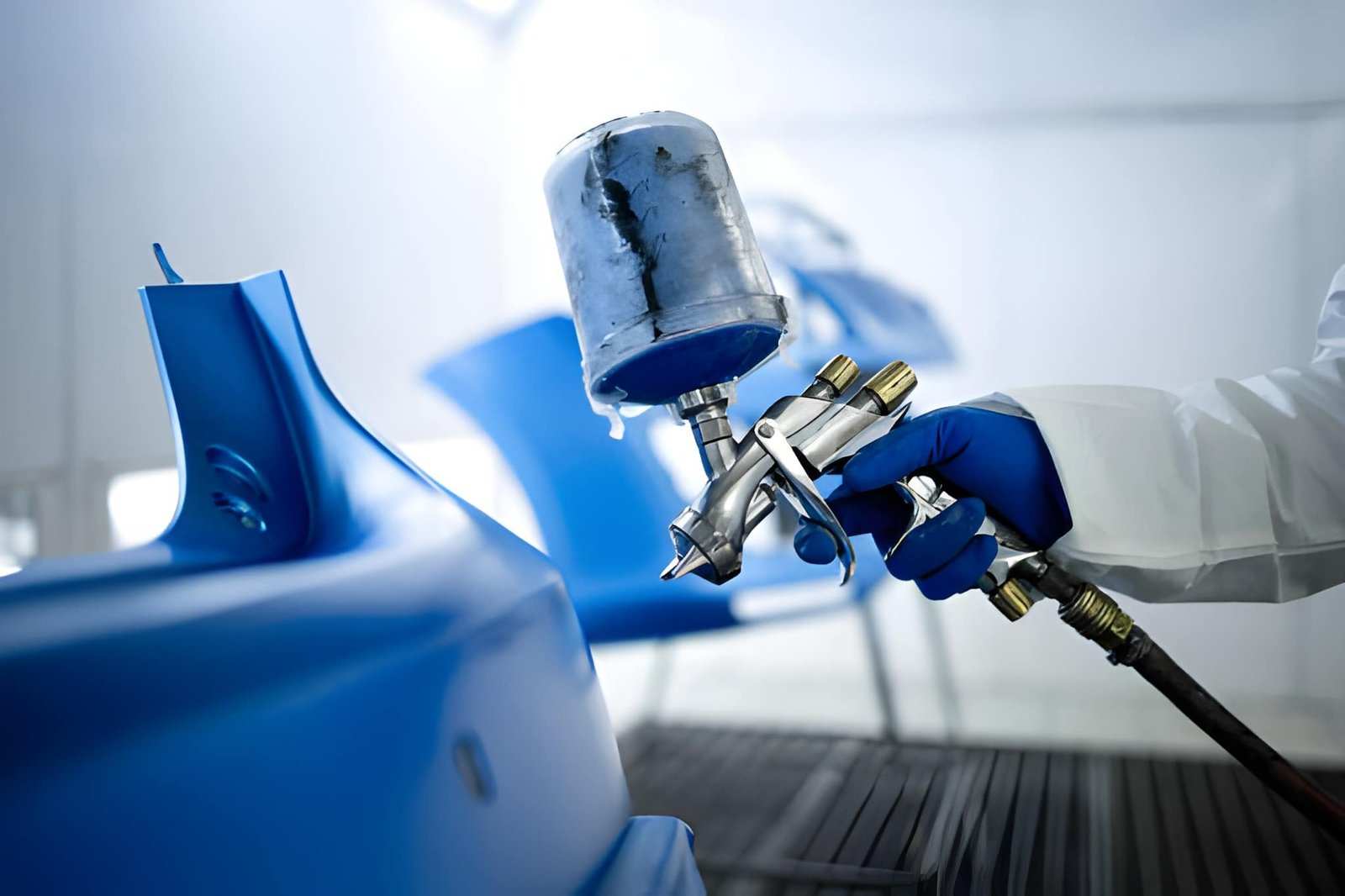
Spray painting - plastic car part (iStock)
Spray painting applies a thin coating layer to machined plastic surfaces to improve color consistency, surface appearance, and visual uniformity across production parts.
Why Plastic CNC Parts Are Spray Painted
- Spray coatings help reduce the visibility of machining marks left by milling and turning operations.
- Coating layers reduce visible variation between parts produced in separate CNC batches.
- Spray coatings are also used to create matte, satin, or gloss surface finishes on visible plastic parts.
- Paint layers mask base plastic shade differences in ABS, PC, and acrylic components.
- Surface sprays support appearance matching between mating parts in assembled products.
Where Spray-Painted Plastic Parts Are Commonly Used
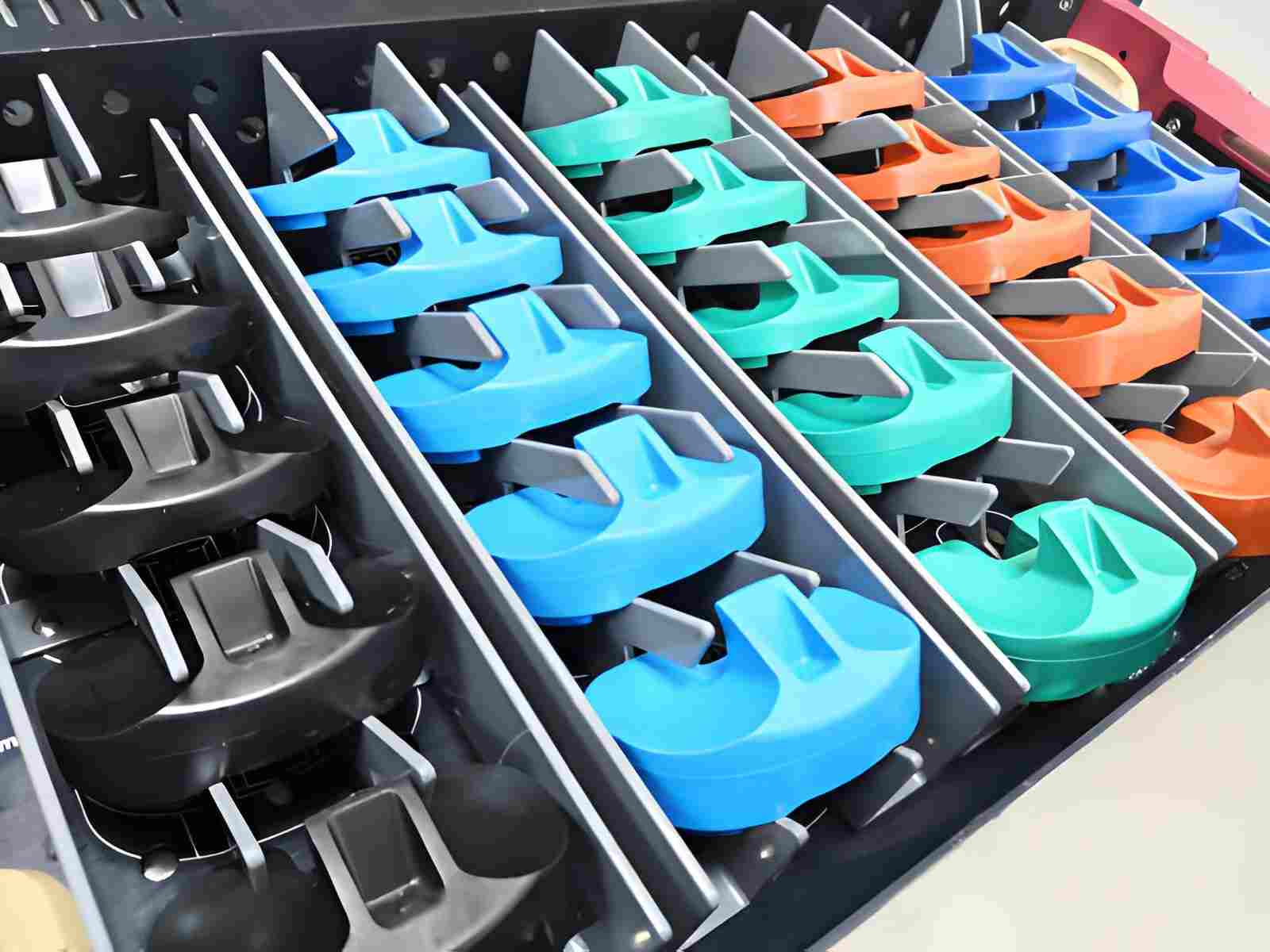
Painted knee replacement surgery instruments (iStock)
- Electronic housings using surface spray layers to define the final product appearance.
- Automotive interior trims using painted finishes to align with cabin design layouts.
- Medical device covers using painted finishes to maintain a cleaner and more uniform appearance.
- Control panel enclosures using front-face coatings for uniform color fields.
- CNC prototype parts using spray finishes to simulate the final molded production surface.
How the Spray Painting Process Works for Plastic Parts
Spray painting for CNC plastic parts follows a simple production sequence from cleaning to coating and curing. Each step controls how the paint sits on the machined surface and how stable the finish remains after handling.
Surface Preparation Before Spray Painting
Plastic parts are cleaned to remove coolant, dust, and machining residue left after CNC cutting. Light abrasion is used to improve surface grip for coating. Internal corners and machined edges are checked because they usually hold debris that affects paint bonding.
Primer and Paint Application Process
The primer is applied first to improve adhesion on plastic surfaces. It forms a base layer for a more even paint spread. Paint is then sprayed in thin passes to avoid buildup on edges and flat areas. Spray direction and coverage are controlled to keep the coating uniform across the part.
Drying, Curing, and Final Inspection
After spraying, parts are left to flash off and dry before curing so the solvent can evaporate from the coating film. Curing holds the paint layer in place on the plastic surface.
Final inspection checks color match, coverage on all faces, and visible defects like patchy areas or surface marks.
Plastic Material Compatibility in Spray Painting
Different engineering plastics react differently to spray coating because primer wetting, solvent interaction, and moisture behavior control how paint anchors on CNC-machined surfaces.
ABS and Acrylic Spray Painting Behavior
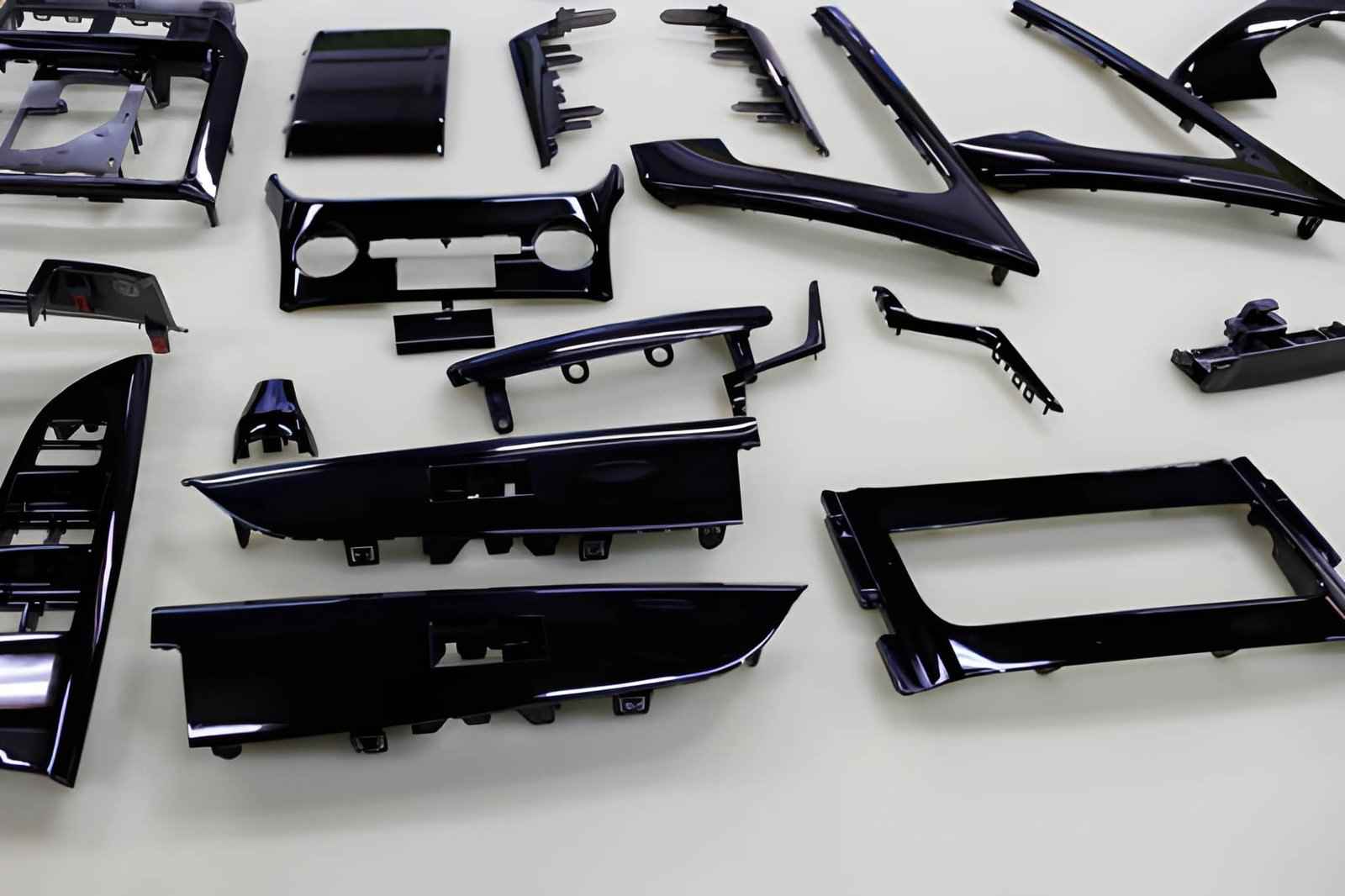
Car interior trim elements painted in a glossy color (iStock)
ABS accepts coating well because the primer spreads evenly on its machined surface without strong separation at the tool marks. Paint films level smoothly on milled faces, so gloss stays consistent across housings and covers. Acrylic also holds clear and colored coats. However, the cutter marks remain visible if surface finishing stays rough before painting.
Polycarbonate and Nylon Coating Challenges
- Polycarbonate can show stress marks near edges and clamped areas when strong solvents are used after machining.
- These marks usually appear near machined corners, clamped regions, or areas already carrying residual stress from machining.
- Nylon absorbs moisture from the air before coating starts, which weakens primer grip during drying.
- This often leads to coating lift near ribs, holes, and threaded areas where coverage is already harder.
Material Properties That Affect Coating Performance
- Uneven primer wetting often shows up first around tool marks and feed lines on machined surfaces.
- Solvent interaction with stressed zones can create microcracking in sensitive plastics like polycarbonate.
- Moisture absorbed in nylon disrupts primer bonding during the drying and curing stages.
- ABS generally accepts coatings more easily than semi-crystalline plastics like nylon and POM, where paint adhesion is generally less stable than on ABS or polycarbonate surfaces.
- CNC surface texture influences paint leveling and how evenly the coating levels during drying.
Why Some Plastics Are Difficult to Spray Paint
Some plastics do not hold a coating after machining. In production environments, coating failure is often traced back to insufficient surface energy on the machined plastic rather than the paint itself. Even after cleaning, the interface between paint and plastic remains weak, so the film separates during drying and handling.
Low Surface Energy and Weak Paint Bonding
Certain plastics do not allow primer to wet the machined surface evenly. The coating retracts from tool marks and edges instead of forming a continuous film. This creates weak spots that later show up as peeling or fisheyes after curing. The issue becomes more visible on smooth CNC finishes where surface grip is low.
Why POM and PTFE Are Especially Hard to Paint
POM and PTFE resist coating because their molecular structure has very low interaction with primers and solvents. Paint does not anchor properly on milled or turned surfaces, even after light abrasion. In production, this leads to frequent coating separation near corners, threaded zones, and recessed features where spray access is uneven.
Surface Condition Problems Before Painting
- Residual cutting oil blocks primer contact on machined surfaces.
- Fine tool marks create uneven coating spread across flat and curved areas.
- Moisture inside nylon parts reduces primer bonding during drying.
- Sharp edges create stress points where the coating separates earlier.
- Machining debris left on the surface weakens paint adhesion areas.
How to Prepare Plastic for Spray Painting
In spray painting of CNC plastic parts, the surface condition after machining sets the base for how the coating behaves later. Any oil film, machining marks, or limited spray access affects how evenly the paint settles on the surface.
Why Paint Adhesion Fails on Plastic Parts
Paint issues usually start when the primer cannot fully wet the machined surface. Small traces of coolant, dust, or handling marks break that contact during application. Over time, these weak areas show up as peeling, especially near edges and frequently handled zones.
Surface Roughness and Coating Consistency
Visible cutter marks and surface roughness often become more noticeable after the coating cures. When tool marks are uneven, the coating does not settle uniformly, so some areas take more paint while others stay lighter after curing. This difference becomes visible once the part dries.
Difficult Geometry and Coverage Problems
Parts with deep pockets or internal ribs are harder to coat evenly during spraying. Airflow and spray reach change inside these features, so coating thickness varies between open surfaces and recessed areas. This often shows as small changes in tone or finish after drying.
How to Spray Paint Plastic Parts
For CNC plastic parts, spray painting usually follows a controlled sequence to improve coating consistency and reduce adhesion problems.
Step 1: Clean the Surface
Remove:
- coolant residue
- machining dust
- oil contamination
- sanding particles
Surface contamination is one of the most common causes of coating failure on plastic CNC parts.
Step 2: Light Surface Abrasion
Fine sanding or bead blasting improves primer grip by increasing surface texture slightly.
Excessively smooth CNC surfaces can reduce coating adhesion.
Step 3: Apply Plastic Primer
Plastic-compatible primers improve coating stability on ABS, polycarbonate, nylon, and other engineering plastics.
Adhesion promoters are often required for low-surface-energy materials.
Step 4: Apply Spray Paint in Thin Layers
Thin coating passes reduce:
- edge buildup
- dripping
- uneven gloss
- solvent trapping
Multiple light passes usually produce more stable results than one heavy coating layer.
Step 5: Allow Flash-Off and Controlled Curing
The coating should partially dry between passes before final curing begins.
Excessive curing temperature may distort thin-wall CNC plastic parts.
Step 6: Final Inspection
Finished parts are checked for:
- gloss consistency
- coating coverage
- peeling
- fisheyes
- edge defects
- dimensional interference
Primers and Coating Systems for Plastic Parts
Primer and coating systems control how spray paint bonds, levels, and stabilizes on CNC-machined plastic surfaces. The system selection affects adhesion strength, visual uniformity, and final surface feel after curing.
Adhesion Promoters for Plastics
Adhesion promoters are used when plastic surfaces do not allow stable primer wetting after machining. They improve how the primer spreads on materials like POM, polypropylene, and nylon, where coating tends to separate during drying.
Single-Coat vs Multi-Coat Systems
- Single-coat systems combine color and finish in one layer, so the process steps are minimal.
- Machining marks remain more visible because there is no separate primer and leveling stage before the final appearance.
- Multi-coat systems use primer, base coat, and topcoat, so the surface builds in controlled stages during application.
Matte, Gloss, and Soft-Touch Finishes
Matte finishes reduce reflection and make tool marks less visible on plastic surfaces. Gloss finishes highlight surface condition, so any machining variation becomes more noticeable. Soft-touch finishes rely on even coating buildup to maintain a consistent feel across the full part surface.
Black spray coatings are commonly used on electronic housings and control panels, although dark finishes tend to make sanding marks and surface waviness more visible under direct lighting.
Why Black Spray Painting Shows Surface Defects More Easily
Black spray painting is widely used for CNC electronic housings, control panels, and consumer-facing plastic assemblies because it creates a clean and uniform appearance.
However, dark coatings also make surface defects more visible under directional lighting.
The following issues become easier to detect on black finishes:
- sanding scratches
- tool marks
- edge waviness
- coating thickness variation
- gloss inconsistency
- dust contamination
Because of this, black-painted CNC plastic parts often require more surface preparation and inspection compared with lighter coating colors.
Spray Painting vs Other Plastic Surface Finishing Methods
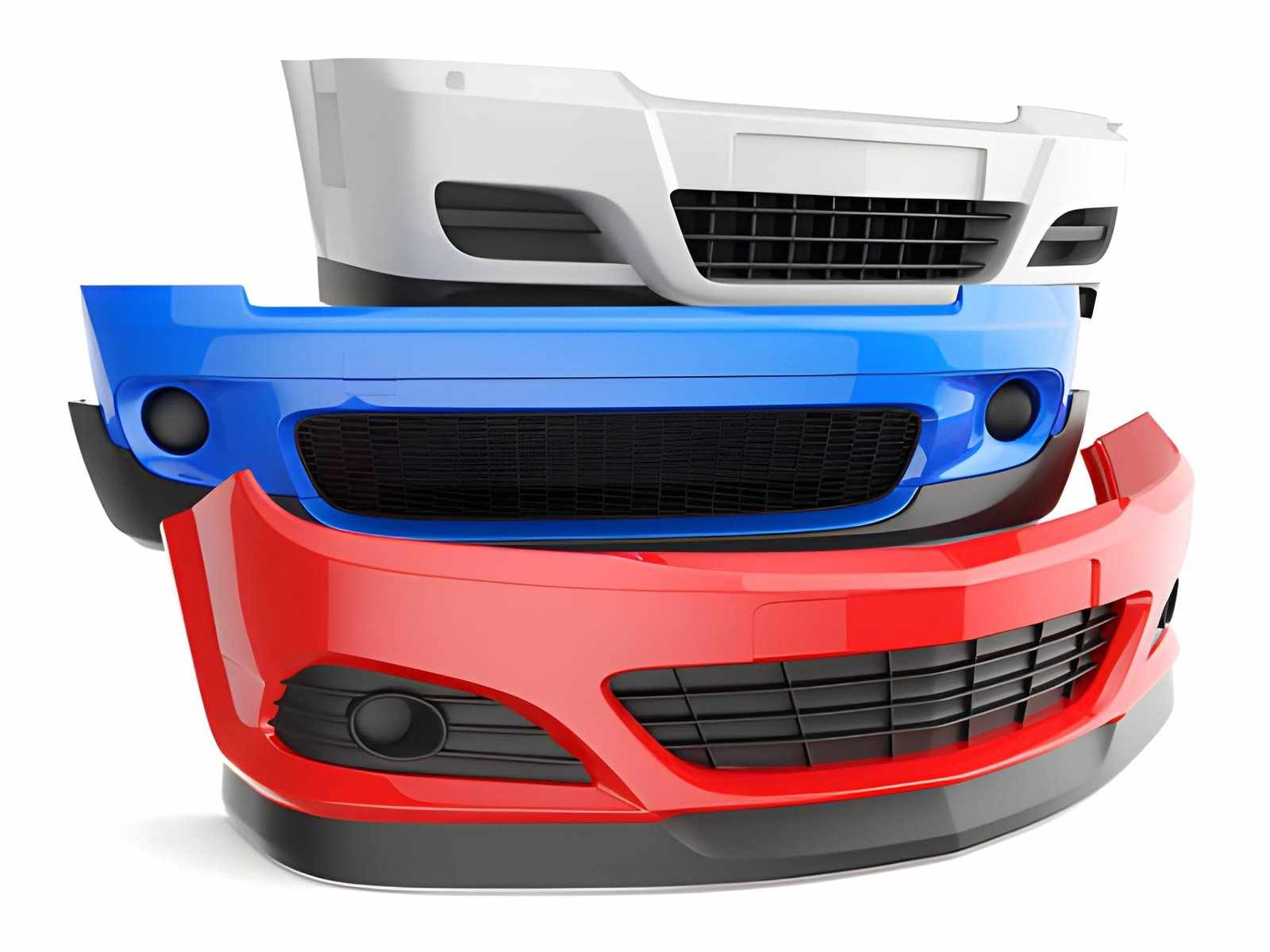
Car bumpers - spray-painted (iStock)
Let’s take a look at the comparison between spray painting, powder coating, molded-in color, silk screening, and pad printing, and their limitation and practical roles after machining.
Table 1: Spray Painting vs Powder Coating vs Molded-In Color vs Silk Screening and Pad Printing
| Method | Process Behavior | Suitable Plastics | Surface Effect | Geometry Handling | Limitation |
|---|---|---|---|---|---|
| Spray Painting | Liquid coating sprayed in controlled layers with primer and topcoat | ABS, PC, PMMA (acrylic), ABS-PC blends | External color control with matte, gloss, or textured finish | Covers complex CNC geometries, including pockets and ribs | Adhesion depends on surface cleaning and primer bonding |
| Powder Coating | Dry powder cured at an elevated temperature to form a film layer | Rare in CNC plastic finishing because most engineering plastics cannot tolerate standard powder coating cure temperatures. | Thick, uniform coating film | Poor on thin-wall plastic parts and heat-sensitive geometries | High curing temperature can distort ABS, PC, and nylon |
| Molded-In Color | Pigment added during the polymer molding process | ABS, PP, PC, PA6 in injection molding only | Color integrated into the material body | No CNC post-machining application | Not applicable to machined prototypes or low-volume CNC parts |
| Silk Screening | Ink pressed through the mesh stencil onto the surface | ABS, PC, PMMA flat panels | Printed graphics, labels, symbols | Works only on flat or low-curvature surfaces | Not suitable for full surface coating |
| Pad Printing | Silicone pad transfers ink onto curved surfaces | ABS, PC, nylon (limited adhesion on PA) | Markings, logos, identification text | Works on curved and uneven surfaces | Thin ink layer, no surface protection function |
Selection Tips
- Spray painting is used on CNC-machined ABS, polycarbonate, and PMMA when full surface color is needed after machining.
- Powder coating is uncommon for CNC plastics because cure temperatures can distort ABS, polycarbonate, and other heat-sensitive polymers.
- Molded-in color belongs to injection-molded PP, ABS, and PC, so it does not apply to CNC-machined prototype parts.
- Silk screening is used on flat ABS or acrylic faces for text, symbols, and simple markings after machining.
- Pad printing is used on curved ABS or PC parts for logos and small identification marks, not full coverage.
Dimensional and Assembly Considerations in Spray-Painted Plastic Parts
Spray painting adds a thin surface build-up on machined plastic faces. This changes the outer dimensions slightly, so masking and coating control decide how parts behave during assembly.
Coating Thickness and Tolerance Impact
- Paint builds up on outer faces, so snap fits and mating edges can feel tighter during assembly.
- Uneven spray on corners and flat zones creates small fit differences across identical parts.
Batch Consistency in Production
- Spray distance and paint flow changes can shift coating thickness between batches.
- Drying time differences can change surface feel and gloss from one production run to another.
Handling and Assembly Risks After Painting
- Fresh coating marks easily during early handling before full curing completes.
- Contact pressure during fitting can leave visible press marks on coated surfaces.
Masking Critical Surfaces and Threads
- Threads, sealing faces, and bearing surfaces are covered before spraying to stop paint buildup.
- Masked zones keep direct contact surfaces clean, so parts assemble without resistance.
Durability and Performance of Spray-Painted Plastic Parts
Spray-painted surfaces on plastic parts show different performance based on handling, environment, and exposure after production. The coating mainly controls appearance, while real usage decides how long the finish stays stable.
Scratch and Wear Resistance
Scratch marks usually appear first on edges, corners, and contact zones during handling and assembly. These areas face repeated friction, so the coating slowly loses its smooth look. Light wear can also appear when parts move against fixtures or stacked components during storage.
UV and Chemical Exposure
Sunlight exposure gradually changes the surface color and reduces gloss over time, especially on lighter finishes. Cleaning agents and oils can also affect the coating surface if the paint system is not selected correctly. In some cases, strong chemicals can soften the finish and reduce surface clarity.
Indoor vs Outdoor Performance
Indoor conditions keep the coating more stable because exposure levels stay controlled. Outdoor environments expose the surface to sunlight, moisture, and temperature changes, which slowly affect the finish. Protective coatings help reduce this effect, but gradual surface change still appears over time.
Common Spray Painting Problems in Plastic CNC Parts
Spray painting defects in plastic parts come from poor cleaning, uneven spray application, and incorrect curing time. These issues usually appear during finishing or after handling when the coating cannot stay stable on the surface.
Peeling and Poor Adhesion
Peeling starts when paint fails to lock onto the plastic surface during primer application. Residual oil, dust, and incomplete surface cleaning reduce bonding strength. Failure usually begins at edges, corners, and handled zones where coating stress is higher.
Orange Peel and Uneven Surface Texture
Orange peel forms when the paint surface does not level during drying. Changes in spray distance, fast solvent flash, and inconsistent application create uneven surface flow. The final finish shows small surface waves instead of a smooth layer.
Bubbling, Cracking, and Surface Defects
Bubbling occurs when trapped air or moisture escapes through the coating during drying. Cracking appears when the paint layer becomes rigid on flexible plastic surfaces after curing. These defects are more visible on thick coating areas and poorly cleaned machined zones.
Choosing Spray Painting for CNC Plastic Components
Spray painting is commonly used after CNC machining when plastic housings or visible components need a more uniform external finish. Part geometry and final product appearance usually determine whether spray coating is worth adding after machining.
When Spray Painting Is a Good Choice
- Used when CNC-machined plastic parts need a uniform external finish after cutting and trimming.
- Works well for ABS and polycarbonate housings that require consistent color across multiple batches.
- Applied when surface tool marks must be reduced without changing part geometry.
- Suitable for parts with complex shapes where molded color is not available in production.
When Other Finishing Methods Work Better
- Molded-in color is preferred when parts are produced in high volume using injection molding instead of CNC machining.
- Silk screening is preferred when only logos, symbols, and labels are needed on flat plastic surfaces.
- Pad printing is preferred for curved parts where only marking and identification are required.
- Uncoated finishing is preferred when internal functional parts do not require visual treatment.
Manufacturing Trade-Offs in Plastic Spray Painting
- Spray painting adds extra process steps, such as masking, coating, and curing, which increases production time.
- Even small changes in spray distance or surface cleanliness can create visible differences after curing.
- Complex geometries can create uneven coverage, especially in deep pockets and tight corners.
- Finished parts require careful handling before full curing to avoid surface marks during assembly preparation.
Conclusion About Spray Painting
Spray painting is used after CNC machining when plastic parts need a controlled external finish before assembly or delivery. It is a separate step after cutting, cleaning, and masking, not as part of the machining process itself.
Surface cleaning and primer condition decide how stable the coating stays during handling and use. Well-prepared surfaces are less likely to show peeling, uneven gloss, or handling marks later in production. Areas like edges, pockets, and tight transitions often show variation because spray access changes across geometry.
In CNC manufacturing, spray painting is not only a cosmetic process. Coating thickness, primer compatibility, curing temperature, and surface preparation all influence how plastic parts behave during assembly and long-term use.
For precision housings and cosmetic CNC components, spray coating strategy should be reviewed together with machining geometry, masking requirements, and material behavior before production begins.
At JLCCNC, spray-painted CNC plastic parts are reviewed for coating accessibility, masking feasibility, and surface preparation requirements before finishing begins. This helps reduce coating defects, assembly interference, and appearance variation across prototype and production batches.

Precision CNC Machining Service
Professional manufacturing, fast turnaround, and quality assurance.
FAQ’s About Spray Painting
Q: Can you spray paint plastic CNC parts successfully?
Spray painting can work reliably on CNC plastic parts when coolant residue, surface texture, and primer compatibility are controlled before coating. ABS and polycarbonate give more stable coating results after machining.
Q: Why does spray paint peel off plastic surfaces?
Peeling happens when oil, coolant, or dust remains on the surface before coating. The paint cannot bond properly, so it lifts during handling or assembly.
Q: What plastics are easiest to spray paint?
ABS and polycarbonate take paint more consistently after machining. Nylon and POM need stronger surface preparation because the coating grip stays weak.
Q: Does spray painting affect CNC part tolerances?
Paint adds a thin layer on outer surfaces, which slightly changes the fit. Masking is used on threads, sealing faces, and tight assembly zones.
Q: How should plastic parts be prepared before spray painting?
Parts are cleaned to remove coolant, dust, and machining residue. Light surface abrasion improves primer grip before painting starts.
Q: How long does spray paint take to dry on plastic parts?
Surface drying may occur within minutes, while full curing can take several hours, depending on coating thickness, solvent type, and curing temperature. Parts must remain untouched until the coating stabilizes.
Q: What causes uneven coating on plastic parts?
Uneven coating comes from inconsistent spray distance and complex geometry. Deep pockets and corners receive less paint during application.
Popular Articles
• Surface Finish in Machining, Types, Charts & Testing
• Anodizing vs. Hard Anodizing: The Differences in Surface Treatment Techniques
• Anodized Aluminum Colors: Options, Limits, and Real-World Results
• Explanation of different material surface treatment technologies in CNC machining
• How to choose between Laser marking and UV printing?
Keep Learning
Surface Finish in Machining, Types, Charts & Testing
What is Surface Finish in Machining? At its core, surface finish in machining refers to the small-scale irregularities left on the surface of a part after machining. These irregularities are typically grouped into three categories: Roughness: The fine, closely spaced deviations caused by the cutting process itself. Roughness depends heavily on feed rate, tool sharpness, and cutting speed. Waviness: Larger, more widely spaced variations caused by machine tool vibration, deflection, or thermal distortio......
CNC Machining Surface Roughness: A Practical Guide
Why Surface Roughness Matters in CNC Machining When we talk about CNC machining, precision isn't just about hitting the right dimensions, it’s also about how the surface feels and performs. Surface roughness describes the fine irregularities left on a machined surface, and it directly impacts how a part behaves in the real world. So, what is surface roughness? In simple terms, it's the measure of tiny peaks and valleys created by the cutting process. While they might look smooth to the naked eye, thes......
Optimizing Manufacturing Efficiency: A Guide to Computerized Numerical Control (CNC) Machining Surface Finishes
CNC Surface Finishes: Types, Costs, and How to Choose Quick Answer: Choose an as-machined finish when cost and dimensional stability matter most. Use bead blasting or brushing for a uniform cosmetic appearance, anodizing for aluminum corrosion resistance, hard anodizing for wear, and laser marking or UV printing for identification. Confirm material, tolerance, color, masking, and end-use environment before quoting. A CNC-machined part comes off the machine functional but rarely finished — tool marks, ......
Anodizing vs. Hard Anodizing: The Differences in Surface Treatment Techniques
Quick Answer: Choose Type II anodizing when corrosion resistance, color, and cosmetic appearance are the main requirements. Choose Type III hard anodizing when the part needs greater wear resistance and the coating thickness can be accommodated in the fit and tolerance plan. Confirm alloy, coating thickness, color, sealing, and critical dimensions before release. An aluminum bracket for an outdoor enclosure and a hydraulic cylinder rod both might get anodized — but specifying the same process for both......
How to Remove Anodizing from Aluminum Parts
Key Takeaways Chemical stripping is commonly used when anodizing needs to be removed from most or all of an aluminum part, but the process can also attack the underlying aluminum if it is not controlled. Mechanical removal works well for accessible areas but can change the surface texture and remove more base metal than intended. CNC machining gives better control when a defined anodized area needs to be removed from a precision part. Laser-based removal can be useful for controlled localized treatmen......
Anodizing Thickness: How Much Does It Add?
Anodizing Thickness and Dimensional Change at a Glance Feature Approximate dimensional effect One coated external surface +0.5 × coating thickness Outside diameter across two coated surfaces +1 × coating thickness Bore diameter with two coated walls −1 × coating thickness 60° thread pitch diameter Changes by about 4 × surface-growth amount, or about 2 × coating thickness under the 0.5× growth assumption Dimensional estimates below use the 0.5 × coating-thickness surface-growth relationship given in MI......