Annealing vs Normalizing Steel: Differences, Properties, Machinability & Applications
18 min
- What Is Annealing?
- What Is Normalizing?
- Annealing vs Normalizing: Side-by-Side Comparison
- How Annealing and Normalizing Work
- How Heat Treatment Affects Steel Properties
- Annealing vs Normalizing for CNC Machining
- Heat Treatment Considerations Before CNC Machining
- When to Use Annealing
- When to Use Normalizing
- Annealing vs Normalizing Decision Matrix
- Common Steel Grades Treated with Annealing or Normalizing
- Conclusion About Annealing vs Normalizing
- FAQ About Annealing and Normalizing
Quick Comparison Between Annealing and Normalizing
Summarizing annealing and normalizing
| Manufacturing Consideration | Annealing | Normalizing |
|---|---|---|
| Cooling Method | Cooled slowly inside the furnace | Removed from the furnace and cooled in air |
| Typical Result | Softer steel with lower internal stress | Stronger steel with a more uniform grain structure |
| CNC Machining Behavior | Lower cutting forces and easier chip formation | Slightly higher cutting forces but better material consistency |
| Tool Life During Machining | Often longer due to lower hardness | May be slightly lower depending on steel grade |
| Dimensional Movement During Machining | Often exhibits reduced distortion during machining when residual stresses have been effectively relieved before production | Better than untreated steel, but may retain more stress than annealed material |
| Suitable for Heavy Rough Machining | Excellent | Good |
| Suitable for Tight-Tolerance Parts | Commonly selected when distortion control is critical | Used when strength requirements are more important |
| Surface Finish Potential | Usually easier to achieve fine finishes | Good, but depends on the hardness and alloy content |
| Strength After Heat Treatment | Lower | Higher |
| Ductility | Higher | Lower than annealed steel |
| Common Manufacturing Uses | Machined blocks, molds, castings, forgings, stress-relieved components | Shafts, gears, structural parts, forgings, and welded fabrications |
| Typical Engineer's Reason for Selection | Reduce machining difficulty and minimize distortion | Improve mechanical properties before service |
| Production Trade-Off | Easier machining but lower final strength | Better strength but higher machining effort |
Annealing and normalizing are two heat treatment methods used before CNC machining, fabrication, inspection, and final assembly. Although both processes heat steel above its transformation range, the cooling stage creates significant differences in structure and performance.
Annealing uses controlled furnace cooling. As a result, the steel develops a softer structure with reduced internal stress.
Normalizing uses air cooling after heating. Therefore, the steel develops a finer grain structure with increased strength and hardness.
A large welded component may benefit from stress reduction before machining, whereas a structural steel part may require the property balance produced through normalizing.
This article explains the differences between annealing and normalizing and how each process affects steel parts during manufacturing, including:
- How annealing and normalizing are performed
- Differences in cooling methods
- Changes in material hardness and strength
- Effects on machinability
- Grain structure and material condition
- Common applications for each process
- How to choose the right process for CNC-machined parts
What Is Annealing?
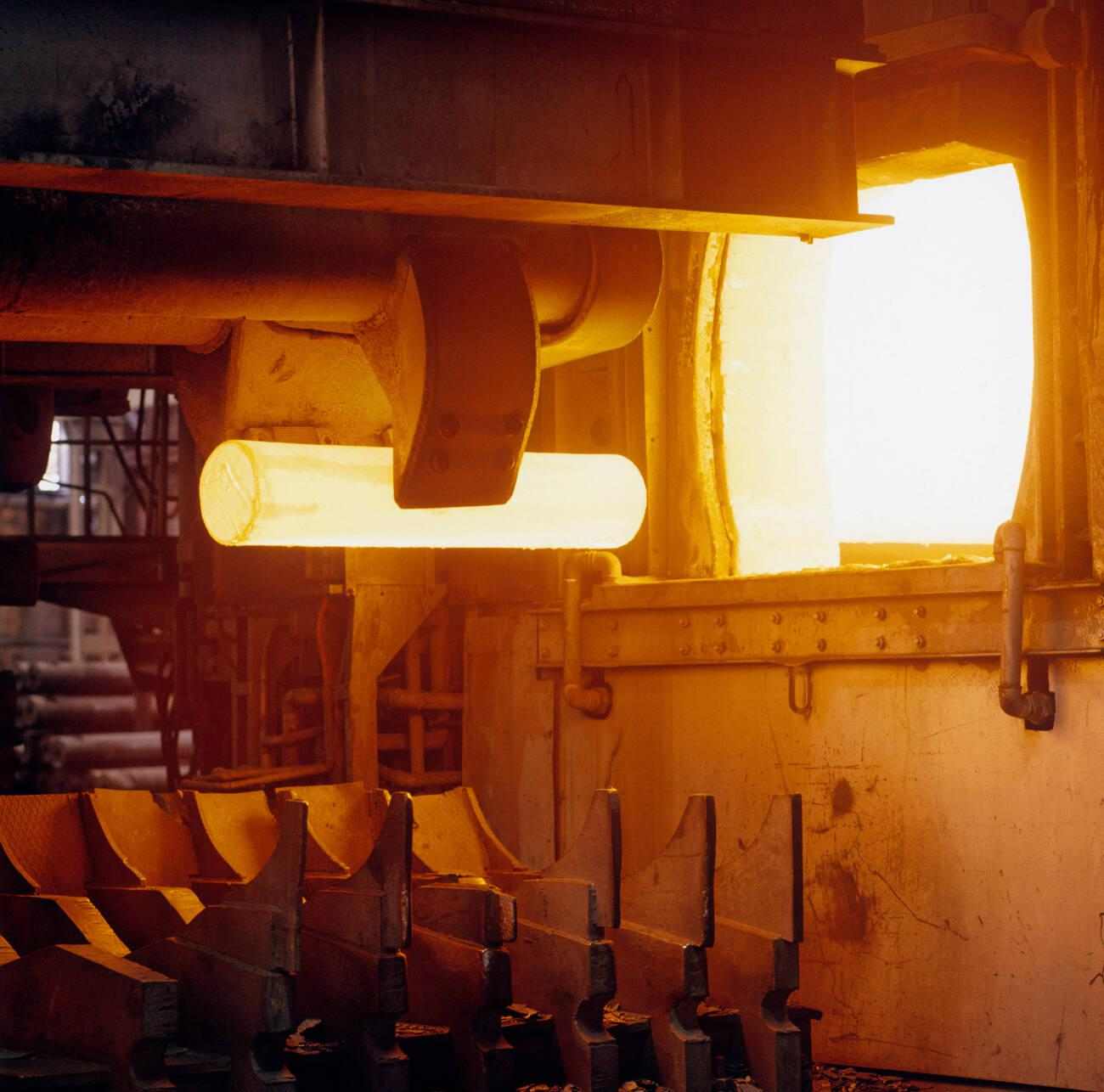
Steel slab in the annealing furnace process (Alamy)
Annealing is used to soften steel, improve its ductility, and reduce internal stress before machining, forming, or inspection operations.
Here are the key purposes of annealing:
- It reduces the hardness to make machining easier
- It improves ductility for bending and forming operations
- Annealing relieves stresses created during forging, rolling, casting, welding, or machining
- It creates a more uniform material structure
- It improves dimensional stability before final machining and inspection
Many steel bars, forgings, castings, and welded parts are annealed before production because the softer material is easier to machine, form, and inspect.
What Is Normalizing?
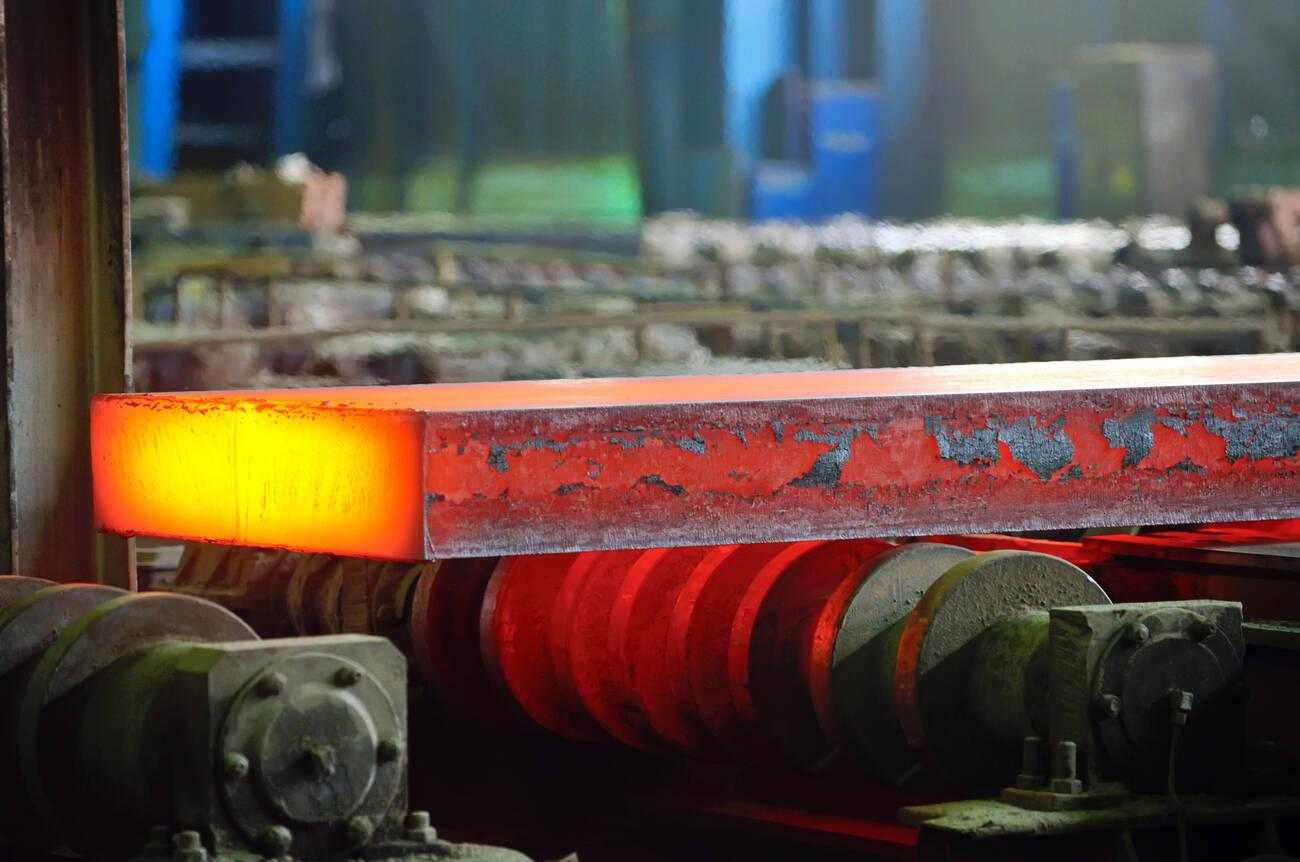
Normalizing steel (Alamy)
Normalizing is also a heat treatment process. It is used to improve grain structure, strength, and ductility. The steel is heated above its transformation temperature and then cooled naturally in still air.
Key purposes of normalizing include:
- Refining the grain structure of steel
- Increasing strength and hardness
- Improving wear resistance
- Creating a more uniform microstructure
- Reducing variations from previous manufacturing processes
Normalizing is commonly performed after:
- Forging operations
- Casting processes
- Hot rolling processes
- Other high-temperature manufacturing methods
From a manufacturing perspective:
- Normalized steel is generally stronger and harder than annealed steel
- Higher hardness usually results in greater cutting forces during machining
- The improved strength can be beneficial for structural and load-bearing components
- The process helps produce more consistent mechanical properties throughout the component
- Many mechanical components are normalized before final machining and service use
Although normalizing is most commonly associated with steel, the term "normalizing metal" is often used broadly to describe grain-refining heat treatment applied to ferrous alloys.
Annealing vs Normalizing: Side-by-Side Comparison
Both processes involve heating steel above its transformation range. However, the cooling stage creates the primary distinction between them. This difference comes down to grain structure, hardness, machinability, dimensional behavior, and final mechanical properties.
| Comparison Factor | Annealing | Normalizing |
|---|---|---|
| Primary Objective | Softening and stress reduction | Grain refinement and property improvement |
| Cooling Environment | Furnace cooling | Still-air cooling |
| Cooling Speed | Very slow | Faster than furnace cooling |
| Grain Structure | Coarser | Finer |
| Hardness Level | Lower | Higher |
| Strength Level | Lower | Higher |
| Ductility | Higher | Moderate compared with annealed steel |
| Residual Stress Reduction | Greater reduction | Partial reduction |
| Machining Characteristics | Lower cutting resistance | Higher cutting resistance |
| Tool Loading During Machining | Lower | Higher |
| Dimensional Stability After Stress Relief | Generally improved | Improved, though not to the same extent |
| Forged Component Processing | Commonly selected before extensive machining | Commonly selected for strength-focused applications |
| Welded Fabrications | Frequently used for stress reduction | Less common for stress-relief purposes |
| Structural Steel Components | Less common | Widely used |
| Material Condition After Treatment | Softer | Stronger |
In manufacturing environments, neither process is automatically preferred. The selection depends on the condition of the starting material, machining requirements, dimensional control targets, and property requirements of the finished component. Therefore, engineers evaluate the complete production sequence rather than comparing hardness values alone.
How Annealing and Normalizing Work
Both processes begin with a similar heating stage, yet the cooling stage creates different outcomes inside the steel. The rate at which heat leaves the material affects grain development, phase distribution, hardness, stress condition, and the behavior of the material during later manufacturing operations.
Heating Above Critical Temperature
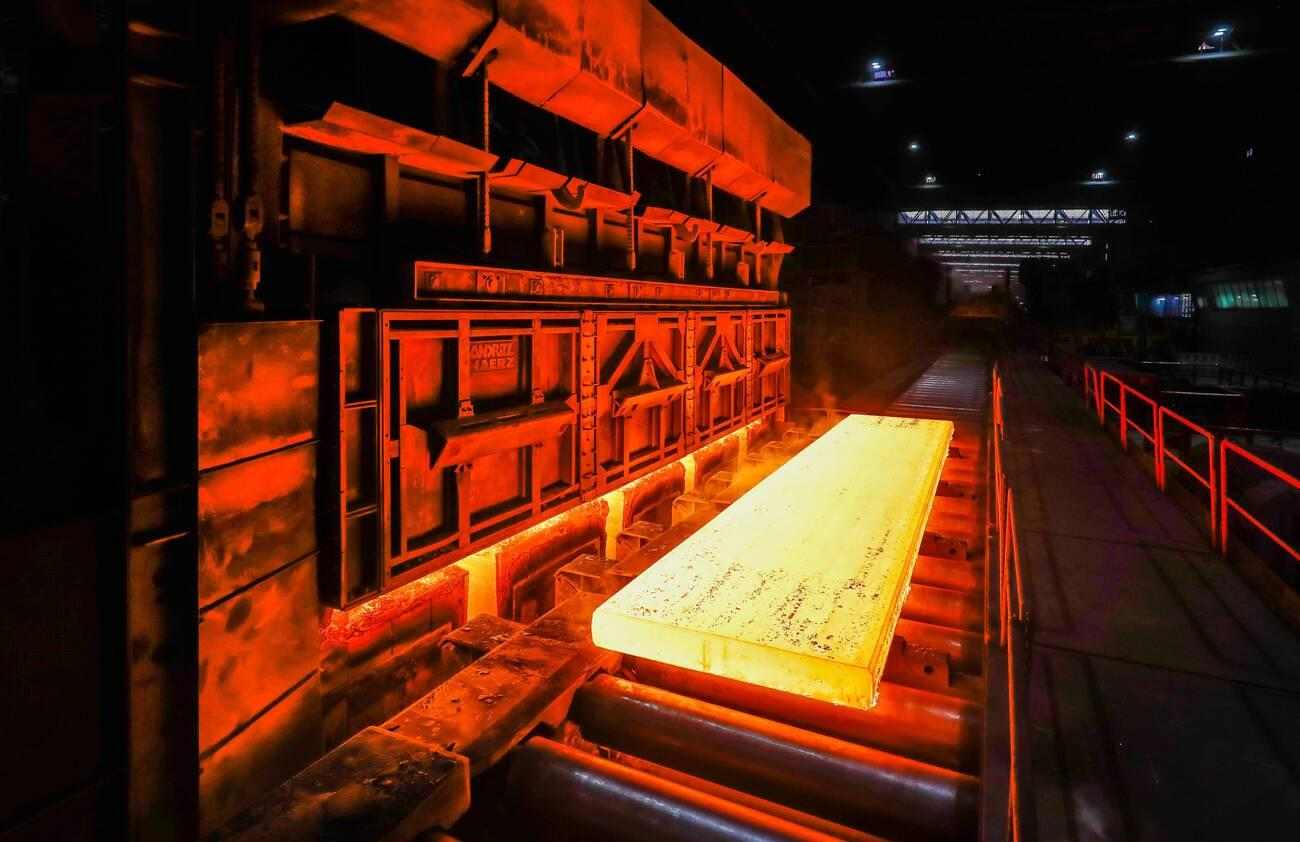
Annealing steel slabs in the hot rolling mill (Alamy)
Commonly, in annealing and normalizing, the steel is heated above its critical transformation temperature. At this stage, the existing microstructure changes into austenite. It creates the foundation for the final structure that develops during cooling.
The heating cycle must be controlled carefully throughout the entire cross-section. Large forgings, thick plates, and heavy castings require sufficient soaking time so the internal temperature matches the surface temperature. Uneven heating can create structural variations that remain after heat treatment.
From a manufacturing perspective, this stage also reduces the influence of previous processing history. Effects from rolling, forging, welding, and earlier thermal cycles are partially reset before the cooling phase begins.
Furnace Cooling in Annealing
After the heating cycle is complete, the material remains inside the furnace while the temperature decreases gradually over an extended period.
Because heat leaves the steel slowly, structural transformation occurs under controlled conditions. This allows larger ferrite and pearlite regions to develop throughout the material. The resulting structure generally exhibits lower hardness and increased ductility.
The gradual temperature reduction also minimizes thermal gradients between the surface and the core. Therefore, internal stress levels decrease significantly during the cooling cycle.
For machining operations, this softer condition often produces smoother chip formation and reduced cutting loads. Large forged blocks, welded fabrications, and cast components commonly undergo annealing before substantial stock removal because the material condition is more predictable during machining.
Air Cooling in Normalizing
In normalizing, the material is removed from the furnace after heating and exposed to still air for cooling.
The higher cooling rate changes how the transformed structure develops. Instead of forming the coarser structure associated with furnace cooling, the steel develops a finer and more uniform grain arrangement.
This finer structure increases hardness and strength compared with annealed material. At the same time, the treatment can improve consistency throughout forgings and castings that may contain localized structural variations from earlier manufacturing processes.
Many manufacturers normalize steel before final machining because the material enters production with a more refined grain structure while remaining suitable for conventional cutting operations.
How Cooling Rate Changes Microstructure
The most significant difference between annealing and normalizing develops during cooling rather than heating.
As cooling slows, atoms have more time to rearrange during transformation. This promotes the formation of larger structural regions and a softer overall condition. Annealing follows this path through controlled furnace cooling.
As cooling becomes faster, transformation occurs over a shorter period. Grain growth becomes more restricted, producing a finer microstructure. Normalizing follows this path through air cooling.
These structural differences influence more than hardness values. They affect cutting resistance, dimensional movement after rough machining, response to additional heat treatment, fatigue performance, and the consistency of properties throughout the component.
Consequently, engineers evaluate cooling conditions as a manufacturing variable rather than treating them as a simple finishing step. For manufacturers, the cooling stage is often where the practical difference between annealing and normalizing is created.
How Heat Treatment Affects Steel Properties
Annealing and normalizing change steel behavior through structure control during cooling. The shift appears in strength, hardness, deformation response, and load response under service conditions.
Strength and Yield Performance
Normalizing raises strength because cooling in the air creates a tighter grain network. This structure resists plastic movement under load, so yield starts at a higher stress level.
Annealing produces lower strength since slow furnace cooling forms larger grains. The material yields earlier under applied load, which supports material removal stages during machining.
Hardness and Wear Resistance
Normalized steel shows higher hardness. Faster cooling limits grain growth and builds a compact structure. This structure resists surface indentation and sliding contact.
Annealed steel stays softer. Larger grains form during slow cooling, which lowers surface resistance. Cutting tools engage the material with less opposition during machining operations.
Ductility and Formability
Annealing increases ductility through a relaxed internal structure. The material stretches more before fracture and supports bending and forming steps.
Normalizing reduces ductility compared with annealing. Grain refinement raises strength, so plastic deformation becomes more restricted under applied force.
Impact Toughness and Fatigue Resistance
For many carbon and alloy steels, normalized structures often provide better impact performance due to finer grain size. Stress spreads across smaller structural units instead of concentrating in larger zones.
For many carbon and alloy steels, normalized structures may provide improved fatigue performance because finer grains help distribute cyclic stresses more uniformly. However, fatigue behavior also depends on factors such as surface condition, residual stress, and material cleanliness.
Annealing vs Normalizing for CNC Machining
Annealing and normalizing are heat treatment routes used before machining to control how steel behaves under cutting load. Each process changes structure differently, so machining response, tool interaction, and stability do not behave the same during production.
Machinability and Cutting Forces
Annealed steel generally produces lower cutting forces because the softer microstructure offers less resistance during material removal. Cutting force stays smoother across varying section thickness.
Normalized steel typically requires higher cutting forces because the refined microstructure is harder and more resistant to deformation. Force fluctuation becomes more noticeable in interrupted cuts and profile transitions.
Tool Wear and Tool Life
In the annealed condition, wear builds mainly from continuous chip contact rather than sudden edge stress. Tool degradation stays gradual during steady operations.
In normalized steel, wear concentrates at the cutting edge due to higher localized stress. This shows up earlier in high-speed finishing passes and corner engagements.
Chip Formation and Surface Finish
Annealed material produces long, less fractured chips that flow steadily along the tool flute. Chip evacuation depends more on geometry than breakage.
Normalized material produces shorter, segmented chips due to a tighter structure. Surface finish depends heavily on feed stability because chip break becomes more aggressive.
Dimensional Stability During Machining
Annealed stock responds more predictably during bulk material removal because internal stress is already reduced before cutting starts. Geometry stays stable across roughing stages.
Depending on prior processing history and residual stress distribution, normalized stock may show more movement during heavy asymmetric material removal than fully annealed stock. This effect becomes more visible in thin walls and long features after stress redistribution.
Heat Treatment Considerations Before CNC Machining
At JLCCNC, we support CNC machining with proper material guidance before production starts. Heat treatment choice directly affects cutting behavior, dimensional control, and final part stability. Our engineering team reviews material condition during DFM so machining performance stays predictable across batches and geometries.
We help identify when annealing is required before machining, especially for steel alloys that need stable cutting conditions or reduced internal stress. This step reduces machining issues and supports precise geometry during production runs.

Precision CNC Machining Service
Professional manufacturing, fast turnaround, and quality assurance.
When to Use Annealing
Improving Machinability Before CNC Processing
Annealing is commonly selected before extensive machining operations when cutting efficiency is a priority. Lower hardness reduces cutting forces, improves tool life, and helps maintain stable machining conditions throughout roughing and finishing.
Example: CNC Machined Mold Block
Large mold blocks are often annealed before rough machining. Material removal rates are high during cavity machining, and lower hardness helps reduce cutting load while improving dimensional stability. This can also reduce the risk of distortion as internal material is removed from the block.
Preparing Material for Forming and Bending
The higher ductility produced by annealing makes steel easier to bend, stamp, draw, and form without cracking. Manufacturers often anneal material before fabrication processes that involve significant plastic deformation.
Relieving Residual Stress
Welding, forging, casting, and previous machining operations can leave internal stresses within the material. Annealing reduces these stresses and lowers the risk of distortion during later manufacturing stages.
Example: Welded Machine Base
Large welded machine frames and equipment bases are frequently annealed after fabrication. Residual stress from welding can cause movement during finish machining or assembly. Stress-relief annealing helps improve dimensional stability before critical surfaces are machined.
Restoring Ductility After Previous Processing
Cold working operations such as rolling or drawing increase hardness while reducing ductility. Annealing restores ductility and improves workability before further manufacturing.
When to Use Normalizing
Normalizing is used when steel needs a controlled grain structure after casting, forging, or welding. The part is heated above the transformation range and then cooled in still air, which changes the internal structure more uniformly than in as-rolled or as-cast conditions.
Refining Grain Structure
During casting or heavy forging, grain size is usually uneven due to non-uniform cooling. Normalizing resets this structure by forming new grains during air cooling after heating above the critical temperature range (typically 850°C–950°C, depending on steel grade).
The result is a more uniform grain distribution across the section, especially in thick or irregular parts where cooling rates differ internally.
Example: Forged Shaft
Large forged shafts are commonly normalized after forging. The process refines grain structure throughout the section and improves material consistency before finish machining or subsequent heat treatment.
Improving Mechanical Strength
Air cooling after normalization produces a finer pearlite structure compared to slow furnace cooling. This increases yield strength and tensile strength compared to the annealed condition for most medium-carbon and alloy steels.
In production, this is selected when the part must retain a higher load-bearing capacity but still remain machinable before final finishing.
Example: Gear Blank
Gear blanks are frequently normalized before machining. The process increases strength compared with annealed steel while maintaining reasonable machinability, making it a practical intermediate condition before final heat treatment.
Preparing Parts for Subsequent Heat Treatment
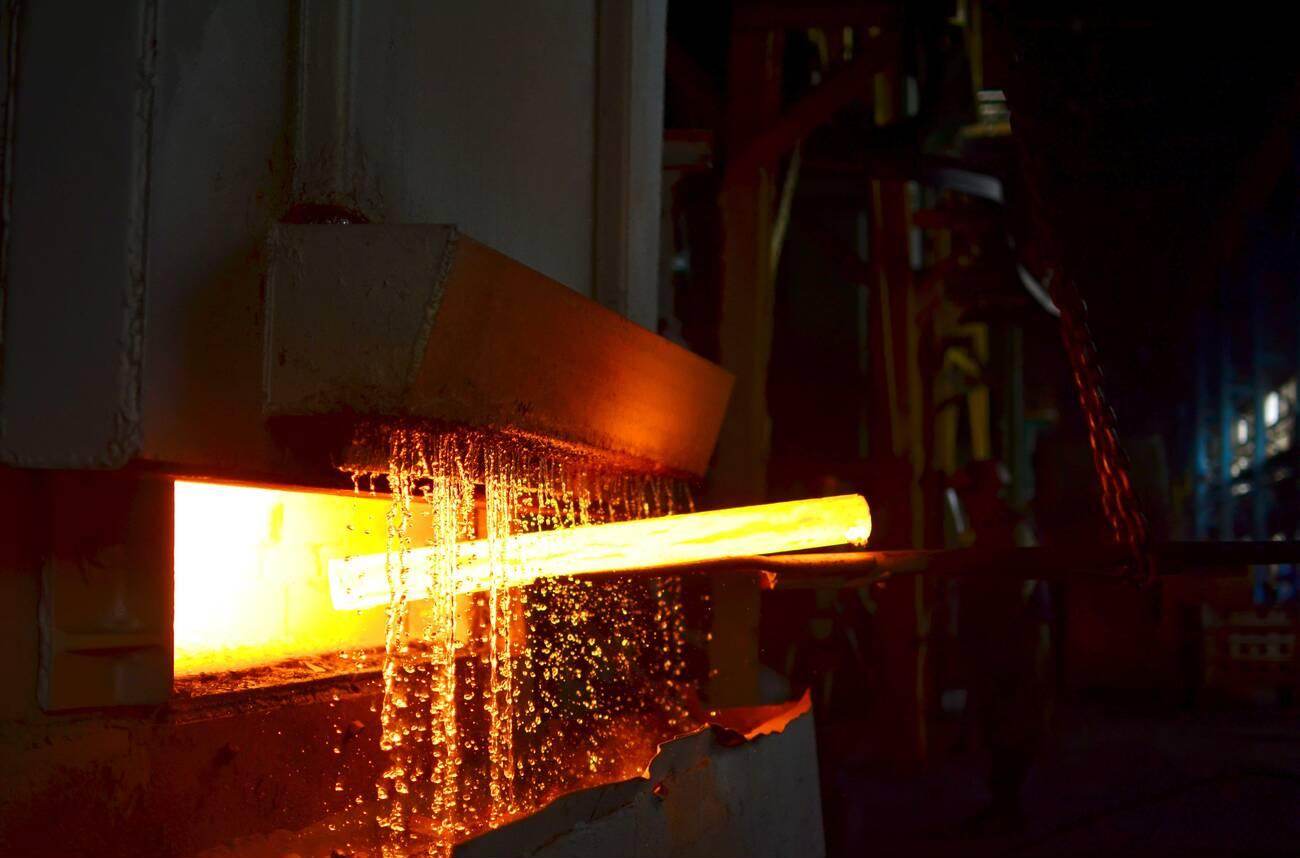
Steel quenching at high temperature in an industrial furnace at the workshop (Alamy)
Normalized steel is often used as an intermediate condition before hardening processes such as quenching and tempering.
The uniform microstructure reduces variation during later heat treatment steps, especially in components that require consistent hardness across sections, such as shafts, gears, and structural load-bearing parts.
Improving Material Uniformity in Castings and Forgings
Cast steel typically contains segregation zones and uneven cooling structures. Forged parts may also show directional grain flow.
Normalizing reduces these differences by producing a more uniform microstructure throughout the section, making material behavior more predictable during machining and subsequent processing.
Annealing vs Normalizing Decision Matrix
There is no universally better process between annealing and normalizing. The appropriate choice depends on whether the manufacturing priority is machinability, dimensional stability, residual stress reduction, strength, or preparation for additional heat treatment.
The matrix below summarizes common engineering objectives and the process typically selected to support them.
| Manufacturing Goal | Recommended Process |
|---|---|
| Maximum machinability | Annealing |
| Lowest cutting force | Annealing |
| Reduced residual stress | Annealing |
| Better dimensional stability during rough machining | Annealing |
| Higher strength | Normalizing |
| Finer grain structure | Normalizing |
| More uniform forgings or castings | Normalizing |
| Preparation before quench and temper | Normalizing |
Common Steel Grades Treated with Annealing or Normalizing
Different steel grades respond differently to heat treatment because their carbon content and alloying elements control hardness, grain structure, and stability during machining and service.
Low-Carbon Steel
Low-carbon steels (typically below ~0.25% carbon) are already relatively soft and ductile. In most production cases, annealing is used only when additional stress relief is required after welding or forming.
Normalizing is less common for low-carbon steels when machinability is the primary concern, although it is still used in some structural applications where improved property uniformity is desired.
Medium-Carbon Steel
Medium-carbon steels (around 0.25% to 0.60% carbon) are where both processes are frequently used, depending on the application.
Annealing is selected when the priority is easier machining and reduced tool load during heavy cutting. Normalizing is used when the component must retain better strength after machining, such as shafts, gears, and mechanical load parts.
Alloy Steel Components
Alloy steels respond more strongly to heat treatment due to elements like chromium, molybdenum, and nickel.
Normalizing is often used to improve structural uniformity before machining or final heat treatment. Annealing is selected when internal stress must be reduced before precision machining, especially in thicker sections or complex geometries.
Forged and Cast Steel Parts
Forged and cast parts usually contain uneven grain flow and residual stress from solidification or deformation.
Annealing is commonly used when machining efficiency and dimensional stability are the priority. Normalizing is used when a more uniform internal structure is required before service loading or additional heat treatment stages.
In production, the choice depends on whether the part needs easier machining conditions or a more uniform mechanical response after processing.
Conclusion About Annealing vs Normalizing
In manufacturing, annealing and normalizing are rarely competing processes. They are usually selected for different objectives at different stages of production.
Annealing is often chosen when machining efficiency, stress relief, or dimensional stability is the priority. Normalizing is more commonly used when a finer grain structure and higher mechanical performance are required before service or additional heat treatment.
Understanding how each condition affects machining behavior, material properties, and downstream processing helps engineers avoid unnecessary manufacturing cost and reduce production risk.
If your project requires CNC-machined steel parts with specific heat treatment conditions, upload your CAD file to JLCCNC. Our engineering team can review material condition, machinability, and production requirements before manufacturing begins.
Precision CNC Machining Service
Professional manufacturing, fast turnaround, and quality assurance.
FAQ About Annealing and Normalizing
Q: What is the difference between annealing and normalizing?
The main difference lies in the cooling method after heating the steel. Annealing cools the material slowly inside the furnace, which reduces hardness and increases ductility. Normalizing cools the steel in air, creating a finer grain structure and improving strength. As a result, annealed steel is often selected for easier forming and machining, whereas normalized steel offers better mechanical performance.
Q: Is normalizing stronger than annealing?
Normalized steel generally has higher strength and hardness than annealed steel because the faster air-cooling process refines the grain structure. While annealing focuses on softening the material and relieving internal stresses, normalizing provides a better balance of strength, toughness, and dimensional stability.
Q: Does annealing improve machinability?
Annealing is commonly used to improve machinability by reducing material hardness and relieving residual stresses. Softer material places less load on cutting tools, making machining operations smoother and helping reduce tool wear. This is particularly beneficial for steels that have become hardened after forging, rolling, or previous heat-treatment processes.
Q: Why is steel normalized?
Steel is normalized to improve its internal structure and create more consistent mechanical properties throughout the material. The process helps refine grain size, reduce structural irregularities, and relieve stresses created during casting, forging, or welding. It is often used as a preparation step before machining or final heat treatment.
Q: Can normalized steel be machined?
Normalized steel can be machined effectively and is widely used for machined components in engineering applications. Although it is harder than annealed steel, it still provides good cutting performance while offering greater strength and stability. Many manufacturers machine normalized steel when the final part requires a balance between machinability and mechanical properties.
Q: Which process produces a finer grain structure?
Normalizing typically produces a finer grain structure because the steel cools in air rather than slowly inside a furnace. A finer grain structure improves strength, toughness, and uniformity, which is why normalized steel often performs better in structural and load-bearing applications.
Q: Should steel be annealed before CNC machining?
The answer depends on the steel grade, part geometry, and machining requirements. For harder materials or parts that require extensive machining, annealing can make the process easier by reducing hardness and cutting forces. However, if the material already provides suitable machinability and the finished part requires higher strength, machining in the normalized condition may be the better option.
Keep Learning
Laser Engraving Aluminum: Marking Methods & Surface Effects
Key Takeaways Laser engraving usually removes base material to create a recess. Laser marking is a broader term that can describe a surface-color change or material removal, so the process name alone does not define the final result. On aluminum, alloy and surface finish affect marking contrast. A light mark on dark anodized aluminum is a common design target, but the actual appearance depends on the finish and laser process. JLCCNC laser marking produces a recessed area 0.03–0.1 mm deep. The result i......
CNC Cutting Fluid: Types, Functions, Applications, and Selection Guide
Key Takeaways Cutting fluid in machining performs four functions simultaneously: cooling the tool and workpiece, lubricating the tool-chip interface to reduce friction, carrying chips away from the cut zone, and protecting machined surfaces from corrosion between operations. Different machining operations need different fluid priorities: high-speed aluminum milling may need adhesion control and chip evacuation, threading and tapping need strong lubrication, and grinding requires both cooling and fine ......
Blind Hole Machining Guide: What Is a Blind Hole, Types of Holes, and Tapping Tips
What Is a Blind Hole? Types of Holes and CNC Hole Machining Explained In CNC machining, few operations challenge process control and tool stability as much as blind hole machining. A blind hole is a hole that terminates at a defined internal depth rather than breaking through the opposite surface. Because the cavity is enclosed at the bottom, chip evacuation, thermal behavior, tool wear, and dimensional accuracy become far more difficult to manage compared to through-hole machining. These constraints ......
Rake Angle in Machining: Machinists’ Guide to Perfect Cuts
What is Rake Angle? (minaprem) If you've ever stood in front of a CNC machine or a manual lathe, you know that the cutting tool's geometry isn't just some arbitrary design. Every angle, edge, and surface has a job to do, and one of the most important of those is the rake angle. We've been running machines long enough to know that rake angle can make or break your surface finish, tool life, and machining efficiency. In this guide, we're going to walk you through what rake angle is, how it works, and ho......
Sheet Metal vs CNC Machining: A Guide to Choosing the Right Method for Your Metal Parts
Quick Answer: Choose sheet metal for uniform-thickness enclosures, panels, and formed brackets when bends and production volume support lower unit cost. Choose CNC machining for variable wall thickness, precision bores, tight feature relationships, and complex 3D geometry. Use a hybrid design when a formed structure needs precision-machined interfaces. A quote comes back for a bracket, and it's priced as a CNC part — machined from solid aluminum, a few hours of spindle time, a per-part cost that makes......
What Steps Are Taken To Minimize Waste In CNC Machining Processes?
How to Reduce Waste in CNC Machining: 5 Practical Strategies Quick Answer: CNC machining waste is reduced mainly through DFM, near-net stock, efficient toolpaths, preventive tool maintenance, and alloy-segregated recycling. The biggest gains usually come before cutting: reduce unnecessary material removal and prevent scrap or rework. Every CNC-machined part starts as more material than it ends up being. A pocket gets milled out, a profile gets cut away, a boss gets faced down to size — and all of that......