Laser Etching: Complete Technical Guide to Process, Materials, and Industrial Applications
28 min
- What Is Laser Etching?
- How Laser Etching Works (Step-by-Step Process)
- Laser Etching vs Laser Engraving vs Laser Marking (Core Comparison Section)
- Materials Suitable for Laser Etching
- Industrial Applications of Laser Etching
- Advantages of Laser Etching in Manufacturing
- Limitations and Technical Constraints of Laser Etching
- Laser Etching vs Other Surface Marking Technologies
- Why Manufacturers Combine Laser Etching With CNC Machining
- Design Guidelines for Laser Etching
- FAQ About Laser Etching
Laser etching is widely used in manufacturing, product design, and industrial marking. However, it is often confused with laser engraving and laser marking, which can lead to incorrect process selection. This guide explains its core principles, process, materials, and industrial applications in a structured way.
What Is Laser Etching?
Engineering Definition of Laser Etching
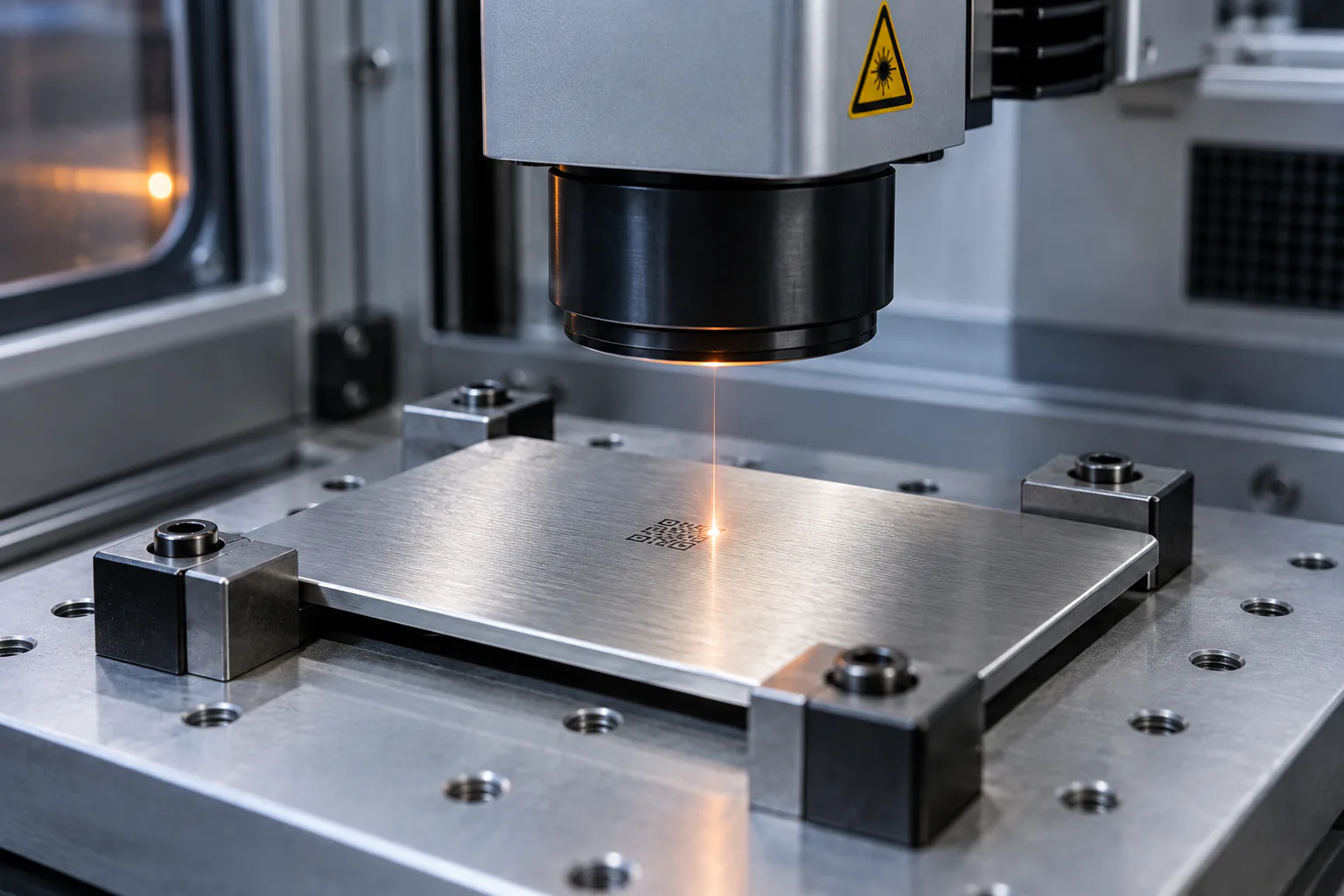
At its core, laser etching is a process that uses a focused laser beam to alter the surface of a material permanently. Unlike processes that add material to the surface (like printing), laser etching changes the material itself through controlled heating and chemical transformation.
The laser creates high contrast markings by changing the color or texture of the surface without removing significant amounts of material. This is what makes it different from deeper processes like engraving – we're modifying the existing material, not carving out a cavity.
In industrial terms, it's a non-contact permanent marking method that can produce extremely precise, high-resolution marks on almost any material type. This contributes to its widespread adoption.
How Laser Etching Differs from Surface Printing and Coating
Laser etching is not simply a printing technology; it fundamentally modifies the material surface. There are some fundamental differences that matter for industrial use.
Surface printing and coating add an extra layer to your material – ink, paint, or some other substance that sits on top. That layer can scratch off, fade with UV exposure, or wear away with use.
Laser etching modifies the material itself. The mark is part of the surface, not something sitting on it. This makes it inherently permanent and resistant to wear, temperature changes, and chemical exposure.
Another big difference: printing requires consumables – ink, solvents, masks, and so on. Laser etching doesn't. You just need electricity and the laser itself. That simplifies production and reduces ongoing costs.
Why Laser Etching Is Used in Manufacturing
Manufacturers don't adopt new technology without good reason, and laser etching has several compelling advantages that make it invaluable today.
First, traceability requirements are stricter than ever. Regulations in automotive, aerospace, and medical devices require permanent part marking that lasts the entire product lifecycle. Laser etching delivers that.
Second, precision. Modern products are getting smaller, and you often need to mark micro-sized text or QR codes on tiny components. Laser etching can handle details that other processes simply can't.
Third, automation compatibility. Laser etching systems integrate seamlessly into existing production lines. You can mark thousands of identical parts with perfect consistency without slowing down your process.
Finally, versatility. One laser system can mark on metals, plastics, ceramics, glass, and many other materials. That flexibility makes it a great investment for shops working with diverse products.
How Laser Etching Works (Step-by-Step Process)
The laser etching process can be broken down into several fundamental stages.
Laser Beam Generation and Focusing
It all starts with generating the laser beam. In modern systems, this usually happens in a laser cavity – either a fiber laser, CO2 laser, or diode-pumped solid-state laser. Each type has its sweet spot for different materials.
Once the beam is generated, it travels through a series of mirrors or fiber optics to the laser head. From there, galvo mirrors steer the beam across the work area following your design pattern.
The final and most critical step is focusing. The laser lens focuses the beam down to a tiny spot – typically between 0.05mm and 0.5mm in diameter. All that laser energy gets concentrated into this extremely small area, which is what allows for such precise heating.
Surface Energy Absorption and Heating
When that focused laser beam hits the material surface, something interesting happens. The material absorbs the laser energy, and that energy converts into heat.
Different materials absorb different laser wavelengths better. For example, metals tend to absorb fiber laser wavelengths (around 1 micron) really well, while organics like wood or plastic absorb CO2 wavelengths (10.6 microns) better. That's why choosing the right laser type for your material matters so much.
The heat spreads quickly from the focal point into the surrounding material. The temperature rise is extremely localized – we're talking millimeters at most – which is why we can get such sharp, clean markings.
Material Transformation Mechanisms (Melting, Oxidation, Ablation)
The actual surface transformation occurs at this stage. Depending on your material and laser parameters, one of three main transformation mechanisms occurs:
Melting: When the laser heats the material above its melting point, the surface melts and then re-solidifies with a different texture or roughness. This creates contrast between the etched area and the untouched surface. This is common on metals like stainless steel.
Oxidation: The heat causes the surface layer to oxidize, changing its color without significant melting. You get a dark mark on a lighter surface or vice versa. This is what creates those high-contrast black marks on anodized aluminum.
Ablation: The laser energy is so high that it vaporizes a very thin layer of the surface material. This removes a microscopic amount of material and leaves a clean etched texture. Ablation is common on polymers and coated materials.
In most cases, you get a combination of these mechanisms working together to create your final mark.
Cooling and Permanent Mark Formation
Once the laser moves away from the spot, the material cools extremely quickly. This rapid cooling "locks in" the surface transformation we just talked about.
For melting processes, the molten material solidifies into a different grain structure that's lighter or darker than the original. For oxidation, the chemical change is permanent once cooling happens. For ablation, the removed material is gone forever, leaving the etched cavity behind.
The result? A permanent mark that's integral to the material itself. It won't rub off, fade, or peel away. That's the key advantage over any additive marking method.
Key Process Parameters (Power, Speed, Frequency, Focus)
Getting great laser etching results boils down to getting four main parameters right:
Power: This controls how much energy hits the material each second. Higher power means more heating. Too much power and you get excessive material removal or damage. Too little and you get poor contrast.
Speed: This is how fast the laser beam moves across the surface. Faster speed means less time heating each spot, less total energy absorbed. Slower speed gives more energy penetration.
Frequency: This controls how often the laser emits pulses. Higher frequency gives more uniform heating but can cause excess heat buildup. Lower frequency gives more intense pulses with better ablation.
Focus: How tightly the beam is focused on the surface. Proper focus gives you the smallest spot size and highest energy density. Out-of-focus etching gives you blurry, low-contrast marks.
Parameter optimization is material-dependent and usually requires iterative tuning. Most modern laser systems come with pre-set parameter libraries that give you a good starting point, though.
Laser Etching vs Laser Engraving vs Laser Marking (Core Comparison Section)
This is the section that confuses more people than any other. The terms are often used interchangeably, but there are real differences that affect your results. Let me clear this up once and for all.
Differences in Depth, Mechanism, and Material Removal
Let's start with the basics. Laser marking is the broad category that includes both etching and engraving. It's any process that uses a laser to mark a material surface.
Laser etching is a type of laser marking where we modify the surface, but only remove minimal material – typically less than 0.001 inches (0.025mm) deep. The contrast comes from texture or color change, not from a deep cavity.
Laser engraving removes significantly more material – usually 0.005 to 0.02 inches (0.125mm to 0.5mm) deep or even more. It actually carves a cavity into the material, so the mark is physically recessed into the surface.
The mechanism also differs. Etching relies mostly on surface transformation (melting, oxidation, minimal ablation). Engraving uses extensive ablation to physically remove material. The depth you need largely determines which process you should choose.
Comparison Table: Etching vs Engraving vs Marking
| Features | Laser Etching | Laser Engraving | Laser Marking (General) |
|---|---|---|---|
| Depth | < 0.03mm | 0.1-0.5mm | Any depth |
| Material Removal | Minimal | Significant | Variable |
| Contrast | Surface-based | Mechanical | Any |
| Speed | Fast | Slower | Depends on depth |
| Permanent | Yes | Yes | Yes |
| Surface Stress | Low | Higher | Lower |
Looking at this table, the main thing that jumps out is the difference in depth and material removal. If you just need a mark for traceability or branding, etching is usually all you need. It's faster, cheaper, and puts less stress on the part.
But if you need the mark to survive heavy abrasion or you want a tactile, embossed effect, engraving is what you need. The deep carved mark will last even when the surface starts to wear away.
When to Use Each Process (Decision Guidelines)
Honestly, the choice usually comes down to your specific requirements. Let me give you some practical guidelines:
Choose laser etching when:
- You need permanent traceability codes (VIN, UDI, part numbers)
- You're working with thin parts where deep removal would cause damage
- High speed and throughput are important
- You want high contrast without changing part dimensions
- You're marking consumer products for branding
Choose laser engraving when:
- The mark needs to survive heavy wear or abrasion
- You want a tactile, visible recessed mark
- You're creating deep patterns or textures
- The part is thick enough to handle material removal
- You need to mark through surface coatings to the base material
Laser marking is just the general term – when people say "laser marking" without specifying, they often mean laser etching these days. But now you know the real difference.
Materials Suitable for Laser Etching
One of the biggest advantages of laser etching is its versatility. It works on an incredibly wide range of materials used in industry today. The most common materials include:
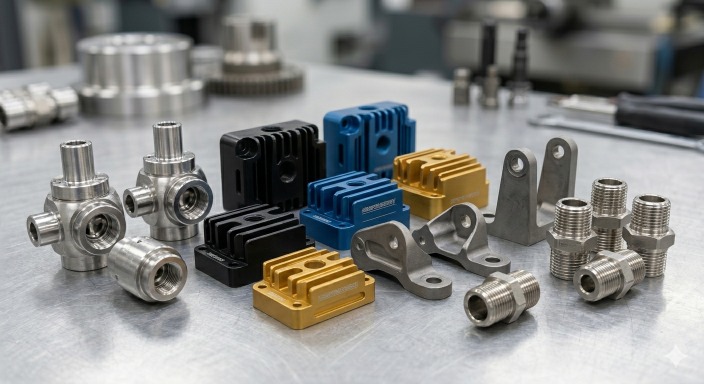
Metals (Stainless Steel, Aluminum, Titanium, Copper, Brass)
Laser etching works exceptionally well on almost all metals.
Stainless steel: You get great high-contrast marks through controlled oxidation. The mark is dark and stands out clearly against the shiny metal surface. Perfect for industrial parts and food equipment.
Aluminum: Especially anodized aluminum – the laser removes the anodized layer or changes its color to create a high-contrast mark. Bare aluminum also etches well through melting and oxidation.
Titanium: Common in aerospace and medical implants. Laser etching creates clean, permanent marks that meet all regulatory requirements without damaging the material properties.
Copper and brass: These are more reflective, so you need the right laser wavelength and parameters. But it's absolutely doable, and you can get great results for electrical components and decorative items.
Fiber lasers are generally preferred for metals due to wavelength absorption characteristics.
Plastics and Polymers (ABS, PET, Polycarbonate)
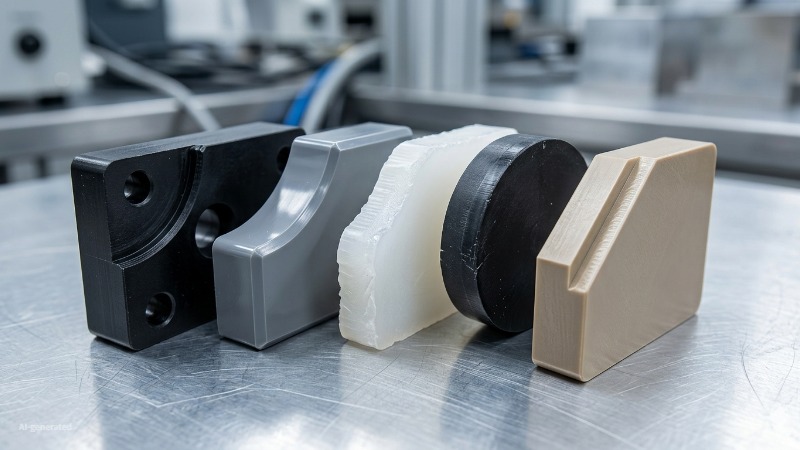
Most plastics etch very well with lasers. The process usually works by ablation of the surface or color change from heat.
ABS: Very common in injection molded parts. Laser etching creates a nice light contrast against the darker base material. It's clean and doesn't cause melting or distortion if you get the parameters right.
PET: Used for bottles, packaging, and electronic housings. You can get high contrast marks without deforming the material. Great for expiration dates and lot codes.
Polycarbonate: Used in medical devices, automotive parts, and electronics. Laser etching produces clean, precise marks that don't affect the material's strength or clarity.
Most polymers work best with CO2 lasers, though fiber lasers can also produce good results depending on the pigmentation in the plastic.
Glass and Ceramics
Glass and ceramics are tricky, but laser etching can produce excellent results when done correctly.
On glass, the laser creates micro-cracks in the surface that create a frosted, white appearance. The key is using the right power and speed – too much power and you'll shatter the glass.
For ceramics, especially industrial ceramics used in electronics and aerospace, laser etching creates permanent marks that can withstand extremely high temperatures. This is critical for parts that go through kiln firing or high-temperature processing.
One thing to note: you need a laser with the right wavelength and pulse duration for glass. Pulsed CO2 or fiber lasers work best.
Wood, Leather, and Organic Materials
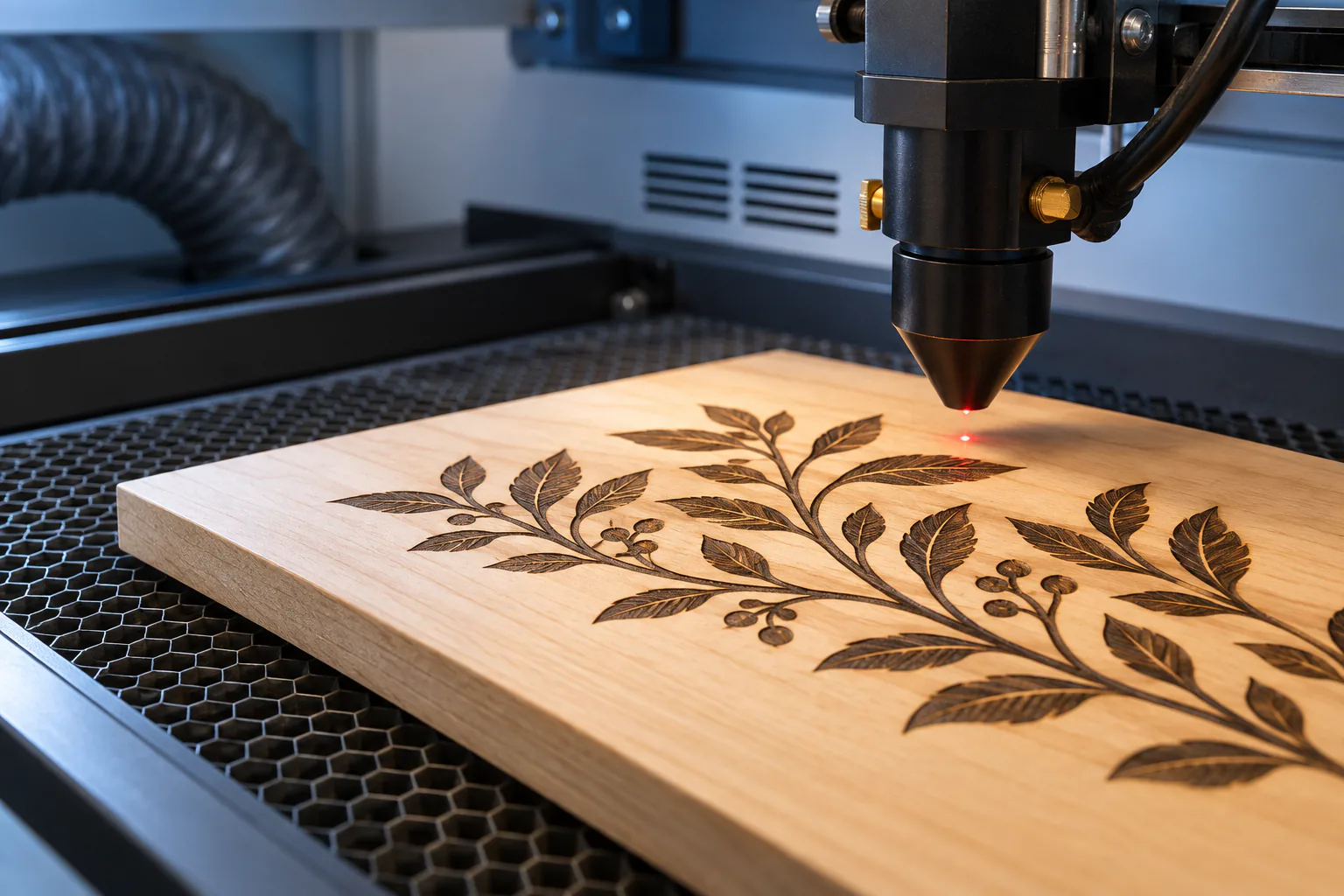
CO2 lasers absolutely love organic materials. Wood, leather, paper, cork – all etch beautifully.
The process works by carbonizing the surface, creating a dark brown or black mark against the lighter natural material. You can get incredible detail for decorative etching, branding, and personalization.
Leather develops a nice permanent dark mark that doesn't wear off with use. It's popular for everything from luxury goods to industrial leather products.
The main limitation with organics is that you can get charring if your parameters are off. But with modern systems, it's easy to avoid that.
Material Limitations and Challenging Substrates
Nothing is perfect, and laser etching does have some limitations. Here are the materials that are challenging:
Highly reflective metals: Pure copper and aluminum can be tricky because they reflect a lot of the laser energy. You need higher power and the right wavelength to get good absorption.
Transparent materials: Clear plastics and glass are challenging because they don't absorb much laser energy. You need special pulsed lasers to get clean results.
PVC and vinyl: When you laser etch PVC, it releases chlorine gas which is corrosive and dangerous. You should never laser etch PVC in an unventilated area, and many shops avoid it altogether.
Thin materials: Extremely thin foils or films can be damaged because even minimal material removal goes all the way through. But that's usually just a matter of tuning your power down low enough.
Industrial Applications of Laser Etching
Laser etching has become ubiquitous across almost every manufacturing sector. Let me show you where it's most commonly used today.
Automotive Industry (VIN, Part Numbers, Traceability Codes)
The automotive industry lives on traceability. Every major component needs a permanent VIN number, part number, or date code that lasts the life of the vehicle.
Laser etching does this perfectly. The marks are resistant to oils, fuels, heat, and abrasion – everything a car goes through during its lifetime. And it's fast enough for high-volume production lines.
You'll also find laser etched marks on engine components, transmission parts, brakes, and even interior trim for branding and identification.
Engine blocks commonly carry laser-etched serial numbers and traceability codes designed to withstand oil, fuel, vibration, and temperatures above 150°C.
Aerospace Industry (Compliance and Identification Marking)
Aerospace has some of the strictest marking requirements in any industry. Every part needs permanent identification that can survive extreme temperatures, pressure changes, and corrosion.
Laser etching meets all aerospace standards for part marking. It can mark titanium, Inconel, aluminum, and all the high-performance materials used in aircraft and spacecraft.
The marks don't compromise the structural integrity of the part because material removal is minimal – that's a huge advantage over deeper engraving processes for critical aerospace components.
Medical Devices (UDI Codes, Surgical Tools, Implants)
The FDA and other regulatory bodies now require Unique Device Identification (UDI) codes on most medical devices. These codes need to be permanent, sterile, and impossible to remove.
Laser etching is perfect for this application. It produces clean, high-resolution QR codes and data matrix codes that can be scanned even on very small surgical tools and implants.
The process is also sterile and doesn't leave any residues or chemicals on the device, which is critical for medical applications. It works on stainless steel, titanium, PEEK, and all the common medical materials.
Titanium orthopedic implants are commonly laser etched with UDI-compliant Data Matrix codes for lifetime traceability.
Electronics and PCB Manufacturing
Modern electronics are tiny, and you need to mark very small text and logos on components, connectors, and printed circuit boards.
Laser etching can produce micro-markings with incredible precision. You can mark part numbers, logos, and traceability codes directly on PCB boards without damaging the sensitive circuitry.
It's also used to mark silicon wafers, connectors, and housings for electronic devices. The non-contact nature means there's no risk of damaging delicate components.
Industrial Machinery and Equipment Labeling
Large industrial machinery needs permanent nameplates and labels that won't fade or corrode over decades of use.
Traditional nameplates are made of aluminum with printed labels – those can fall off or fade. Laser etching etches the information directly into the metal nameplate, so it lasts forever even in harsh industrial environments.
You'll also find laser etched markings on hydraulic components, valves, pumps, and all kinds of industrial equipment where identification is critical.
Consumer Products and Product Branding
Branding matters, and laser etching gives consumers a premium feel that printing just can't match. Luxury goods from watches to handbags use laser etching for logos and text.
It's also used for personalization – everything from wedding gifts to promotional products. The process is fast enough for mass production but flexible enough for custom one-off pieces.
The permanent nature of laser etching means your brand stays on the product for its entire life – no peeling, no fading, no wearing away.
Advantages of Laser Etching in Manufacturing
When you compare laser etching to other marking methods, the advantages really stand out. Let me break down the key benefits that make manufacturers switch to laser.
Non-Contact Process and No Tool Wear
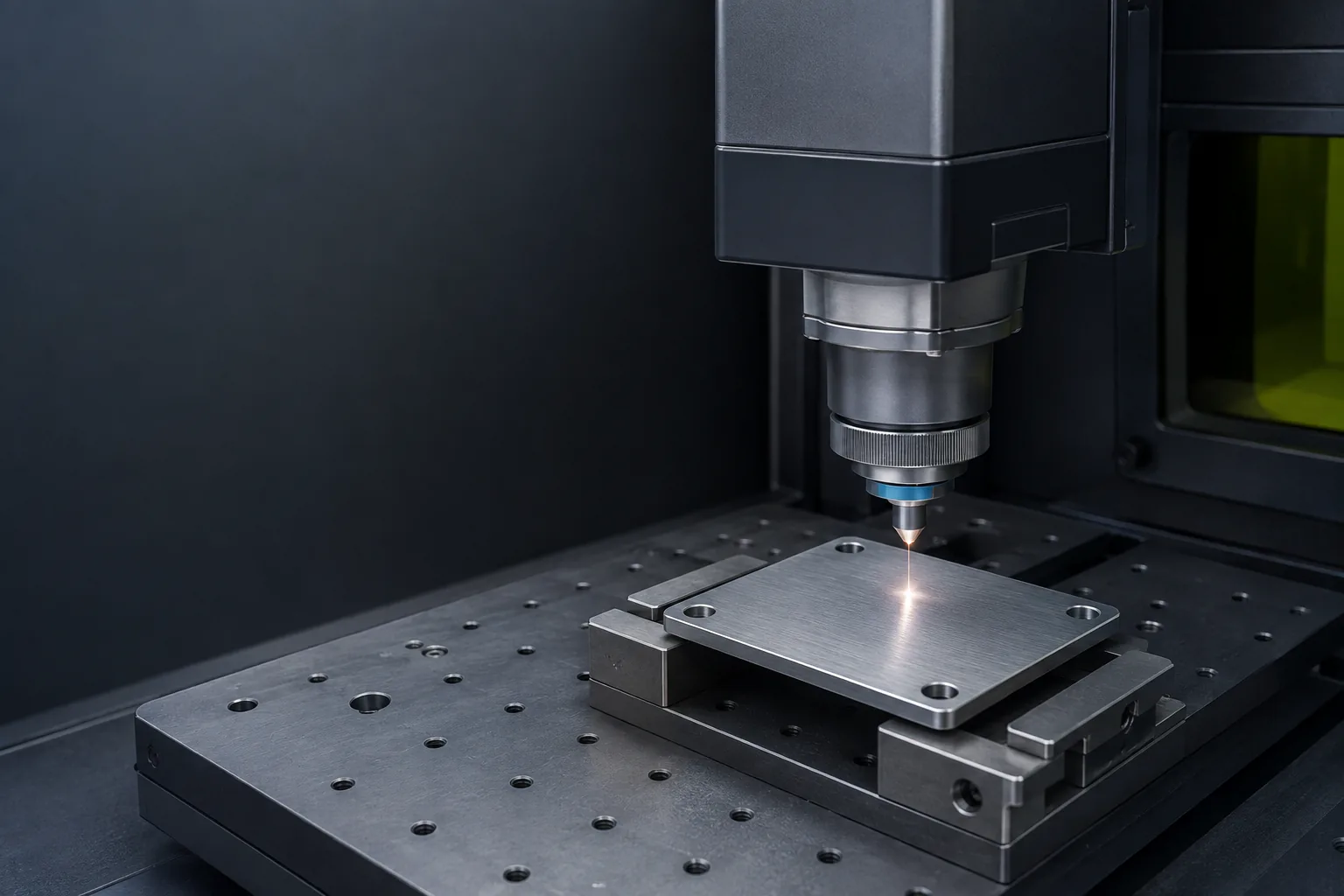
Unlike mechanical engraving, there's no cutting tool touching the part. The only thing that touches the material is light.
It means no tool wear. Your laser doesn't get dull, it doesn't need replacement, and you get the same quality mark on the thousandth part as you did on the first.
It also means there's no mechanical stress on the part. You can mark thin, delicate, or fragile parts without risk of bending or breaking them. This is particularly important for thin or delicate components.
High Precision and Micro-Scale Marking Capability
Modern laser etching systems can achieve spot sizes as small as 0.05mm. That means you can mark text as small as 0.5mm high and still have it readable. You can create QR codes or data matrix codes on components the size of a fingernail.
This level of precision simply isn't possible with mechanical engraving or ink printing. As products keep getting smaller and more compact, that precision becomes more and more valuable.
Even for larger marks, the edge definition is incredible. You get sharp, clean lines every time. There's no smudging, no bleeding, no chipping – just crisp, clean marks.
High Repeatability for Mass Production
Once you've got your parameters dialed in for a specific material and design, every subsequent mark is identical. The computer controls the laser path with micron-level accuracy, so part number 1 and part number 100,000 look exactly the same.
This repeatability is critical for mass production where consistency matters. You don't have to worry about worn tools changing the mark quality over time, and you don't need constant adjustments.
Compatibility with Automation Systems
Laser etching systems are inherently digital. The design comes from a computer file, and the laser head is controlled by computerized galvo mirrors. That makes it extremely easy to integrate into automated production lines.
You can connect your laser system to your factory network, pull different designs for different parts, and mark each part automatically as it comes down the line. It works perfectly with robotic loading and unloading, conveyor systems, and automated quality inspection.
This automation compatibility reduces labor costs and increases throughput – two things every manufacturer cares about.
No Consumables Required
Here's what surprises many people when they switch to laser etching – there are almost no consumables. You don't need ink, solvents, masks, stencils, or replacement cutting tools.
The only thing you use is electricity. That's it.
Compare that to inkjet printing where you're constantly buying ink cartridges and cleaning print heads, or mechanical engraving where you're always replacing cutting bits. The lower ongoing operating costs add up quickly.
Yes, the initial investment in a laser system is higher, but the lower operating costs usually pay back the investment in just a few years.
Limitations and Technical Constraints of Laser Etching
It's only fair to talk about the downsides. Laser etching isn't the perfect solution for every application, and it's important to understand its limitations before you invest.
Limited Depth Compared to Mechanical Engraving
Remember what I said earlier about depth? Laser etching only goes a fraction of a millimeter deep. If you need a deep carved mark that you can feel with your finger or that will survive heavy surface abrasion, laser etching probably isn't enough.
In applications where the part will be repeatedly sanded, ground, or heavily abraded during use, that shallow mark can wear away over time. In those cases, you need laser engraving or mechanical engraving that goes deeper.
Material Sensitivity and Parameter Tuning Requirements
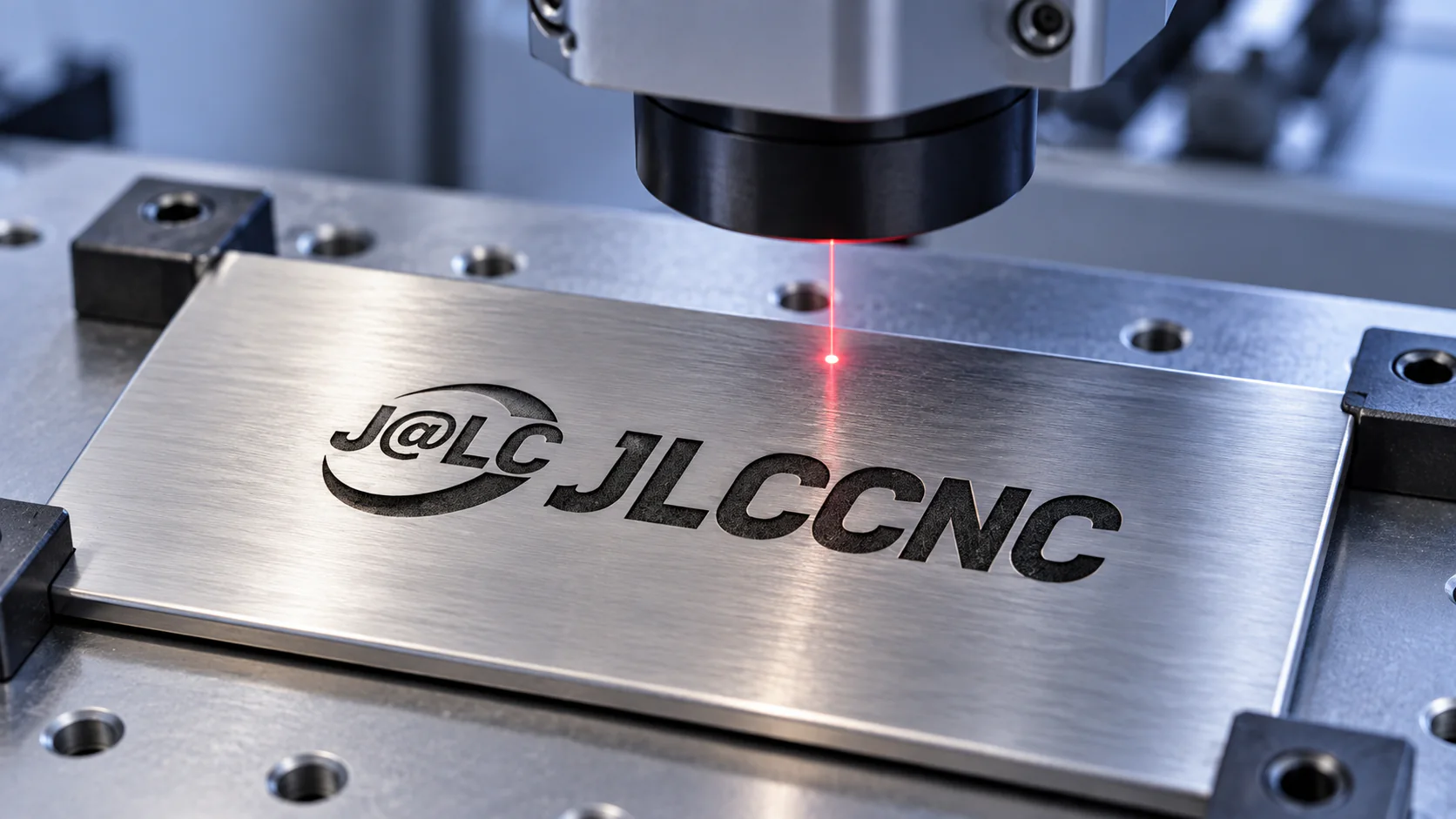
Laser etching isn't "set it and forget it" for every material. Different materials absorb laser energy differently, so you need different parameters for each one.
If you're running multiple different materials through your laser system, you'll need to spend time dialing in the correct power, speed, and frequency for each one. Get it wrong and you get poor contrast, burned material, or damaged parts.
Modern systems do come with pre-set libraries that help a lot, but there's still usually some tweaking involved when you're working with a new material.
Challenges with Highly Reflective Materials
Highly reflective metals like pure copper, pure gold, and highly polished aluminum can be challenging. The polished surface reflects a lot of the laser energy back, so you need higher power to get enough absorption for good etching.
In some cases, the reflected light can even damage the laser system itself if you don't have proper beam dumps and protective features. Good modern systems handle this, but it's still something you need to plan for.
The good news is that fiber lasers with the right wavelength handle most reflective metals much better than older laser types. It's less of a problem than it used to be.
Surface Finish Dependency on Output Quality
The quality of your laser etch depends a lot on the starting surface finish. If you have a rough, uneven surface, the laser focus will vary across the surface, and you'll get inconsistent contrast.
For high-contrast, consistent marks, you generally need a relatively smooth starting surface. That means if your part has a rough cast finish, you might need to do some surface preparation before etching to get good results.
That said, even on rough surfaces, you can still get a permanent mark – it just might not be as high contrast as it would be on a smooth surface.
If you're planning a new production line that requires permanent marking, you really need to factor these limitations into your decision. The good news is that for 90% of industrial marking applications, the advantages far outweigh the limitations, and laser etching works beautifully.
Laser Etching vs Other Surface Marking Technologies
How does laser etching stack up against the other common marking technologies? Let me compare them directly.
Laser Etching vs Chemical Etching
Chemical etching uses acids or corrosive chemicals to etch the surface through a mask. It's been around a long time, but it has some significant downsides compared to laser etching.
First, chemical etching requires masks or stencils. Every new design needs a new mask, which adds time and cost. With laser etching, you just change the file – no extra tooling needed.
Second, chemical etching uses hazardous chemicals that require special handling, ventilation, and waste disposal. That adds cost and creates environmental liabilities. Laser etching is much cleaner – no chemicals, no waste to dispose of.
Third, chemical etching is harder to automate and change over between different parts. Laser etching changeovers happen in seconds.
The main advantage of chemical etching is that you can etch very large areas uniformly. But for most industrial marking applications, laser etching is faster, cleaner, and more flexible.
Laser Etching vs Mechanical Engraving
Mechanical engraving uses a cutting tool to carve the mark into the surface. It's still used in some shops, but it's being replaced by laser etching for most applications.
Mechanical engraving has tool wear – your cutting tool gets dull over time, so you have to replace it regularly. The quality can degrade between tool changes. And the contact process can stress thin parts.
On the positive side, mechanical engraving can go deeper than laser etching, and it doesn't have the same material sensitivity issues. It's also cheaper for very simple, deep marking on large parts.
But for most precision marking applications, laser etching is faster, more consistent, and lower maintenance.
Laser Etching vs Ink Printing and Labeling Methods
Ink printing and adhesive labels are the cheapest upfront options, but they have the biggest downsides in the long run.
The biggest problem is permanence. Ink rubs off, fades in UV light, and can be peeled off. Adhesive labels can fall off, especially when exposed to heat, moisture, or chemicals.
For industrial applications where the mark needs to last the life of the product, ink and labels just don't cut it. You also have ongoing consumable costs – you're always buying more ink or more labels.
The only advantage of ink and labels is that they're cheaper for very large text or high-volume marking where permanence isn't important. But for any critical application, laser etching is worth the extra investment.
Environmental and Waste Impact Comparison
This is becoming more and more important for manufacturers, so let's look at the environmental side.
| Process | Waste Generated | Hazardous Materials | Energy Use |
|---|---|---|---|
| Laser Etching | Almost none | None | Low-Moderate |
| Chemical Etching | Chemical waste | Yes (acids/solvents) | Moderate |
| Ink Printing | Ink cartridges, waste ink | Yes (solvents) | Low |
| Mechanical Engraving | Metal swarf/dust | None | Moderate |
| Adhesive Labels | Packaging, wasted labels | Some (adhesives) | Low |
As you can see, laser etching has by far the lowest environmental impact. No hazardous waste, no consumables, very little waste of any kind. That's a big plus for companies working to reduce their environmental footprint.
Why Manufacturers Combine Laser Etching With CNC Machining
Many industrial parts require both precision machining and permanent identification.
For example:
- CNC-machined aluminum housings
- Medical device components
- Aerospace brackets
- Automotive assemblies
After machining, these components are often laser etched with serial numbers, logos, or traceability codes before entering final assembly.
In industrial workflows, laser etching is rarely used in isolation. It is typically applied after CNC machining or sheet metal fabrication to add permanent identification or traceability information.
JLCCNC provides CNC machining and sheet metal fabrication services for components that may later undergo laser etching, engraving, anodizing, or other finishing processes.
Precision CNC Machining Service
Professional manufacturing, fast turnaround, and quality assurance.
Design Guidelines for Laser Etching
Getting great laser etching results starts with good design. Here are the key guidelines I always share with people new to laser etching.
Recommended File Formats (Vector vs Raster)
Always use vector files when possible. Vector files (like AI, DXF, SVG) use mathematical lines and curves, so you can scale them to any size without losing resolution. This gives you the sharpest, cleanest edges.
Raster files (JPG, PNG, BMP) are made of pixels. They work fine for photos or complex images, but you need to make sure you have enough resolution. For a 4-inch mark, you need at least 300 DPI. Anything less and you'll get blurry edges.
Most modern laser software can convert raster files to good etches, but vector is always better for text, logos, and line art.
Minimum Text Height and Line Width Standards
What's the smallest text you can reasonably read after laser etching? That depends on your laser's spot size, but here are some general guidelines:
- For most industrial fiber lasers: minimum readable text is 1.0mm (0.04 inches)
- For high-precision galvo systems: you can go down to 0.5mm (0.02 inches)
- Minimum line width: about 0.15mm (0.006 inches)
If you go smaller than that, the text becomes hard to read – especially on rough surfaces. Stick to these minimums, and you'll get marks that people can actually read or scan.
QR Code and Data Matrix Design Rules
If you're marking 2D codes for traceability, you need to follow a few simple rules to make sure they scan reliably:
- Make sure the code is at least 5mm x 5mm (0.2 inches square) for most applications
- Leave a quiet zone (empty space) around the code of at least one module width
- Use high contrast – the difference between the etched and unetched area needs to be clear
- Test the scanning with the actual scanner you'll be using in production
The biggest mistake I see people make is making the QR code too small. Yes, the laser can etch it smaller, but that doesn't mean your scanner can read it. Err on the side of slightly larger.
Contrast Optimization by Material Type
The way you get good contrast depends on the material:
- Metals: Use higher speed and lower power for oxidation (dark marks). Too much power and you get too much ablation, which can actually reduce contrast.
- Anodized aluminum: Lower power ablates the anodized layer to expose the bright aluminum underneath – great contrast.
- Plastics: Higher speed with moderate power usually gives the best contrast without melting or deformation.
- Glass: Lower power with multiple passes gives better frosted contrast without cracking.
The key is understanding how your material reacts and adjusting parameters accordingly. Most laser systems come with good starting parameters, so use those as your starting point.
Common Design Mistakes to Avoid
Common design mistakes in laser etching include:
Too much detail in too small a space: Even though the laser can do fine detail, if you cram too much into a small area, it just turns into a blur. Keep it simple.
Ignoring the quiet zone on 2D codes: Scanners need that empty space around the code to work properly. Leave it.
Using low-resolution raster files for logos: A blurry logo looks unprofessional. Get a vector version of your logo if you can.
Not accounting for surface curvature: If you're marking a curved surface, you need to adjust the focus or use a 3D laser head. Out of focus equals poor contrast.
Forgetting that contrast depends on material: A design that looks great on stainless steel might not have enough contrast on plastic. Test your design on your actual material before going into production.
FAQ About Laser Etching
Q: What is laser etching?
Laser etching is a non-contact laser marking process that modifies the surface of a material to create a permanent high-contrast mark for identification, branding, or traceability.
Q: What is laser etching used for?
Laser etching is used for permanent identification and traceability marking on industrial and consumer products. Common applications include VIN numbers, UDI codes, serial numbers, QR codes, data matrix codes, and product branding. It is widely used where durable, high-precision marking is required.
Q: Is laser etching permanent?
Yes. Laser etching permanently alters the surface of the material, making the mark resistant to heat, chemicals, UV exposure, and abrasion.
Q: What materials can be laser etched?
Laser etching can be applied to most metals, plastics, glass, ceramics, wood, and leather. Exceptions include PVC and some highly reflective metals that require optimized parameters.
Q: Can laser etching produce QR codes and logos?
Yes. Laser etching can produce high-resolution QR codes, data matrix codes, and logos. Modern laser systems can achieve very fine detail, allowing scannable codes on small components while maintaining permanent readability.
Q: What is the difference between etching and engraving?
Laser etching modifies the surface with minimal material removal (typically <0.03 mm), while laser engraving removes material to create a deeper cavity (around 0.1–0.5 mm). Etching is faster and less invasive, while engraving provides deeper, more wear-resistant marks.
Q: Does laser etching damage parts?
When properly calibrated, laser etching does not damage parts. It removes very little material and does not affect structural integrity. However, incorrect power settings may cause deformation in thin or heat-sensitive materials.
Popular Articles
• Surface Finish in Machining, Types, Charts & Testing
• Anodizing vs. Hard Anodizing: The Differences in Surface Treatment Techniques
• Anodized Aluminum Colors: Options, Limits, and Real-World Results
• Explanation of different material surface treatment technologies in CNC machining
• How to choose between Laser marking and UV printing?
Keep Learning
Surface Finish in Machining, Types, Charts & Testing
What is Surface Finish in Machining? At its core, surface finish in machining refers to the small-scale irregularities left on the surface of a part after machining. These irregularities are typically grouped into three categories: Roughness: The fine, closely spaced deviations caused by the cutting process itself. Roughness depends heavily on feed rate, tool sharpness, and cutting speed. Waviness: Larger, more widely spaced variations caused by machine tool vibration, deflection, or thermal distortio......
CNC Machining Surface Roughness: A Practical Guide
Why Surface Roughness Matters in CNC Machining When we talk about CNC machining, precision isn't just about hitting the right dimensions, it’s also about how the surface feels and performs. Surface roughness describes the fine irregularities left on a machined surface, and it directly impacts how a part behaves in the real world. So, what is surface roughness? In simple terms, it's the measure of tiny peaks and valleys created by the cutting process. While they might look smooth to the naked eye, thes......
Optimizing Manufacturing Efficiency: A Guide to Computerized Numerical Control (CNC) Machining Surface Finishes
CNC Surface Finishes: Types, Costs, and How to Choose Quick Answer: Choose an as-machined finish when cost and dimensional stability matter most. Use bead blasting or brushing for a uniform cosmetic appearance, anodizing for aluminum corrosion resistance, hard anodizing for wear, and laser marking or UV printing for identification. Confirm material, tolerance, color, masking, and end-use environment before quoting. A CNC-machined part comes off the machine functional but rarely finished — tool marks, ......
Anodizing vs. Hard Anodizing: The Differences in Surface Treatment Techniques
Quick Answer: Choose Type II anodizing when corrosion resistance, color, and cosmetic appearance are the main requirements. Choose Type III hard anodizing when the part needs greater wear resistance and the coating thickness can be accommodated in the fit and tolerance plan. Confirm alloy, coating thickness, color, sealing, and critical dimensions before release. An aluminum bracket for an outdoor enclosure and a hydraulic cylinder rod both might get anodized — but specifying the same process for both......
How to Remove Anodizing from Aluminum Parts
Key Takeaways Chemical stripping is commonly used when anodizing needs to be removed from most or all of an aluminum part, but the process can also attack the underlying aluminum if it is not controlled. Mechanical removal works well for accessible areas but can change the surface texture and remove more base metal than intended. CNC machining gives better control when a defined anodized area needs to be removed from a precision part. Laser-based removal can be useful for controlled localized treatmen......
Anodizing Thickness: How Much Does It Add?
Anodizing Thickness and Dimensional Change at a Glance Feature Approximate dimensional effect One coated external surface +0.5 × coating thickness Outside diameter across two coated surfaces +1 × coating thickness Bore diameter with two coated walls −1 × coating thickness 60° thread pitch diameter Changes by about 4 × surface-growth amount, or about 2 × coating thickness under the 0.5× growth assumption Dimensional estimates below use the 0.5 × coating-thickness surface-growth relationship given in MI......