What Is Passivation in CNC Machining? Process, Types, Benefits & Limitations
13 min
- What Is Passivation in CNC Machining
- Passivation Process in CNC Manufacturing
- Passivation Types and Alloy Behavior
- Types of Passivation Used in CNC Machining
- Passivation Standards (ASTM A967 / AMS 2700)
- Passivation vs Electropolishing vs Anodizing vs Black Oxide
- Measurable Performance in CNC Applications
- When to Use (and Not Use) Passivation in CNC Projects
- Passivation Problems and Failure Causes in CNC Parts
- Industries That Use Passivated CNC Components
- FAQ’s About Passivation
Key Takeaways About Passivation
✔ Passivation removes free iron from stainless steel after CNC machining to improve corrosion resistance
✔ It does not change part dimensions or geometry
✔ Most common processes are nitric acid and citric acid passivation
✔ It is required for stainless steel grades like 303, 304, 316, 17-4PH in precision CNC parts
✔ Effectiveness depends more on surface cleanliness than alloy type
✔ Common standards include ASTM A967 and AMS 2700
During machining such as CNC milling, drilling, CNC turning, and tapping, stainless steel comes in contact with cutting tools, fixtures, and chips. Small iron particles can stay on the surface after this process.
Over time, these particles cause rust spots, staining, and early corrosion. This especially occurs in threaded areas and tight corners. That’s where passivation becomes important because it helps remove surface contamination left after machining.
Passivation is commonly used on parts made from 303, 304, 316, 17-4 PH, and duplex stainless steels.
The process does not work like plating or coating. Besides, it does not add visible thickness to the part surface. Instead, it improves the existing stainless steel surface through controlled chemical treatment.
This article explains:
- What passivation does to machined metal parts
- How nitric and citric passivation work
- Why do some stainless steel parts rust after machining
- What affects passivation quality in production
- Common process problems, limitations, and preventive measures
- When passivation becomes necessary in engineering applications
What Is Passivation in CNC Machining
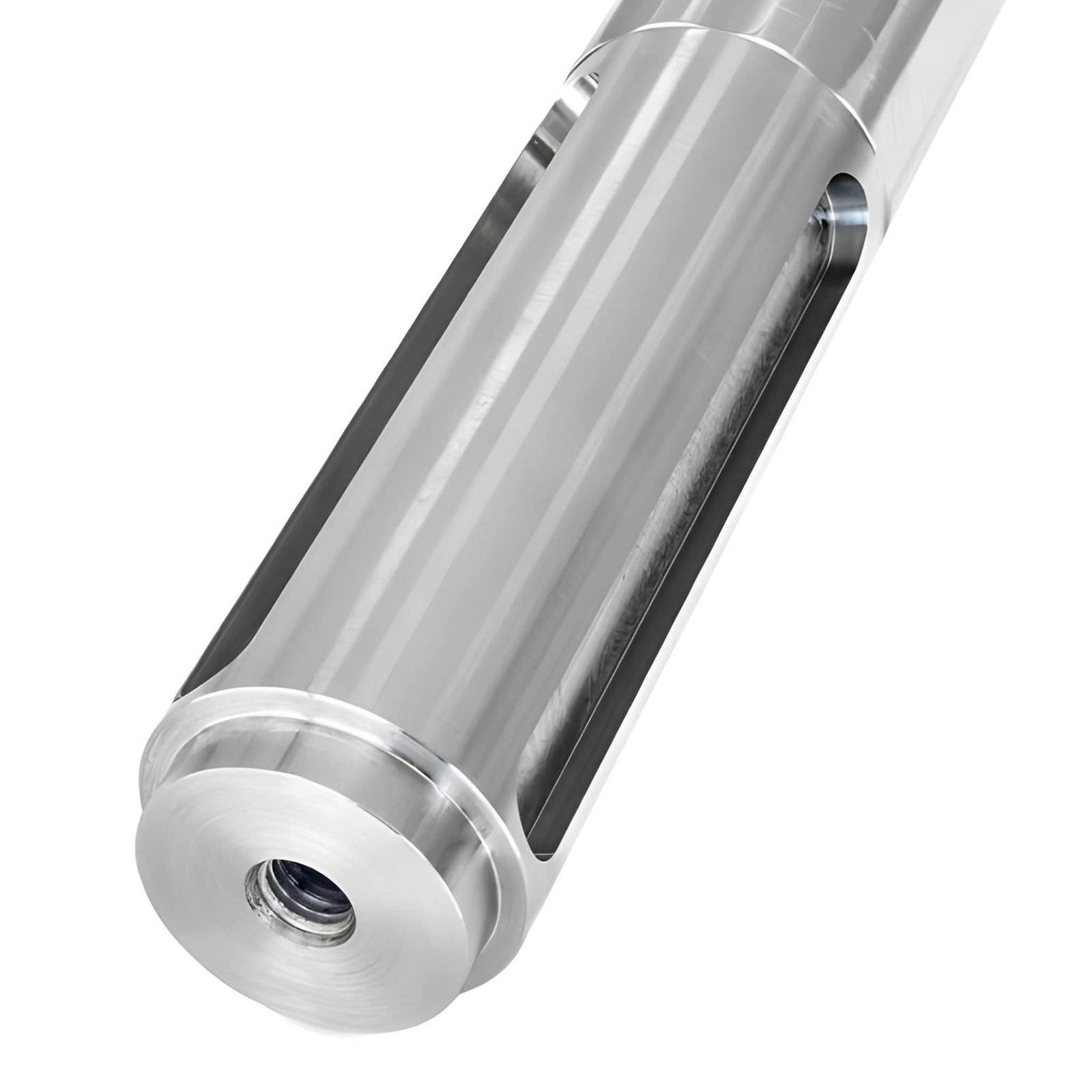
The image shows a close-up view of a CNC-machined passivated shaft. (iStock)
Passivation in CNC machining is a chemical surface treatment. It removes free iron and machining residues from stainless steel parts after cutting, grinding, and finishing methods.
Where Passivation Matters in Precision CNC Parts
- The internal passages of valve bodies usually come in contact with fluids after machining, and surface particles can stay trapped in those channels. So, passivation plays a pivotal role here.
- In medical CNC parts, it is applied after machining and polishing, since even small surface contamination can remain in grooves, holes, and tight features.
- Food processing components are passivated after welding and grinding, as heat marks and tool contact areas tend to hold iron particles on the surface.
- Threaded fittings need passivation after tapping, because cutting action exposes fresh metal at thread roots where residue often stays behind.
- Hydraulic manifolds go through passivation after deep drilling, since intersecting bores often retain debris that normal cleaning cannot fully remove.
- Semiconductor components use passivation after final machining because internal contamination can interfere with clean handling environments.
Passivation Process in CNC Manufacturing
Passivation depends on how the CNC part comes out of machining. Surface condition, internal geometry, and trapped residue decide how the chemical reacts across the part. Deep holes, threads, and pockets need more control because fluid access is limited.
Pre-Treatment: Surface Condition Controls Everything
- CNC machining often leaves tool marks, burrs, and trapped particles in threads, deep pockets, and drilled holes.
- If these parts are not cleaned properly, the chemical cannot reach the full surface evenly. So, deep cavities and intersecting holes need extra care; otherwise, residue stays inside hidden areas.
- In such cases, degreasing and rinsing are treated as an important control step.
Chemical Passivation Stage
In this stage, the part is immersed in a controlled acid bath, usually nitric or citric-based. The chemical interacts with the exposed surface and removes free iron left from machining. Temperature and time are adjusted based on stainless steel grade and surface condition.
Heavier machining marks and welded zones need longer exposure because contamination density is higher. However, overexposure is avoided since it can affect surface appearance without improving cleaning.
Post-Treatment and Verification
After chemical treatment, parts are rinsed to remove remaining acid from internal passages and threaded areas. If rinsing is incomplete, residues can stay trapped and affect surface condition later. Drying is done carefully to avoid watermarks on finished surfaces.
Passivation Types and Alloy Behavior
Each alloy carries a unique mix of elemental composition and machining response. So, the passivation layer remains different across different metals.
Why Different Alloys Respond Differently
Alloys react differently because surface chemistry changes with composition and machining conditions. Stainless steels that retain more surface contamination after machining often show stronger chemical reactions during passivation. Machining marks also influence how deeply contamination stays on the surface. Therefore, rougher surfaces usually need more attention during treatment.
Stainless Steel Grades and Passivation Response
As mentioned earlier, different stainless steel grades show different behavior during passivation.
- 304 stainless steel shows moderate reactivity after machining. It can retain small amounts of free iron from tools and chips on the surface
- 316 performs better in aggressive environments due to its alloy structure.
- 303 stainless steel has high sulfur, and this can trap machining residue.
- Higher strength grades like 17-4 PH also need controlled treatment because heat treatment changes surface condition and reaction speed.
Titanium and Specialized Alloy Applications
- Titanium naturally forms a stable oxide layer after exposure to air, so conventional stainless steel passivation is usually unnecessary. In aerospace and medical manufacturing, titanium parts are more often chemically cleaned to remove machining residue and surface contamination.
- Post-machining cleaning is primarily concerned with the removal of coolant film, embedded chips, and surface contamination from cutting tools.
- Nickel-based specialised alloys are cleaned by controlled chemical and mechanical methods, ensuring residues are removed without damaging the surface of the base metal.
Types of Passivation Used in CNC Machining
There are various ways to passivate stainless steel parts. The right choice depends on how the stainless steel surface reacts after cutting and how complex the part geometry is.
Nitric Acid Passivation
Nitric acid passivation uses an acid immersion tank where parts are fully dipped, then moved into rinse tanks. The setup is simple and used in batch processing. It is used in general CNC shops for parts like machined brackets, covers, and machine housings.
Citric Acid Passivation
Citric acid passivation also uses immersion tanks, but the chemical is weaker and needs a longer soaking time. After treatment, parts are rinsed in water tanks to remove residue from holes and surface edges.
It is used for CNC parts like medical device components, food equipment fittings, and small machined housings. It also fits parts with fine features like small holes and thin wall sections, where strong acid action is not preferred.
Comparison Table
| Method | Equipment Setup | Process Flow | Where It Is Used | Typical Parts Example |
|---|---|---|---|---|
| Nitric Acid | Acid tank + rinse tanks | Dip → rinse → dry | General machine shops | Brackets, covers, housings |
| Citric Acid | Mild chemical tanks + rinse system | Soak → rinse → dry | Controlled machining environments | Medical parts, fittings, and small housings |
Passivation Standards (ASTM A967 / AMS 2700)
ASTM A967 and AMS 2700 define how passivation is performed and checked in CNC production. They control chemical strength, temperature, time, and testing methods after treatment.
These standards are used in aerospace, medical, and regulated industrial machining, where parts must follow fixed surface treatment rules across different suppliers.
Passivation vs Electropolishing vs Anodizing vs Black Oxide
These processes are often confused because all improve the CNC-machined surface condition. The key difference is what each process actually changes on the surface. Some only clean, some reshape the surface, and some build a new layer on top of the metal.
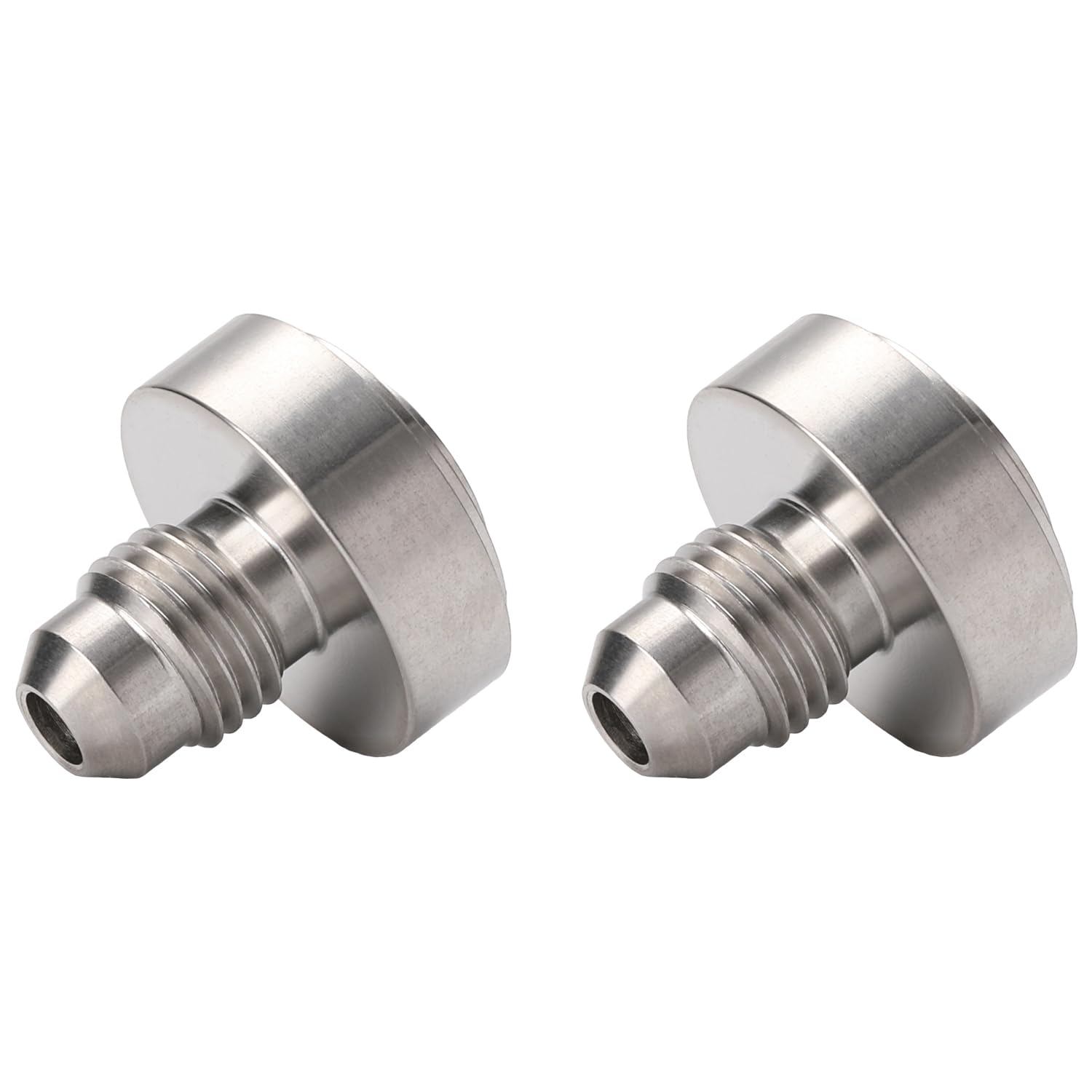
A pair of stainless steel passivated fittings in a white background. (Amazon)
Passivation only removes free iron from stainless steel after machining. It does not change surface shape or remove material layers. It only stabilizes the outer surface chemistry.
Electropolishing is an electrochemical process. It removes a very thin layer from stainless steel using controlled current. It smooths tool marks and sharp micro peaks left after CNC machining.
Anodizing builds a controlled oxide layer on aluminum. It becomes part of the surface and can also carry color finishes depending on the process type.
Black oxide forms a thin chemical conversion layer on steel. It changes surface appearance with negligible dimensional change in most precision applications.
Comparison Table
| Process | Material Scope | Process Mechanism | Surface Action | Layer Behavior | Dimensional Impact | CNC Machining Purpose |
|---|---|---|---|---|---|---|
| Passivation | Stainless steel | Chemical cleaning (acid bath) | Removes free iron only | No added layer | No change | Post-machining surface stabilization |
| Electropolishing | Stainless steel | Electrochemical material removal | Removes micro peaks | Removes thin surface layer | Slight reduction | Surface smoothing for flow and finish |
| Anodizing | Aluminum | Electrochemical oxidation | Builds an oxide layer | Permanent oxide layer | Slight growth | Protection + functional surface finish |
| Black Oxide | Steel | Chemical conversion reaction | Converts the surface layer | Thin conversion film | Negligible change | Appearance + mild corrosion resistance |
Passivation is used for corrosion resistance without dimensional change, while electropolishing is used when surface smoothness is required.
Measurable Performance in CNC Applications
Passivation is not a visible design change process. Its value shows in how CNC stainless steel parts behave after machining, especially in service exposure, assembly fit, and rejection rates. The effect is measurable when parts are compared before and after treatment under controlled conditions.
Corrosion Resistance in Real Conditions
Passivated stainless steel shows lower surface staining when exposed to moisture, coolant residue, or mild salt environments. This happens because free iron left from machining is removed, so surface spots form more slowly compared to untreated parts. In CNC components stored before assembly, this reduces early surface marking during handling and logistics.
Dimensional Impact in Precision CNC Parts
- Passivation does not alter GD&T features such as hole size or thread pitch.
- No measurable material removal or deposition occurs.
- Suitable for post-machining validation of stainless steel assemblies.
Process Reliability and Rework Reduction
Stainless steel parts are often contaminated by the cutting tools and contact with the coolant after machining. Passivation removes this layer. So, there is less surface-related rejection on parts going through inspection. This reduces manual cleaning effort and the risk of parts being returned for rework in production batches.
When to Use (and Not Use) Passivation in CNC Projects
Passivation is a post-machining step that only makes sense in specific CNC situations. It is not tied to every stainless steel part. The use of passivation depends on machining conditions, surface cleanliness after cutting, and how well the part geometry allows chemical access and removal.
Ideal Use Cases
Passivation is used when stainless steel parts leave the CNC machine, but still have trace surface contamination from cutting tools and coolant contact. It is usually done on parts such as housings, fixtures, and connector bodies.
When Passivation Fails
Passivation does not correct machining defects like burn marks, deep tool damage, or embedded scale. If the surface is already degraded from cutting conditions, the chemical step cannot restore it. In those cases, the issue is created during machining and must be fixed before any surface treatment.
Geometry and Manufacturing Constraints
Passivation behaves differently depending on part shape. Open surfaces respond evenly, while blind holes, threads, and narrow channels hold solution longer and require controlled rinsing. In complex CNC parts, the effectiveness depends more on how easily the chemical enters and exits the geometry rather than the treatment itself.
Passivation Problems and Failure Causes in CNC Parts
Passivation failures in CNC parts are rarely random. They usually come from how the part is machined, how clean the surface is before treatment, and how chemical access behaves inside real geometry.
Micro Components with Contamination Issues
- Small CNC parts with dense tool marks retain coolant and machining debris, so the surface does not react evenly during passivation.
- As a result, some zones show clean behavior while other areas keep localized discoloration or early surface spotting.
Deep-Hole Components with Incomplete Passivation
- Deep drilled holes and internal channels trap passivation solution, which leads to uneven reaction along the hole depth.
- Therefore, the entry area often looks treated, while deeper sections show inconsistent surface conditions after rinsing.
Batch Inconsistency in Production
- In production runs, small changes in machining conditions or cleaning time create variation between early and late batches.
- Thus, some parts meet surface expectations while others show mixed results due to inconsistent pre-treatment handling.
Industries That Use Passivated CNC Components
Passivation is used in CNC stainless steel parts when machining marks and free iron need to be cleared before service use. Each industry applies it based on how the part is exposed after production and what kind of surface condition is acceptable in real operation.
Industry Use Table
| Industry | Why Passivation Is Applied | Typical Parts | Practical Focus in Use | Priority Level |
|---|---|---|---|---|
| Medical Devices | Removes machining residues before assembly and repeated cleaning cycles | Surgical instrument bodies, housings, small fittings | Clean internal surfaces and contamination-sensitive contact areas | Critical |
| Aerospace Components | Helps maintain stable stainless steel surfaces during storage and long service exposure | Brackets, fasteners, fluid connectors | Surface consistency and controlled production standards | Critical |
| Semiconductor Equipment | Reduces unwanted surface contamination in controlled manufacturing environments | Vacuum parts, wafer handling fixtures, chamber fittings | Internal cleanliness and residue control | Critical |
| Food-Grade Stainless Parts | Supports repeated wash-down exposure in processing environments | Valves, pipe fittings, pump components | Surface stability during cleaning cycles | Recommended |
| Marine Hardware | Reduces early surface staining in humid and salt-exposure environments | Deck fittings, marine fasteners, structural connectors | Outdoor corrosion exposure management | Environment-Dependent |
In CNC manufacturing, passivation is often discussed for stainless steel parts used in fluid systems and corrosion-sensitive assemblies. After machining, residue can remain inside threaded sections or deep internal features, especially where coolant flow is difficult to clear completely.
For precision CNC parts, machining quality usually affects final surface reliability more than the chemical step itself. Burrs around drilled intersections, for example, can trap contamination and create inconsistent surface conditions later in production.
JLCCNC provides custom CNC machining for stainless steel components with attention to dimensional consistency and production feasibility during machining. Upload your CAD file to get a manufacturing quote and evaluate finishing feasibility early in production.

Precision CNC Machining Service
Professional manufacturing, fast turnaround, and quality assurance.
FAQ’s About Passivation
Q: Does passivation affect CNC tolerances?
Passivation does not change part geometry because it does not remove measurable stock. In CNC parts, it only clears surface-level iron left after cutting, so the fits like threads, bores, and sealing faces stay unchanged.
Q: How long does passivation last in real environments?
Its effect is not a coating, so it does not “wear out” like a layer. The surface stays stable as long as the stainless layer is not damaged again during handling, machining, contact, or harsh exposure.
Q: Can all stainless steels be passivated the same way?
Not really. Austenitic grades respond more predictably, while some free-machining grades behave differently due to alloy additions. So, process time and chemical choice often change from one stainless type to another.
Q: What causes passivation failure in production?
Most issues come from surface conditions before treatment, not the chemical step itself. If coolant residue, tool oil, or embedded chips stay on the surface, the reaction becomes uneven, and parts leave with mixed surface results.
Popular Articles
• Surface Finish in Machining, Types, Charts & Testing
• Anodizing vs. Hard Anodizing: The Differences in Surface Treatment Techniques
• Anodized Aluminum Colors: Options, Limits, and Real-World Results
• Explanation of different material surface treatment technologies in CNC machining
• How to choose between Laser marking and UV printing?
Keep Learning
Surface Finish in Machining, Types, Charts & Testing
What is Surface Finish in Machining? At its core, surface finish in machining refers to the small-scale irregularities left on the surface of a part after machining. These irregularities are typically grouped into three categories: Roughness: The fine, closely spaced deviations caused by the cutting process itself. Roughness depends heavily on feed rate, tool sharpness, and cutting speed. Waviness: Larger, more widely spaced variations caused by machine tool vibration, deflection, or thermal distortio......
CNC Machining Surface Roughness: A Practical Guide
Why Surface Roughness Matters in CNC Machining When we talk about CNC machining, precision isn't just about hitting the right dimensions, it’s also about how the surface feels and performs. Surface roughness describes the fine irregularities left on a machined surface, and it directly impacts how a part behaves in the real world. So, what is surface roughness? In simple terms, it's the measure of tiny peaks and valleys created by the cutting process. While they might look smooth to the naked eye, thes......
Optimizing Manufacturing Efficiency: A Guide to Computerized Numerical Control (CNC) Machining Surface Finishes
CNC Surface Finishes: Types, Costs, and How to Choose Quick Answer: Choose an as-machined finish when cost and dimensional stability matter most. Use bead blasting or brushing for a uniform cosmetic appearance, anodizing for aluminum corrosion resistance, hard anodizing for wear, and laser marking or UV printing for identification. Confirm material, tolerance, color, masking, and end-use environment before quoting. A CNC-machined part comes off the machine functional but rarely finished — tool marks, ......
Anodizing vs. Hard Anodizing: The Differences in Surface Treatment Techniques
Quick Answer: Choose Type II anodizing when corrosion resistance, color, and cosmetic appearance are the main requirements. Choose Type III hard anodizing when the part needs greater wear resistance and the coating thickness can be accommodated in the fit and tolerance plan. Confirm alloy, coating thickness, color, sealing, and critical dimensions before release. An aluminum bracket for an outdoor enclosure and a hydraulic cylinder rod both might get anodized — but specifying the same process for both......
How to Remove Anodizing from Aluminum Parts
Key Takeaways Chemical stripping is commonly used when anodizing needs to be removed from most or all of an aluminum part, but the process can also attack the underlying aluminum if it is not controlled. Mechanical removal works well for accessible areas but can change the surface texture and remove more base metal than intended. CNC machining gives better control when a defined anodized area needs to be removed from a precision part. Laser-based removal can be useful for controlled localized treatmen......
Anodizing Thickness: How Much Does It Add?
Anodizing Thickness and Dimensional Change at a Glance Feature Approximate dimensional effect One coated external surface +0.5 × coating thickness Outside diameter across two coated surfaces +1 × coating thickness Bore diameter with two coated walls −1 × coating thickness 60° thread pitch diameter Changes by about 4 × surface-growth amount, or about 2 × coating thickness under the 0.5× growth assumption Dimensional estimates below use the 0.5 × coating-thickness surface-growth relationship given in MI......