Reaming in CNC Machining: Process, Tolerances, and Design Guidelines for Precision Holes
15 min
- What Is Reaming in Machining?
- Drilling vs Boring vs Reaming: Hole-Making Comparison
- Where Reaming Fits in the Hole-Making Process
- How the CNC Reaming Process Works: Reaming a Hole
- Reamer Types and Tool Selection: CNC Reamer Options
- Accuracy and Surface Finish in Reaming
- Design Guidelines for Reamed Holes
- Common Reaming Problems and How to Avoid Them
- When to Use: Reaming vs Drilling or Boring
- FAQ
What Is Reaming in Machining?
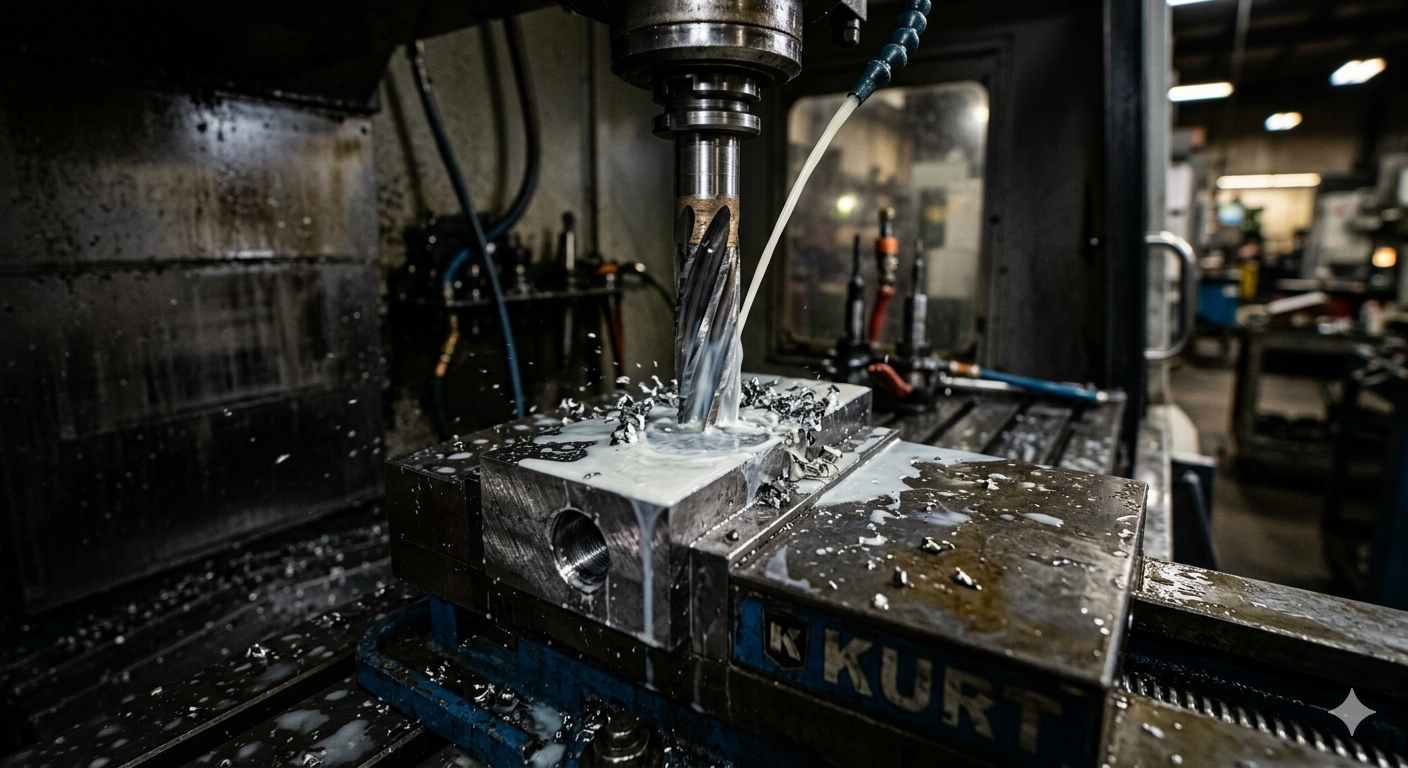
(AI generated) CNC machine performing reaming machining operation finishing a precision metal hole with a reamer tool
Reaming is a finishing operation used in CNC machining to improve the size accuracy and surface finish of a previously drilled hole. A CNC reamer removes a small amount of material from the inside of the hole to bring it to a precise final diameter.
In simple terms, reaming refines an existing hole. The hole is first drilled slightly undersized. Then the reamer passes through it to achieve the final dimension and a smoother internal surface.
This process matters when hole accuracy affects assembly. Bearings, dowel pins, shafts, and precision fasteners often require tight fits that drilling alone cannot achieve. That’s where reaming machining becomes necessary.
Most reaming operations remove only about 0.1 to 0.5 mm of material, depending on the part and material. The goal is accuracy and finish, not heavy material removal.
Typical results from reaming machining include:
- Improved hole diameter accuracy
- Better roundness and alignment
- Smooth internal surface finish
- Consistent hole size across multiple parts
In production machining, reaming is often the final step after drilling to ensure the hole meets the required tolerance.
At this stage, many engineers also start thinking about where the parts will actually be machined. Getting consistent results from processes like reaming depends a lot on the shop running the job. Tooling choices, machining sequence, and process control all play a role in whether those tolerance numbers are realistic in production.
That’s where JLCCNC supports engineering teams. By combining CNC machining expertise with design-for-manufacturing feedback, JLCCNC helps ensure precision features, like reamed holes, bearing bores, and alignment points, are produced reliably from the first prototype through full production. Instead of guessing whether a tolerance will hold, engineers can validate the machining approach early and avoid costly redesigns later.
Drilling vs Boring vs Reaming: Hole-Making Comparison
Different machining processes create holes in different ways. Drilling, boring, and reaming each serve a specific purpose depending on the required accuracy and hole quality.
Drilling removes the bulk of the material. Boring corrects alignment and diameter. Reaming finishes the hole to its final dimension.
Process | Purpose | Typical Accuracy | Surface Finish | Material Removal | Best Use Case |
|---|---|---|---|---|---|
Drilling | Creates the initial hole | Moderate (±0.1–0.3 mm) | Rougher finish | High | Fast hole creation |
Boring | Corrects size and alignment | High (±0.02–0.05 mm) | Good finish | Moderate | Enlarging or correcting holes |
Reaming | Finishes hole to precise size | Very high (±0.005–0.02 mm) | Very smooth | Low | Precision holes for pins, bearings, and tight fits |
If you want a deeper look at how CNC drilling works and when it’s the better choice for hole creation, our guide on CNC drilling processes and hole machining strategies explains how drilling parameters affect accuracy and surface finish.
For holes that need more precise alignment or diameter correction, CNC boring is often used before reaming. It adjusts the hole size and straightness while maintaining surface quality. Learn more about CNC boring machining and its applications for precision parts.
Where Reaming Fits in the Hole-Making Process
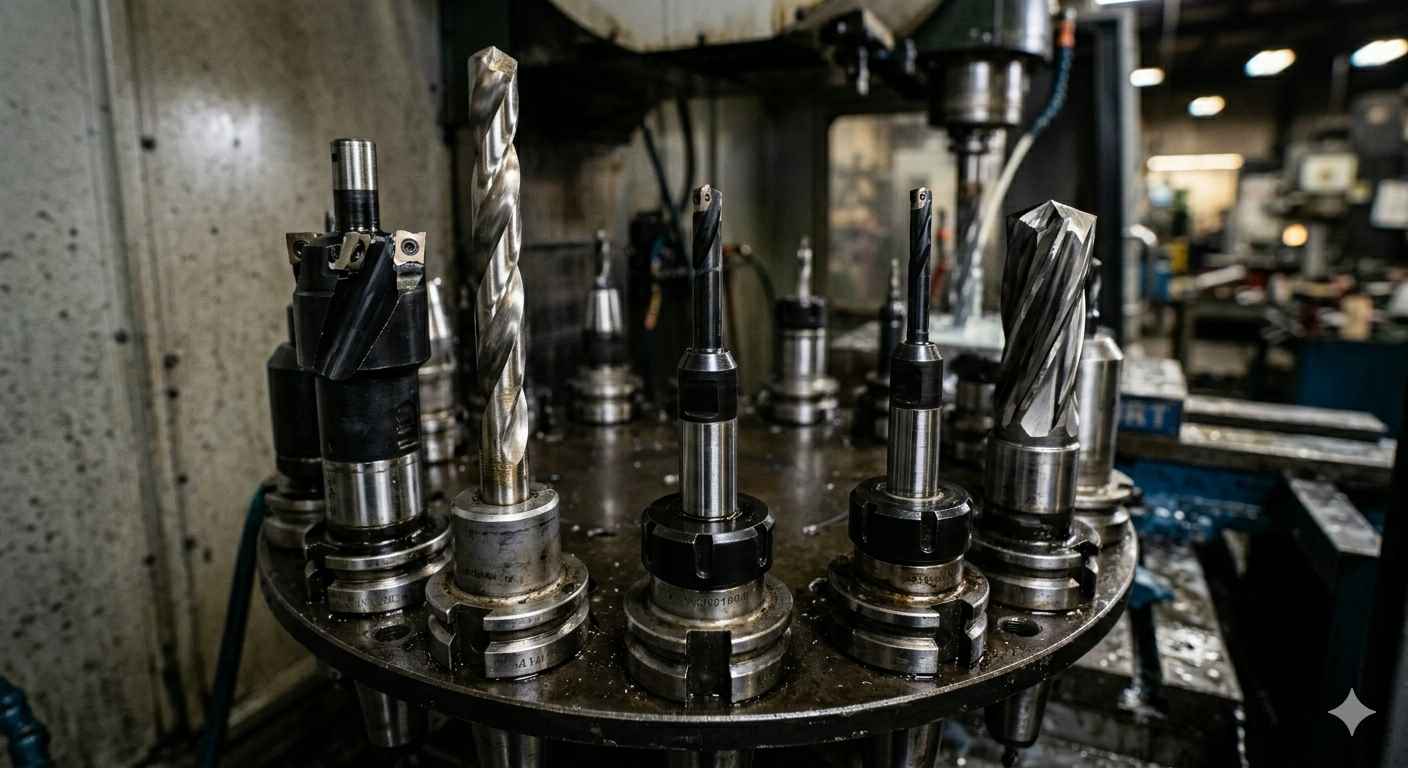
(AI generated) CNC machine tool holders containing drills, boring bars, and reamers used in precision hole machining processes
A precise hole rarely comes from a single machining step. Most holes are created through a short sequence of operations, each one improving accuracy a little more. The first step removes most of the material. Later steps refine the size and surface finish.
This is where reaming fits in. It’s usually the final operation in the hole-making chain. The earlier steps create a hole close to the size. Then reaming machining brings the hole to its exact diameter and improves the internal surface.
Think of it this way. Drilling gets you close. Boring corrects alignment if needed. Reaming a hole delivers the final precision.
This sequence is common when the hole must hold bearings, dowel pins, or precision shafts. In those cases, a standard drilled hole often isn’t accurate enough. A CNC reamer finishes the job by removing a very small amount of material and smoothing the internal surface.
Typical Machining Sequence
A typical hole-making workflow in reaming machining looks like this:
- Spot drilling
Creates a small guide point so the drill starts in the correct position. - Drilling
Removes most of the material and creates the initial hole. The hole is usually drilled slightly undersized. - Boring (optional)
Used when the hole location or straightness needs correction before finishing. - Reaming
A CNC reamer passes through the hole and removes a thin layer of material to achieve the final dimension and surface finish.
This approach gives machinists control over both geometry and accuracy. It also prevents the reamer from doing too much work, which could damage the tool or affect the hole quality.
How the CNC Reaming Process Works: Reaming a Hole
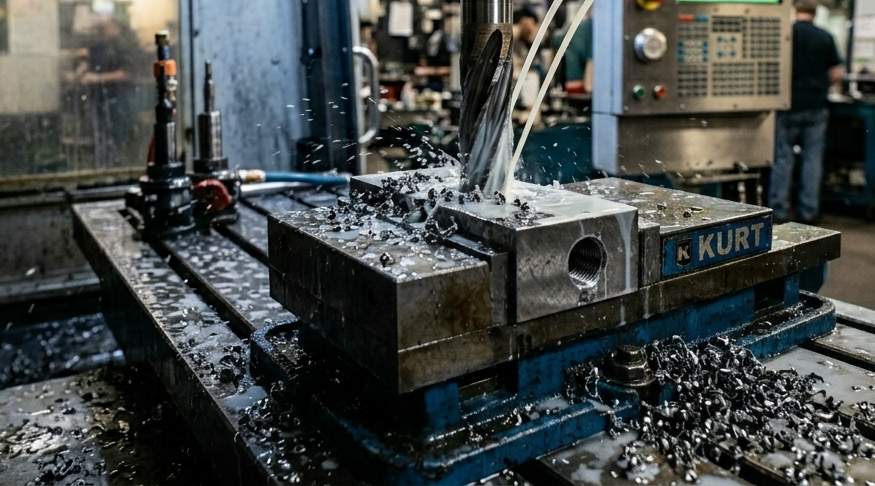
(AI generated) CNC reamer finishing a precision hole during reaming machining with coolant flowing over the cutting tool
Preparing the Correct Pre-Reamed Hole Size
The most important step in reaming machining happens before the reamer even touches the part. The hole must be drilled slightly smaller than the final diameter.
This extra space gives the reamer material to cut while still guiding the tool along the existing hole.
Typical stock allowance for reaming a hole:
Final Hole Diameter | Recommended Pre-Drill Size Difference |
|---|---|
Small holes (<10 mm) | 0.10–0.20 mm undersize |
Medium holes (10–25 mm) | 0.20–0.30 mm undersize |
Large holes (>25 mm) | 0.30–0.50 mm undersize |
Too little material and the CNC reamer won’t cut properly. Too much material and the tool can deflect or wear prematurely.
Reamer Entry, Feed Strategy, and Cutting Motion
Reaming works best with steady, controlled motion. The machine feeds the CNC reamer directly into the hole at a consistent speed.
A few rules guide the process:
- Feed rate is typically moderate and consistent, often lower than or similar to drilling
- Spindle speed is lower than the drilling speed
- The tool should enter the hole smoothly without hesitation
The reamer cuts along multiple edges at once, which helps maintain diameter and roundness. Once the tool reaches full depth, it exits without stopping inside the hole. Pausing inside the hole can damage the surface finish.
Coolant, Chip Evacuation, and Stability
Coolant plays a major role in reaming machining. The cutting edges produce small chips, and those chips must leave the hole quickly.
Coolant helps by:
- Reducing friction on the cutting edges
- Flushing chips out of the hole
- Preventing heat buildup that could distort the hole size
Stability matters just as much. Any vibration during reaming a hole can affect roundness and surface quality. That’s why machinists use rigid setups, sharp tools, and consistent feeds when performing precision reaming operations.
Reamer Types and Tool Selection: CNC Reamer Options
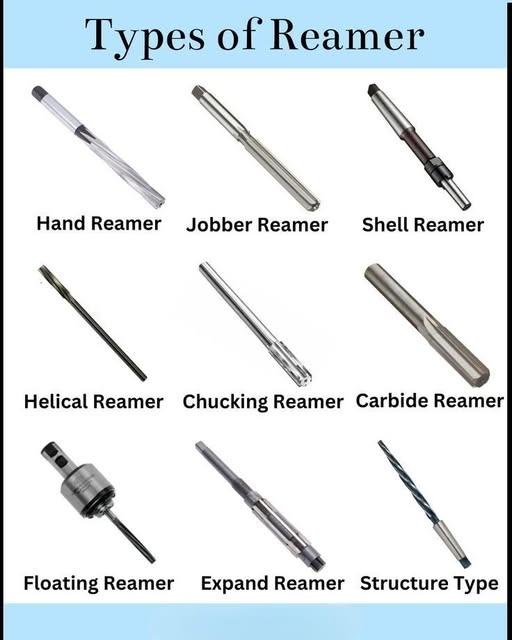
Facebook (https://www.facebook.com/Sonale.balu/posts/types-of-reamers-and-their-usesreamers-are-precision-cutting-tools-used-in-machi)
Not every CNC reamer behaves the same way. Small differences in tool design can change how smoothly the cut runs and how consistent the hole size ends up.
In reaming machining, the tool isn’t removing much material. Usually, just a thin layer is left behind after drilling. That means stability matters more than aggressive cutting. If the tool vibrates or chips pack up inside the hole, the surface finish suffers, and the hole size can drift.
Most machinists pick a reamer based on three things: the material being cut, the hole diameter, and how tight the tolerance needs to be. Some tools handle chip evacuation better. Others hold size longer in production runs.
Reamer Type | Key Feature | Best For | Advantages | Typical Use in Reaming |
|---|---|---|---|---|
Straight Flute Reamer | Straight cutting edges along the tool body | Cast iron, brass, brittle materials with short chips | Very stable cutting, simple design | Common choice when reaming a hole in materials that don’t produce long chips |
Helical Flute Reamer | Spiral flutes help guide chips out of the hole | Aluminum, mild steel, ductile metals | Better chip evacuation and smoother cutting | Frequently used in reaming machining, where chip buildup could become a problem |
High-Speed Steel (HSS) Reamer | Tough tool steel construction | General machining across many materials | Durable and relatively affordable | A typical CNC reamer choice for low to medium production work |
Solid Carbide Reamer | Very rigid carbide body | Harder materials or high-precision parts | Holds edge longer and maintains hole size well | Common in production reaming where tolerance consistency matters |
Adjustable Reamer | Expandable cutting blades | Maintenance work or manual setups | Allows slight diameter adjustments | Used when the exact hole size needs small corrections during reaming a hole |
Expansion Reamer | Internal screw expands the tool slightly | Small batch or repair work | Fine diameter control without changing tools | Occasionally used in reaming machining when fixed-size tools aren’t available |
JLCCNC provides CNC machining support for engineers who need reliable tolerances on features such as dowel pin holes, bearing seats, and precision bores. By reviewing your uploaded CAD model and machining requirements up front, the team can suggest adjustments that improve manufacturability and help ensure the final parts meet the intended fit and performance.
Accuracy and Surface Finish in Reaming
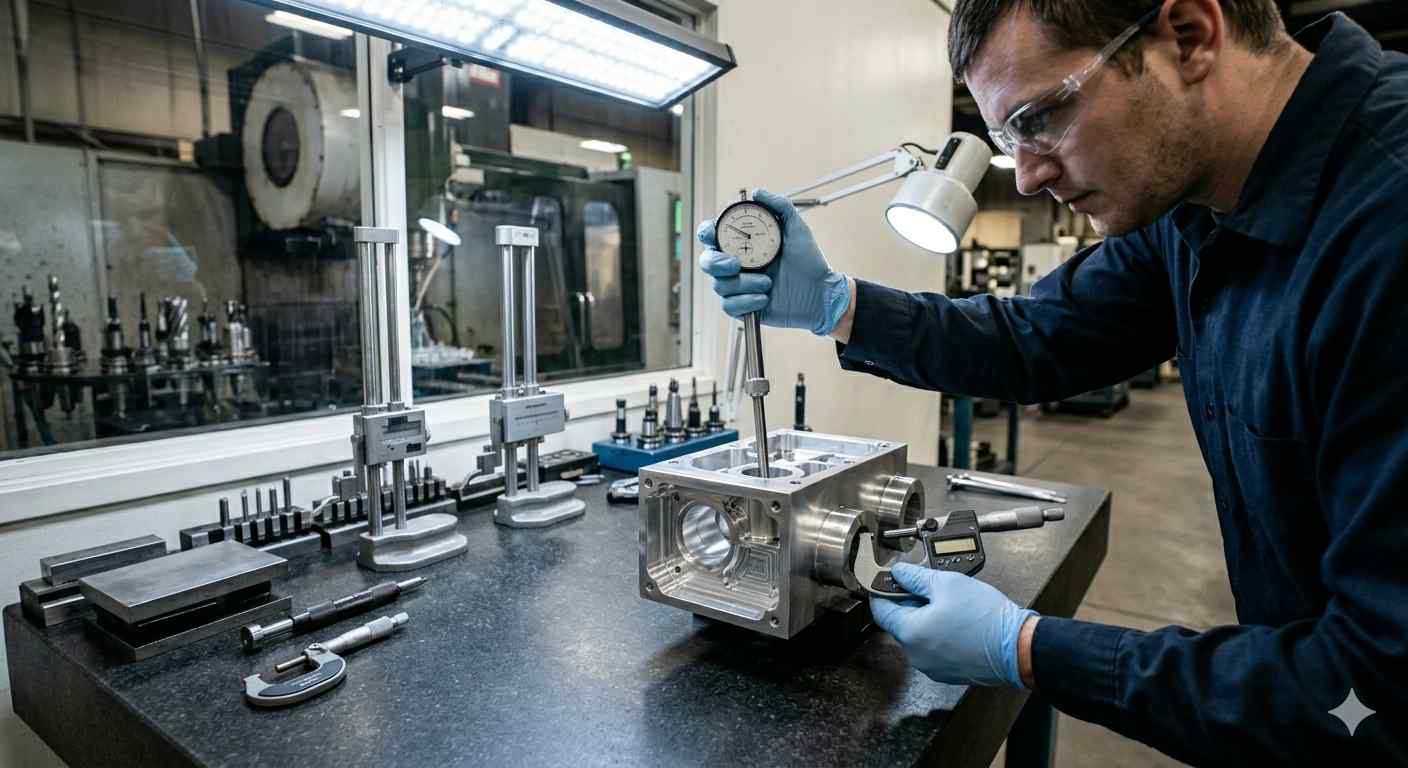
(AI generated) Machinist measuring precision reamed hole diameter using a bore gauge during quality inspection
Since the tool follows the existing hole, a stable reaming machining setup can produce noticeably tighter diameters than drilling alone. The surface finish improves, too. That’s why engineers commonly specify reaming for features like bearing seats, dowel pin holes, or alignment points where parts actually need to fit together without play.
Typical Tolerance Ranges for Reamed Holes
In normal production conditions, reaming a hole can usually hold tolerances somewhere around ±0.005 mm to ±0.02 mm (roughly ±0.0002–0.0008 in). The exact number depends on things like the material, the rigidity of the setup, and how worn the tool is.
In practical shop work, reaming often shows up when a hole needs to meet fits such as:
- H7 tolerance holes
- dowel pin locations
- precision alignment holes
Drilling by itself rarely holds those tolerances reliably, especially if you’re machining dozens or hundreds of parts.
Surface Roughness Achievable with Reaming
Reaming doesn’t just control diameter. It also improves the texture inside the hole. A typical CNC reamer can produce surface finishes around:
- Ra 0.8–1.6 µm
That’s quite a bit smoother than what you get from drilling alone. A smoother hole wall reduces friction and helps parts seat properly, which matters for things like shafts, bushings, or press-fit components.
Coolant flow plays a bigger role here than people sometimes expect. If chips start dragging along the wall of the hole, the finish deteriorates quickly. Keeping chips moving out of the cut makes a noticeable difference.
Controlling Roundness and Cylindricity
Another benefit of reaming machining is better geometric consistency. A reamer has several cutting edges spaced evenly around the tool body. As it passes through the hole, those edges help smooth out small irregularities left behind by drilling.
That typically improves:
- roundness
- cylindricity
- overall hole straightness
It improves surface consistency, but does not correct major alignment errors from earlier operations. There’s a limit to what reaming can fix. If the drilled hole is badly off-center or already oversized, the reamer usually follows that path instead of correcting it. In other words, the earlier hole-making steps still need to be done properly.
Design Guidelines for Reamed Holes
Getting good results from reaming machining actually starts long before the tool touches the part. The way the hole is designed can make the process easy and predictable, or unnecessarily difficult.
A few small design choices, like leaving the correct allowance or avoiding overly deep holes, go a long way toward keeping the reaming pass stable.
Recommended Hole Allowance Before Reaming
Reaming tools aren’t meant to remove large amounts of material. They’re finishing tools. That means the hole must be drilled slightly undersized so the reamer has a thin layer left to cut.
Typical allowances before reaming a hole look like this:
- 0.10–0.20 mm for holes smaller than 10 mm
- 0.20–0.30 mm for holes between 10 mm and 25 mm
- 0.30–0.50 mm for holes larger than 25 mm
If the allowance is too small, the reamer ends up rubbing rather than cutting. Too large, and the tool experiences higher cutting forces, which can push it off-center and affect accuracy.
Depth-to-Diameter Limits
Hole depth also influences how stable the reaming process will be. As holes get deeper, chip evacuation becomes harder, and tool deflection starts to increase.
A common guideline used in machining shops is:
- Reliable results are typically achieved below 5–8× the hole diameter.
Once you go deeper than that, you often need special tooling, peck strategies, or additional coolant management to keep things running smoothly.
Blind Holes vs Through Holes
Whenever possible, through holes are easier to ream. Chips can escape out the bottom of the hole, which keeps the cutting edges clear and reduces the chance of chip packing.
Blind holes are a bit trickier. Chips have nowhere to go except back up the flute, so coolant flow and chip evacuation become more important. The tool also needs some clearance at the bottom to prevent damage.
For precision components, engineers often choose through-hole designs if the assembly allows it. It simply makes the reaming process more stable and predictable.
Common Reaming Problems and How to Avoid Them
Problem | What Usually Causes It | What You’ll Notice | How Machinists Deal With It |
|---|---|---|---|
Oversized or Tapered Holes | Pre-drilled hole too large, worn reamer, or the tool slightly deflecting during the cut | The hole measures bigger than expected, or the diameter slowly changes along the depth | Start with the correct pre-hole size, keep the reamer sharp, and make sure the setup is rigid so the tool stays centered |
Chatter and Poor Surface Finish | Vibration, feed rate too aggressive, or chips not clearing properly | Visible chatter marks inside the hole and a rough surface instead of a smooth bore | Reduce feed slightly, improve coolant flow, and use a reamer style that evacuates chips more easily |
Tool Wear and Chip Packing | Chips building up in the flutes or long production runs, gradually dulling the tool | Heat increases, surface finish drops, and hole size starts drifting out of tolerance | Maintain good coolant flow, choose the right flute design for the material, and replace worn tools before accuracy starts slipping |
When to Use: Reaming vs Drilling or Boring
A lot of holes in machined parts are drilled and left as-is. That’s perfectly fine for many applications. But once the hole starts affecting alignment, fit, or motion between parts, drilling alone usually isn’t accurate enough. That’s where reaming comes in.
If you're comparing different manufacturing approaches for prototype parts, this rapid prototyping methods guide explains when CNC machining, 3D printing, or other processes make the most sense.
When Reaming Is Necessary
Precision Fit Applications
Reaming is often used when two components need to fit together very precisely. Since the reamer only removes a thin finishing layer, it can hold the hole diameter much more consistently than a drill.
You’ll see this in things like alignment features, press-fit components, or assemblies where small dimensional differences would cause problems later.
Dowel Pin and Bearing Holes
Dowel pin holes are probably the most common example. Dowel pins are used specifically for positioning and alignment, so the hole size has to be very predictable. Even a small deviation can throw off the assembly.
Bearing bores are another situation where reaming helps. Bearings rely on smooth, accurately sized holes so they seat properly and stay aligned during operation.
When Boring or Drilling Alone Is Enough
That said, reaming isn’t always necessary.
If a hole is only used for a standard bolt, screw, or clearance feature, drilling usually provides more than enough accuracy. For larger diameters, boring can also produce precise results without needing an extra finishing step.
In practice, engineers reserve reaming for holes where the fit or function of the part really depends on accuracy.
JLCCNC supports engineers with precision CNC machining, rapid prototyping, and production manufacturing. From early prototypes to finished parts, our machining services help ensure features like reamed holes meet the accuracy and consistency your design requires. Upload CAD files to JLCCNC to validate tolerances before production.
FAQ
Q: What tolerance can reaming achieve?
In most CNC machining setups, reaming can typically hold tolerances around ±0.005 mm to ±0.02 mm, depending on the material and machine stability.
Q: How much material should be left for reaming?
Machinists usually leave a small allowance before reaming, often around 0.2–0.5 mm, so the tool has enough material to cut cleanly.
Q: Is reaming better than drilling for precision holes?
Yes. Drilling makes the initial hole, but reaming improves the final diameter accuracy and surface finish.
Q: Can CNC machines perform reaming automatically?
Yes. Reaming tools can be included in the CNC program so the machine performs the drilling and finishing operations in sequence.
Q: Is reaming necessary for dowel pin holes?
In most cases, it is, because dowel pins rely on tight, consistent hole diameters to maintain accurate alignment between parts.
Keep Learning
Laser Engraving Aluminum: Marking Methods & Surface Effects
Key Takeaways Laser engraving usually removes base material to create a recess. Laser marking is a broader term that can describe a surface-color change or material removal, so the process name alone does not define the final result. On aluminum, alloy and surface finish affect marking contrast. A light mark on dark anodized aluminum is a common design target, but the actual appearance depends on the finish and laser process. JLCCNC laser marking produces a recessed area 0.03–0.1 mm deep. The result i......
CNC Cutting Fluid: Types, Functions, Applications, and Selection Guide
Key Takeaways Cutting fluid in machining performs four functions simultaneously: cooling the tool and workpiece, lubricating the tool-chip interface to reduce friction, carrying chips away from the cut zone, and protecting machined surfaces from corrosion between operations. Different machining operations need different fluid priorities: high-speed aluminum milling may need adhesion control and chip evacuation, threading and tapping need strong lubrication, and grinding requires both cooling and fine ......
Blind Hole Machining Guide: What Is a Blind Hole, Types of Holes, and Tapping Tips
What Is a Blind Hole? Types of Holes and CNC Hole Machining Explained In CNC machining, few operations challenge process control and tool stability as much as blind hole machining. A blind hole is a hole that terminates at a defined internal depth rather than breaking through the opposite surface. Because the cavity is enclosed at the bottom, chip evacuation, thermal behavior, tool wear, and dimensional accuracy become far more difficult to manage compared to through-hole machining. These constraints ......
Rake Angle in Machining: Machinists’ Guide to Perfect Cuts
What is Rake Angle? (minaprem) If you've ever stood in front of a CNC machine or a manual lathe, you know that the cutting tool's geometry isn't just some arbitrary design. Every angle, edge, and surface has a job to do, and one of the most important of those is the rake angle. We've been running machines long enough to know that rake angle can make or break your surface finish, tool life, and machining efficiency. In this guide, we're going to walk you through what rake angle is, how it works, and ho......
Sheet Metal vs CNC Machining: A Guide to Choosing the Right Method for Your Metal Parts
Quick Answer: Choose sheet metal for uniform-thickness enclosures, panels, and formed brackets when bends and production volume support lower unit cost. Choose CNC machining for variable wall thickness, precision bores, tight feature relationships, and complex 3D geometry. Use a hybrid design when a formed structure needs precision-machined interfaces. A quote comes back for a bracket, and it's priced as a CNC part — machined from solid aluminum, a few hours of spindle time, a per-part cost that makes......
What Steps Are Taken To Minimize Waste In CNC Machining Processes?
How to Reduce Waste in CNC Machining: 5 Practical Strategies Quick Answer: CNC machining waste is reduced mainly through DFM, near-net stock, efficient toolpaths, preventive tool maintenance, and alloy-segregated recycling. The biggest gains usually come before cutting: reduce unnecessary material removal and prevent scrap or rework. Every CNC-machined part starts as more material than it ends up being. A pocket gets milled out, a profile gets cut away, a boss gets faced down to size — and all of that......