Black Anodizing Aluminum: Process, Tolerance, and Applications in CNC Machining
13 min
- What Is Black Anodizing
- How to Blacken Aluminum (Industrial vs DIY Methods)
- CNC Machining Considerations Before Anodizing
- Material Compatibility and Oxide Layer Control
- Surface Finish, Color Consistency, and Durability
- Applications for Black Anodized Aluminum in CNC Parts
- Common Defects in Black Anodized Aluminum and How to Prevent Them
- Key Engineering Tips for Successful Black Anodizing
- FAQs About Black Anodized Aluminum
What Is Black Anodizing
In simple words, black anodizing refers to an electrochemical aluminum surface treatment that provides CNC-machined parts with a dark, wear-resistant oxide layer. This is accomplished by forming a controlled oxide layer, adding dye, and sealing the surface.
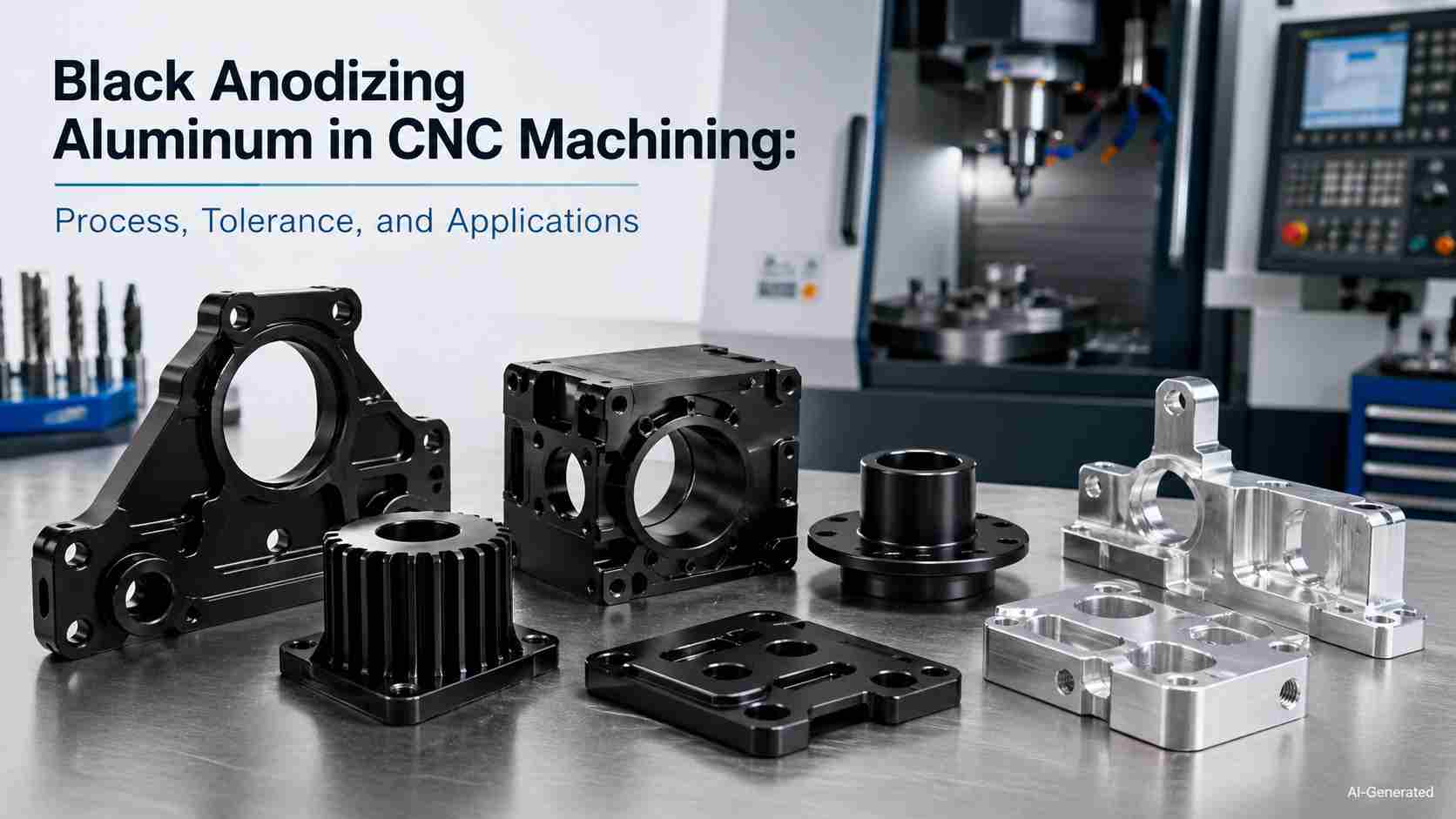
Black anodized CNC aluminum parts on workshop bench
How Black Anodizing Works
After machining, the aluminum part enters an acid electrolyte bath and acts as the anode, forming an oxide layer from the base metal itself. The layer has open pores and lets dark dye enter before sealing closes the pore structure and locks the color into place. A black anodized part gains a finished appearance along with the metallic character of the machined component.
How to Blacken Aluminum (Industrial vs DIY Methods)
Blackening aluminum can be achieved through several methods, but the suitability depends on whether the part is decorative, functional, or used in a precision CNC assembly.
Industrial Method: Anodizing (Primary Approach)
In CNC manufacturing, black anodizing is the standard method used to produce a stable and durable surface. The process forms a controlled oxide layer on the aluminum substrate, which is then dyed and sealed to create a consistent black anodized finish.
Compared to other approaches, anodizing provides:
- predictable coating thickness (typically 5–25 μm in Type II)
- strong adhesion since the oxide layer grows from the base material
- improved wear and corrosion resistance
- repeatable color control across production batches
For parts requiring dimensional stability, surface durability, and controlled appearance, anodizing remains the only practical solution in production environments.
DIY and Alternative Blackening Methods
Simpler methods are sometimes used outside industrial contexts. These may include chemical darkening solutions, painting, or marker-based coatings. While these approaches can darken aluminum surfaces, they do not produce a true anodic layer.
As a result:
- coating adhesion is limited
- surface durability is low
- color consistency varies significantly
- dimensional control is not maintained
These methods are typically used for temporary marking, visual prototypes, or non-critical components.
Why CNC Parts Require Anodizing Instead of DIY Methods
In CNC-machined components, surface treatment is not only aesthetic but functional. Features such as threads, mating surfaces, sealing interfaces, and wear zones require predictable coating behavior.
Black anodized aluminum ensures that:
- coating thickness can be accounted for in tolerance planning
- critical areas can be masked or controlled
- surface hardness and wear resistance are maintained
- batch-to-batch variation is minimized
For this reason, when the requirement is to blacken aluminum in a controlled, repeatable, and engineering-relevant way, anodizing is not just preferred—it is necessary.
CNC Machining Considerations Before Anodizing
Surface Roughness and Finishing
Before a part heads for black anodizing, the machined face already shapes the final look. After finishing, it is common for feed lines, cutter markings, burrs, and blended edges to be apparent. This is particularly true on housings, brackets, covers, and panels in which light travels across broad faces. A steady tool condition, planned deburring, and a specified surface texture allow the shop to create parts that have a consistent appearance from one batch to another.
Dimensional Allowances for Anodizing
Once the coating is added, precision features need planning rather than last-minute correction. Holes, slots, grooves, thread areas, bearing seats, and mating faces should be reviewed before machining since the finished layer changes working dimensions. For a black anodized part, the safest approach is to call out the required final size, note masked areas when needed, and leave enough allowance for finishing without pushing the part outside the drawing requirement.
In typical sulfuric anodizing (Type II), approximately 50% of the coating thickness grows outward while the remaining 50% penetrates into the base material, which directly affects functional dimensions.
Tool Path and Engagement Impact on Wall Consistency
Tool path selection matters since uneven cutter engagement can leave faint bands, chatter, or varied wall texture that becomes easier to notice after finishing. Thin walls, deep pockets, and long vertical faces need stable machining passes, appropriate stepovers, and controlled chip load to avoid mixed surface patterns across the same part. When the machining strategy is consistent, the finished component has a more uniform appearance and better post-treatment quality.
Material Compatibility and Oxide Layer Control
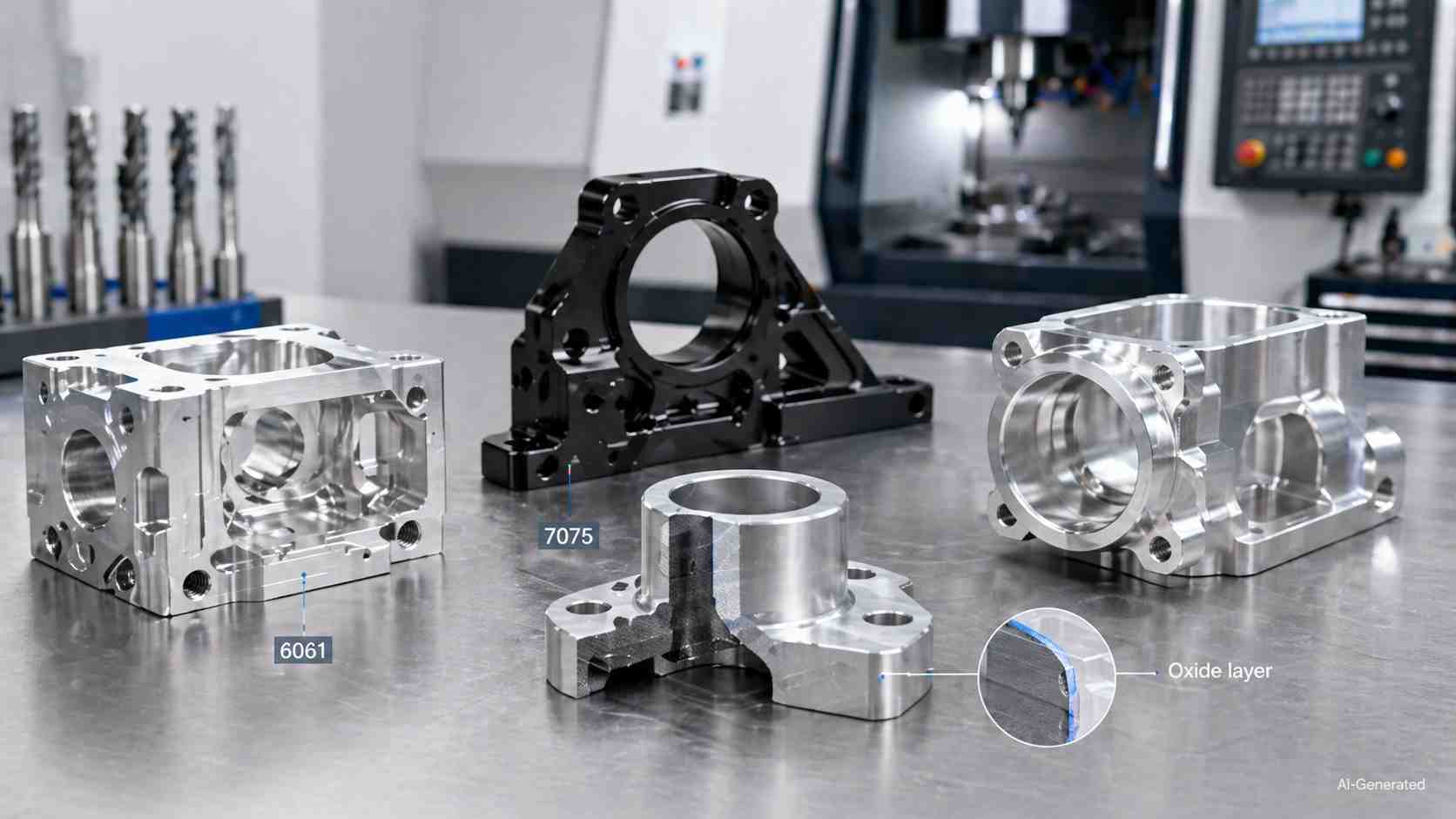
CNC aluminum alloy parts with oxide layer detail
Aluminum Alloys Suitable for Black Anodizing
Alloy selection is determined before the finishing process begins. In CNC work, 6061 and 6063 are preferred when a deep and even black anodized aluminum finish is the goal, since their magnesium-silicon chemistry responds well to sulfuric anodizing and accepts color with good uniformity.
Alloys with higher copper or zinc content tend to produce less uniform oxide layers due to differences in oxide formation kinetics, often resulting in gray, bronze, or uneven color tones. While these alloys may meet mechanical requirements, they require careful evaluation when color consistency is critical.
Controlling Oxide Layer Thickness
Black Anodizing Key Parameters (Engineering Reference)
| Parameter | Typical Range | Engineering Impact |
|---|---|---|
| Coating Thickness (Type II) | 5–25 μm | Affects wear resistance and directly shifts part dimensions |
| Dimensional Growth | ~50% outward / ~50% inward | Requires tolerance compensation on holes, fits, and threads |
| Surface Hardness | ~200–400 HV | Improves abrasion resistance but depends on sealing quality |
| Color Consistency | Process dependent | Influenced by alloy, dye control, and batch conditions |
| Porosity (Before Sealing) | Micro-porous structure | Enables dye absorption; affects final color depth |
| Sealing Quality | Hot water / nickel acetate | Controls corrosion resistance and color stability over time |
Layer thickness needs to match the part's purpose, not just its appearance. A decorative component may need only a lighter coating, but sliding faces, outdoor hardware, or wear-contact parts may call for a thicker film with tighter process control. For precision CNC work, the drawing should name the anodizing type, class, target thickness, and any areas that must remain untreated. It gives the finishing team a defined range rather than an open-ended request.
Typical black anodizing follows Type II sulfuric anodizing standards (e.g., Type II sulfuric anodizing per MIL-A-8625), with thickness commonly ranging from 5 to 25 μm depending on application. For example, a 20 μm coating typically results in about 10 μm dimensional growth on each surface.
Avoiding Deformation and Warping
Thin ribs, broad flat faces, and slender arms need extra care. This is because finishing exposes the part to chemical baths, electrical current, and temperature changes after machining is complete. Dark anodized aluminum parts with uneven wall mass can react differently across heavy and thin sections, which might lead to bowing or slight shape change. Good design practice keeps wall thickness balanced, introduces support wherever needed, and avoids fragile geometry when the finished part must hold tight CNC requirements.
Surface Finish, Color Consistency, and Durability
Achieving Consistent Black Color
A rich black tone begins long before the part reaches the dye tank. It depends on matching material batches, using the same pretreatment route, and keeping anodizing parameters steady across loads.
On CNC parts, broad exterior faces show shade drift earlier than hidden pockets.
In practice, even standard colors can shift slightly depending on process conditions, especially when compared with other anodized finishes. For a broader view of how different shades behave in production, see this guide to anodized aluminum colors.
Surface Hardness and Wear Resistance
Durability comes from the hard aluminum oxide layer (Al₂O₃), which protects the base metal against abrasion and corrosion while preserving the underlying machined geometry. For components handled often, mounted in assemblies, or exposed to sliding contact, the coating choice can be toward higher wear resistance without changing the design language of the product. This is why dark anodized aluminum works for enclosures, mounts, knobs, fixtures, and visible mechanical parts.
Preventing Streaks and Uneven Texture
Streaks come from earlier variations that the finish makes more noticeable, such as directional machining marks, uneven grain response, residue, or mixed gloss across adjacent faces. The best prevention is to treat appearance as an engineering requirement, not a final inspection surprise. When the drawing, machining plan, and finishing notes agree on cosmetic zones, grain direction, and acceptable visual range, the finished part has a more dependable surface from batch to batch.
Applications for Black Anodized Aluminum in CNC Parts
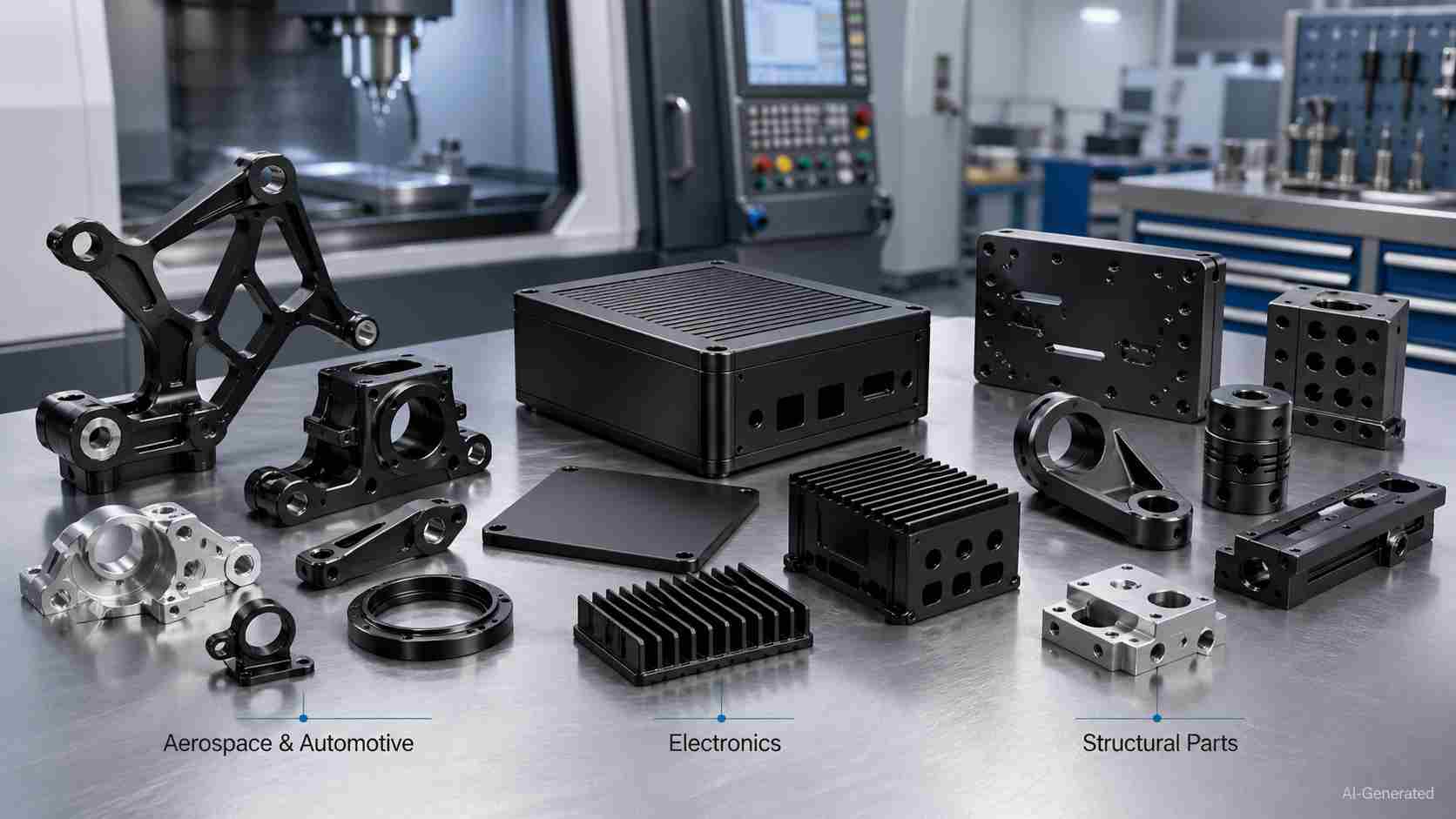
Black anodized CNC parts for industrial applications
Aerospace and Automotive Components
In the context of aerospace and automotive work, black aluminum parts are utilized when low weight, wear protection, and a controlled appearance are all important at the same time. Brackets, sensor mounts, bezels, interior hardware, and fluid-system pieces may need a dark surface that supports visual control as well as deals with vibration, wear, and environmental exposure. For teams asking how to blacken aluminum in a production-ready way, the answer begins with the required alloy, finish callout, masking areas, and assembly role.
Electronic Enclosures and Casings
Electronic housings carry both visual and practical demands, which render the black anodized finish appropriate for panels, covers, handheld device bodies, heat-spreader cases, and control boxes. The dark surface can reduce glare, protect frequently handled faces, and support a premium product appearance without hiding machined geometry. Before production, designers should review screw bosses, grounding points, labels, inserts, and connector openings. Such details guide which areas receive coating and which remain bare for assembly.
Structural and Mechanical Parts
For structural and mechanical components, black anodized aluminum works well when the part needs surface protection alongside maintaining crisp machined edges, threaded features, and repeatable mating behavior. Fixtures, arms, guide plates, couplers, knobs, and machine accessories might use this finish. The reason is that it gives the part a finished industrial look and introduces a protective barrier against routine handling. As the assembly grows more complicated, the finish note should travel with the CAD model, drawing, and inspection plan. It keeps cosmetic intent and functional surfaces aligned from prototype to production.
Upload your CAD file to JLCCNC for an instant online quote.
Our engineers review anodizing feasibility, masking strategy, and tolerance impact before production, with prices starting from $1 and lead times as fast as 3 days.

Precision CNC Machining Service
Professional manufacturing, fast turnaround, and quality assurance.
Common Defects in Black Anodized Aluminum and How to Prevent Them
Color Variation and Batch-to-Batch Inconsistency
Color drift may start with a variation that looks harmless during planning. Mixed alloy lots, uneven rack loading, bath changes, or different dwell times from one order to another. In black anodizing, these small shifts can move the shade from deep black toward charcoal or brown-black across separate production runs. The best prevention is to keep material grade, lot traceability, rack layout, chemistry range, and inspection samples matched before approval.
Streaking and Uneven Dye Absorption Causes
Streaks point to non-uniform dye uptake. Meanwhile, the cause may come from trapped residue, uneven etching, poor rinsing, or local differences in oxide porosity. Long faces and wide cosmetic areas reveal these marks more clearly because the eye follows continuous surface geometry. A good prevention plan uses controlled pretreatment, dependable rinsing, stable dye concentration, and sample review under consistent lighting.
Surface Burn Marks and Pre-Anodizing Machining Defects
Burn marks may appear when electrical contact, current density distribution, electrolyte agitation, or bath temperature control drift away from the required range during finishing. Before that stage, machining can also leave scratches, chatter, smeared aluminum, or leftover burrs that become much easier to notice after the part is colored. A black anodized component needs cautious handling from the machine bed through racking, since damage at any step may remain visible after finishing.
Dimensional Shift Leading to Assembly Interference
Dimensional defects are serious when coated holes, slots, grooves, or threaded regions no longer match mating parts. The prevention work begins with the drawing. Finished dimensions, masking notes, thread treatment, and inspection points should be defined before production. When these details are addressed early, assemblies come together with less rework and fewer rejected parts.
Key Engineering Tips for Successful Black Anodizing
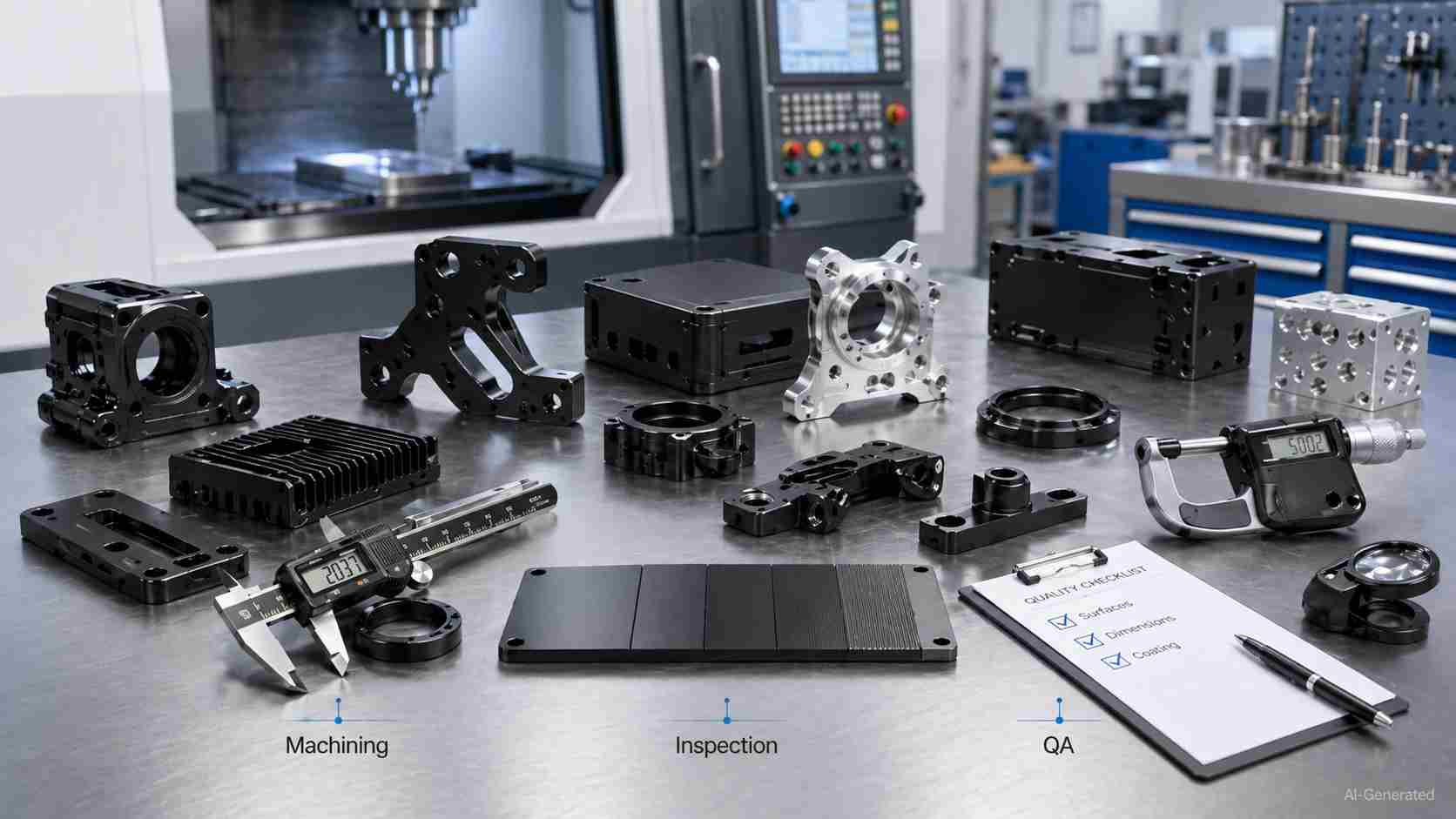
Black anodized CNC parts with inspection tools
Minimizing Tool Marks and Defects
First of all, decide which faces need the best visual result. After that, machine those areas with extra care before black anodized aluminum goes into finishing. A light finishing pass, sharp cutting edges, careful deburring, and guarded handling help reduce witness lines, drag marks, dents, and burr shadows. This kind of approach gives the finishing process a better starting point, rather than asking the anodic coating to hide machining flaws it will usually reveal.
Optimizing Machining Parameters for Post-Anodizing Quality
Machining parameters should sustain the removal of material in a stable manner from the first operation to the last. Balanced spindle speed, feed rate, coolant delivery, chip evacuation, and tool reach help control heat, vibration, and deflection on visible walls and precision details. When the cutting plan is prepared with finishing in mind, dark anodized aluminum products leave production with fewer visual surprises and improved assembly confidence.
Inspection and Quality Assurance Procedures
Quality control should begin with the first article, not the final box of parts. Review cosmetic zones under agreed lighting, masking locations, coated features with go/no-go gauges, and coating thickness wherever the drawing calls for it. For repeat orders, approved samples and inspection notes provide machinists, finishers, and buyers with a consistent reference.
For parts with strict cosmetic or tolerance requirements, early DFM review helps avoid rework after anodizing.
Precision CNC Machining Service
Professional manufacturing, fast turnaround, and quality assurance.
FAQs About Black Anodized Aluminum
Q: What Is Black Anodized Aluminum?
It is aluminum with an engineered anodic oxide surface and a dark color, employed in situations when CNC parts need both a polished look and additional protection.
Q: How Is Black Anodizing Applied to CNC Parts?
The part is cleaned, anodized in an electrolytic bath, dyed, and then sealed to lock in the color.
Q: Does Black Anodizing Affect Part Tolerances?
Yes, the coating provides measurable thickness, which implies that precision holes, threads, grooves, and mating areas need allowance or masking before production.
Q: How Durable Is a Black Anodized Finish?
Its durability depends on coating type, thickness, sealing quality, exposure, and usage conditions. Also, keep in mind that thicker anodic films give better wear performance.
Q: Can All Aluminum Alloys Be Blackened?
It is possible to anodize many aluminum grades; nevertheless, different alloys may react differently in terms of shade, gloss, coating depth, and surface performance.
Q: How to Avoid Streaks or Uneven Coloring?
For repeat production, use consistent material, controlled pretreatment, proper racking, stable bath conditions, and approved reference samples.
Popular Articles
• Surface Finish in Machining, Types, Charts & Testing
• Anodizing vs. Hard Anodizing: The Differences in Surface Treatment Techniques
• Anodized Aluminum Colors: Options, Limits, and Real-World Results
• Explanation of different material surface treatment technologies in CNC machining
• How to choose between Laser marking and UV printing?
Keep Learning
Surface Finish in Machining, Types, Charts & Testing
What is Surface Finish in Machining? At its core, surface finish in machining refers to the small-scale irregularities left on the surface of a part after machining. These irregularities are typically grouped into three categories: Roughness: The fine, closely spaced deviations caused by the cutting process itself. Roughness depends heavily on feed rate, tool sharpness, and cutting speed. Waviness: Larger, more widely spaced variations caused by machine tool vibration, deflection, or thermal distortio......
CNC Machining Surface Roughness: A Practical Guide
Why Surface Roughness Matters in CNC Machining When we talk about CNC machining, precision isn't just about hitting the right dimensions, it’s also about how the surface feels and performs. Surface roughness describes the fine irregularities left on a machined surface, and it directly impacts how a part behaves in the real world. So, what is surface roughness? In simple terms, it's the measure of tiny peaks and valleys created by the cutting process. While they might look smooth to the naked eye, thes......
Optimizing Manufacturing Efficiency: A Guide to Computerized Numerical Control (CNC) Machining Surface Finishes
CNC Surface Finishes: Types, Costs, and How to Choose Quick Answer: Choose an as-machined finish when cost and dimensional stability matter most. Use bead blasting or brushing for a uniform cosmetic appearance, anodizing for aluminum corrosion resistance, hard anodizing for wear, and laser marking or UV printing for identification. Confirm material, tolerance, color, masking, and end-use environment before quoting. A CNC-machined part comes off the machine functional but rarely finished — tool marks, ......
Anodizing vs. Hard Anodizing: The Differences in Surface Treatment Techniques
Quick Answer: Choose Type II anodizing when corrosion resistance, color, and cosmetic appearance are the main requirements. Choose Type III hard anodizing when the part needs greater wear resistance and the coating thickness can be accommodated in the fit and tolerance plan. Confirm alloy, coating thickness, color, sealing, and critical dimensions before release. An aluminum bracket for an outdoor enclosure and a hydraulic cylinder rod both might get anodized — but specifying the same process for both......
How to Remove Anodizing from Aluminum Parts
Key Takeaways Chemical stripping is commonly used when anodizing needs to be removed from most or all of an aluminum part, but the process can also attack the underlying aluminum if it is not controlled. Mechanical removal works well for accessible areas but can change the surface texture and remove more base metal than intended. CNC machining gives better control when a defined anodized area needs to be removed from a precision part. Laser-based removal can be useful for controlled localized treatmen......
Anodizing Thickness: How Much Does It Add?
Anodizing Thickness and Dimensional Change at a Glance Feature Approximate dimensional effect One coated external surface +0.5 × coating thickness Outside diameter across two coated surfaces +1 × coating thickness Bore diameter with two coated walls −1 × coating thickness 60° thread pitch diameter Changes by about 4 × surface-growth amount, or about 2 × coating thickness under the 0.5× growth assumption Dimensional estimates below use the 0.5 × coating-thickness surface-growth relationship given in MI......