Bearings: Types, Applications, Materials, and Selection Guide
21 min
- What Are Bearings and How Do They Work?
- How Bearings Are Classified
- Types of Bearings and Applications
- Ball Bearings vs Roller Bearings: Key Differences
- How to Choose the Right Bearing Type
- Common Bearing Materials and Manufacturing Considerations
- CNC Machined Components Used in Bearing Assemblies
- Bearing Failure Causes and Maintenance Tips
- FAQ About Bearing Types
Bearings are small components, but they play a critical role in the reliability of mechanical systems. The wrong bearing selection can lead to excessive friction, vibration, premature wear, and unexpected equipment downtime.
In this guide, I'll break down every common type of bearing, what they're used for, and how to choose the right one for your project. Whether you're a mechanical engineer, a hobbyist, or just someone trying to understand how things work, this guide has you covered.
What Are Bearings and How Do They Work?
Bearings are essential mechanical components that allow controlled movement between parts while reducing friction. They are widely used in rotating systems such as automotive components, industrial machinery, CNC machines, motors, and other precision equipment.
Without bearings, moving parts would experience excessive friction, heat buildup, and wear, which would significantly reduce machine performance and service life. By supporting loads and maintaining accurate movement, bearings help mechanical systems operate more smoothly and efficiently.
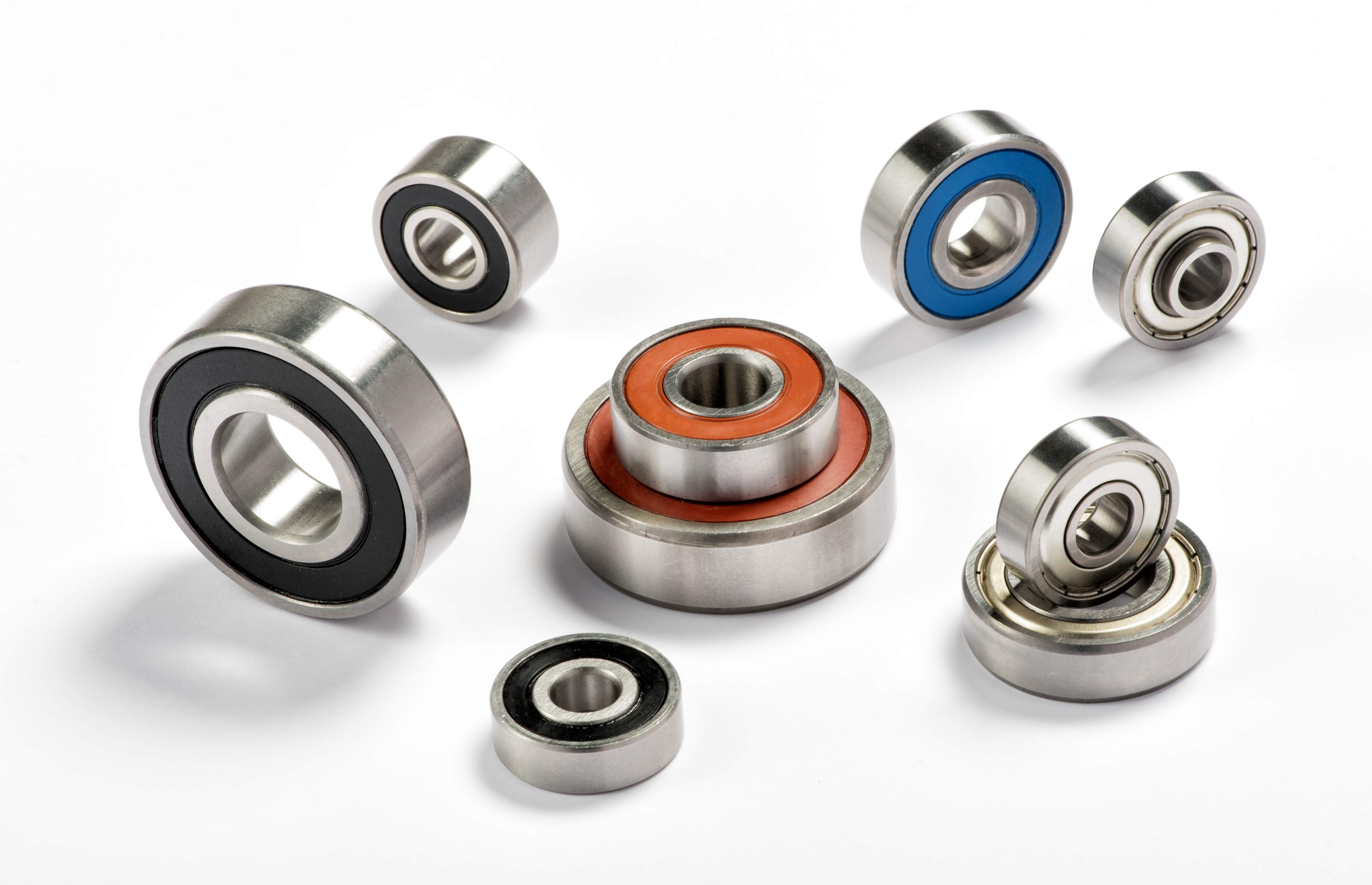
What Is a Bearing?
A bearing is a mechanical component designed to support moving parts and allow relative motion between them, usually by reducing friction between surfaces.
In most applications, bearings are used to support a rotating shaft while allowing it to move with minimal resistance. Instead of allowing two surfaces to slide directly against each other, bearings use rolling elements or specially designed surfaces to reduce friction and improve motion efficiency.
Depending on the design, bearings can handle different types of loads:
- Radial loads: Forces applied perpendicular to the shaft direction
- Axial loads: Forces applied along the shaft direction
- Combined loads: A combination of radial and axial forces
Different bearing designs are optimized for different operating conditions. For example, ball bearings are commonly used for high-speed applications, while roller bearings are preferred when heavier loads need to be supported.
Main Components of a Bearing
Most rolling bearings consist of several key components that work together to reduce friction and support movement.
| Component | Function |
|---|---|
| Inner ring | Mounted on the rotating shaft and provides a raceway for rolling elements |
| Outer ring | Fits into the housing and supports the bearing structure |
| Rolling elements | Transfer loads between the inner and outer rings while reducing friction |
| Cage | Keeps rolling elements evenly spaced and prevents contact between them |
| Seals | Protect lubricant and prevent dust, moisture, and contaminants from entering |
The interaction between these components determines the bearing’s performance, including load capacity, speed capability, accuracy, and service life.
For example, precision bearings used in CNC machine spindles require extremely accurate manufacturing because even small dimensional errors can affect rotation accuracy and machining quality.
How Bearings Reduce Friction and Support Motion
Bearings reduce friction by replacing sliding contact with rolling contact. In a traditional sliding system, two surfaces directly rub against each other, creating higher friction, heat, and wear.
In a rolling bearing, balls or rollers move between the inner and outer raceways. Because rolling friction is much lower than sliding friction, the shaft can rotate more easily with less energy loss.
The rolling elements are held in position by the cage, which ensures they remain evenly distributed and maintain smooth operation. The precision-ground surfaces of the raceways also help the bearing maintain stable movement even during continuous operation.
Besides reducing friction, bearings also support mechanical loads and maintain alignment between moving components. This is especially important in precision equipment such as CNC machines, where shaft movement must remain accurate to achieve consistent machining results.
The correct bearing design allows a machine to operate with:
- Lower friction and heat generation
- Improved rotational accuracy
- Reduced component wear
- Longer service life
This is why bearing selection is an important consideration in mechanical design. The right bearing type depends on factors such as load direction, operating speed, installation space, and environmental conditions.
How Bearings Are Classified
Bearings can be classified in several ways depending on their internal structure, the type of load they support, and how they allow movement. Understanding these basic classifications helps engineers quickly narrow down the right bearing type before selecting a specific design.
Classification by Rolling Element
The most common classification is based on the rolling elements inside the bearing.
Ball bearings use spherical balls to reduce friction between moving parts. They are widely used for applications requiring high rotational speed and moderate loads.
Roller bearings use cylindrical, tapered, or spherical rollers. Compared with ball bearings, they can support heavier loads because the contact area between the roller and raceway is larger.
Classification by Load Direction
Bearings can also be classified by the direction of the loads they are designed to handle.
Radial bearings are designed to support loads applied perpendicular to the shaft. They are commonly used in motors, machines, and rotating equipment.
Thrust bearings support axial loads that act along the shaft direction. They are often used in applications where components experience pushing or pulling forces.
Combined-load bearings can handle both radial and axial forces at the same time, making them suitable for more complex operating conditions.
Classification by Motion Type
Another way to classify bearings is by the type of movement they support.
Rotary bearings are the most common type and allow shafts or components to rotate with reduced friction. Ball bearings and roller bearings are typical examples.
Linear bearings support straight-line motion instead of rotation. They are commonly used in automation equipment, CNC machines, and precision motion systems.
The best bearing type depends on the required movement, load conditions, speed, and operating environment. This classification provides a starting point before selecting a specific bearing design.
Types of Bearings and Applications
Bearings come in many different designs, and each type is optimized for specific load conditions, speeds, and operating environments. The most common way to classify bearings is by their rolling elements, including ball bearings and roller bearings.
Choosing the right bearing type depends on factors such as load capacity, rotational speed, available space, precision requirements, and application conditions.
Ball Bearings
Ball bearings use spherical rolling elements between the inner and outer raceways to reduce friction and support rotational movement. Because they have lower friction and can operate at high speeds, they are one of the most widely used bearing types.
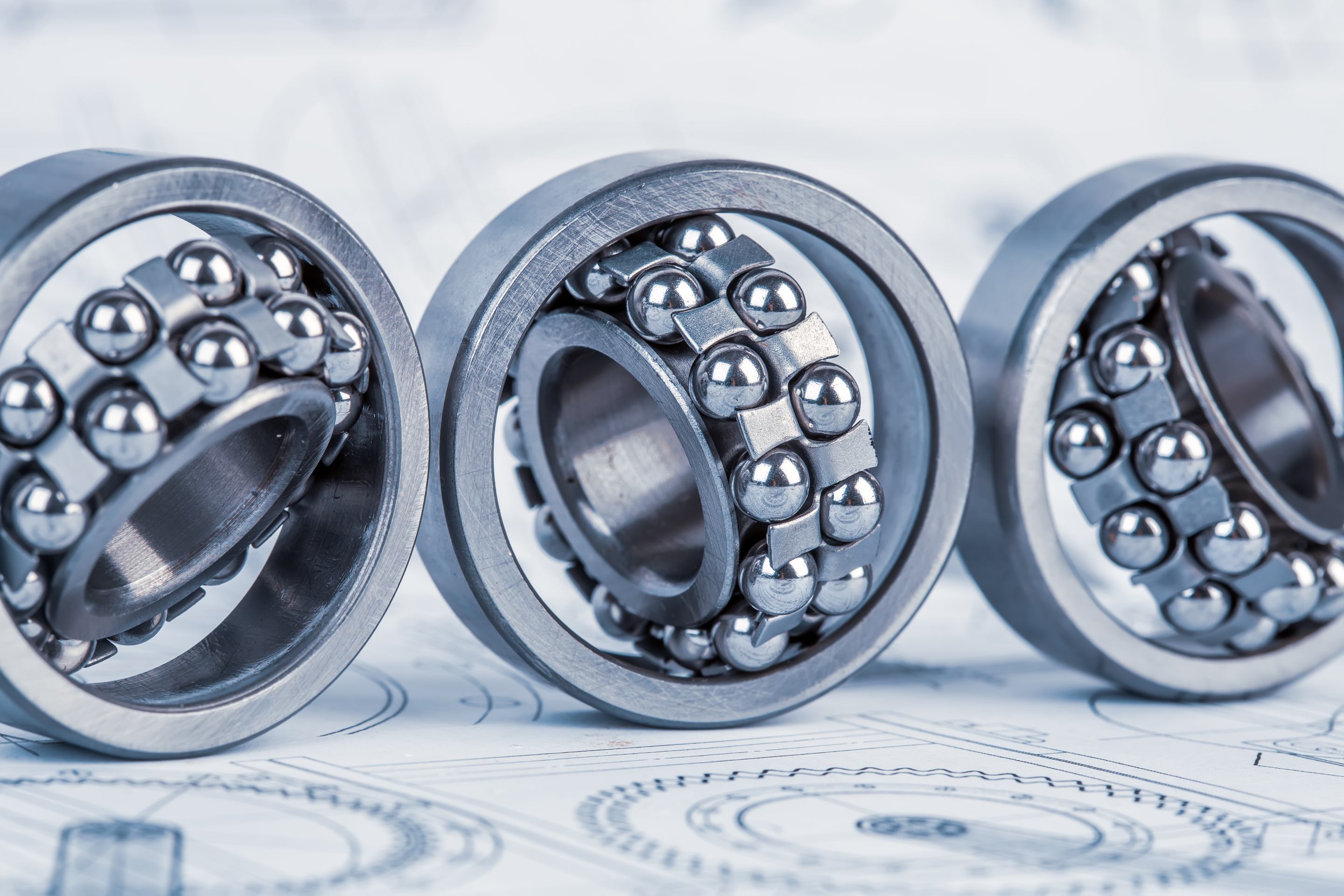
Common applications include electric motors, CNC machine spindles, automotive components, and general industrial equipment.
Deep Groove Ball Bearings
Deep groove ball bearings are the most common type of ball bearing. They can handle both radial loads and moderate axial loads while maintaining high-speed performance.
They are commonly used in:
- Electric motors
- Household appliances
- Pumps
- General machinery
Their simple design, low maintenance requirements, and versatility make them suitable for a wide range of applications.
Angular Contact Ball Bearings
Angular contact ball bearings are designed to handle combined radial and axial loads. Their raceways are positioned at an angle, allowing them to support higher axial forces compared with standard ball bearings.
They are widely used in:
- CNC machine tool spindles
- High-speed rotating equipment
- Precision machinery
In CNC applications, angular contact ball bearings help maintain spindle accuracy and reduce vibration during machining.
Self-Aligning Ball Bearings
Self-aligning ball bearings can compensate for small alignment errors between the shaft and housing. Their curved raceway design allows the bearing to continue operating even when slight shaft deflection occurs.
Common applications include:
- Agricultural machinery
- Industrial equipment
- Systems where alignment is difficult to maintain
Roller Bearings
Roller bearings use cylindrical or specially shaped rollers instead of balls. Because rollers have a larger contact area with the raceway, they can support heavier loads compared with ball bearings.
They are commonly used in heavy machinery, automotive systems, and industrial equipment where load capacity is more important than maximum speed.
Cylindrical Roller Bearings
Cylindrical roller bearings use cylindrical rollers to support high radial loads. They provide higher load capacity than ball bearings while maintaining good speed capability.
Typical applications include:
- Gearboxes
- Electric motors
- Industrial machinery
They are often selected for systems that experience continuous radial loading.
Tapered Roller Bearings
Tapered roller bearings use angled rollers that allow them to handle both radial and axial loads. This makes them suitable for applications where forces come from multiple directions.
Common applications include:
- Automotive wheel hubs
- Transmission systems
- Heavy equipment
Their ability to handle combined loads makes them one of the most common bearing types in vehicles.
Spherical Roller Bearings
Spherical roller bearings are designed for heavy loads and can tolerate misalignment between the shaft and housing.
They are commonly used in:
- Mining equipment
- Large industrial machines
- Heavy-duty conveyors
These bearings are suitable for harsh environments where vibration and alignment issues are common.
Needle Roller Bearings
Needle roller bearings use long, thin rollers to provide high load capacity in a compact design.
They are often used in:
- Automotive transmissions
- Compact mechanical assemblies
- Space-limited applications
Their small cross-section makes them ideal when installation space is limited.
Other Bearing Types
Besides ball and roller bearings, several specialized bearing designs are used for specific motion requirements.
Plain Bearings
Plain bearings use sliding contact instead of rolling elements. They have a simple structure and can operate in applications where rolling bearings are unsuitable.
Common applications include:
- Automotive suspension systems
- Industrial equipment
- Low-speed rotating systems
They are often chosen for their low cost and ability to handle shock loads.
Linear Bearings
Linear bearings are designed to support straight-line motion rather than rotation. They reduce friction between moving components and guide precise linear movement.
Common applications include:
- CNC machines
- Automation equipment
- Precision positioning systems
They are essential in systems that require accurate and repeatable movement.
Mounted Bearings
Mounted bearings combine a bearing with a housing, making installation easier and improving alignment.
They are widely used in:
- Conveyor systems
- Agricultural machinery
- Industrial equipment
Their easy installation and maintenance make them popular in general mechanical assemblies.
Ball Bearings vs Roller Bearings: Key Differences
Now that we've looked at both categories, let me break down the key differences between ball bearings and roller bearings so you can see which one makes sense for your application.
Load Capacity Comparison
This is the biggest difference. Because roller bearings have line contact instead of point contact, they can handle much higher loads. A typical roller bearing can handle between 2 and 10 times the load of a similarly sized ball bearing. If you're dealing with heavy machinery or high loads, roller bearings are almost always the answer.
Speed Capability Comparison
Ball bearings win here. The smaller contact area means less friction, so ball bearings can handle much higher rotational speeds than roller bearings. If you have a motor spinning at 10,000 RPM, you definitely want ball bearings, not roller bearings.
Friction and Efficiency Differences
Again, ball bearings have an advantage here. Less contact area means less friction, which means better efficiency and less heat generation. For applications where energy efficiency is important or where heat buildup is a concern, ball bearings are the better choice.
Application Differences
Your choice really comes down to what your application needs. If you have high speeds and light to moderate loads, go with ball bearings. If you have heavy loads and lower speeds, roller bearings are the way to go.
| Feature | Ball Bearings | Roller Bearings |
|---|---|---|
| Contact type | Point contact | Line contact |
| Load capacity | Lower | Higher |
| Speed capability | Higher | Lower |
| Friction | Lower | Higher |
| Shock resistance | Lower | Higher |
| Best applications | High-speed/light loads | Heavy-load machinery |
Looking at this table, the choice is actually pretty straightforward. For most general-purpose applications with moderate loads, ball bearings work perfectly. When you start getting into heavy equipment, automotive, or industrial machinery, you'll start seeing roller bearings everywhere.
How to Choose the Right Bearing Type
Choosing the right bearing type depends on more than just the bearing size. Engineers need to consider factors such as load conditions, operating speed, installation space, and working environment.
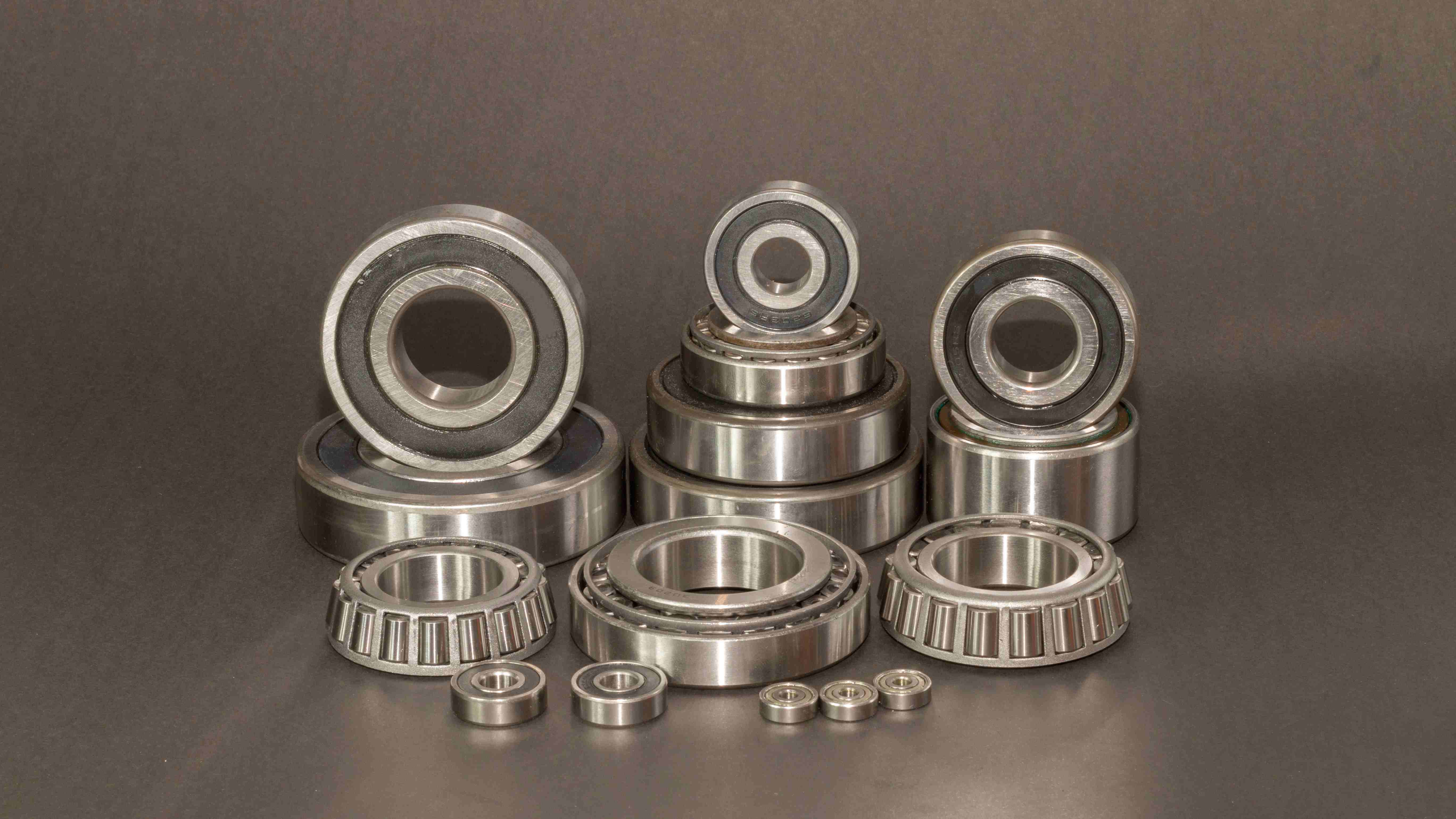
A suitable bearing selection helps reduce friction, improve machine reliability, and extend service life. The following factors are commonly considered when selecting a bearing.
Load and Speed Requirements
The first step in bearing selection is understanding the loads and operating speed the bearing needs to handle.
Bearings may experience different types of loads:
- Radial loads: Forces applied perpendicular to the shaft direction
- Axial loads: Forces applied along the shaft direction
- Combined loads: A combination of radial and axial forces
Ball bearings are generally suitable for high-speed applications with moderate loads because they generate less friction. Roller bearings are usually preferred for heavier loads because their larger contact area provides higher load capacity.
radial load: Deep-groove ball bearings, cylindrical roller bearings, or needle roller bearings are preferred. axial load: Thrust ball bearings or thrust roller bearings are preferred. Combined load: Angular contact ball bearings or tapered roller bearings are typically selected. If the axial load is relatively light, deep-groove ball bearings can also accommodate the load.
Operating speed is also important. High-speed applications require bearings with lower friction, proper lubrication, and suitable precision levels to prevent overheating and premature wear.
Space and Installation Constraints
Available installation space can greatly affect bearing selection.
When space is limited, compact bearing designs such as needle roller bearings may provide higher load capacity without requiring a larger installation area. In applications with more available space, larger bearings may offer better durability and load performance.
Cons
- Shaft diameter
- Housing dimensions
- Mounting arrangement
- Ease of installation and replacement
The bearing must fit properly within the mechanical structure while maintaining correct alignment and support.
Operating Environment and Lubrication
The working environment directly affects bearing performance and service life.
Factors such as temperature, dust, moisture, and chemical exposure should be considered during selection.
For example:
- Sealed bearings help prevent contamination from dust and moisture
- Special materials or coatings may be required in corrosive environments
- High-temperature applications may require specialized lubricants and bearing materials
Lubrication is also critical because it reduces friction, controls heat generation, and prevents premature wear. The correct lubricant depends on operating speed, temperature, and load conditions.
Precision and Service Life Requirements
Different applications require different levels of bearing accuracy and durability.
Precision equipment such as CNC machines, robotics systems, and industrial automation equipment often requires high-precision bearings to maintain positioning accuracy and smooth operation.
Key factors affecting bearing life include:
- Proper load selection
- Correct installation
- Alignment accuracy
- Lubrication quality
- Operating conditions
For critical applications, selecting a higher-quality bearing and ensuring proper installation can significantly reduce downtime and maintenance costs.
Ultimately, the best bearing choice depends on balancing performance requirements, operating conditions, and application needs. Selecting the correct bearing type at the design stage helps improve machine reliability and overall system performance.
Common Bearing Materials and Manufacturing Considerations
The material used in a bearing has a direct impact on its load capacity, wear resistance, operating temperature, and service life. Different applications require different material characteristics, depending on factors such as speed, load, environment, and maintenance requirements.
While standard bearings are often made from hardened steel, specialized applications may require stainless steel, ceramics, plastics, or composite materials.
Bearing Steel and Metal Materials
Most rolling bearings are manufactured from high-strength bearing steels because they provide an excellent balance of hardness, fatigue resistance, and durability.
Common metal materials include:
Chrome steel
Chrome steel is one of the most widely used bearing materials. It offers high hardness, good wear resistance, and strong fatigue performance.
Common applications include:
- Electric motors
- Industrial machinery
- Automotive components
- General-purpose bearings
It is suitable for many standard applications where high strength and long service life are required.
Stainless steel
Stainless steel bearings are used when corrosion resistance is more important than maximum load capacity.
They are commonly found in:
- Food processing equipment
- Medical equipment
- Marine environments
- Chemical processing systems
Compared with standard bearing steel, stainless steel provides better resistance against moisture and corrosion.
Ceramic materials
Ceramic bearings use materials such as silicon nitride for rolling elements or complete bearing structures.
Pros
- Lower friction
- Higher speed capability
- Better temperature resistance
- Improved corrosion resistance
Ceramic bearings are often used in high-speed precision equipment, aerospace applications, and advanced machinery.
Plastic and Composite Bearing Materials
Plastic and composite bearings are used in applications where low weight, corrosion resistance, or self-lubricating properties are important.
Common materials include:
Engineering plastics
Materials such as PEEK, PTFE, and nylon are used for lightweight and low-friction bearing solutions.
They are suitable for:
- Medical devices
- Food processing equipment
- Chemical environments
- Low-load applications
Plastic bearings can operate without traditional lubrication in some cases, reducing maintenance requirements.
Composite materials
Composite bearings combine different materials to achieve specific performance advantages, such as improved wear resistance and reduced friction.
They are often used in:
- Industrial machinery
- Automotive systems
- Applications where lubrication is difficult
However, plastic and composite bearings usually have lower load capacity than metal bearings, so material selection must match the actual operating conditions.
Surface Finish and Dimensional Requirements
Bearing performance depends not only on material selection but also on manufacturing accuracy. Precision machining and surface treatment are essential for achieving smooth operation and long service life.
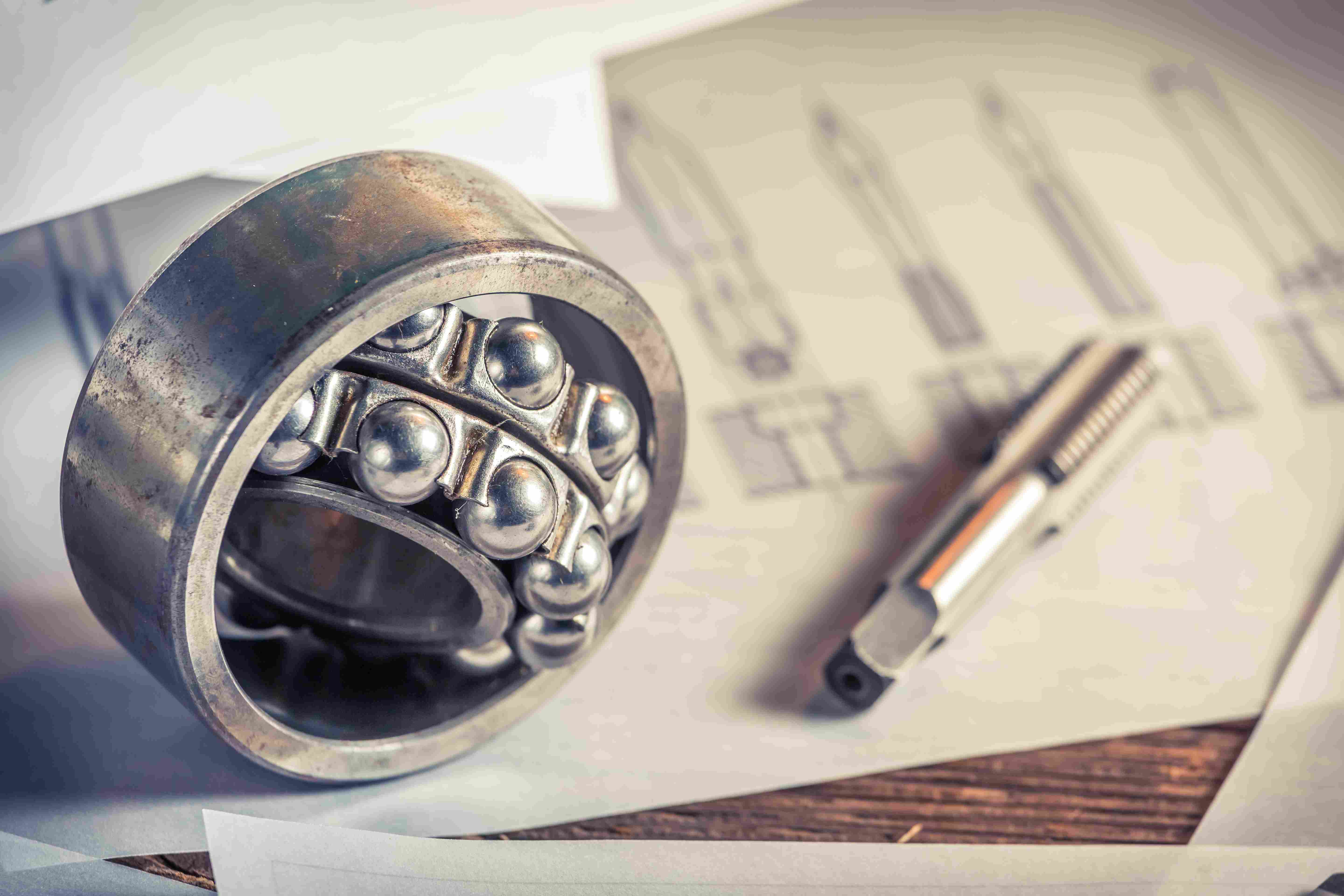
Important factors include:
Surface finish
Bearing contact surfaces require controlled surface roughness. A poor surface finish can increase friction, generate heat, and accelerate wear.
Cons
- Reduce friction
- Improve lubrication performance
- Minimize vibration
Dimensional accuracy and tolerances
Bearings often operate with precise fits between shafts, housings, and other components. Small dimensional errors can affect load distribution and bearing performance.
Important dimensions include:
- Shaft diameter
- Housing bore size
- Alignment accuracy
- Assembly clearances
For precision applications such as CNC machines and industrial equipment, accurate manufacturing of supporting components is critical because even a small tolerance issue can reduce bearing life.
Proper material selection combined with precision manufacturing helps ensure that bearings perform reliably under their intended operating conditions.
CNC Machined Components Used in Bearing Assemblies
Bearings are precision components, but their performance also depends heavily on the accuracy of the parts that support and connect them. In many mechanical systems, bearings work together with custom-machined components such as housings, shafts, and mounting structures.
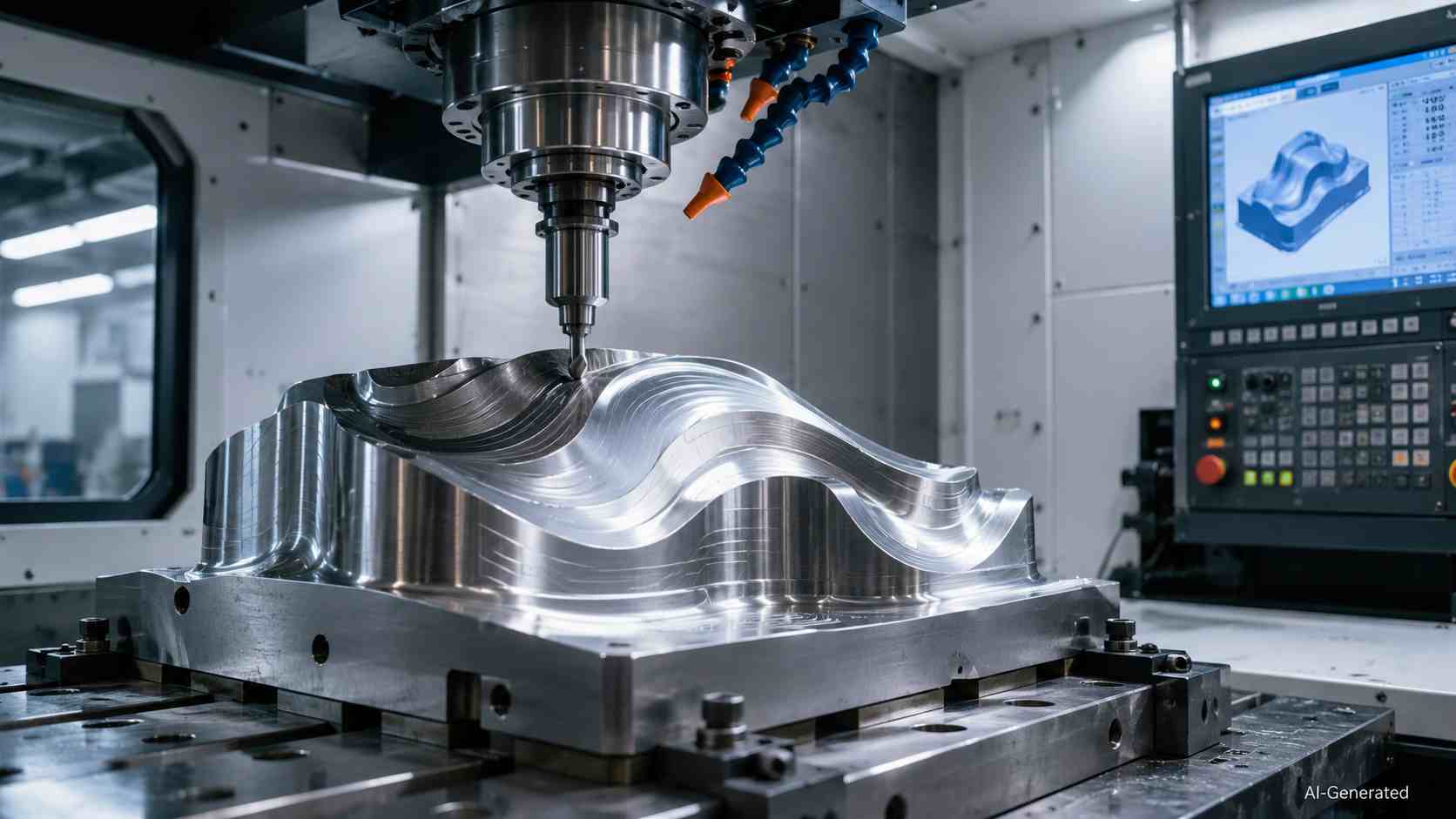
CNC machining is commonly used to manufacture these supporting components because it can achieve the dimensional accuracy, surface finish, and design flexibility required for reliable bearing assemblies.
Bearing Housings and Mounting Parts
Bearing housings provide a secure location for the bearing outer ring and help maintain proper alignment during operation.
The housing bore must be machined accurately because:
- An oversized bore can cause unwanted movement between the bearing and housing
- An undersized bore can create excessive stress and increase friction
- Poor alignment can accelerate bearing wear
CNC machining allows manufacturers to produce bearing housings with precise dimensions and consistent tolerances, especially for custom machinery, prototypes, and low-volume production.
Common machined bearing-related parts include:
- Bearing housings
- Mounting brackets
- Support blocks
- Retaining components
- Custom fixtures
These components help ensure that bearings operate smoothly and maintain their expected service life.
Precision Shafts and Rotating Components
Shafts are another critical component in bearing assemblies. The shaft diameter, surface finish, and alignment features directly affect bearing performance.
CNC-machined shafts are commonly used when applications require:
- Accurate bearing fits
- Precise rotational alignment
- Custom dimensions
- Improved mechanical reliability
For example, CNC-machined shafts are widely used in industrial equipment, automation systems, and rotating machinery where standard off-the-shelf parts cannot meet design requirements.
Other precision components used with bearings may include:
- Spacers
- Bushings
- Coupling components
- Alignment parts
The accuracy of these components helps reduce vibration, improve efficiency, and prevent premature bearing failure.
CNC Machining Requirements for Bearing Components
Manufacturing bearing-related components requires careful control of several machining factors.
Tight tolerances
Bearing fits often require precise dimensional control. Small variations in bore diameter, shaft size, or alignment features can affect load distribution and operating performance.
Surface finish
The contact surfaces of bearing components need appropriate surface quality to prevent excessive friction and wear. Proper machining processes help achieve the required finish for reliable assembly.
Material selection
Common materials for CNC-machined bearing components include:
- Aluminum for lightweight structures
- Steel and stainless steel for strength and durability
- Brass and engineering plastics for specific applications
The right material depends on factors such as load, environment, corrosion resistance, and operating conditions.
Prototype and low-volume production
CNC machining is especially useful during product development because engineers can quickly produce custom bearing components without expensive tooling.
For prototypes or small-batch projects, CNC machining allows design verification, testing, and modification before moving into larger-scale production.
JLCCNC provides CNC machining services for precision mechanical components used in various assemblies. With support for materials including aluminum, steel, stainless steel, and plastics, JLCCNC helps engineers produce accurate parts for prototypes and low-volume manufacturing needs.

Precision CNC Machining Service
Professional manufacturing, fast turnaround, and quality assurance.
Bearing Failure Causes and Maintenance Tips
Even high-quality bearings can fail prematurely if they are incorrectly selected, installed, or maintained. Most bearing failures are caused by a combination of factors such as insufficient lubrication, contamination, misalignment, or excessive loading.
Understanding common failure causes can help engineers improve bearing life, reduce downtime, and prevent unexpected equipment problems.
Wear and Lubrication Problems
Lubrication plays a critical role in reducing friction and protecting bearing surfaces. Insufficient or incorrect lubrication can cause increased friction, overheating, and accelerated wear.
Common lubrication-related problems include:
- Insufficient lubrication: Creates direct contact between rolling elements and raceways, increasing wear.
- Incorrect lubricant selection: The wrong grease or oil may not perform well under certain temperatures, speeds, or loads.
- Contamination: Dust, moisture, or particles inside the bearing can damage surfaces and reduce service life.
Regular lubrication checks and proper sealing can help maintain smooth operation and extend bearing performance.
Misalignment and Installation Errors
Proper installation is essential for bearing reliability. Even small alignment errors can create uneven load distribution and increase stress on bearing components.
Common installation issues include:
- Incorrect mounting force during installation
- Improper shaft or housing fit
- Misalignment between the shaft and bearing
These problems can lead to vibration, noise, overheating, and premature bearing failure.
Using precision-machined shafts and housings with accurate tolerances helps ensure proper bearing installation and alignment.
Overloading and Operating Conditions
Bearings are designed to operate within specific load, speed, and environmental limits. Exceeding these conditions can significantly shorten bearing life.
Common causes include:
- Excessive radial or axial loads
- High operating speeds beyond bearing limits
- Shock loads and vibration
- Extreme temperatures or corrosive environments
Selecting the correct bearing type based on actual operating conditions is essential. For example, roller bearings are often preferred for heavy loads, while ball bearings are better suited for high-speed applications with moderate loads.
Proper bearing selection, installation, and maintenance together help improve machine reliability and reduce unexpected failures.
FAQ About Bearing Types
Q: What are the main types of bearings?
The main bearing types include ball bearings, roller bearings, plain bearings, and linear bearings. Each type is designed for different load, speed, and motion requirements.
Q: Which bearing type handles the most load?
Roller bearings generally handle higher loads than ball bearings because they use line contact instead of point contact. Spherical roller bearings are commonly used for heavy radial loads, while thrust roller bearings handle high axial loads.
Q: What is the difference between ball bearings and roller bearings?
Ball bearings are better for high-speed applications with lighter loads, while roller bearings are designed for heavier loads and lower-speed applications. The choice depends on the machine requirements and operating conditions.
Q: What bearing type is best for high-speed applications?
Ball bearings, especially deep groove ball bearings and angular contact ball bearings, are commonly used for high-speed applications because they generate less friction.
Q: How do I choose the right bearing type?
Select a bearing based on load direction, operating speed, available space, environment, and service life requirements. The correct choice helps improve performance and reduce premature failure.
Q: Can different bearing types be used in the same machine?
Yes. Many machines use multiple bearing types because different components require different load and speed capabilities.
Q: How long do bearings usually last?
Bearing life depends on factors such as load, speed, lubrication, alignment, and operating environment. Proper selection and maintenance can significantly extend service life.
Q: What bearing types are commonly used in CNC machines?
CNC machines often use angular contact ball bearings for high-speed spindles and linear bearings or guideways for precise linear movement. These bearings help maintain accuracy and smooth operation.
Keep Learning
Laser Engraving Aluminum: Marking Methods & Surface Effects
Key Takeaways Laser engraving usually removes base material to create a recess. Laser marking is a broader term that can describe a surface-color change or material removal, so the process name alone does not define the final result. On aluminum, alloy and surface finish affect marking contrast. A light mark on dark anodized aluminum is a common design target, but the actual appearance depends on the finish and laser process. JLCCNC laser marking produces a recessed area 0.03–0.1 mm deep. The result i......
CNC Cutting Fluid: Types, Functions, Applications, and Selection Guide
Key Takeaways Cutting fluid in machining performs four functions simultaneously: cooling the tool and workpiece, lubricating the tool-chip interface to reduce friction, carrying chips away from the cut zone, and protecting machined surfaces from corrosion between operations. Different machining operations need different fluid priorities: high-speed aluminum milling may need adhesion control and chip evacuation, threading and tapping need strong lubrication, and grinding requires both cooling and fine ......
Blind Hole Machining Guide: What Is a Blind Hole, Types of Holes, and Tapping Tips
What Is a Blind Hole? Types of Holes and CNC Hole Machining Explained In CNC machining, few operations challenge process control and tool stability as much as blind hole machining. A blind hole is a hole that terminates at a defined internal depth rather than breaking through the opposite surface. Because the cavity is enclosed at the bottom, chip evacuation, thermal behavior, tool wear, and dimensional accuracy become far more difficult to manage compared to through-hole machining. These constraints ......
Rake Angle in Machining: Machinists’ Guide to Perfect Cuts
What is Rake Angle? (minaprem) If you've ever stood in front of a CNC machine or a manual lathe, you know that the cutting tool's geometry isn't just some arbitrary design. Every angle, edge, and surface has a job to do, and one of the most important of those is the rake angle. We've been running machines long enough to know that rake angle can make or break your surface finish, tool life, and machining efficiency. In this guide, we're going to walk you through what rake angle is, how it works, and ho......
Sheet Metal vs CNC Machining: A Guide to Choosing the Right Method for Your Metal Parts
Quick Answer: Choose sheet metal for uniform-thickness enclosures, panels, and formed brackets when bends and production volume support lower unit cost. Choose CNC machining for variable wall thickness, precision bores, tight feature relationships, and complex 3D geometry. Use a hybrid design when a formed structure needs precision-machined interfaces. A quote comes back for a bracket, and it's priced as a CNC part — machined from solid aluminum, a few hours of spindle time, a per-part cost that makes......
What Steps Are Taken To Minimize Waste In CNC Machining Processes?
How to Reduce Waste in CNC Machining: 5 Practical Strategies Quick Answer: CNC machining waste is reduced mainly through DFM, near-net stock, efficient toolpaths, preventive tool maintenance, and alloy-segregated recycling. The biggest gains usually come before cutting: reduce unnecessary material removal and prevent scrap or rework. Every CNC-machined part starts as more material than it ends up being. A pocket gets milled out, a profile gets cut away, a boss gets faced down to size — and all of that......