Galvanized Sheet Metal: Grades, Specs & When to Use It
7 min
- Galvanized Sheet Metal: Grades, Specs & When to Use It
- What Counts as Galvanized Sheet Metal
- Gauge and Thickness
- Coating Classes: G30, G60, G90, and Beyond
- Hot-Dip vs. Electro-Galvanized Sheet — Which One for Sheet Metal Parts
- Galvanized vs. Other Sheet Metal Materials
- Fabrication Considerations Specific to Galvanized Sheet
- FAQ
Galvanized Sheet Metal: Grades, Specs & When to Use It
A design engineer specs "galvanized sheet metal" on a drawing and sends it out for quotes. Three shops come back with three different prices, and one of them asks a follow-up question the others didn't: which gauge, which coating class, hot-dip or electro-galvanized? That question is the difference between a part that survives outdoors for fifteen years and one that starts showing rust spots after eighteen months — and it's the kind of detail that's easy to skip when "galvanized" feels like a single, self-explanatory spec.
It isn't. Galvanized sheet metal comes in enough combinations of gauge, coating weight, and process that picking the wrong one is a common — and avoidable — source of either wasted budget or premature failure. This guide covers how to actually specify it.
Need Custom Galvanized Sheet Metal Parts?
Before diving into the material specs, if you’re looking for a reliable fabrication partner, JLCCNC can help. We stock standard galvanized gauges (G60/G90) and provide precision laser cutting, bending, and powder coating for custom enclosures and brackets.
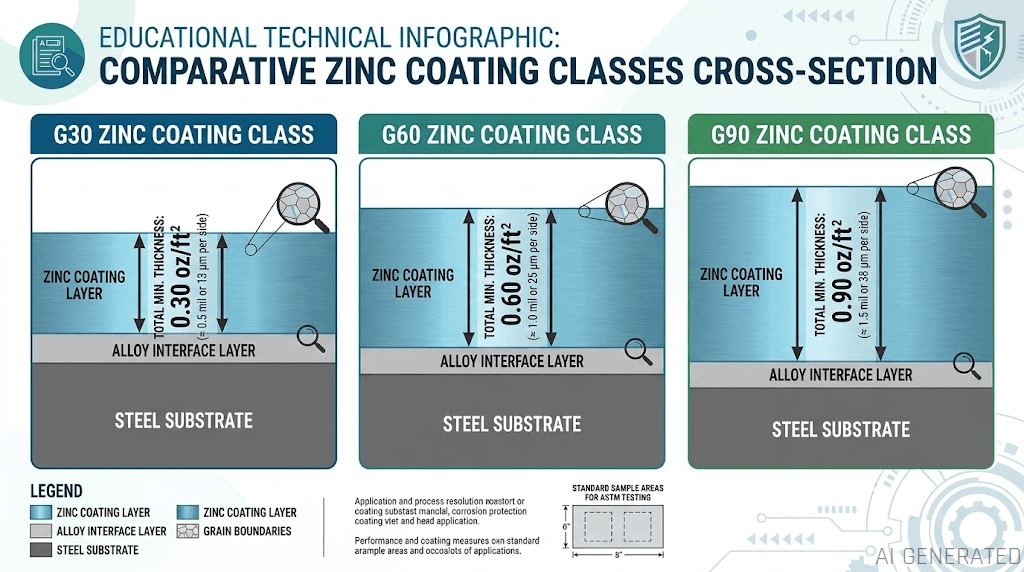
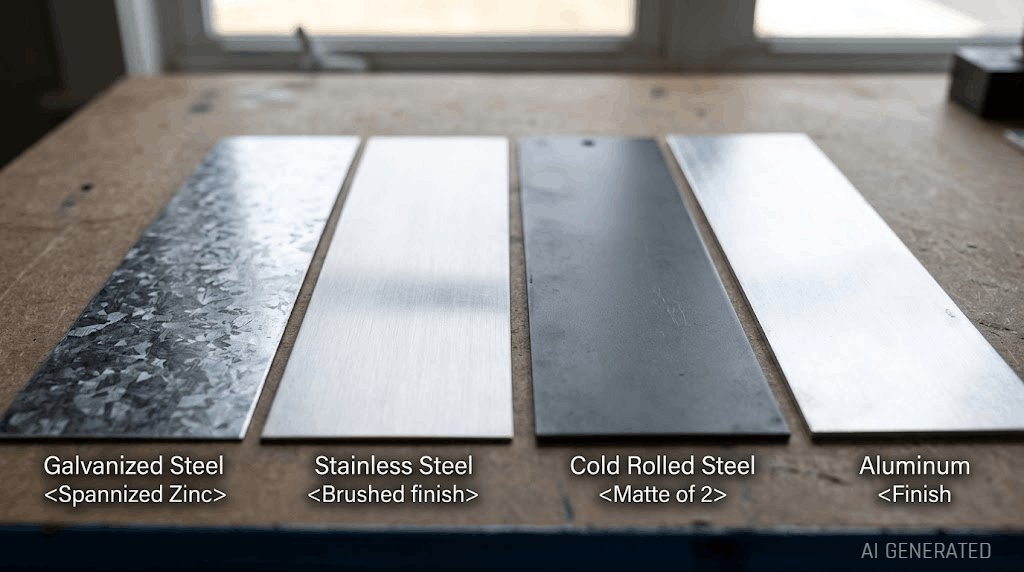
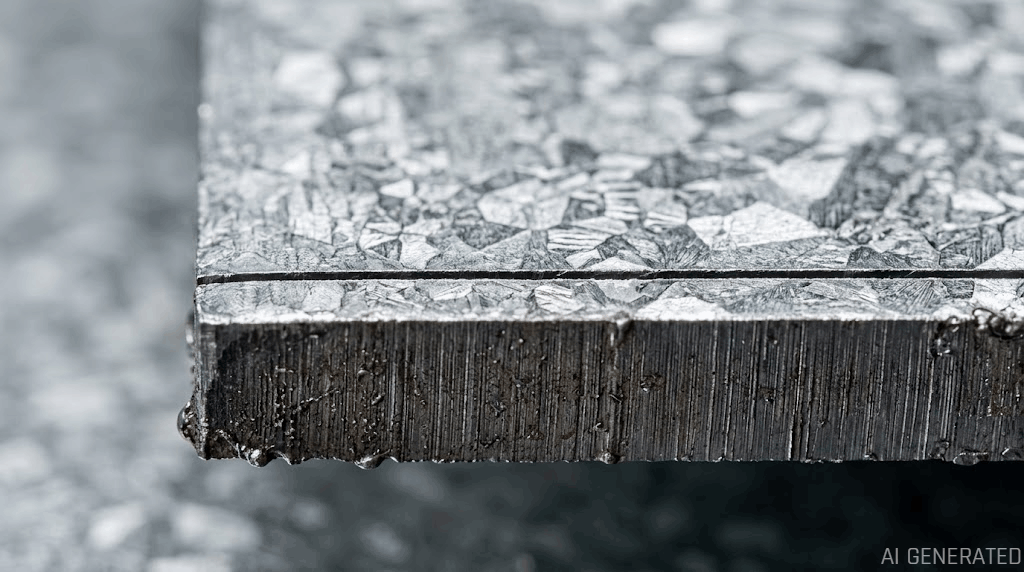
Professional manufacturing, fast turnaround, and quality assurance. Galvanized sheet metal is thin-gauge steel — generally under about 6mm, and often much thinner for enclosures and brackets — coated with zinc for corrosion resistance. It's distinct from galvanized structural steel (beams, angle, heavier sections) mainly in thickness and how it's typically fabricated: sheet stock gets cut and bent into panels, enclosures, and formed parts, rather than used as structural framing. If you want the underlying process behind the zinc coating itself, our guide on what galvanized metal is and how the coating process works covers hot-dip versus electro-galvanizing in more depth — this article picks up from there and focuses on choosing the right material for a specific part. Sheet metal gauge is an inverse scale — the higher the gauge number, the thinner the material. A few common reference points for galvanized steel sheet: Coating weight is specified separately from gauge, using designations that indicate total zinc coating weight per square foot across both surfaces (in the U.S. system under ASTM A653). The most common classes: Both processes show up in sheet metal fabrication, but they tend to suit different jobs. Hot-dip galvanized sheet (often labeled G90 or similar) carries a thicker, slightly textured coating that holds up well outdoors but doesn't finish as smoothly under paint or powder coat. Electro-galvanized sheet has a thinner, smoother coating that's easier to paint over cleanly, making it a common choice for parts that'll get a cosmetic finish applied regardless — appliance panels, indoor enclosures, anything where appearance matters as much as corrosion resistance. If a part is going to be powder-coated anyway, the zinc coating's main job shifts to protecting the steel if the powder coat ever chips. In these scenarios, a thinner electro-galvanized coating works well. Alternatively, many engineers specify Galvannealed steel (often designated as A40 or A60 instead of G40/G60). Galvannealing adds a heat-treatment step that creates a zinc-iron alloy surface. This matte surface is specifically designed to provide superior paint and powder coat adhesion compared to standard spangled galvanized steel. Galvanized steel isn't always the right call. Stainless steel offers stronger, more uniform corrosion resistance without relying on a sacrificial coating, which matters for parts exposed to constant moisture or where a scratched, exposed edge would otherwise be a weak point — but it costs more and machines differently. Cold rolled steel, uncoated, is cheaper still but offers no corrosion protection at all, which only makes sense for indoor parts that'll be painted or that simply don't need to survive humidity. Aluminum sidesteps the corrosion question entirely thanks to its natural oxide layer, at a different cost and weight tradeoff. Our comparison of aluminum vs. stainless steel for sheet metal and our broader guide to sheet metal material types both go further into how to weigh these options against galvanized steel for a specific part. A few things behave differently once zinc is in the picture. Welding requires either stripping the coating at the joint or working in a ventilated setup, since heated zinc releases fumes. Bending is generally fine at standard radii for the gauge, but very tight bends can cause the zinc coating to crack or flake at the fold even when the underlying steel holds up fine — worth checking on a sample bend before committing a full production run to an aggressive radius. And any cut edges — laser-cut or punched — expose bare steel at the edge itself, since the coating doesn't wrap around a freshly cut face; for parts in harsh environments, edge treatment or a touch-up coating is sometimes worth specifying separately. At JLCCNC, galvanized steel sheet is one of our core materials for custom enclosures and brackets, available alongside cold rolled and stainless steel. We lay out gauge and finish options clearly at quoting time, ensuring your coating class matches your part's actual environment—while factoring in bend radii and cut-edge treatments before production even starts. Don't leave your sheet metal specs to chance. Upload your CAD file today to get an instant quote and seamless fabrication for your next project. What gauge of galvanized steel is used for enclosures? Is G90 galvanized steel outdoor rated? Can galvanized sheet metal be powder coated? Does cutting galvanized sheet metal expose bare steel at the edges?
Precision Sheet Metal Fabrication
What Counts as Galvanized Sheet Metal
Gauge and Thickness
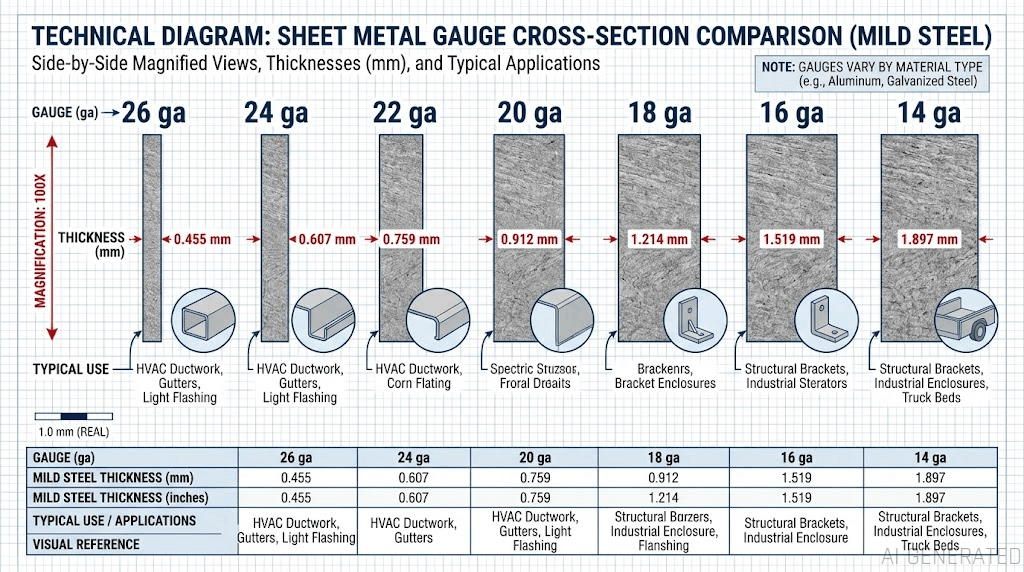
Gauge Approx. Thickness (mm) Typical Use 26 ga ~0.55 mm Light-duty ductwork, thin panels 22 ga ~0.85 mm HVAC ductwork, light enclosures 18 ga ~1.31 mm Enclosures, brackets, general fabrication 16 ga ~1.61 mm Structural brackets, heavier enclosures 14 ga ~2.03 mm Load-bearing panels, industrial equipment
Thinner gauges cost less and bend more easily but sacrifice rigidity and dent resistance. A common mistake in early designs is defaulting to a thicker gauge "to be safe" — which drives up material cost and can actually make tight-radius bends harder to hold cleanly, since thicker material needs a proportionally larger minimum bend radius to avoid cracking at the fold.Coating Classes: G30, G60, G90, and Beyond
Hot-Dip vs. Electro-Galvanized Sheet — Which One for Sheet Metal Parts
Galvanized vs. Other Sheet Metal Materials
Fabrication Considerations Specific to Galvanized Sheet
FAQ
Most electronics and equipment enclosures fall in the 18–16 gauge range, balancing rigidity against weight and cost. Lighter-duty enclosures sometimes go thinner (20–22 gauge); load-bearing or industrial enclosures may go heavier.
Generally yes — G90 is a common minimum specification for steel that'll see regular outdoor exposure, though very harsh or coastal environments may call for a heavier coating class or a switch to hot-dip galvanizing with a thicker coating than typical sheet-stock designations provide.
Yes, and it's a common combination — the powder coat provides the cosmetic and additional protective layer, while the zinc coating underneath protects the steel if the powder coat is ever chipped or scratched. Proper surface prep (cleaning, sometimes a light etch) is important for adhesion.
Yes. Laser cutting, punching, and shearing all cut through the coating along with the steel, leaving a thin exposed edge. In most applications this is a minor, localized weak point that doesn't significantly affect service life, but for harsh environments an edge treatment can be specified.
Popular Articles
• 9 Sheet Metal Cutting Problems and Solutions
• Hole cutting in sheet metal: techniques, tolerances and applications
• Introduction to Sheet Metal Processing: Techniques and Tools for Precision
• Bending and Forming Technology in Sheet Metal Processing
• Laser cutting technology in sheet metal processing
Keep Learning
Galvanized Sheet Metal: Grades, Specs & When to Use It
Galvanized Sheet Metal: Grades, Specs & When to Use It A design engineer specs "galvanized sheet metal" on a drawing and sends it out for quotes. Three shops come back with three different prices, and one of them asks a follow-up question the others didn't: which gauge, which coating class, hot-dip or electro-galvanized? That question is the difference between a part that survives outdoors for fifteen years and one that starts showing rust spots after eighteen months — and it's the kind of detail that......
Custom Sheet Metal Fabrication: How the Process Works From Design to Delivery
Custom Sheet Metal Fabrication: How the Process Works From Design to Delivery A stock enclosure almost fits. The mounting holes are close but not quite right, the depth is half an inch too shallow, and the vendor's next size up is twice the volume you actually need. This is the point where most people start looking into custom sheet metal fabrication — not because they set out to design a part from scratch, but because nothing off the shelf actually solves the problem. Custom fabrication sounds like i......
Sheet Metal Assembly: How Fabricated Parts Come Together
Sheet Metal Assembly: How Fabricated Parts Come Together Cutting and bending gets a lot of attention because that's where a flat sheet visibly turns into a 3D part. But a single bracket by itself rarely finishes the job — most real sheet metal products are assemblies, multiple formed pieces joined into one working unit, and that assembly step is where a lot of designs quietly succeed or fail. A part that measured perfectly on its own can still not fit once it's supposed to mate with three other pieces......
Sheet Metal Bender: Types, Specs & How to Choose the Right Machine
Sheet Metal Bender: Types, Specs & How to Choose the Right Machine Every sheet metal bracket, enclosure, and panel eventually passes through a bender of some kind — that's the machine, not the process. Our guide on sheet metal bending covers how bending actually deforms metal — springback, minimum radius, bend allowance, and the core press brake and CNC press brake setups most shops run. This one goes further into the equipment side specifically: the less common bender types beyond the standard press ......
What Is Galvanized Metal? Process, Types & How It Works
What Is Galvanized Metal? Process, Types & How It Works Leave a piece of bare steel outside for a season and you'll see exactly why galvanizing exists. Rust doesn't wait for dramatic weather — a little humidity and a few weeks is enough to start eating into an unprotected surface. Galvanized metal solves that problem by giving steel a sacrificial layer of zinc that corrodes in its place, and it's done this job well enough that it's become the default choice for anything from highway guardrails to HVAC......
What Is Sheet Metal Fabrication? The Complete Guide
What Is Sheet Metal Fabrication? The Complete Guide Somewhere between a CAD file and a working enclosure sitting on your bench, a flat piece of metal gets cut, bent, joined, and finished into something that actually does a job. That's sheet metal fabrication — and if you've never ordered a part before, the term can feel bigger than it needs to be. Ask five people what "sheet metal fabrication" covers and you'll get five different answers: some think laser cutting, some think welding, some just picture......