What Is Galvanized Metal? Process, Types & How It Works
8 min
- What Is Galvanized Metal? Process, Types & How It Works
- What Does "Galvanized" Actually Mean?
- Hot-Dip Galvanizing vs. Electro-Galvanizing
- Coating Weight and Thickness Standards
- Why Zinc, Specifically?
- Where Galvanized Metal Shows Up
- Common Mistakes When Specifying Galvanized Parts
- FAQ
What Is Galvanized Metal? Process, Types & How It Works
Leave a piece of bare steel outside for a season and you'll see exactly why galvanizing exists. Rust doesn't wait for dramatic weather — a little humidity and a few weeks is enough to start eating into an unprotected surface. Galvanized metal solves that problem by giving steel a sacrificial layer of zinc that corrodes in its place, and it's done this job well enough that it's become the default choice for anything from highway guardrails to HVAC ductwork to the sheet metal enclosure sitting on a factory floor.
But "galvanized" gets used loosely enough that people conflate different processes under the same word. Hot-dip galvanizing and electro-galvanizing both put zinc on steel, but they do it differently, and the results aren't interchangeable. If you're specifying material for a part, that distinction matters more than it might seem.
Need Galvanized Sheet Metal Parts?
Before diving into the theory, if you’re looking for a reliable fabrication partner, JLCCNC can help. We stock various gauges of galvanized steel and offer precision laser cutting, bending, and finishing for custom enclosures and brackets.

Precision Sheet Metal Fabrication
Professional manufacturing, fast turnaround, and quality assurance.
What Does "Galvanized" Actually Mean?
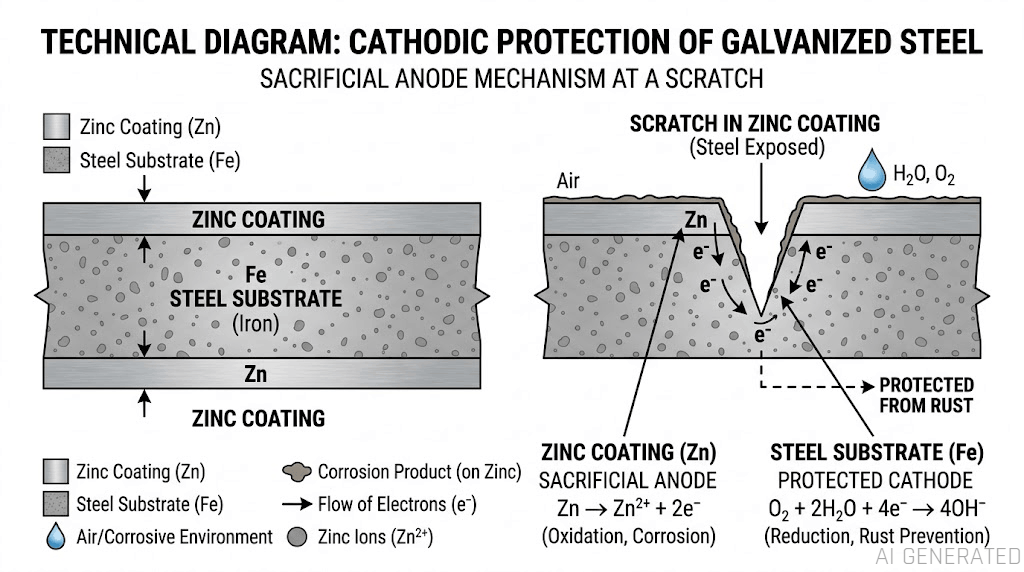
Galvanizing is the process of applying a protective zinc coating to steel or iron to prevent corrosion. The zinc works through two mechanisms at once. First, it forms a physical barrier that keeps moisture and oxygen from reaching the steel underneath. Second — and this is the part people miss — zinc is more reactive than steel, so even where the coating gets scratched or damaged, the zinc around the exposed spot will corrode preferentially and protect the steel underneath it. That's called cathodic (or sacrificial) protection, and it's the reason a galvanized part with a small scratch doesn't immediately start rusting the way bare steel would.
Hot-Dip Galvanizing vs. Electro-Galvanizing
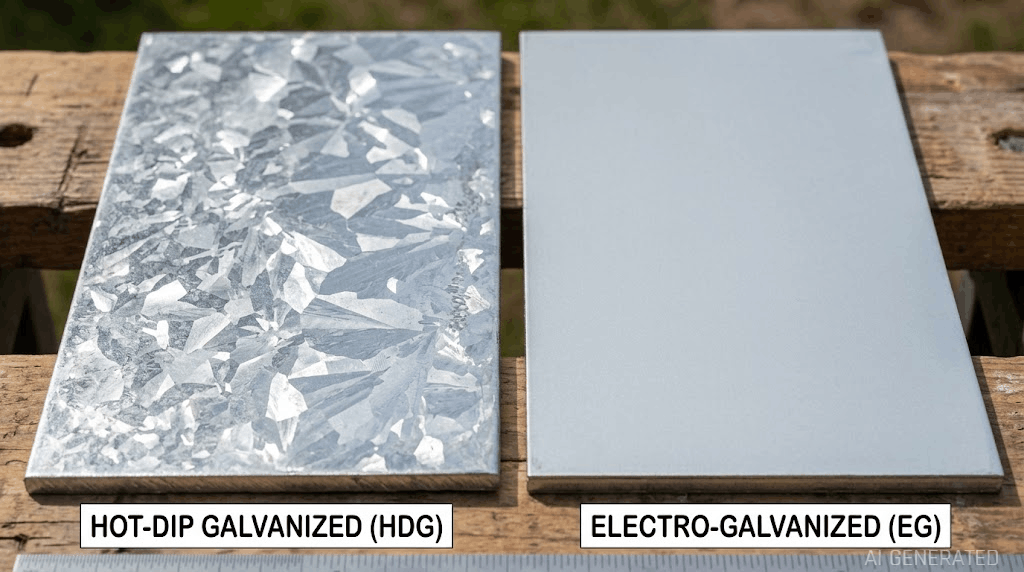
These are the two processes doing most of the work in the market, and the difference between them shows up in coating thickness, appearance, and cost.
| Hot-Dip Galvanizing | Electro-Galvanizing | |
|---|---|---|
| Process | Steel is fully immersed in a bath of molten zinc at around 450°C | Zinc is applied via electric current in an electroplating bath, at room temperature |
| Coating thickness | Thicker — typically 45–100+ microns | Thinner — typically 5–25 microns |
| Corrosion resistance | Stronger, longer-lasting, better for outdoor/harsh exposure | Adequate for indoor or mild environments |
| Surface finish | Slightly textured, spangled appearance | Smooth, uniform, better for painting or further finishing |
| Typical use cases | Structural steel, outdoor equipment, guardrails, agricultural equipment | Automotive body panels, appliance housings, indoor enclosures |
| Relative cost | Higher, but longer service life offsets it over time | Lower upfront cost Neither one is universally "better" — it's a question of what the part needs to survive. A structural beam that'll sit outdoors for twenty years wants the thick, tough coating hot-dip galvanizing provides. An indoor electronics enclosure that'll get painted over anyway doesn't need that much protection, and the smoother electro-galvanized surface actually finishes better under paint. Additionally, modern electro-galvanizing uses trivalent chromium (Cr3+) clear or blue passivation to remain fully RoHS compliant, which is a mandatory requirement for most electronics and automotive enclosures today. One thing worth knowing if you're speccing hot-dip galvanized parts: the process happens after fabrication, not before. The steel gets cut, formed, and welded first, then dipped as a finished part. That sequencing affects design — vent holes are sometimes needed in enclosed sections so the molten zinc can flow in and drain out cleanly, and skipping that detail is a common source of rework when a design moves from a painted-steel version to a hot-dip galvanized one for the first time. |
Coating Weight and Thickness Standards
Galvanized coatings are usually specified by weight (grams of zinc per square meter) rather than thickness alone, since that's a more consistent way to measure it across curved or textured surfaces. In the U.S., ASTM A123 governs hot-dip galvanizing of structural steel, while ASTM A653 covers galvanized sheet steel — the thinner-gauge material more commonly used in sheet metal fabrication. Coating designations like G60 or G90 on a mill certification refer to the coating weight per side, and picking the wrong one for the application is an easy mistake: over-spec it and you're paying for corrosion resistance the part doesn't need, under-spec it and you're looking at premature rust in a few years instead of a few decades.
Why Zinc, Specifically?
Zinc isn't the only metal that could theoretically protect steel, but it's the one that ended up dominating the industry for a combination of reasons that's hard to beat all at once: it's abundant and relatively cheap, it bonds well to steel through a metallurgical reaction rather than just sitting on top of it, and its position on the galvanic series relative to iron makes it an effective sacrificial anode without being so reactive that it corrodes away too fast to be useful.
Where Galvanized Metal Shows Up
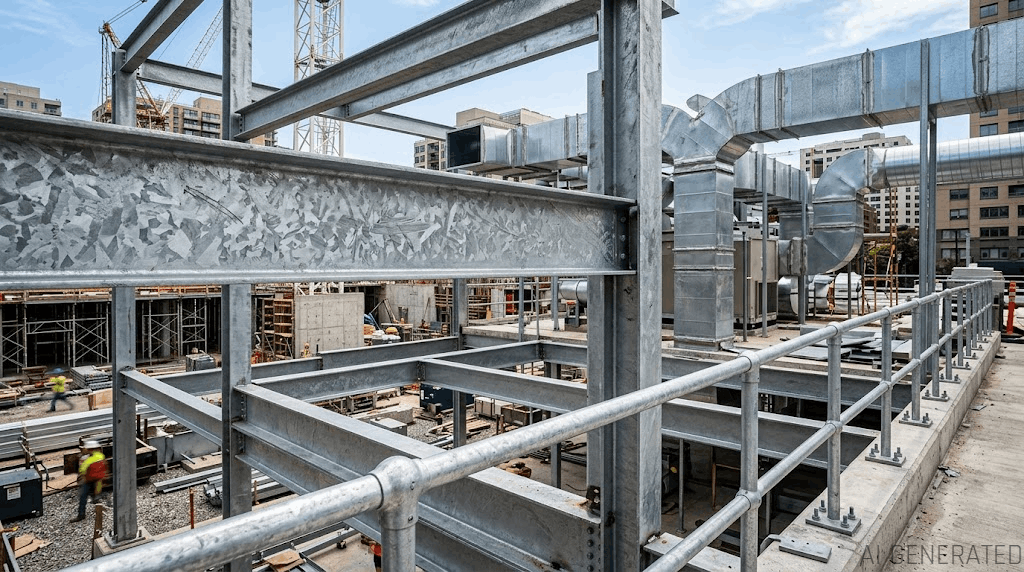
Galvanized steel is everywhere outdoor exposure or moisture is a factor: chain-link fencing, guardrails, HVAC ductwork, outdoor electrical enclosures, agricultural equipment, and structural framing in construction. It also shows up in plenty of indoor applications where cost matters more than raw corrosion resistance but some protection is still worth having — appliance frames, shelving, and general-purpose brackets.
If you're working with galvanized sheet stock specifically — thinner gauge material used for enclosures, panels, and fabricated parts rather than structural sections — the material selection and spec questions are different enough that they're worth a separate look. Our guide on galvanized sheet metal grades and specs covers how to pick the right coating and gauge for that kind of part. For a broader look at how galvanized steel compares to other common sheet metal materials, see our breakdown of the different types of sheet metal, and if you're deciding between hot rolled and cold rolled base steel before it's even galvanized, our hot rolled vs. cold rolled steel guide is a useful starting point.
Not sure which galvanized spec you need? Upload your drawing to JLCCNC for a free material and manufacturability review.
Precision Sheet Metal Fabrication
Professional manufacturing, fast turnaround, and quality assurance.
Common Mistakes When Specifying Galvanized Parts
A few issues come up often enough to be worth flagging directly. Welding galvanized steel without ventilation is a real hazard — heating zinc past its boiling point releases zinc oxide fumes that cause metal fume fever, so any welding on galvanized material needs proper extraction or the coating stripped from the weld zone first. Painting over galvanized steel without the right primer is another common failure point: standard primers don't bond well to zinc, and paint applied directly tends to peel within a year or two — a zinc-compatible or etching primer is worth the extra step. And treating "galvanized" as one uniform spec, rather than checking whether hot-dip or electro-galvanizing (and which coating weight) actually fits the exposure the part will see, is the most common way people end up either overpaying or under-protecting.
FAQ
Does galvanized steel rust?
Eventually, yes, but far more slowly than bare steel. The zinc coating corrodes first and protects the steel underneath; once the zinc is fully consumed in a given area, the underlying steel becomes vulnerable again. Under normal outdoor exposure, hot-dip galvanized steel can last several decades before that happens.
Can galvanized steel be welded?
Yes, but it requires ventilation or the coating removed at the weld zone first, since heating zinc releases fumes that are hazardous to breathe. Post-weld, the affected area is typically re-coated with a zinc-rich paint to restore corrosion protection at the joint.
Is galvanized steel magnetic?
Yes — the zinc coating doesn't change the base steel's magnetic properties. A galvanized part behaves the same way a bare steel part would with a magnet.
What's the difference between galvanized and galvannealed steel?
Galvannealed steel goes through an additional heat treatment after hot-dip galvanizing that causes the zinc to alloy with the steel surface, producing a duller, more matte finish that's better suited for painting and has improved weldability compared to standard hot-dip galvanized coatings.
Popular Articles
• 9 Sheet Metal Cutting Problems and Solutions
• Hole cutting in sheet metal: techniques, tolerances and applications
• Introduction to Sheet Metal Processing: Techniques and Tools for Precision
• Bending and Forming Technology in Sheet Metal Processing
• Laser cutting technology in sheet metal processing
Keep Learning
Galvanized Sheet Metal: Grades, Specs & When to Use It
Galvanized Sheet Metal: Grades, Specs & When to Use It A design engineer specs "galvanized sheet metal" on a drawing and sends it out for quotes. Three shops come back with three different prices, and one of them asks a follow-up question the others didn't: which gauge, which coating class, hot-dip or electro-galvanized? That question is the difference between a part that survives outdoors for fifteen years and one that starts showing rust spots after eighteen months — and it's the kind of detail that......
Custom Sheet Metal Fabrication: How the Process Works From Design to Delivery
Custom Sheet Metal Fabrication: How the Process Works From Design to Delivery A stock enclosure almost fits. The mounting holes are close but not quite right, the depth is half an inch too shallow, and the vendor's next size up is twice the volume you actually need. This is the point where most people start looking into custom sheet metal fabrication — not because they set out to design a part from scratch, but because nothing off the shelf actually solves the problem. Custom fabrication sounds like i......
Sheet Metal Assembly: How Fabricated Parts Come Together
Sheet Metal Assembly: How Fabricated Parts Come Together Cutting and bending gets a lot of attention because that's where a flat sheet visibly turns into a 3D part. But a single bracket by itself rarely finishes the job — most real sheet metal products are assemblies, multiple formed pieces joined into one working unit, and that assembly step is where a lot of designs quietly succeed or fail. A part that measured perfectly on its own can still not fit once it's supposed to mate with three other pieces......
Sheet Metal Bender: Types, Specs & How to Choose the Right Machine
Sheet Metal Bender: Types, Specs & How to Choose the Right Machine Every sheet metal bracket, enclosure, and panel eventually passes through a bender of some kind — that's the machine, not the process. Our guide on sheet metal bending covers how bending actually deforms metal — springback, minimum radius, bend allowance, and the core press brake and CNC press brake setups most shops run. This one goes further into the equipment side specifically: the less common bender types beyond the standard press ......
What Is Galvanized Metal? Process, Types & How It Works
What Is Galvanized Metal? Process, Types & How It Works Leave a piece of bare steel outside for a season and you'll see exactly why galvanizing exists. Rust doesn't wait for dramatic weather — a little humidity and a few weeks is enough to start eating into an unprotected surface. Galvanized metal solves that problem by giving steel a sacrificial layer of zinc that corrodes in its place, and it's done this job well enough that it's become the default choice for anything from highway guardrails to HVAC......
What Is Sheet Metal Fabrication? The Complete Guide
What Is Sheet Metal Fabrication? The Complete Guide Somewhere between a CAD file and a working enclosure sitting on your bench, a flat piece of metal gets cut, bent, joined, and finished into something that actually does a job. That's sheet metal fabrication — and if you've never ordered a part before, the term can feel bigger than it needs to be. Ask five people what "sheet metal fabrication" covers and you'll get five different answers: some think laser cutting, some think welding, some just picture......